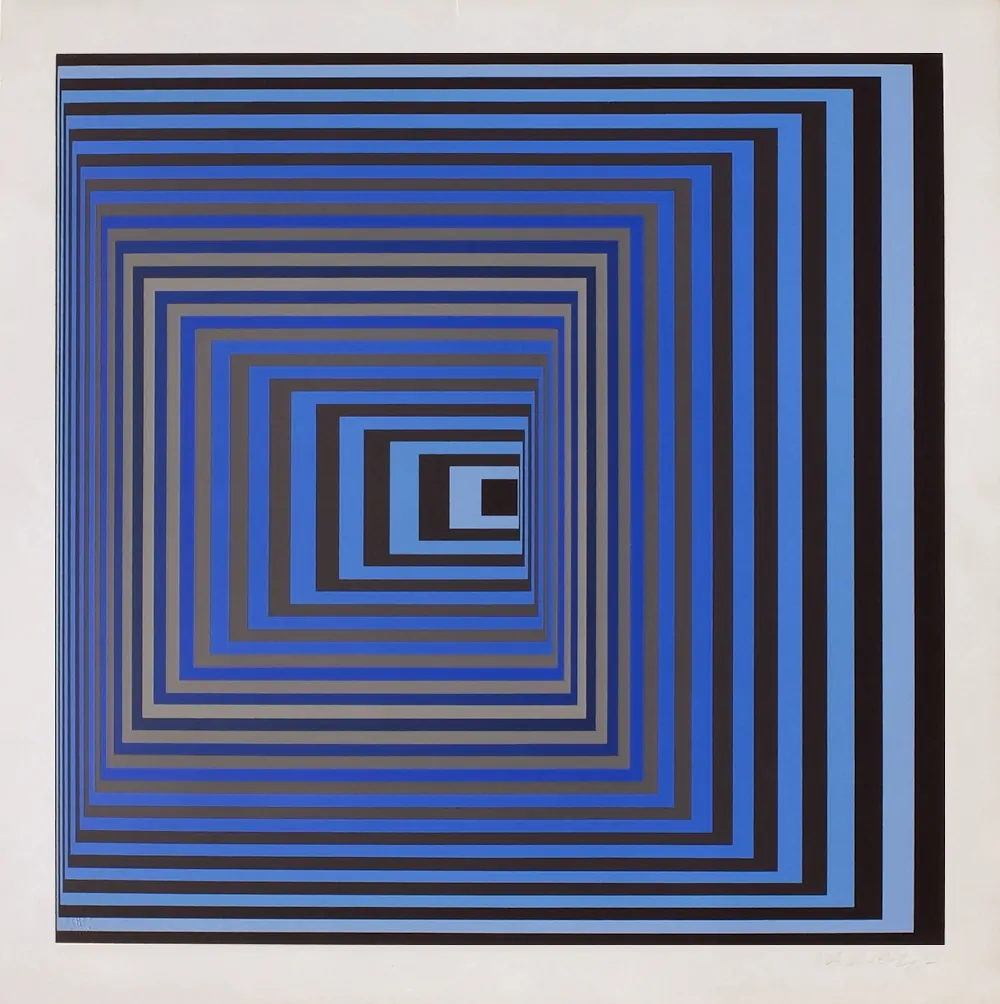
Victor Vasarely was an artist whose unique style of Op-Art defined his remarkable creations that are still mesmerizing with their optical illusions and powerful energy. Vasarely was born in 1906 in Hungary. He was a relatively conservative kid, where his father was a university professor and his mother was a housewife. This made him study medicine first but soon realized that it wasn’t his thing and switched to art, where he found his passion. During his glorious career, he refuted traditional art notions, accepting geometric abstraction, and exploiting optical phenomena to produce artworks that brought the subject alive in front of the viewer. One of the best of Vasarely is “Vonal Ksz,” which features some of the finest pieces of art that showcase the mastery of Vasarely to Op Art and continues to amaze the public worldwide.
Who was Victor Vasarely?
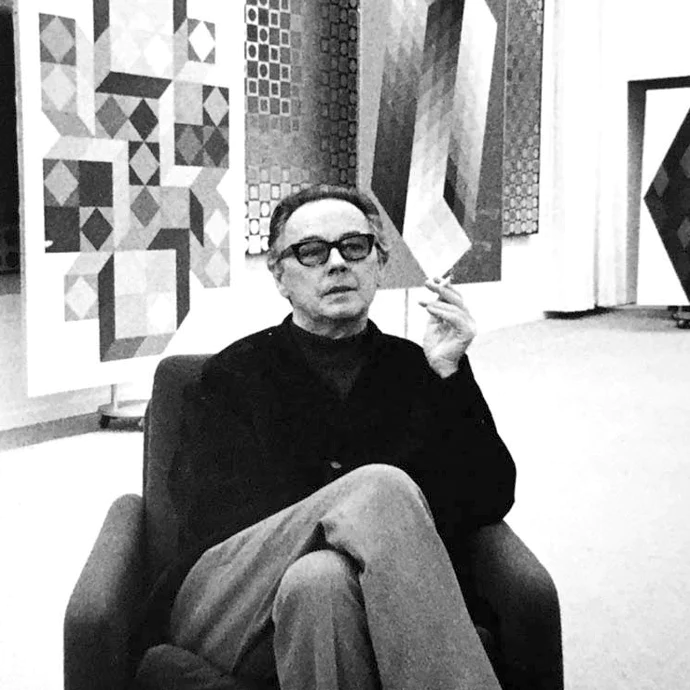
The art of Victor Vasarely was fresh and visionary and laid a new foundation Op Art which entirely altered the way the public perceives and interacts with art. Vasarely, the Pécs-born artist, who was born in 1906, initially intended to pursue a career in medicine and therefore studied at the University of Budapest. But his love for art took him to a new chapter, he got enrolled at Műhely Academy of Budapest and further developed his artistic talents.
Vasarely’s artistic journey reached a new phase with his entry at the Bauhaus in Germany, which was then one of the world’s most famous schools for the integration art, craft, and technology. It was this place that particularly drove Vasarely to focus on the avant-garde movements of the beginning of the 20th century, including Cubism, Surrealism, and Constructivism. These different inputs gave rise to his own artistic vision which was a predecessor of the Op Art movement.
FUN FACT: Victor Vasarely initially worked as a graphic designer, creating advertising posters and designs for packaging before gaining recognition as a fine artist. Vasarely’s experience in commercial art greatly influenced his later work, as he incorporated principles of visual communication and optical illusion into his iconic op art style.
His Career
At the end of the 1950s and early 1960s, the artist’s career as an artist started to take off and he began to produce artworks that had optical illusions and geometric shapes. He held the conviction that art should be open to all who can afford it, and therefore he endeavored to democratize it by producing prints and multiples to make his work reach the wider public. The use of strong color and form by Vasarley, and his interest in visual perception, applauded by many, resulted in exhibitions on an international scale and had him recognized.
What is Happening in Vonal Ksz
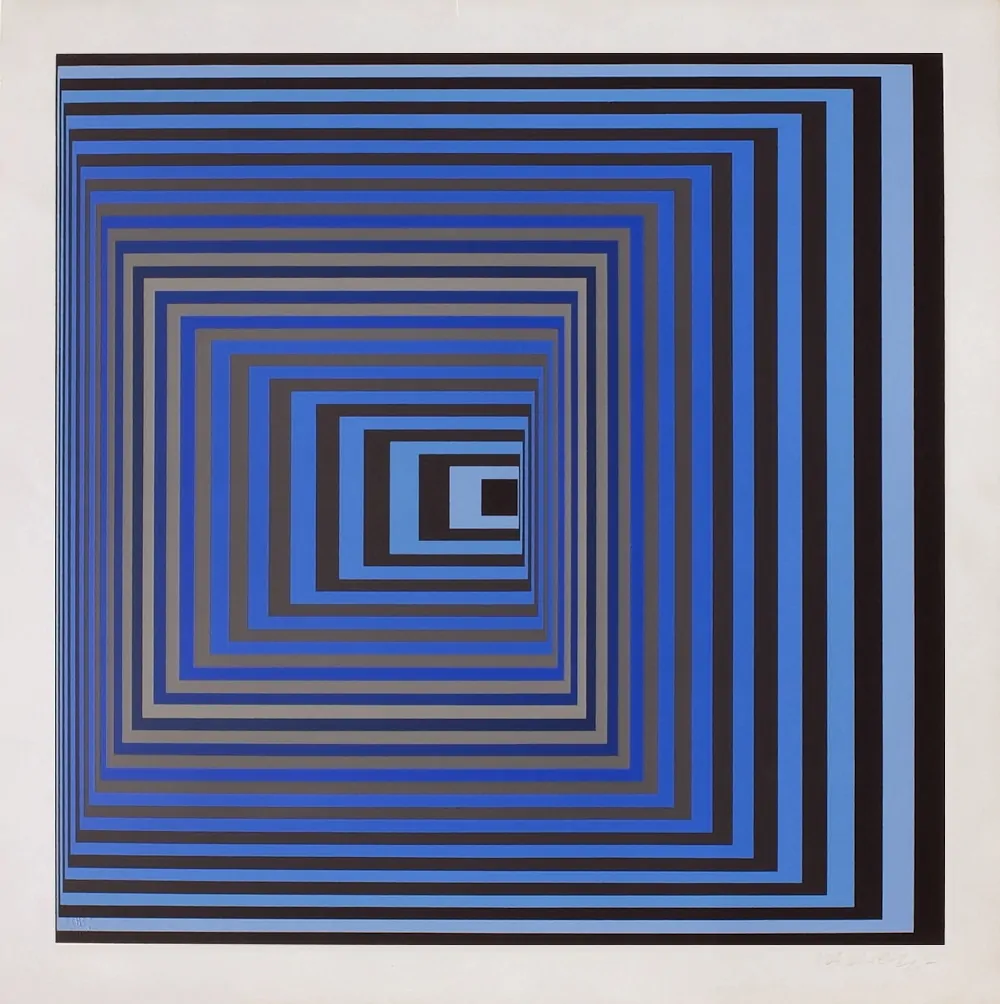
| Artist | Victor Vasarely |
| Date Created | 1973 |
| Medium | Acrylic on canvas |
| Genre | Op Art |
| Period | 20th Century |
| Dimensions | 120 cm x 120 cm |
| Series/Versions | Singular |
| Housed | Private Collection |
Among Vasarely’s most iconic works is “Vonal Ksz,” which translates to “Line Growth.” Created in 1973, this masterpiece exemplifies Vasarely’s exploration of optical illusions and dynamic compositions. At first glance, “Vonal Ksz” appears to be a static painting. However, upon closer inspection, the viewer is drawn into a world of pulsating movement and shifting patterns.
About “Vonal Ksz”
“Vonal Ksz” is a captivating exploration of geometric forms and optical effects. Through carefully arranged lines and shapes, Vasarely creates a sense of depth and motion that challenges the viewer’s perception. The artwork seems to come alive as if the lines are expanding and contracting, creating a hypnotic visual experience.
Interesting Facts about “Vonal Ksz”
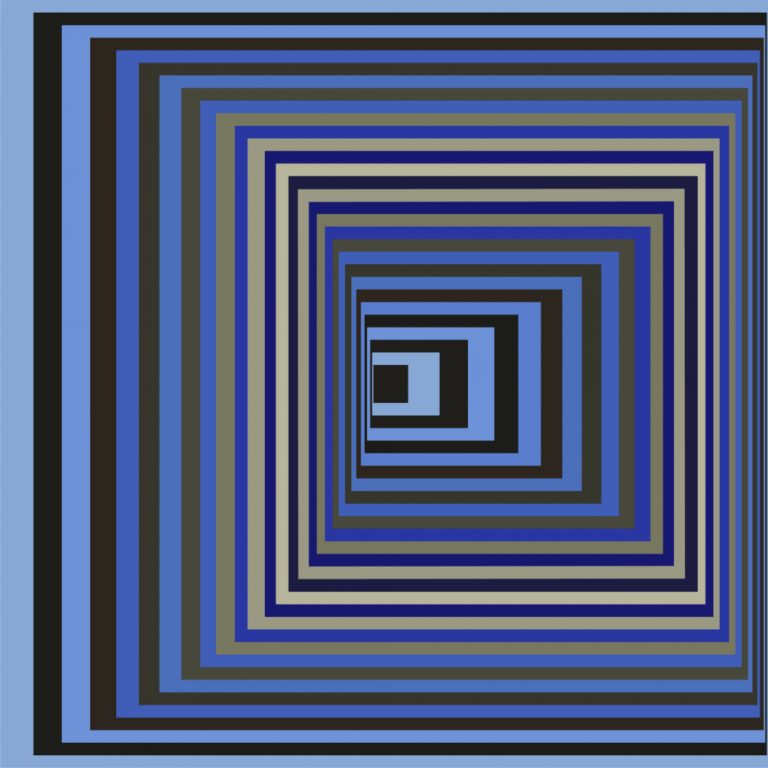
Innovative Technique: “Vonal Ksz” was made with the help of meticulous planning and mathematical precision by Vasarely. Every line and shape was distinguished by its exact place to form the desired optical illusion. Using color and form as elements, Vasarely has created an optical composition that is not rigid but rather dynamic suggesting the traditional idea of motionless art.
Series Variation: Whilst “Vonal Ksz” represents a single masterpiece of the artist, Vasarely still studied similar themes and explored more about them in his career. This work is part of a wider series in which Vasarley investigated deeper into the capacities of Op Art, trying out various design options and combinations of colors.
Global Influence: Vasarely’s impact extends beyond his art. He applied geometrical abstraction and optical illusions in design, architecture, and fashion. His influence remains strong over time, demonstrating his lasting impact.
Artwork Spotlight: OMEGA V
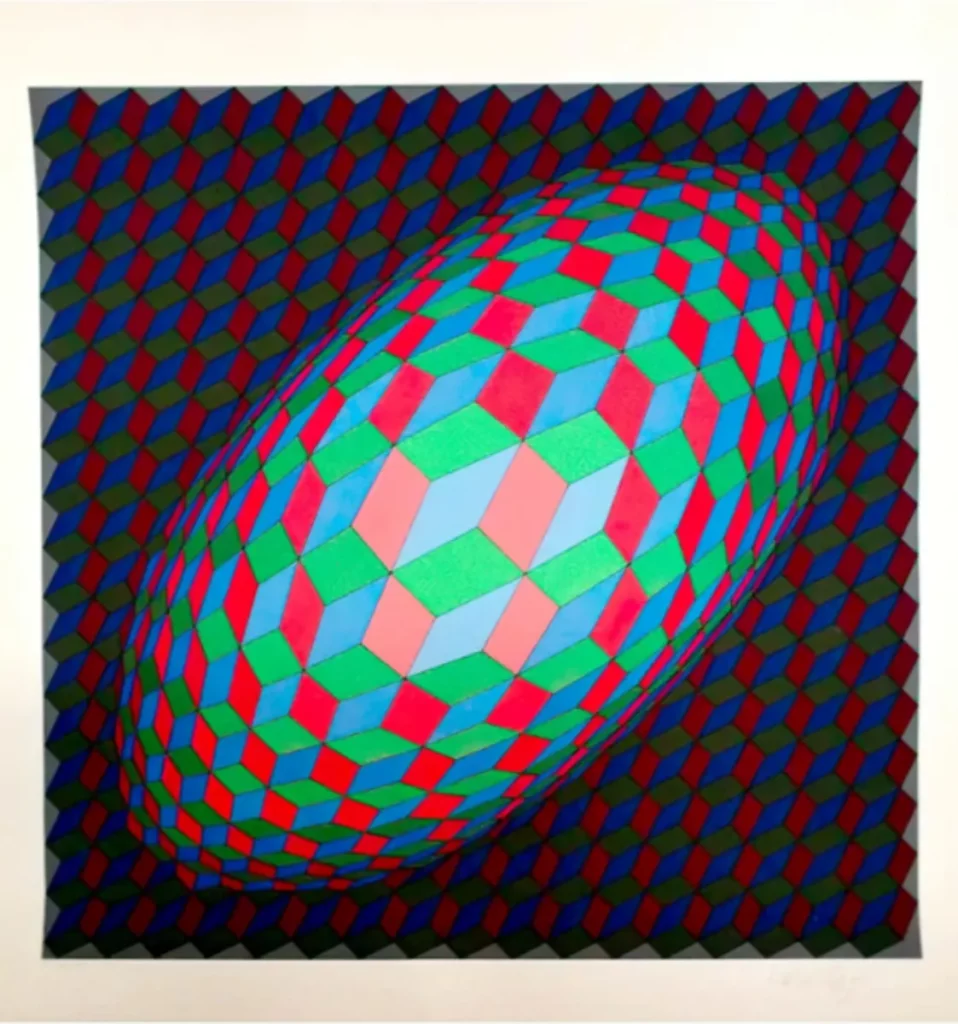
“OMEGA V” by Victor Vasarely is an audacious Op Art, containing bright geometric shapes that give an impression of moving. This artwork is an excellent example of Vasarely’s work, exploring the idea of perception and optical illusions.
Are you looking for a masterpiece from Victor Vasarely?
Singulart presents exclusive limited edition pieces by Victor Vasarely. To discover and acquire Vasarely’s art, click on the artwork or the button below for more information!
Frequently Asked Questions
What was Victor Vasarely famous for?
His grid-like paintings and sculptures from the 1960s onward are what made him most famous. They manipulate the viewer’s perception of form by producing phantom-like flickering effects of perspective, depth, and motion.
Why did Victor Vasarely move to France?
The artist moved to Paris after leaving Budapest in 1930, where he initially looked for work at several advertising firms to support his graphic arts career, which he would pursue for the following ten years.
Conclusion
In conclusion, “Vonal Ksz” honors Vasarely’s revolutionary Op Art. He utilized geometric abstraction and optical illusions, challenging perception. His lasting influence delights audiences globally.