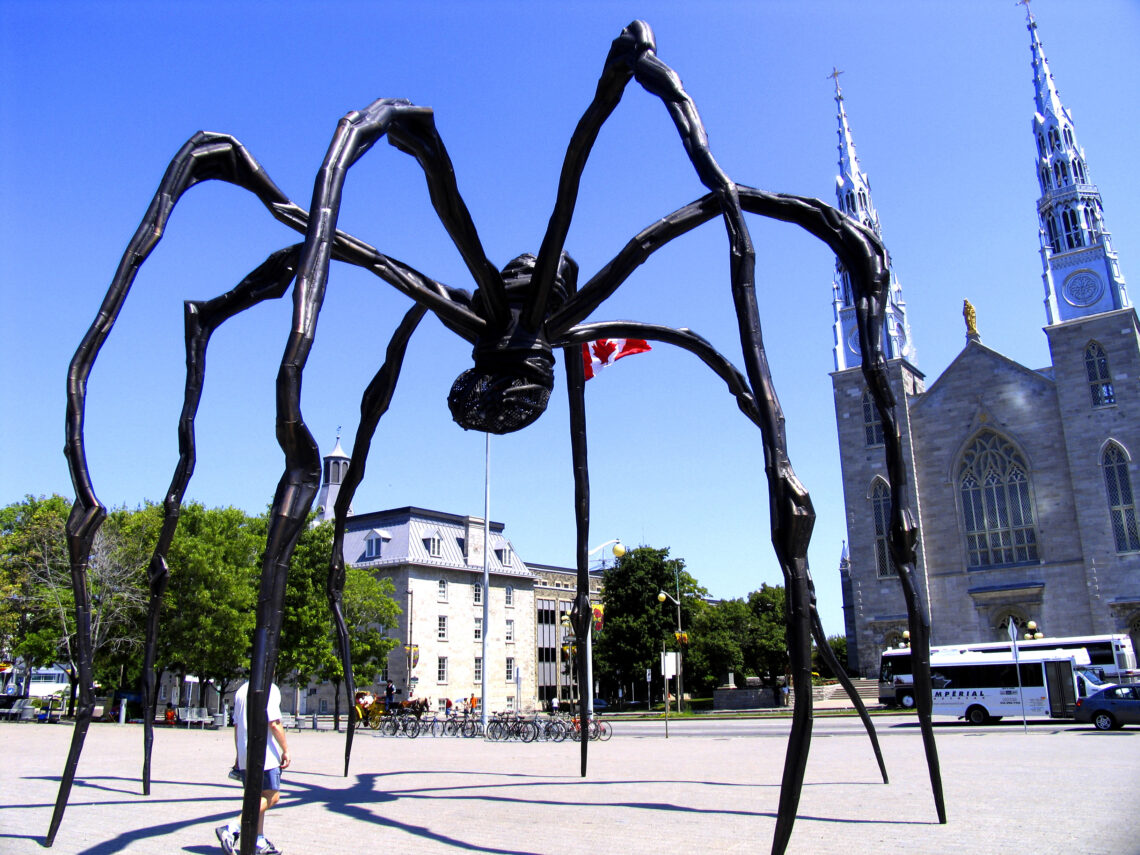
In the fast lane of modern art, few people leave such a mark and respect for the world as Louise Borgeois does. Bringing forth in 1911, the Paris-born artist’s artistic journey was versatile and metamorphose in broader perspectives. From her early years of geometric algebra through to her later craft conceptual experiments and abstract art, Bourgeois blurred the lines becoming the person who changed the arty world in an indelible and obnoxious way. Her stories go into the depths of the personality, into the complicated squares of one’s trauma, memory, and the intricacies of the family circle. Her most popular works include “Maman,” a vital part of which is “Maman,”an enormous symbol of woman strength and care. This article delves into the complexities of “Maman” as we attempt to comprehend its relevance within Bourgeois’s artworks, examining its symbolism, delicate build, and looming presence.
Who was Louise Bourgeois?
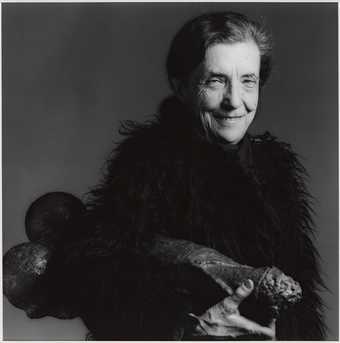
Louise Bourgeois was a French-American female artist, notably for her innovative works in contemporary art. The year of 1911 was a time for Bourgeois to complete her studies in math. She later concentrated on art. From the start, the business of tapestry restoration owned by her parents generated her interest in textile objects, which she would then use in sculpture. The art of Bourgeois was highly personal as she frequently used themes that discussed her own trauma, memory and the psyche of a person.
FUN FACT: Louise Bourgeois maintained a studio in New York City for over six decades. This studio, located in the Chelsea neighborhood, became an iconic space where she produced much of her celebrated artwork.
Her Career
Bourgeois’s artistic experience lasted almost seven decades while she was using different media as sculptures, paintings and printmaking. She got known as a member of the New York School, contemporaneous with Jackson Pollock and Willem de Kooning, in the 1940s and 1950s. Nevertheless, it was in the succeeding years of her life, her works which have focused on the psyche-charged forms that brought her worldwide recognition.
What is Happening in “Maman”?
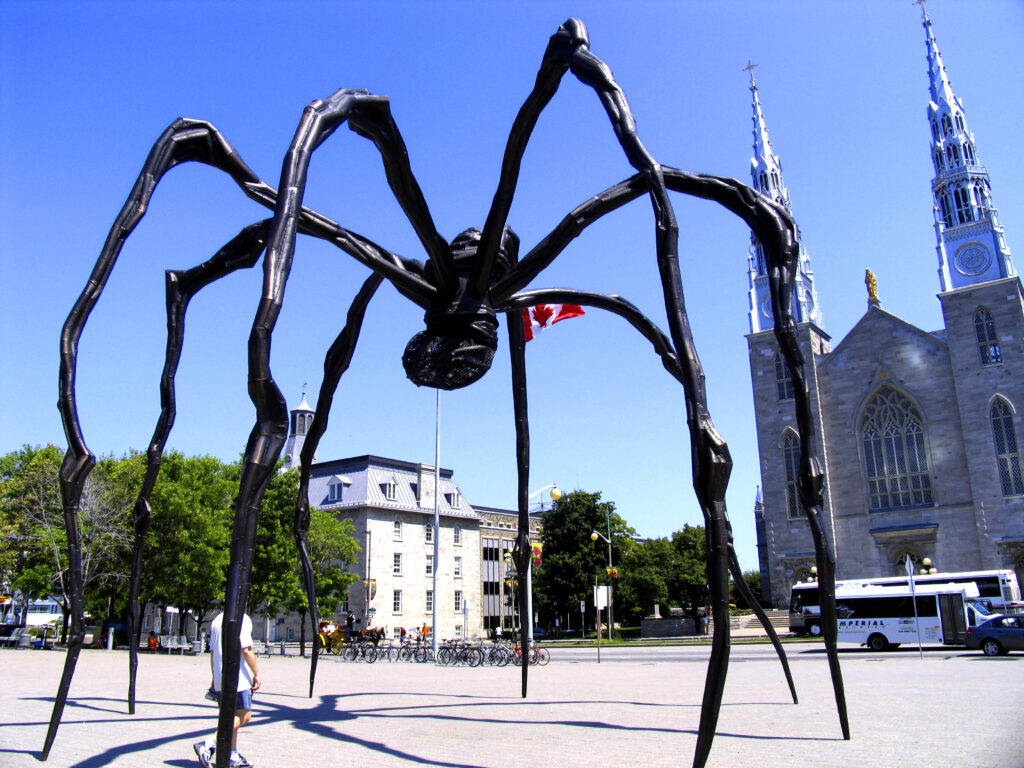
| Artist | Louise Bourgeois |
| Date Created | 1999 |
| Medium | Bronze, Stainless Steel, Marble |
| Genre | Sculpture |
| Period | Contemporary |
| Dimensions | Over 30 feet tall (varies by iteration) |
| Series/Versions | Multiple |
| Where is it housed? | National Gallery of Canada, Ottawa (Original) |
Bourgeois is a legend in art world and one of his well-known artworks is “Maman” which is a spider’s figure. Born in 1999 and completed in 2003, “Maman” has always had the audience attention with its magnitude and profound symbolism. This sculpture is a dedication to the wondrous powers of motherhood and protection, with its creative process based on Bourgeois’s own complicated connection with her mother, who was a weaver.
In “Maman”, a gigantic spider with skinny legs that is up inclined to hold in it eggs which look like marble is depicted. The scale of the sculpture which is over 30 feet tall in some versions will be breath-taking. The spider being the symbol here weighs pretty heavy, not just maternal but also the darker, more deep-seated feminine nature.
Interesting Facts about “Maman”
Material and Construction: “Maman” is constructed from bronze, stainless steel, and marble. The intricate details of the spider’s legs and body required meticulous craftsmanship, with each component carefully assembled to achieve the desired effect.
Multiple Versions: While the original “Maman” sculpture resides in the collection of the National Gallery of Canada in Ottawa, several other versions exist around the world. These iterations have been exhibited in prominent locations such as London, Tokyo, and Seoul, ensuring that Bourgeois’s message reaches a global audience.
Symbolism: Bourgeois often used spiders as a metaphor for her mother, whom she described as clever, patient, and protective. By monumentalizing the spider in “Maman,” Bourgeois pays homage to the strength and resilience of motherhood, while also confronting the complexities of her own familial relationships.
Audience Interaction: The scale of “Maman” invites viewers to engage with the sculpture on a visceral level, prompting reflection on themes of vulnerability and protection. Visitors often find themselves dwarfed by the towering arachnid, evoking a sense of both awe and unease.
Legacy: “Maman” stands as a testament to Bourgeois’s enduring influence on contemporary art. Her exploration of psychological themes and use of unconventional materials paved the way for subsequent generations of artists, cementing her legacy as one of the most innovative and daring figures in 20th-century art.
Artwork Spotlight: I Have Been to Hell and Back Handkerchief (Red)

Louise Bourgeois’ “I Have Been to Hell and Back Handkerchief (Red)” is available on Singulart. It is one of the most powerful pieces that unveils personal experiences in textile artistry accompanied by hand-emblazoned statements inscribed on a blue handkerchief. It shows how Bourgeois catered the topics such as trauma, memory, and emotional experience associated with her personal life.
Are you looking for a piece of artwork from Louise Bourgeois ?
Singulart has limited edition prints of Louise Bourgeois. If you are looking for a piece of Bourgeois‘ artwork for sale, simply click on the artwork or the button below to discover more!
Frequently Asked Questions
What is the meaning behind Maman Louise Bourgeois?
According to Bourgeois, the artwork was a tribute to her mother, a weaver and restorer of tapestries. With twenty eggs within its abdomen, the sculpture represents concepts related to maternal safety. But the artist’s relationship to parenthood was complicated, ambivalent, and contradictory.
How did Louise Bourgeois influence the world?
The reconstruction of memory has always been at the heart of Bourgeois’s work, and during her 98 years, she created an incredible corpus of sculptures, drawings, books, prints, and installations. The work of Bourgeois influenced the emerging feminist art movement and continues to impact installation art and feminist-inspired art.
Conclusion
“Maman” by Louise Bourgeois is far more than just an art piece; it is an essence of relationship between motherly and vulnerability. The large-scale and the imagery deliberately represent “Maman” as a gate to the level of motherhood, family, and subconscious which viewers, in turn, can access. In the testament to Bourgeois’s artistic talent and sustaining history, audiences are connected to around the world; “Maman” still seems to mesmerize and delight.
Our partners at Artfacts offer an in-depth look into the remarkable career of Louise Bourgeois, providing a rich collection of data that highlights her artistic journey and impact. Explore her profile here.