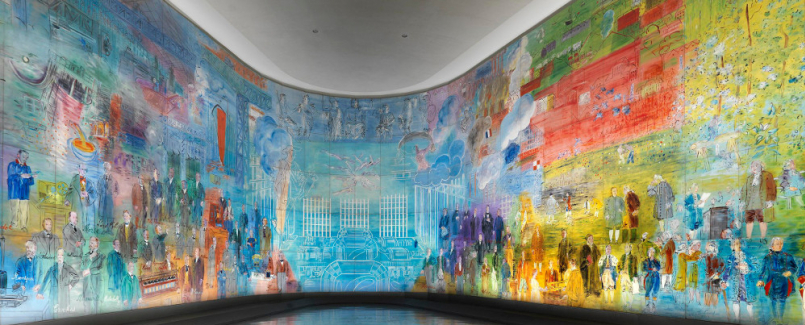
Raoul Dufy, a French painter of the early 20th century, who was known for his vibrant and lively paintings, left a lasting impact with his artwork, and “The Electric Fairy” is one of his works that rang the bell with his innovative spirit. In this exploration, we explore the life and career of Raoul Dufy, writing about his artistic journey and how “The Electric Fairy” came to life. Let’s uncover this celebrated masterpiece’s hidden corners.
Who was Raoul Dufy?
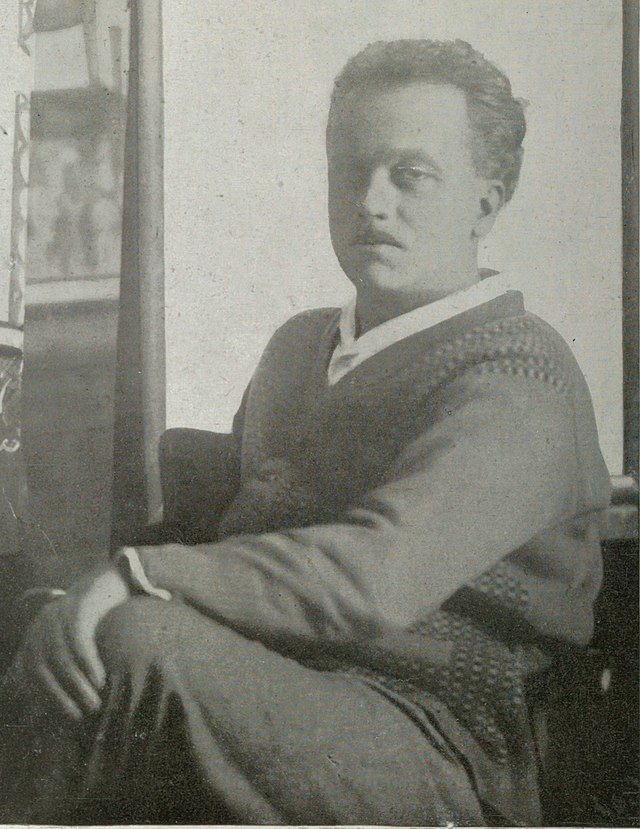
Raoul Dufy, who was born in 1877 in Le Havre, France, started his professional life as a commercial person. Yet, his passion for art made him enroll at the École des Beaux-Arts de Paris, where he improved his skills, and developed a unique style that allowed him to emerge as an artist. The paintings of Dufy were marked by a masterful application of colors and loose brush movements that were influenced by the Fauves and his meetings with artists like Henri Matisse.
FUN FACT: Raoul Dufy was fascinated with French Riviera. He was deeply inspired by the vibrant colors and Mediterranean light of the region, which influenced many of his paintings.
His Career
Dufy’s career evolved during an artistic revolution dominated by movements such as Fauvism, Cubism, and Impressionism overturning traditional concepts. Dufy, though, continued being himself and he made his history. His images were almost always dedicated to the scenes of leisure, city life full of activity and festivities showing the irrepressible feeling of happiness.
Dufy concentrated on painting, designing fabrics, and even collaborating with famous fashion designers. These pieces demonstrated how sophisticated art could be a part of day-to-day life. The impact of Dufy was not restricted to the world of art, as his influence brought significant changes to the cultural scene of the first part of the 20th century.
What is Happening in “The Electric Fairy”?
| Artist | Raoul Dufy |
| Date Created | 1937 |
| Medium | Oil on canvas |
| Genre | Modernism |
| Period | 20th Century |
| Dimensions | Over 600 square meters (as mural) |
| Series / Versions | N/A |
| Where is it housed? | Musée d’Art Moderne de la Ville de Paris |
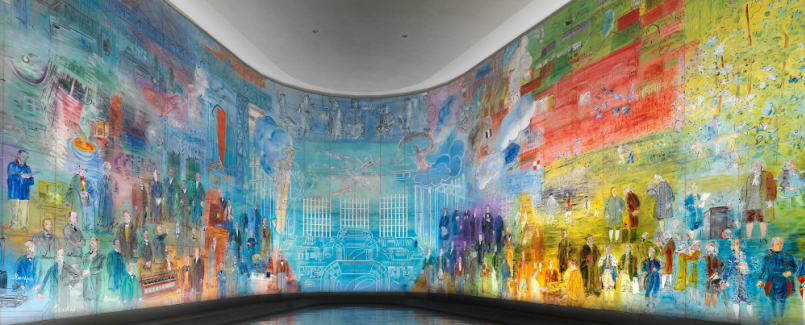
“The Electric Fairy” from 1937 epitomizes modernity. Initially intended for the Palace of Light and Electricity, it glorifies electricity. This painting, created for the 1937 World Exposition in Paris, pays tribute to electricity’s influence.
The painting seems animated by a dark cityscape, emitting an electric glow. Dufy vividly expresses urban vitality. Vehicles and pedestrians move palpably. In the center stands an electrical pylon, symbolizing modernity’s transition.
Dufy’s colors are typical: saturated, rich, and festive. The lively brushstrokes animate the scene. Viewers can join in the dance-like motion. “Electric Fairy” embodies the vivacious pulse of the city.
Interesting Facts about “The Electric Fairy”:
Title Inspiration: The title “The Electric Fairy” (La Fée Électricité) was inspired by a phrase coined by French poet Paul Valéry to describe the marvel of electricity.
Commissioned Mural: “The Electric Fairy” was commissioned as a mural for the 1937 International Exposition in Paris, a grand event celebrating technological advancements and innovation in electricity.
Scale and Ambition: The mural spans over 600 square meters, making it one of Dufy’s most ambitious works. Its colossal size emphasizes the grandeur of the subject and the artist’s mastery of large-scale compositions.
Preservation Efforts: Following the closure of the exposition, the mural was carefully preserved. Today, it finds its home in the Musée d’Art Moderne de la Ville de Paris, where visitors can still experience the awe-inspiring impact of Dufy’s vision.
Artwork Spotlight: Les Moissonneurs
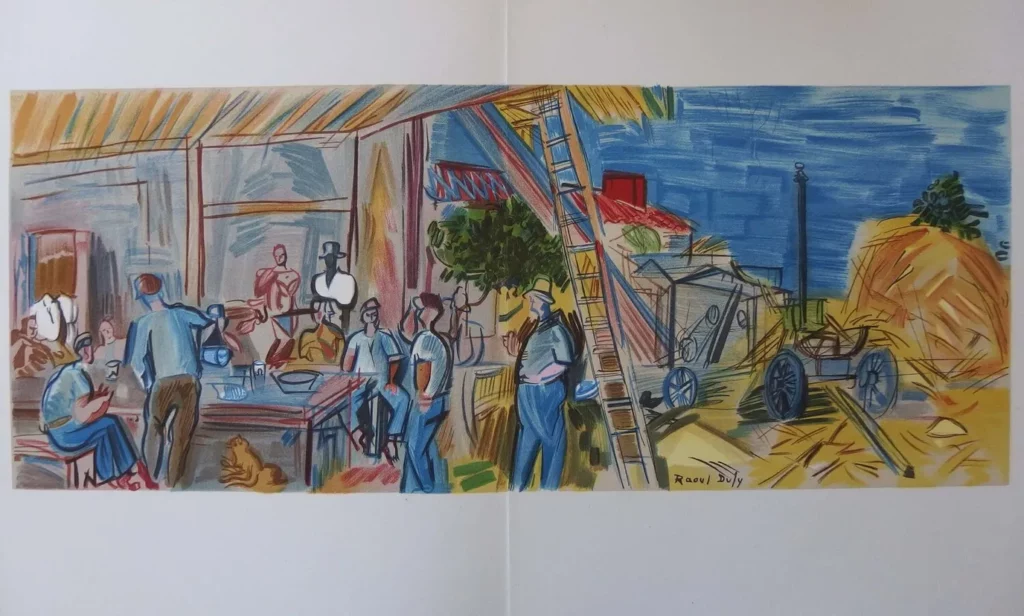
“Les Moissonneurs” by Raoul Dufy is available on Singulart. This artwork presents us with a beautiful and vivid picture of rural life, characterized by a wide color palette and expressive brushwork. Illustrating reapers in the field, Dufy conveys the scene with motion and vibrancy by paying tribute to the rhythms of agricultural labor.
Are you looking for a masterpiece from Raoul Dufy?
Singulart presents exclusive limited edition pieces by Raoul Dufy. To discover and acquire Dufy’s art, click on the artwork or the button below for more information!
Frequently Asked Questions
What type of artist was Raoul Dufy?
French painter Raoul Dufy was a member of the Fauvist movement. His colorful and ornamental style became well-known, and it was used to decorate public buildings and textile patterns, among other things.
What techniques did Raoul Dufy use?
Raoul Dufy (1877–1953) is best known for his experiments with vivid, contrasted colors and drawn lines that he used on a variety of media. The majority of his watercolor paintings mirrored the 1920s Art Deco style, which emphasized geometric patterns and contrasting colors.
Conclusion
Overall, “The Electric Fairy” mirrors contemporary life with Dufy’s love for color and movement. This towering achievement captures the artist’s feelings for his time. Housed in Musée d’Art Moderne de la Ville de Paris, it enchants viewers. The painting reflects the vitality of the 20th century. Dufy’s ingenuity in “The Electric Fairy” celebrates art’s ability to shape cultural narratives.