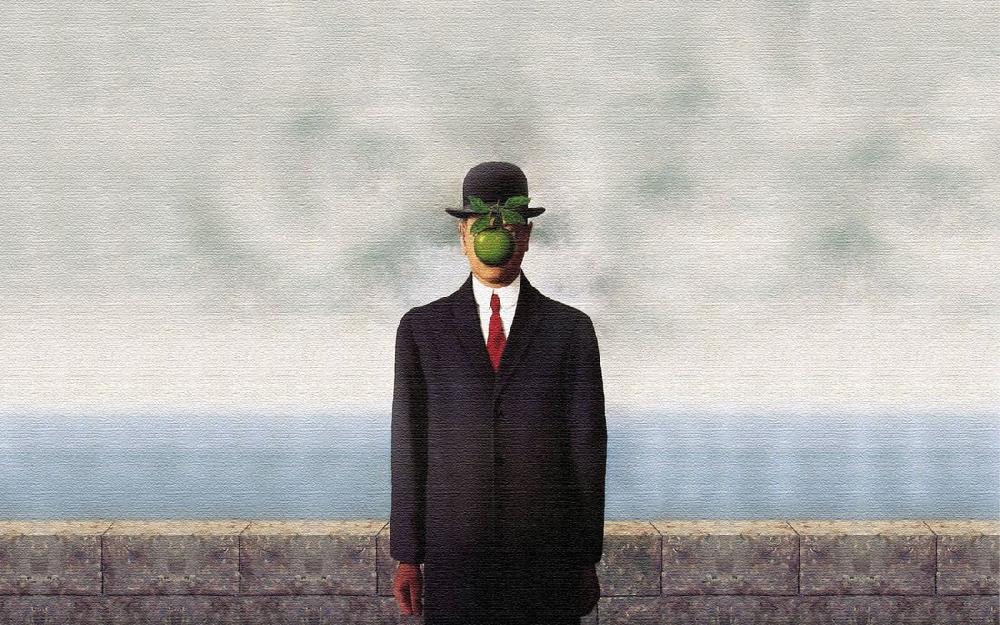
René Magritte, a Surrealist painter, is known for his mysterious and puzzling artworks which make viewers question their understanding of reality. Among his impressive oeuvre of works, “The Son of Man” is probably the most recognizable and enigmatic of them all. This article covers René Magritte’s life and career, delves into the symbolism behind “The Son of Man,” and reveals some riveting facts about this marvelous painting.
Who was René Magritte?
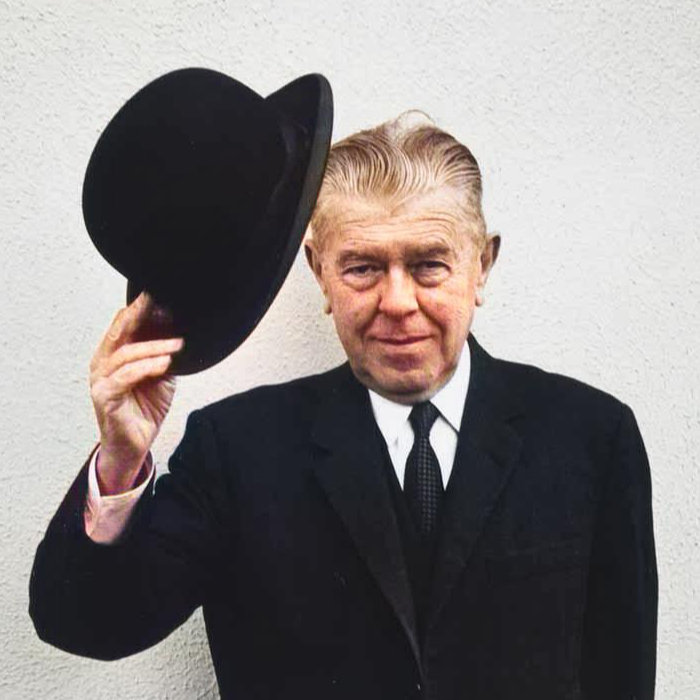
René Magritte (1898-1967) was a Belgian Surrealist painter known for his specific manner and the theme of the subconscious mind. Magritte, who was born in Lessines, Belgium, had the works of Cubism and Futurism as his early artistic inspiration. Nevertheless, it was the Surrealism led by André Breton that had the most far-reaching impact on him as an artist.
Magritte’s art frequently featured everyday objects in original situations, which questioned a viewer’s preconceived notions and invited them to consider the nature of reality. His accurate and detailed technique, as well as humorous imagery and language, led to a one-of-a-kind visual language that keeps attracting audiences even today.
FUN FACT: René Magritte’s love for mysteries went beyond his art; he was an avid collector of detective novels and enjoyed incorporating elements of suspense and intrigue into his personal life. This fascination with mystery novels often seeped into his artwork, adding an extra layer of intrigue and ambiguity to his surreal compositions.
His Career
Magritte’s evolution as an artist included multiple experiments with various styles and techniques, but he is mostly associated with Surrealism and defined by his involvement in it. From the 1920s to the 1930s he created some of his greatest masterpieces for example “The Treachery of Images” (1929) which includes the picture phrase, “Ceci n’est pas une pipe” (This is not a pipe).
In contrast to Surrealism, with its improvisation and automatism, Magritte’s art was produced very meticulously and resulted in a precise expression of his ideas. Many of his work included realistic aspects with elements of fantasy creating an atmosphere of dreamlike uncertainty that is still enjoyable to modern viewers.
What is Happening in The Son of Man?

| Artist | René Magritte |
| Date Created | 1964 |
| Medium | Oil on canvas |
| Genre | Surrealism |
| Period | 20th century |
| Dimensions | 81 cm × 65 cm (31.9 in × 25.6 in) |
| Series / Versions | One version |
| Where is it housed? | Private collection |
“The Son of Man,” from 1964, embodies Magritte’s surrealism. A man with a bowler hat hides behind a green apple, prompting mystery. His obscured eyes invite reflection on identity.
Magritte blends the ordinary with the absurd. Through face anonymization, he probes identity. “The Son of Man” explores reality and illusion.
Magritte’s painting delves into reality versus illusion. The bowler-hatted man symbolizes anonymity and conformity. The hidden face challenges traditional portraits, inviting interpretation of representation and perception.
Interesting Facts about The Son of Man
The Green Apple: Magritte’s choice of a green apple as the obscuring object in “The Son of Man” has sparked various interpretations. Some suggest that it symbolizes temptation, referencing the biblical story of Adam and Eve, while others see it as a nod to the artist’s favorite fruit.
Influence of Magritte’s Wife: It’s believed that Magritte’s wife, Georgette, inspired the bowler-hatted figure in many of his paintings, including “The Son of Man.” Georgette often wore a bowler hat, which became a recurring motif in Magritte’s work.
Legacy and Influence: “The Son of Man” stands as one of Magritte’s enduring masterpieces, celebrated for its iconic imagery. It has inspired numerous interpretations and homages in popular culture, captivating audiences worldwide. Its enigmatic quality sparks engaging discussions about reality and representation.
Artwork Spotlight: La Peine Perdue
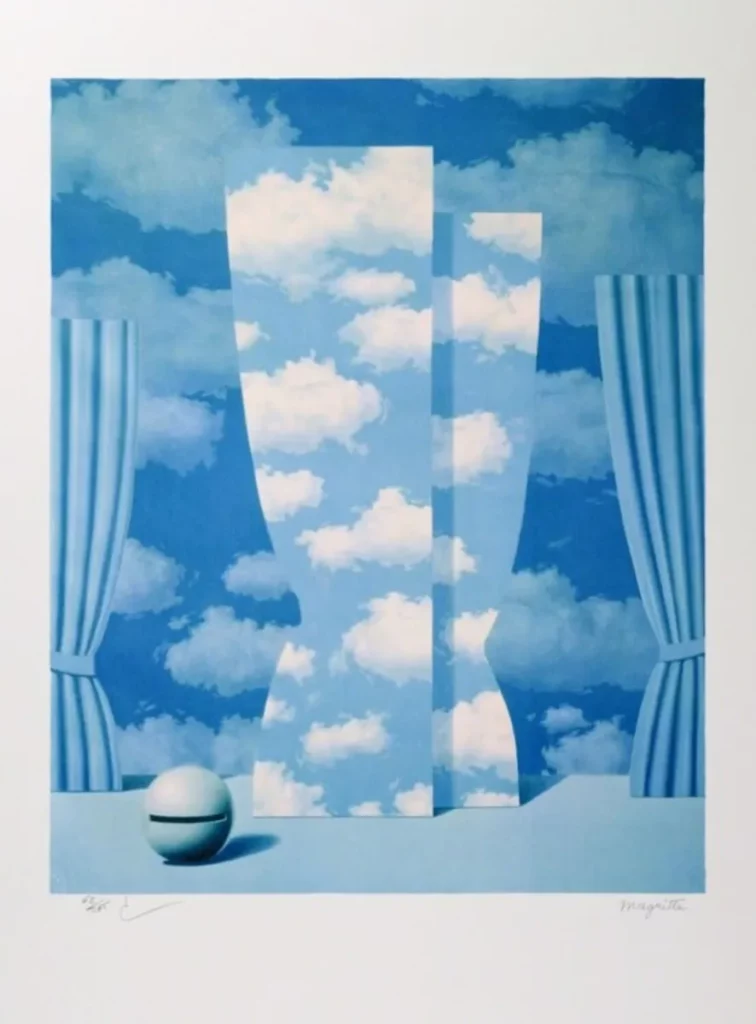
“La Peine Perdue” by René Magritte is available on Singulart. It is a thought-evoking artwork that depicts a large boulder hanging in the sky over a calm landscape to make the viewer think of the contrast between heaviness and lightness. Magritte’s surrealist composition induces one to think about the essence of reality and the mystical ties between objects and their environment.
Are you looking for a masterpiece from René Magritte?
Singulart presents exclusive limited edition pieces by René Magritte. To discover and acquire Magritte’s art, click on the artwork or the button below for more information!
Frequently Asked Questions
What does the apple represent in The Son of Man?
A symbolic apple appears in Magritte’s 1964 painting Son of Man. When the title of the piece is combined with a description of Christ, the apple represents Original Sin.
Why did René Magritte create The Son of Man?
Despite being asked for a self-portrait, René painted a man. Regrettably, his face was obscured by an apple. René depicted himself amidst gloomy clouds, indicating personal turmoil.
Conclusion
In conclusion, “The Son of Man” stands as a masterpiece of surrealism. It encourages contemplation of perception and reality. Magritte’s skillful juxtaposition challenges conventional beliefs. Despite his passing, Magritte’s legacy thrives.