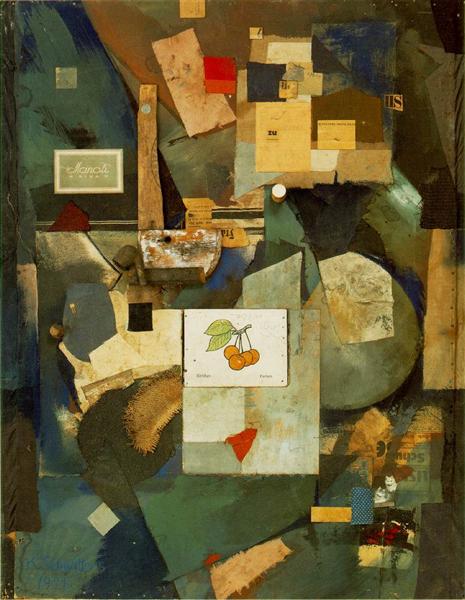
Kurt Schwitters who was a creative pioneer of his time excelled in daring techniques and depicted a unique perception of art. Among his many remarkable creations, “Merz Picture 32A: “The Cherry Picture” is a brilliant illustration of his limitless ingenuity and artistic originality. In this article, we set out on a journey to discover the life and work of Kurt Schwitters, uncover the mysterious details behind The Cherry Picture and finally unravel the intricacies that make this artwork a work of eternal significance.
Who was Kurt Schwitters?
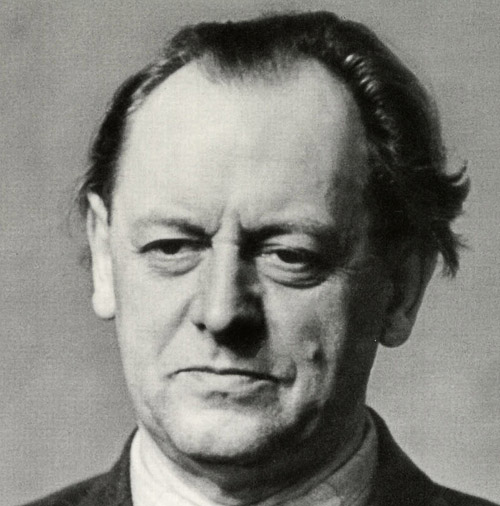
Kurt Schwitters, who was born in Hanover, Germany, in 1887, was a visionary artist with world-renowned creative accomplishments in the realm of modern art. From his childhood Schwitters demonstrated creative inclinations striving to explore different styles and unique methods. However, it was his adventure into the Merz technique that would eventually catapult him to become the luminaria of art.
His Career
During his artistic career, Schwitters displayed a remarkable resilience and ingenuity. Although this was against many odds and faced some opposition, he was always himself and would not give up on trying his best for the creative ends. As with Merz pieces, a collage-like composition and the use of found materials characterized geometric abstract paintings. They undermined common aesthetic perceptions. By the prodigious amount of work he accomplished and by being steadfast in his diligence to his art, Schwitters became a leading figure in Dadaism and Constructivism, a movement that is still affecting newer generations of artists.
What is Happening in Merz Picture 32A: The Cherry Picture?
| Artist | Kurt Schwitters |
| Date Created | 1921 |
| Medium | Collage |
| Genre | Dadaism, Constructivism |
| Period | Modernism |
| Dimensions | Variable |
| Series/Versions | Merz series |
| Where is it housed? | Various museums and private collections |
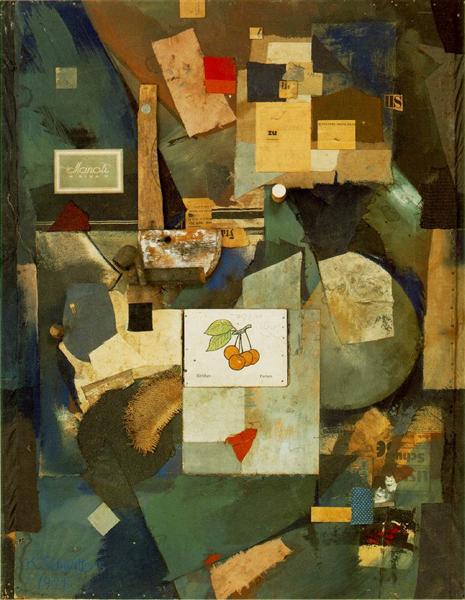
“Merz Picture 32A: “Die Kirsche” is the merz-technique’s marvelous illustration instance. Founded in 1921, this piece provides a stunning illustration of Schwitters’ superb mastery of collage, assemblage, and abstract art. On a first view, collage in general might look confusing with the mix of colors, shapes and texture. In contrast, there are a spare of details being perfectly combined, thus showing Schwitters’s skill in drafting.
The title “The Cherry Picture” reveals the picture consists cherries, even if they can not be discovered at first glance. Schwitters sometimes added to his Merz works objects, visual elements that were roundaboutly and had them as filled with layers of meaning and symbolism. The contrast among different components implores the viewers to affect their meaning and to view and interact with the art on multi -level barriers, balancing reality and imagination.
Unveiling the Intricacies: Exploring “The Cherry Picture”
As we delve deeper into “Merz Picture 32A: In our essay “The Cherry Picture,” we explore more than just the simple details and bring out so much information that makes us appreciate an artwork like this more. Schwitters’s intriguing fondness for articles like scraps of paper, fabric, and wood shows how he related to the ordinary and discarded things. Through this recycling, he turned the ordinary into the exceptional, leaving the crowd to meditate on what constitutes art and beauty.
The collage creates a dynamic and colorful impression with its composition, attracting the eye with its wonderful shapes and forms. Parts of the text combined with artwork create an effect of obscurity, thereby encouraging the audience to interpret and suppose. Each layer of the collage hides something new for the viewer, prompting him to descend the abyss of Schwitters’s thought.
Fascinating Facts about “The Cherry Picture”
Influence of Dadaism and Constructivism: Merz technique which Schwitters used was formed under the impact from the Dadaism and Constructivism movements. These great movements put an end to the old artistic manners and took new path of experimental and innovative art.
Found Objects: It is the “Cherry Picture” drawing which shows a collection of varied objects including fabric, newspaper articles, as well as scraps. Schwitters thought that these things, owning their own valued beauty and importance, must be designated as works of art.
Dimensions and Medium: “The Cherry Picture” has different dimensions depending upon the exact iterative representation and it has revealed the curiosity of Schwitters in format and scale. The medium can be multifaceted and involve a lot of different materials, for example, paper, fabric, wood, and other found objects.
Frequently Asked Questions
What was Kurt Schwitters inspired by?
Schwitters was drawn to the newly formed Dada school shortly after World War I. Dada was a nihilistic literary and creative movement that aimed to destroy preexisting aesthetic norms.
Why was Kurt Schwitters important?
In 1917, Schwitters worked as a draftsman in the armed forces before experimenting with Cubist and Expressionist approaches. His earliest collages were created in 1918, and he coined the term “Merz” in 1919 to refer to all of his artistic endeavors, including collage and constructions, poetry, and other media.
Conclusion
“Merz Picture 32A: The Cherry Picture” remains a timeless masterpiece that continues to captivate and inspire audiences worldwide. Through his innovative use of materials and his bold exploration of form and composition, Kurt Schwitters invites us to embark on a journey of imagination and discovery, transcending the boundaries of art and perception.