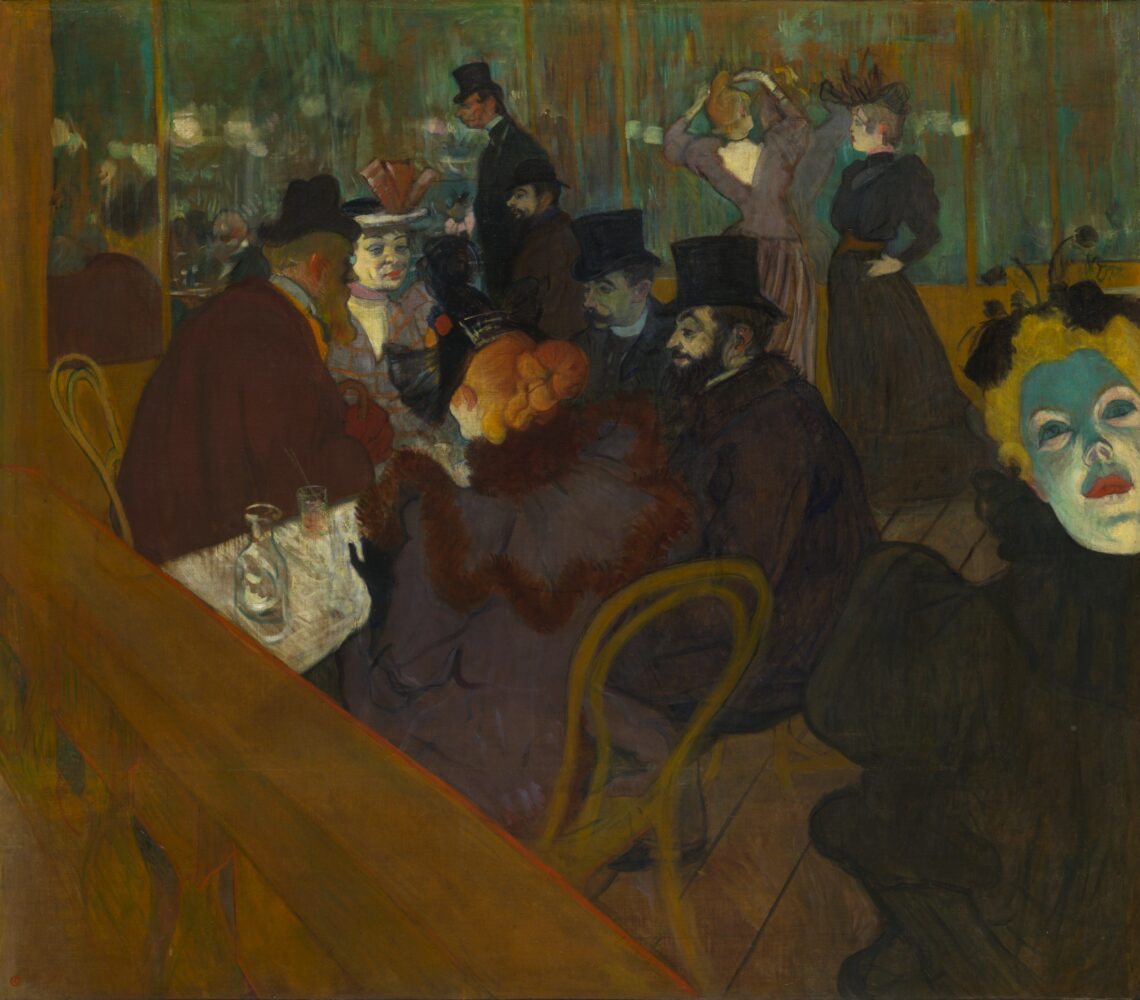
Henri de Toulouse-Lautrec, a very famous artist of the late nineteenth century, left an important trace with his fascinating works describing the fast life of the Parisian night. Born into an aristocratic family in 1864, he developed some health issues but he found solace and expression through art. His out-of-the-box perceptions and his revolutionary techniques would significantly contribute to his overall success and would lead him to talented works like “At the Moulin Rouge.”
Who was Henri Toulouse-Lautrec?
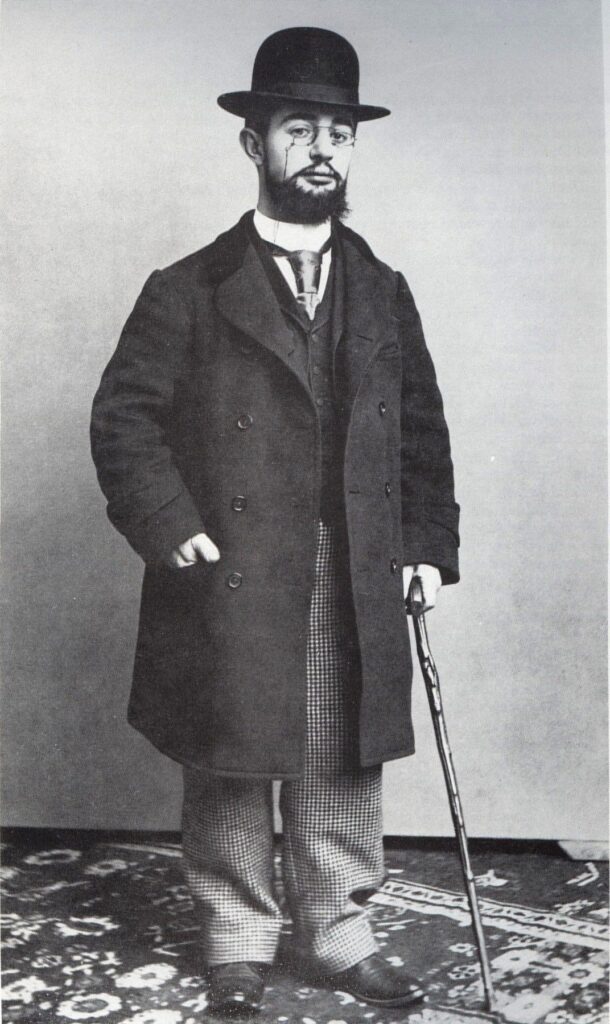
Henri de Toulouse-Lautrec was not an ordinary artist, he was a visionary with the ability to see the beauty in the ordinary commotion of the Parisian life. His individualistic approach to art created a difference from the earlier artists who focused on representing traditional subjects as opposed to reflecting the dynamic world of contemporary daily life.
FUN FACT: Henri de Toulouse-Lautrec had a pet monkey named Monsieur Kesller, who accompanied him almost everywhere. This unconventional companion added to Toulouse-Lautrec’s already eccentric persona and was often seen perched on his shoulder as he moved through the bohemian streets of Paris.
His Career
Henry drew inspiration from the rebellious Parisian atmosphere of the late 19th century. Influenced by Impressionists and Japanese prints, he developed his unique style. He often depicted marginalized societal groups, including dancers and circus performers, emphasizing human dignity.
Despite challenges, Henri maintained prolific artistic output. He explored various mediums like lithography, etching, and oil painting. His innovative use of color and composition influenced his successors, shaping Fauvism and Expressionism. Over the years, Henri built a substantial artistic legacy, still resonates today.
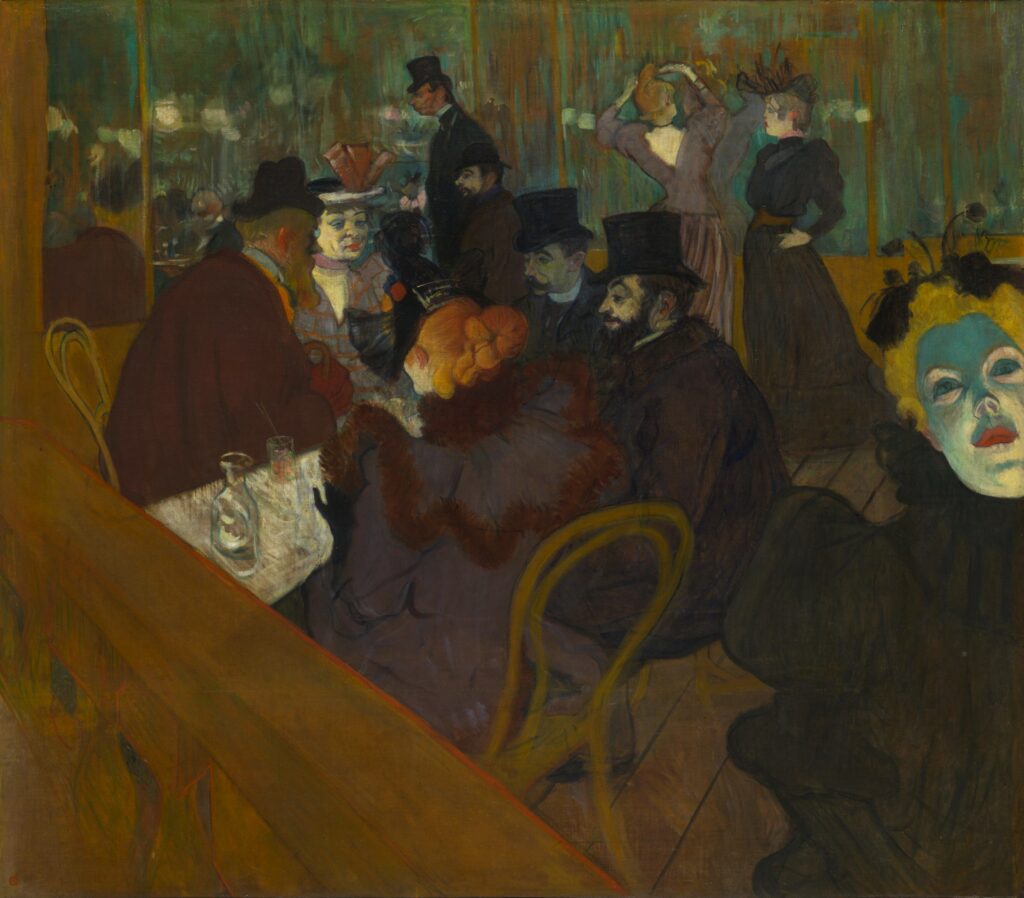
| Artist | Henri de Toulouse-Lautrec |
| Date Created | 1892-1895 |
| Medium | Oil on canvas |
| Genre | Post-Impressionism |
| Period | Belle Époque |
| Dimensions | 123 cm × 141 cm |
| Series / Versions | N/A |
| Where is it housed? | Art Institute of Chicago |
“The Moulin Rouge”, created between 1892 and 1895, is probably Henri de Toulouse-Lautrec’s best-known piece of art. The scene is set at the well-known cabaret of the same name in Paris, where the viewer is transported to a world of glamour, thrill, and subtle mystery. At the center is Jane Avril, a recognizable dancer who was a frequent performer at the Moulin Rouge. The rich red hair and complex outfit catch the beholder’s eye.
The painting is alive with its patrons, mixing and having the time of their lives in the hedonistic scenery of the cabaret. Henri’s courageous brushwork and passionate colors depict Paris of Belle Époque, a time of cultural blooming and social shifts. The “At the Moulin Rouge” painting is not only a snapshot of a particular moment in history, but it is a vibrant panorama that invites the audience to experience all the sights and sounds of the Parisian era.
Interesting Facts
Revolutionary Technique: Henri de Toulouse-Lautrec’s innovative approach to art, characterized by bold colors and unconventional compositions, challenged traditional norms and paved the way for modernist movements.
Personal Connection: Henri was deeply immersed in the world of Parisian nightlife, frequenting establishments like the Moulin Rouge and forging friendships with its performers. This personal connection imbues his artwork with authenticity and intimacy.
Cultural Significance: “At the Moulin Rouge” is more than just a painting; it is a cultural artifact that reflects the spirit of Belle Époque Paris. It serves as a window into a world of glamour, excess, and social upheaval, offering invaluable insights into the cultural landscape of the time.
Legacy: Henri de Toulouse-Lautrec’s influence extends beyond the art, with his iconic permeating popular culture and shaping our understanding of the Belle Époque. His legacy lives on in museums, galleries, and cultural institutions internationally, his artwork still inspires and enthralls audiences of all ages.
Artwork Spotlight: L’apparition fantastique
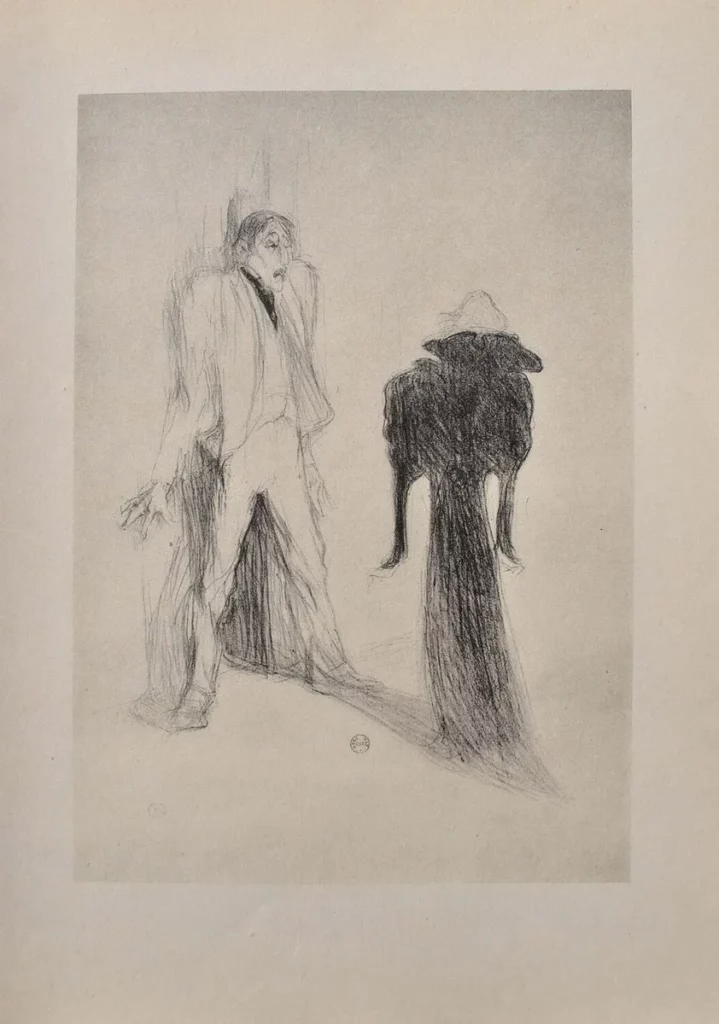
“L’apparition fantastique” by Henri de Toulouse-Lautrec is available on Singulart. The mesmerising lithograph highlights an image of a woman surrounded by swirling motifs. With the help of its fantastic imagery and free lines, the work depicts the artist’s enthusiasm for the supernatural and his proficiency with the lithographic medium.
Are you looking for a masterpiece from Henri de Toulouse-Lautrec?
Singulart presents exclusive limited edition pieces by Henri de Toulouse-Lautrec. To discover and acquire Lautrec’s art, click on the artwork or the button below for more information!
Frequently Asked Questions
Who was Henri Toulouse-Lautrec and why is he important?
French artist Henri Toulouse-Lautrec is widely recognized for portraying a bohemian, absinthe-soaked Paris of the 19th century. An aristocrat who enjoyed the nightlife, he was a VIP at the Moulin Rouge and the first to conflate advertising and high art.
Who influenced Toulouse-Lautrec?
He was profoundly influenced by fellow Impressionist Edgar Degas, who formerly resided nearby, and by Japanese ukiyo-e woodblock etching.
Conclusion
“At the Moulin Rouge” showcases Toulouse-Lautrec’s talent. His vivid strokes capture Belle Époque Paris. His legacy persists today. Additionally, it symbolizes Parisian nightlife and transcends time and space.