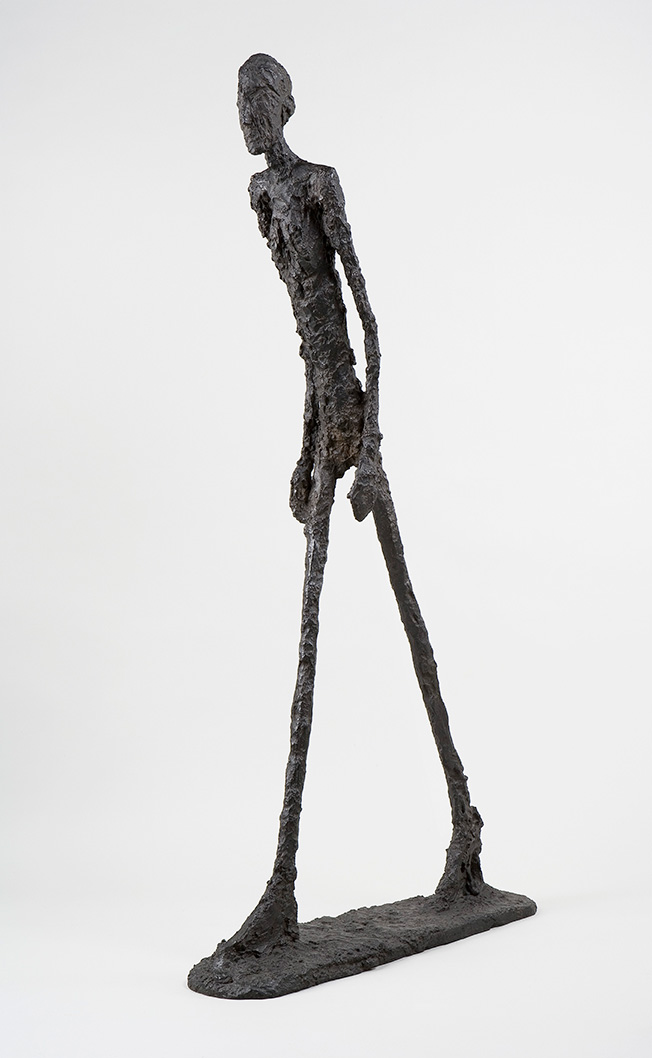
In the artistic realm, some original pieces stand the test of time and become immortalized symbols of the human journey. “The Walking Man I” by Alberto Giacometti is one of many of such masterpieces. Born in the year 1901 in the Swiss Alps, the art of Giacometti took his artistic journey to Paris where he developed a style that gave the epitome of human nature. “The Walking Man I,” sculpted in 1960, depict Giacometti’s introspect attitude and search for sense. In this article, Giacometti’s life is discussed, the mystery behind “The Walking Man I” is investigated, and the lasting influence of this symbolic artwork is unraveled.
Who was Alberto Giacometti?
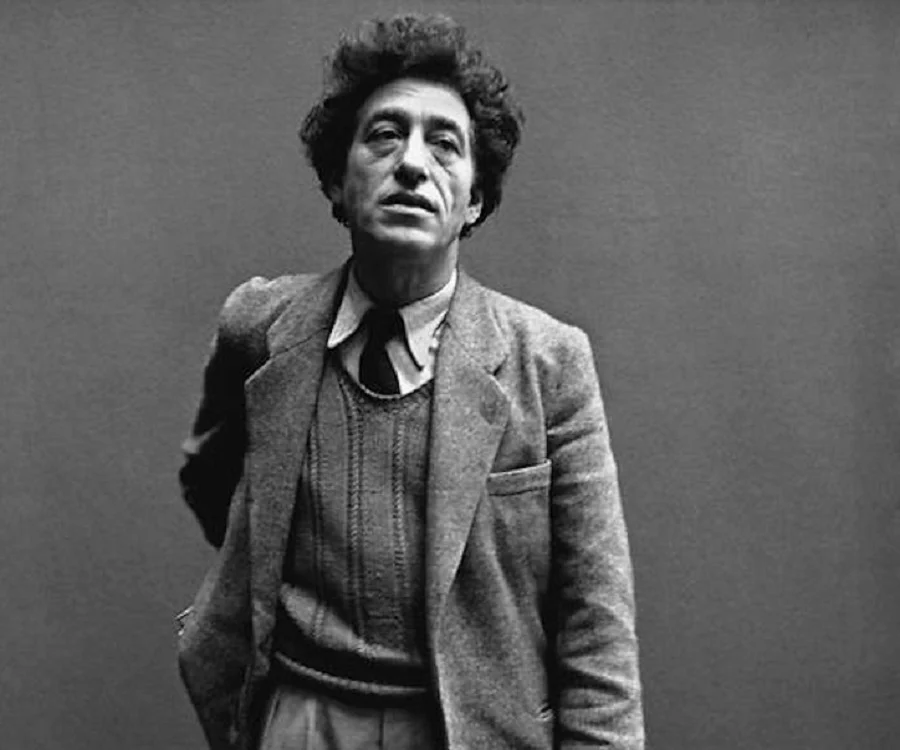
Alberto Giacometti, a Swiss sculptor and painter (1901), whose works became a benchmark for the art world thanks to the mystical and disturbing creations. Known for his unique style and existentialist themes, Giacometti’s works still amaze audiences from all over the world. He swam through different artistic styles, such as Surrealism and Existentialism, uncovering his own path unlike any other.
FUN FACT: Alberto Giacometti had a deep fascination with the concept of space and distance in his sculptures. He often portrayed his figures as elongated and thin, symbolizing the distance between individuals and their inability to fully connect with one another.
His Career
Giacometti’s artistic journey through life was one of discovery and invention. He started his formal education at the École des Beaux-Arts and École des Arts Industriels in Geneva, and in the 1920s, he moved to Paris to immerse himself in the active art community. Under the influence of Surrealism, he worked with some of the great figures like André Breton and Joan Miró . Nonetheless, Giacometti’s unique artistic approach was distinct, which was expressed through his long and thin sculptures that seemed to encapsulate the core of mankind.
What is Happening in The Walking Man I?
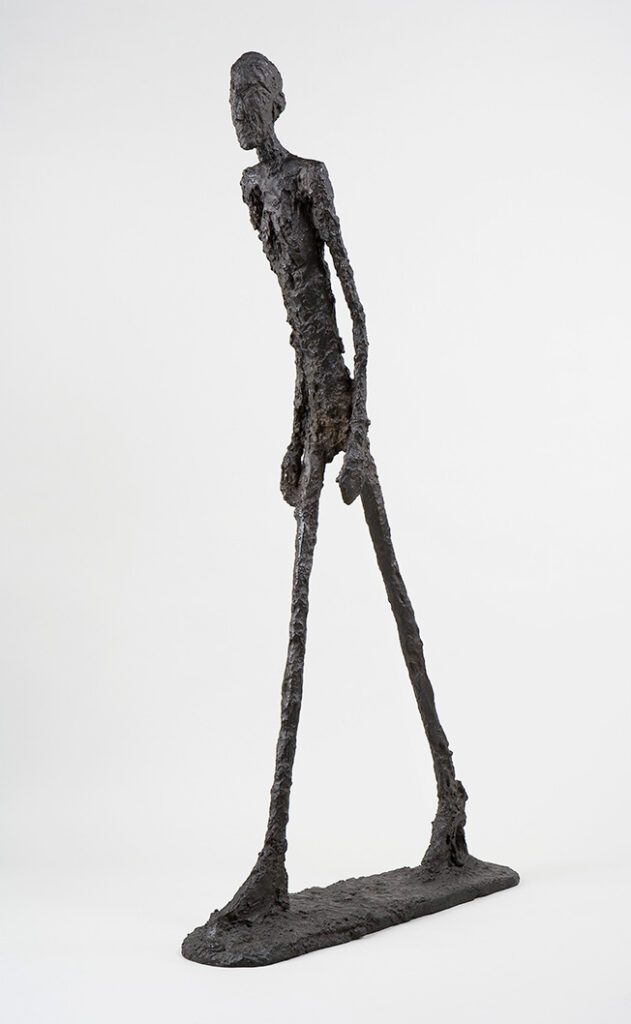
| Artist | Alberto Giacometti |
| Date Created | 1960 |
| Medium | Bronze |
| Genre | Sculpture |
| Period | Modernism |
| Dimensions | 183 x 10 x 9 cm |
| Series / Versions | 1 |
| Where is it housed? | The Museum of Modern Art, New York |
Giacometti’s renowned sculpture “The Walking Man I”, encapsulates his existential ideas and peculiar style. Formed in 1960, this bronze sculpture depicts a walking figure moving forward with purpose yet at the same time seems to exist in motion. The slender limbs and the miniscule trunk of the figure are indicative of the fragility and vulnerability, and cause the viewers to contemplate the human existence.
While advancing, the figure appears to be both determined and reluctant, a reflection of the internal struggle to find one’s purpose and a sense of belonging. The scratched surface of the bronze hardly overshadows the marks of Giacometti’s sculpting tools, highlighting the artist’s skilful touch as well as the vividness of human existence.
Interesting Facts about “The Walking Man I”
Influence of Existentialism: Giacometti’s fascination with existential philosophy, particularly the writings of Jean-Paul Sartre and Albert Camus, deeply influenced his artistic vision. “The Walking Man I” reflects the existential themes of isolation, alienation, and the search for meaning in a seemingly indifferent universe.
Enduring Legacy: Despite its minimalist form, “The Walking Man I” continues to captivate audiences worldwide with its poignant depiction of the human condition. It has inspired countless artists and remains an iconic symbol of existential angst.
Process of Creation: Giacometti’s creative process was notoriously meticulous and time-consuming. He would often spend months or even years refining his sculptures, constantly revisiting and reworking them until he felt they captured the essence of his vision.
Global Recognition: “The Walking Man I” has been exhibited in prestigious galleries and museums around the world, including The Museum of Modern Art in New York, where it holds a revered place in their collection.
Artwork Spotlight: Buste d’homme
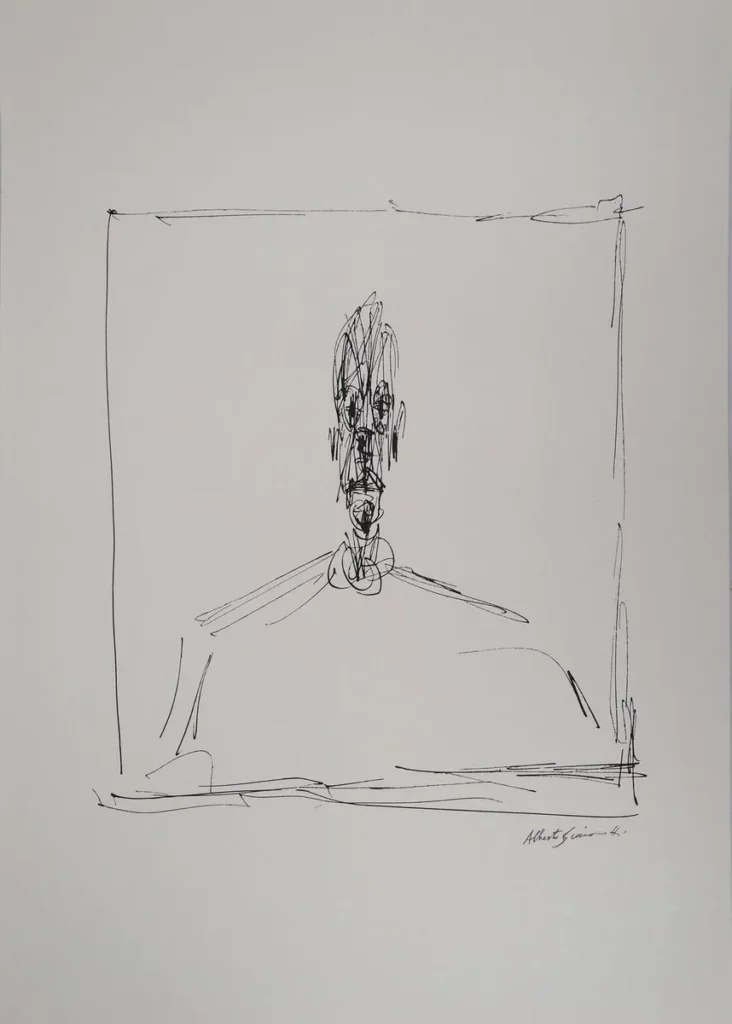
Giacometti’s “Buste d’homme” (Man’s Bust) is available on Singulart. This artwork is also seen as another illustrative manifestation of his style. In 1954, this haunting sculpture depicts the shattered head of a human being, which evokes a miserable state of mankind, both spiritual and physical. The expression of human emotion and identification within a cruel world find their expression in the simplicity of the “Buste d’homme”.
Are you looking for a masterpiece from Alberto Giacometti?
Singulart presents exclusive limited edition pieces by Alberto Giacometti. To discover and acquire Giacometti’s art, click on the artwork or the button below for more information!
Frequently Asked Questions
What was Alberto Giacometti famous for?
Giacometti created both painted and drawn objects as well as decorative pieces, but his sculptures—especially his figures—are what made him most well-known. Giacometti left Geneva after the Second World War and traveled back to Paris.
Where is Alberto Giacometti art found?
The artist’s 1947 work Pointing Man brought in a record-breaking $142.8 million at auction in 2015. Today, collections of Giacometti’s artwork may be found at the Kunsthaus Zürich, the Solomon R. Guggenheim Museum in New York, the J. Paul Getty Museum in Los Angeles, and the Tate Gallery in London.
Conclusion
Alberto Giacometti’s achievements as an artist go far beyond aesthetics; his sculptures reveal intimate details of the human condition that make spectators wonder about the profundity of their own existence. Even today, these pieces such as “The Walking Man I” remind and provoke audience, who are compelled to think about the inescapable and eternal questions of human existence.