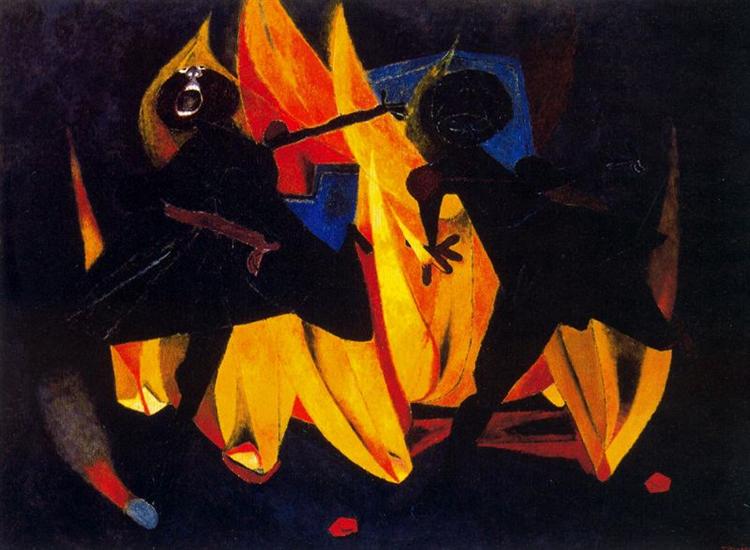
Rufino Tamayo, a well-known Mexican artist and muralist, made a big contribution to the art development through his distinctive style and theme. However, his most prominent piece is the “Children Playing with Fire” which is full of symbolism and exciting visuals. This article aims at the life of Rufino Tamayo, its importance, and its cultural and artistic significance.
Who was Rufino Tamayo?
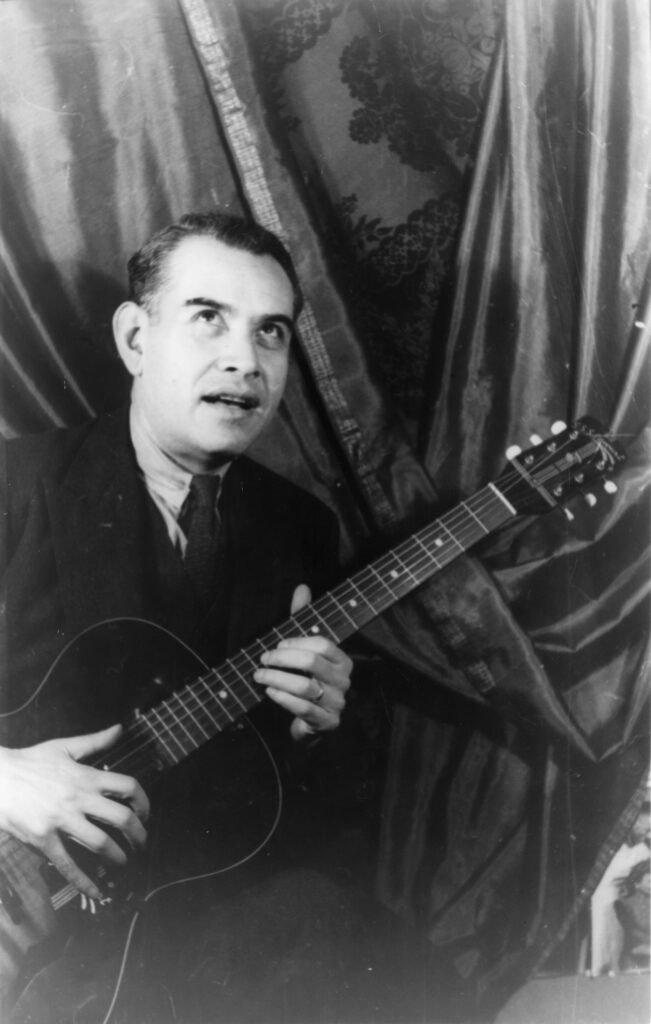
Rufino Tamayo (1899-1991) was a Mexican painter from Oaxaca, Mexico. He was one of the most prominent members of the Mexican modernism movement, working alongside artists such as Diego Rivera and Frida Kahlo. Unlike the muralists who were dominant at the time, Tamayo combined the European modernism style and the deep Mexican culture and traditions.
FUN FACT: Rufino Tamayo was an avid collector of pre-Columbian art, which greatly influenced his own artistic style. Despite his prominence in the art world, he preferred to keep a low profile, leading a relatively private life.
His Career
The artistic trip of Tamayo was full of discoveries and attempts. Initially, he trained at the Escuela Nacional de Artes Plásticas in Mexico City. The artist then traveled to New York, where he encountered the works of European modernists such as Pablo Picasso and Henri Matisse. Through this exposure, Tamayo’s style developed, subsequently incorporating the abstraction and figurative arts.
During his professional life, Tamayo experimented different subjects, such as Mexican folklore, the indigenous culture, and universal human experiences. His daring expression through color and texture, paired with an impeccable sense of form made him a visionary artist. In spite of being criticized by some Mexican muralists as a deviation from traditional styles, Tamayo earned international recognition for his unique style of painting.
What is Happening in “Children Playing with Fire”?
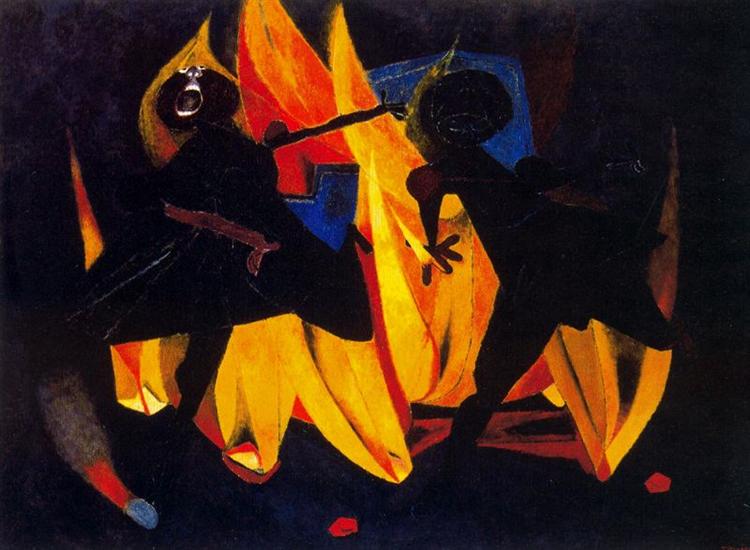
| Artist | Rufino Tamayo |
| Date Created | 1947 |
| Medium | Oil on canvas |
| Genre | Figurative abstraction |
| Period | 20th century |
| Dimensions | 199.4 cm × 251.2 cm (78.5 in × 98.9 in) |
| Series/Versions | N/A |
| Housed at | Museo Nacional de Arte, Mexico City, Mexico |
“Children Playing with Fire” (1947) proves Tamayo’s prowess in color and shape and simultaneously illustrates important issues of safety and innocence. The painting shows the children who are busy playing, and the flames surrounding them are shown in the background that seem to be dangerous. However, in spite of the apparent danger, the children are completely unaware of it, their faces sparkling with fire light.
At the beginning, viewers could find the scene to be chaotic and disorienting. Nevertheless, thorough examination of such paintings gives rise to nuances that lead to deeper contemplations. The various emotions of children, from curiosity to thrill, indicate how fire fascinates them. Nevertheless, there is also hidden fragility as they can be easily descended the slippery slope from the naivety to maturity.
The colors in Tamayo’s “Children Playing with Fire” are unusually intense, with red and orange, the hues of fire dominating the painting. Such a background with a flaming scene behind provides an effective contrast to the figures of the child, which are emphasized with solidity and weight.
Analysis and Interpretation
“Children Playing with Fire” might refer to the human condition metaphorically if it implies the dual nature of innocence and temptation. Kids’ playing with fire represents the natural curiosity and propensity of the human kind to take risks. Concurrently with this fact, the flames become a symbol of the destructive force of an unbridled desire.
On the other hand, the picture is also an example of wider socio-political meanings, which are depicting the contrast between the tradition and the modernity of the Mexican society. When Mexico grew quickly in terms of industrialization and urbanization in the mid-20th century, Tamayo faced the questions of cultural identity and social transformation. The title “Children Playing with Fire” thus becomes a profound commentary on the difficulty of maintaining one’s cultural identity amidst an ever changing world.
Interesting Facts about the Artwork
Despite its seemingly straightforward title, “Children Playing with Fire” invites multiple interpretations, reflecting Tamayo’s penchant for ambiguity and symbolism.
The painting’s composition is deliberately ambiguous, blurring the line between realism and abstraction. This ambiguity encourages viewers to engage with the artwork on a deeper, more introspective level.
“Children Playing with Fire” is part of a larger series of works by Tamayo exploring themes of childhood and innocence. Each painting in the series offers a unique perspective on these universal themes, showcasing Tamayo’s versatility as an artist.
Artwork Spotlight: About “Chacal (Deluxe Edition)”
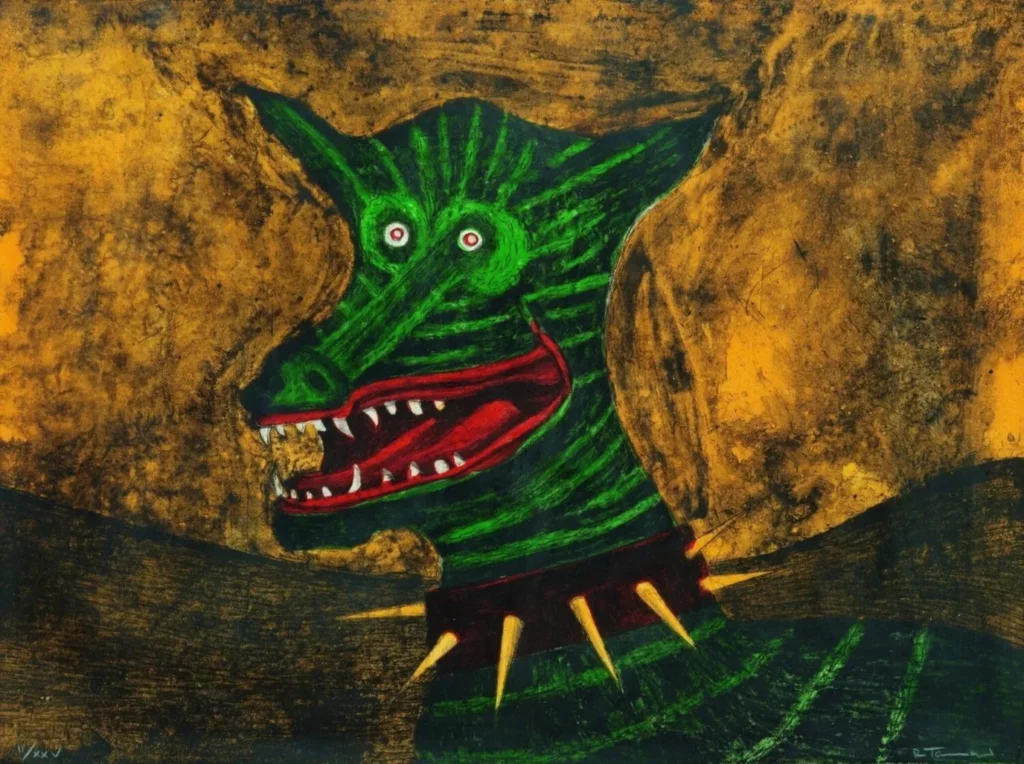
“Chacal (Deluxe Edition)” by Rufino Tamayo is available on Singulart. This work clearly represents Tamayo’s technical skill in printmaking. The piece “Chacal” displaying a bold lines and geometric forms denotes Tamayo’s capability to generate intersting compositions that encourage viewers.
Are you looking for a masterpiece from Rufino Tamayo?
Singulart presents exclusive limited edition pieces by Rufino Tamayo. To discover and acquire Tamayo’s art, click on the artwork or the button below for more information!
Frequently Asked Questions
What is Rufino Tamayo remembered for?
Tamayo’s early still lifes and portraits of Mexican men and women included the shapes and slate tones of pre-Columbian ceramics. Tamayo’s first American exhibition took place in 1926 at the Weyhe Gallery in New York.
What is Rufino Tamayo art style?
Rufino Tamayo is well recognized for his portrayals of contemporary Mexican subjects that combine regional sensibility with worldwide avant-garde approaches.
Conclusion
“Children Playing with Fire” stands as a testament to Rufino Tamayo’s enduring legacy as an artist and thinker. Through his bold use of color, form, and symbolism, Tamayo invites viewers to contemplate timeless themes of innocence, temptation, and cultural identity. As we gaze upon the flickering flames and the children’s enraptured faces, we are reminded of the complexities of the human experience and the enduring power of art to provoke thought and stir emotion.