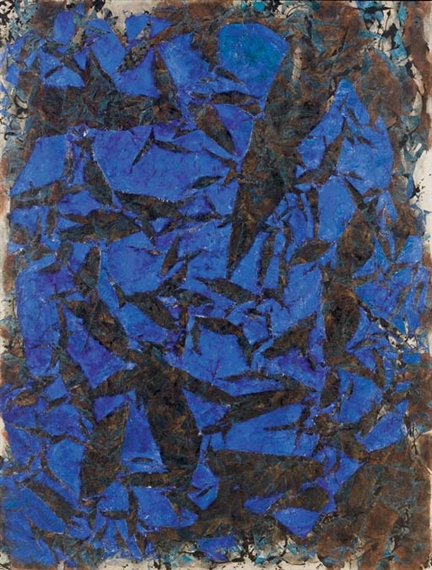
Simon Hantaï, a luminary of abstract expressionism, remains to impress viewers with his innovative and striking artworks. To the list of his remarkable creations belongs “La Maria,” testifying to his perfection of the pliage and his depth of the knowledge of color and shape. Today we will embark on a journey into the life and career of Simon Hantaï, shedding light on the unique characteristics of “La Maria,” and unveiling its stunning essence.
Who was Simon Hantaï?
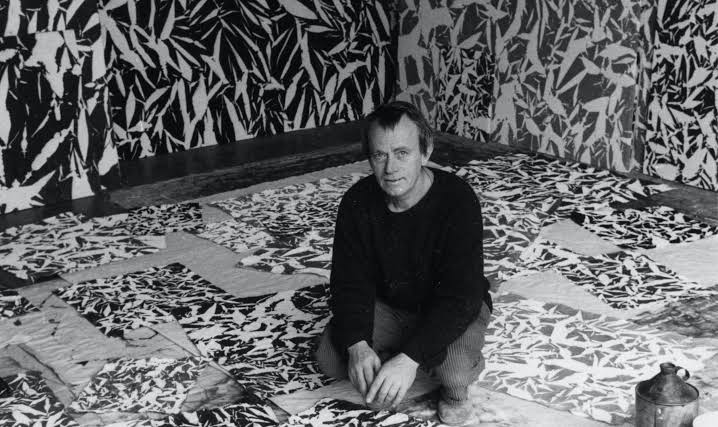
Simon Hantaï, a Hungarian artist who worked in France, was an innovator of abstract painting. He was born in 1922 and in 1948 he emigrated to France, where he got involved in the Abstract Expressionism. Hantai’s work grew and expanded over the years, guided by a dedication to spontaneity, inventiveness, and an exploration of the limits of paint and canvas. His artistic adventures had him compose bewitching pieces that rather defied the conventional patterns of form and technique.
FUN FACT: Simon Hantaï, known for his innovative “pliage” technique, once stated, “I paint so that I can leave traces of my life behind.” This sentiment reflects his deeply personal approach to art and adds depth to his enigmatic persona.
His Career
Hantaï’s career started in the 1950s after he began to get recognition for his abstract paintings. Under the impact of Surrealism and spontaneous painting of the Art Informel movement, he created a distinctive style based on gestural abstraction and creative process. In his early years, many of his paintings feature expressive brushwork and bright colors, reflecting the spirit of the post-war generation.
Along with the progress of his career, Hantaï started to pay more attention to the role of convergence and choice in art-making. He experimented with the different methods, such as folding and crumpling the canvas before applying the paint to give up a control and let unforeseen forms emerge. By doing so, he eventually came up with “pliage” or folding, which thereafter represented in his work.
What is Happening in “La Maria”?
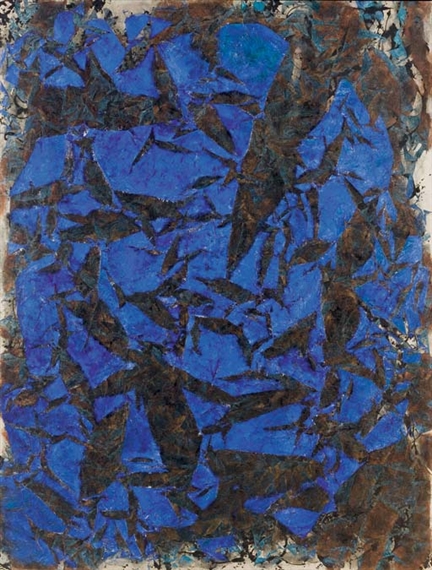
| Artist | Simon Hantaï |
| Date Created | 1960s |
| Medium | Oil on canvas |
| Genre | Abstract Expressionism |
| Period | 20th Century |
| Dimensions | Variable |
| Series/Versions | N/A |
| Where is it housed? | Private Collection/Art Museum |
In “La Maria,” Hantai uses his renowned pliage technique to render a visual kaleidoscope of color and form. Through folding and unfolding of the canvas step by step, beautiful patterns and textures are formed to play on its surface. Every fold and wrinkle presents a depth and dimension, and at the same time, asks the observer to probe as deeply as possible into the artwork.
The interaction of lively colors with dynamic forms is magnetic and attracts the eye, dragging the viewer into a world with endless potential. The blues, reds, and yellows interlace and converge, resulting in a uniform mixing of complementary hues. The movement is introduced because of the dynamic composition, as if the work itself is in a constant moving state.
Analysis
Initially, “La Maria” attracts attention by combination of dynamism in color and shape. The layers of paint weave over and under, forming a teeming mosaic of shapes and designs that appear to throb with life. The intricate folding and unfolding of the canvas brings out layers of texture and depth in the artwork that make it even more commanding and visually appealing to the viewers who come closer to the artwork.
Among the most captivating things about “La Maria” is its feel of movement. The spiraling and twisting lines as well as the flow creates a feeling of movement as if the whole composition is always in a state of change. The gaze of the viewer moves from one side of the canvas to the other as the eye follows the stream of colors and shapes, and sees more and more details with every glance.
Interesting Facts about “La Maria”
The title “La Maria” is a nod to Hantaï’s wife, Maria, who played a significant role in his life and artistic practice.
Hantaï often drew inspiration from nature and the environment, and “La Maria” evokes organic forms and motifs, reminiscent of landscapes or geological formations.
Despite its abstract nature, “La Maria” exudes a sense of harmony and balance, with each fold and brushstroke contributing to the overall unity of the composition.
Artwork Spotlight: “Tabula Bleue”
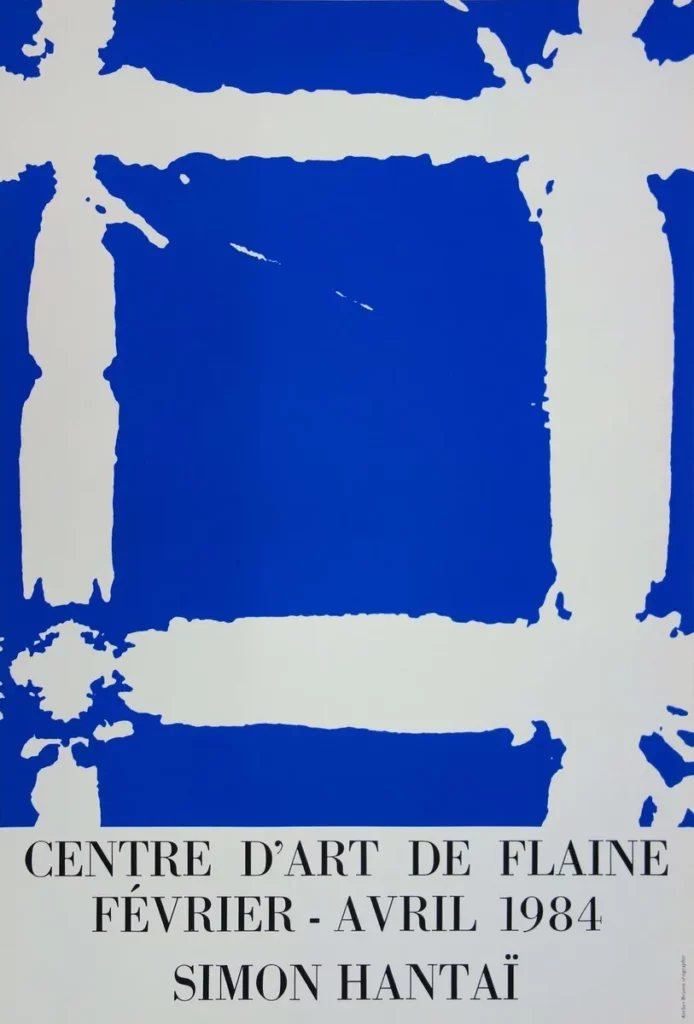
Hantai’s “Tabula Bleue” is available on Singulart. This artwork exhibits his skillful use of color and shape. Featuring colorful blues and compelling dabs of paint, this artwork created in 1984 invites viewers to the experience a world of wonder and adventure.
Are you looking for a piece of artwork from Simon Hantaï?
Singulart has limited edition prints of Simon Hantaï. If you are looking for a piece of Hantaï‘s artwork for sale, simply click on the artwork or the button below to discover more!
Conclusion
“La Maria” embodies the creative will of Simon Hantaï and his refusal to give it up. In his revolutionary pliage style, he expanded the abstract art field, giving a legacy that still charms and inspires viewers all around the world.