Francis Bacon, the much-sought-after and enigmatic British painter, seized the imagination of the art world with his visceral and haunting masterpieces. Among his most significant works is “Three Studies for Figures at the Base of a Crucifixion“, a triptych that stuns with its raw emotion and ghastly imagery. In this article, we examine the life of Francis Bacon, his career, the importance of “Three Studies for Figures at the Base of a Crucifixion”, and some incredible facts about this work.
Who was Francis Bacon?
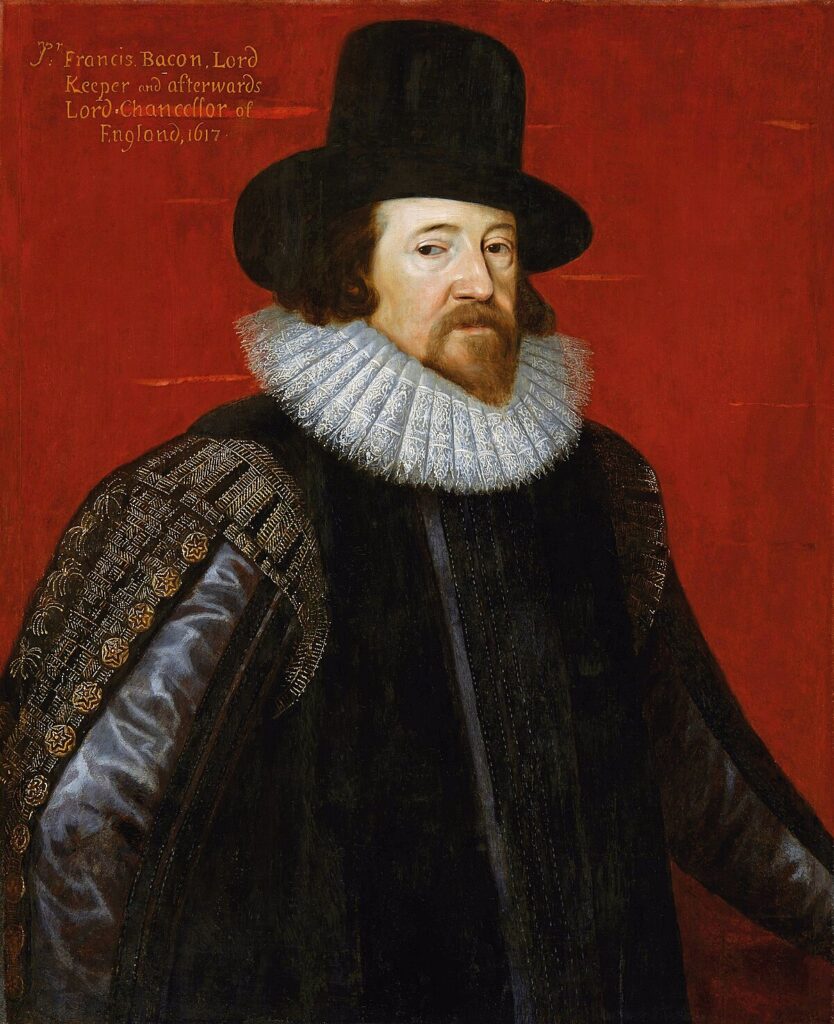
Francis Bacon (1561–1626) was a clever guy from England who liked science and thinking. He was born on January 22, 1561, in London, and did important stuff during the scientific revolution. Bacon was a big deal in England, working as a lawyer and a leader, but he got into trouble for being a bit shady. He passed away on April 9, 1626. His smart books, like “Novum Organum,” talked about using science and observations to learn new things. People call him the father of empiricism because he believed in learning from real experiences.
FUN FACT: Bacon was known to be an avid gambler, particularly fond of betting on horse races. He often frequented London’s prestigious betting establishments.
His Career
Francis Bacon began his career in the late 16th century as a scholar and lawyer. He entered politics and gained favour at the court of Queen Elizabeth I. His early writings, including the “Essays,” showcased his intellect. Bacon’s political ascent continued under James I, and he served in various roles, eventually becoming Lord Chancellor. Despite his success, his political career faced a downfall due to corruption allegations, but his early contributions laid the foundation for his later influential work in philosophy and science.
What is Happening in Three Studies for Figures at the Base of a Crucifixion?
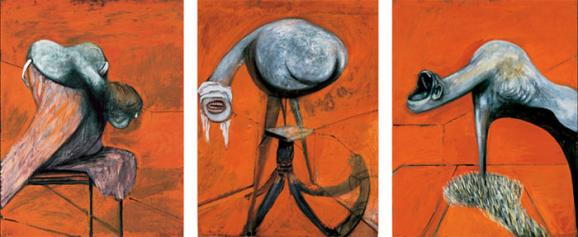
| Artist | Francis Bacon |
| Date Created | 1944 |
| Medium | Oil on canvas |
| Genre | Modern art, Expressionism |
| Period | 20th century |
| Dimensions | Each panel approximately 35 x 30 inches |
| Series/Versions | Original triptych |
| Where Housed | Tate Britain, London, United Kingdom |
“Three Studies for Figures at the Base of a Crucifixion,” finished in 1944, is acknowledged a masterwork of Bacon. Composed of three panels, the triptych format increases the level of drama and power in the piece. The distorted and contorted figures depicted by each panel against blank background give a sensation of existential crises and spiritual anguish.
The crucified figure which is the central theme of the artwork shows some similarities with the tortured body of Jesus on the cross. There are two other distorted figures flanking the central one, both of them absolutely tangled in the misery of their forms. With vivid hues and expressive brushwork, the painting suggests the emotional upheaval depicted in the work.
Although Bacon never openly stated the meaning of his work, “Three Studies for Figures at the Base of a Crucifixion” can be understood as a reflection on the impact of the war on ordinary people. The warped bodies and the feeling of despair and uncertainty are a metaphor for the gloomy atmosphere and disenchantment with the life that the society felt after the war.
Interesting Facts about the Artwork
Bacon drew inspiration for “Three Studies for Figures at the Base of a Crucifixion” from various sources, including the horrors of war, the writings of philosophers such as Friedrich Nietzsche, and the works of earlier artists like Diego Velázquez and Pablo Picasso.
The triptych format of “Three Studies for Figures at the Base of a Crucifixion” is reminiscent of traditional religious altarpieces, adding to the painting’s sense of solemnity and grandeur.
The painting caused a sensation when it was first exhibited, with some viewers expressing shock and revulsion at its disturbing imagery. Despite—or perhaps because of—its controversial nature, “Three Studies for Figures at the Base of a Crucifixion” solidified Bacon’s reputation as a provocateur and visionary artist.
Artwork Spotlight: “Prejudice”
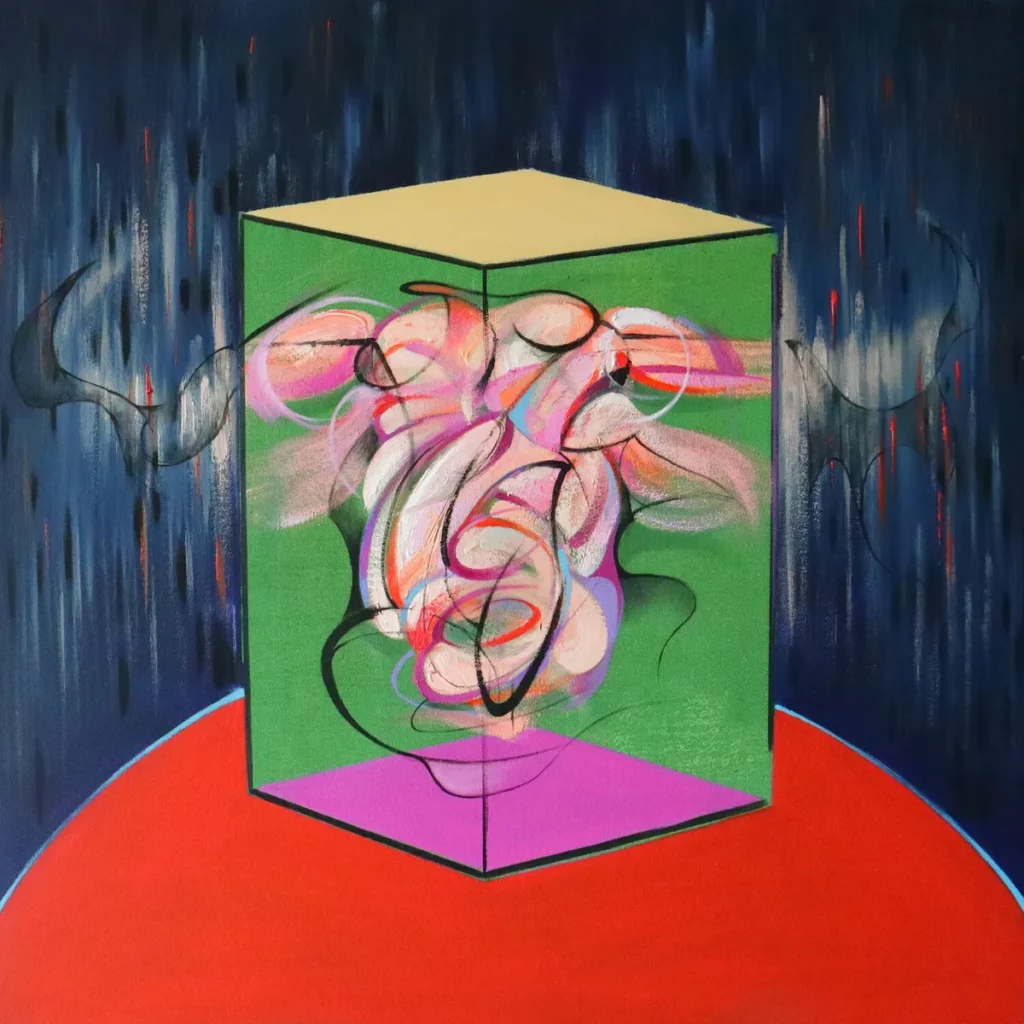
“Prejudice” is another outstanding work by Bacon which is also available on Singulart. This artwork portrays him touching the subjects of human pain and mental agitation. In this work, Bacon meets the observer with a horrible distorted figure, the face contorted in a grimace of torture. Bacon’s “Prejudice” is a work that challenges the ordinary notions of beauty and unmasks dark sides of human nature, provoking viewers to reflect and examine their own prejudice and prejudgement.
Are you looking for a piece of artwork from Francis Bacon?
Singulart has limited edition prints of Francis Bacon. If you are looking for a piece of Bacon‘s artwork for sale, simply click on the artwork or the button below to discover more!
Frequently Asked Questions
What was Francis Bacon best known for?
Francis Bacon’s philosophy of science is what made him most well-known. He maintained that making observations and using inductive reasoning to interpret them are the first steps in obtaining scientific knowledge. Bacon also maintained that studying nature requires carefully planned scientific experiments.
What was Francis Bacon’s method?
Bacon’s way starts with the recital of the requirements for the tedious, methodical observations required for producing credible facts. Induction is also another method that he uses, i.e. generalizing from a set of facts to one or more axioms.
Conclusion
Three Studies for Figures at the Base of a Crucifixion is a singular work that showcases Bacon’s individual view and his talent to undress the deepest part of humanity. Through his “disgusting” and stirring pictures, Bacon finds a way to make the audience see what it means to be human and to experience the struggle of meaning in a world that is primarily known for its pain and uncertainty.