Robert Motherwell, who was a renowned abstract expressionist artist, created one of his most memorable series, “Elegy to the Spanish Republic” which is an artistic tribute to the Spanish Civil War. The series attempts to portray the emotions of the conflict era with powerful strokes and emotionally charged imagery. This article will examine the life and works of Robert Motherwell, with a particular focus on “Elegy to the Spanish Republic,” which is his most iconic painting.
Who was Robert Motherwell?
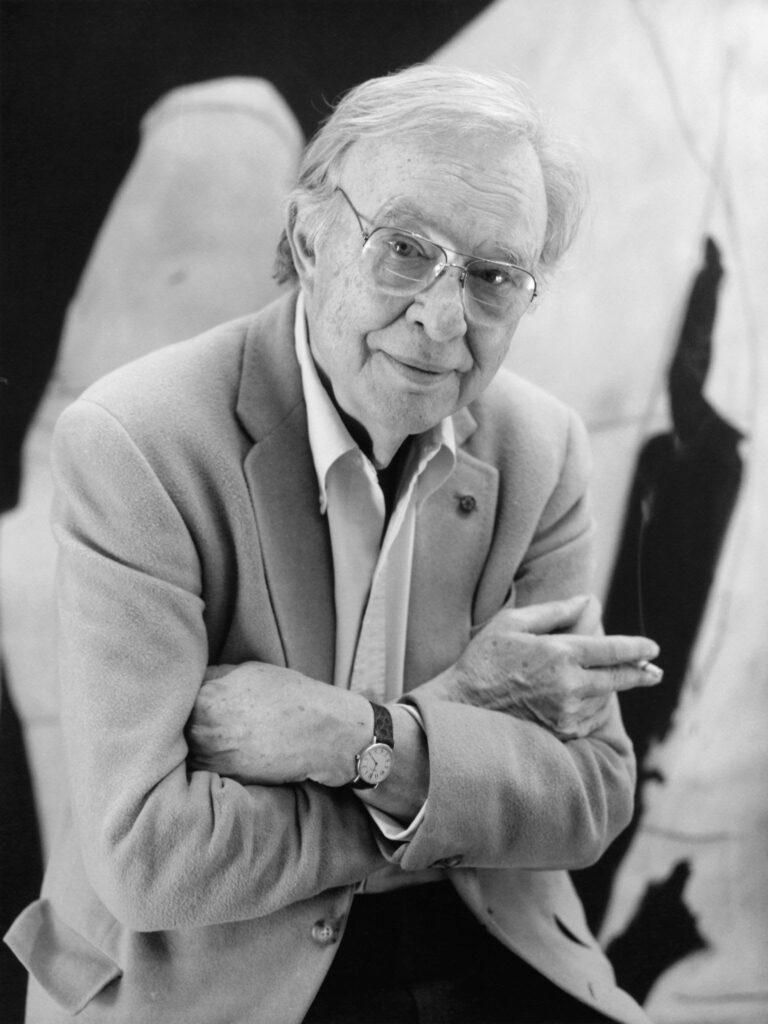
Robert Motherwell (1915-1991), was an American painter, printmaker and important theorist of the abstract expressionist movement. Aberdeen, Washington was the place where Motherwell was born. He studied philosophy and art history at Stanford University and later pursued graduate studies in philosophy at Harvard University.
FUN FACT: Did you know that Robert Motherwell was a bit of a Renaissance man? Not only was he a master of the paintbrush, but he also dabbled in poetry and philosophy!
His Career
Motherwell’s career was characterized by an uncompromising pursuit of artistic expression and experimentation. This movement and the philosophical works of the existentialists had a profound influence on him, manifesting at the core of his art through an exploration of introspection, emotions, and the human condition. Motherwell brings boldness about the use of colors, shapes, and forms to define the abstract expressionistic style.
Throughout his career, Motherwell created a large oeuvre, which consisted of paintings, prints, collages and drawings. Alongside his artistic endeavors, he was also an acclaimed writer and speaker, offering authoritative opinions on the subject of modern art. Motherwell’s artistic legacy is still an undeniable source of inspiration for a lot of artists, and his contributions to the abstract expressionist movement are unfathomably significant.
What is Happening in Elegy to the Spanish Republic?
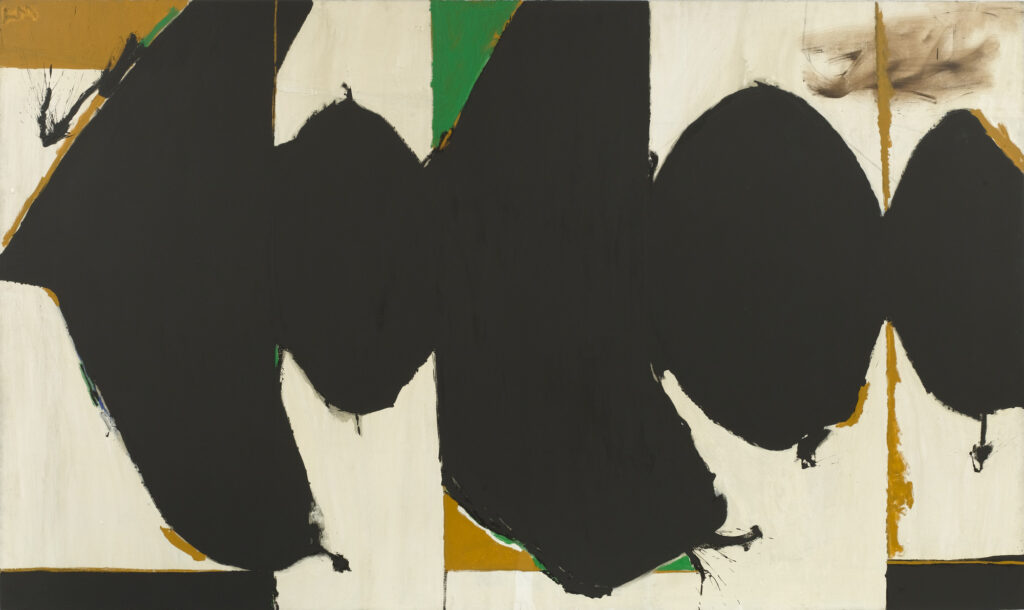
| Artist | Robert Motherwell |
| Date Created | 1948-1967 |
| Medium | Oil on canvas |
| Genre | Abstract Expressionism |
| Period | 20th Century |
| Dimensions | Varies |
| Series/Versions | Multiple |
| Where is it housed? | Various museums and private collections worldwide |
So, what’s the deal with Robert Motherwell’s “Elegy to the Spanish Republic”? Let’s not only put on our painted shoes but fly on a crazy trip through the Spanish Civil War and the artistic mind of Motherwell!
So, imagine this: It is the 1930s, the late time, Spain has become a battleground for the ferocious civil war. Here the Republicans are fighting with the Nationalists, which are led by General Franco. Robert Motherwell, a romantic painter with his canvas as big as his heart. He finally understands exactly what war is about and decides to crystallize this feeling through his work.
And thus, “Elegy to the Spanish Republic” is created! It is not just a series of artworks that happened to appear but a sincere homage to the victims of the war. Imagine vivid strokes of a brush, mellow hues, and symbols everywhere. We are referring to crosses, bullfighting motifs, and geometric shapes that spin faster than a Picasso painting!
However, why bother you, you may ask? Here, let me strap you in because “Elegy to the Spanish Republic” is not a book on pictures only. It’s a powerful kick-in-the-gut reminder that war has very real casualties. Motherwell’s works are not just decorating walls; they are screaming from the rooftops for people to recall the lives that were impacted and the hardships that were gone through.
Interesting Facts
Evolutionary Art: “Elegy to the Spanish Republic” wasn’t a one-and-done deal for Motherwell. Nope, he kept coming back to it like a painterly boomerang, revisiting the theme and reinterpreting it throughout his career. Talk about dedication!
Inspiration Station: Motherwell wasn’t just inspired by the Spanish Civil War; he was downright obsessed with it! The symbols and motifs in his artwork weren’t just random doodles – they were carefully chosen to evoke the spirit of the conflict and honor its victims.
Worldwide Wanderer: Motherwell’s “Elegy” series isn’t just chilling out in one museum somewhere; it’s jet-setting around the globe! These paintings have been spotted in museums and private collections from New York to New Zealand, spreading their message of remembrance far and wide.
Legacy of Influence: Motherwell’s “Elegy to the Spanish Republic” isn’t just a standalone masterpiece; it’s a trendsetter! Artists from all corners of the globe have been inspired by Motherwell’s work, creating their own interpretations and tributes to the Spanish Civil War. It’s like a big, artistic love fest!
Artwork Spotlight: The Red and Black No. 52
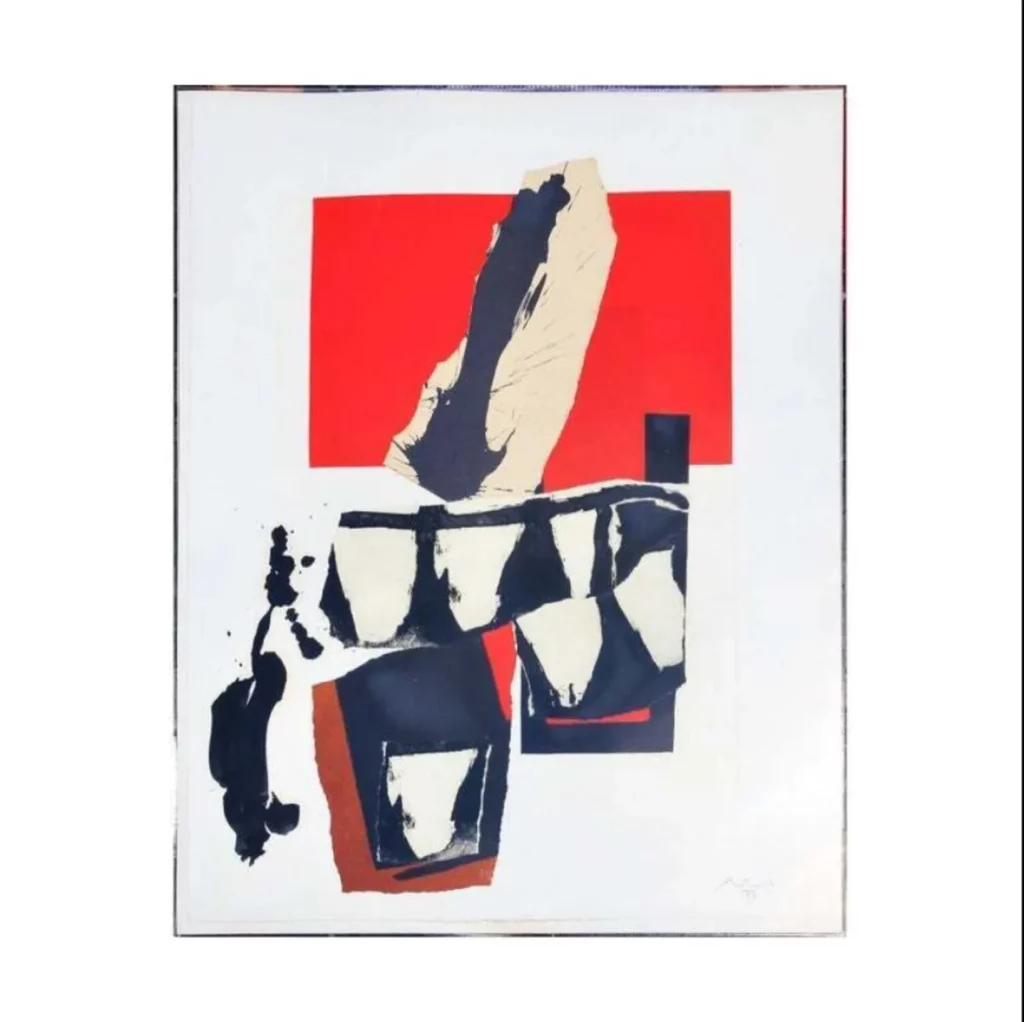
Motherwell’s “The Red and Black No. 52” is also available on Singulart. This painting is a vivid work that shows Motherwell’s aptness in abstract expressionism. Featuring its dynamic brushstrokes and distinctive clash between red and black, “The Red and Black No. 52” lets visitors into a visual world of intensity and emotional depth, effectively demonstrating the continuing artistic legacy of one of the 20th century’s most renowned artists.
Are you looking for a masterpiece from Robert Motherwell?
Singulart presents exclusive limited edition pieces by Robert Motherwell. To discover and acquire Motherwell’s art, click on the artwork or the button below for more information!
Frequently Asked Questions
What art movement was Robert Motherwell?
American painter Robert Motherwell was one of the pioneers of Abstract Expressionism (q.v.) and one of the first to cultivate incidental elements in his paintings.
What techniques did Robert Motherwell use?
Automatism and collage were two techniques that let Motherwell continue to express his creativity and expand his visual vocabulary. Motherwell developed an early passion for modern art. He created and synthesized his own style, initially referencing Pablo Picasso and Henri Matisse, then Paul Cézanne.
Conclusion
Robert Motherwell’s “Elegy to the Spanish Republic” is a proof that art is capable of confronting, memorializing and, finally, going beyond the atrocities in history. By the daring use of the color, form and symbolism, Motherwell makes us stand witness on the suffering caused by war and the endless quest of justice and remembrance. Pondering the depths of “Elegy to the Spanish Republic”, we learn to appreciate the importance of art in shaping our comprehension of the world around us and our place within it.