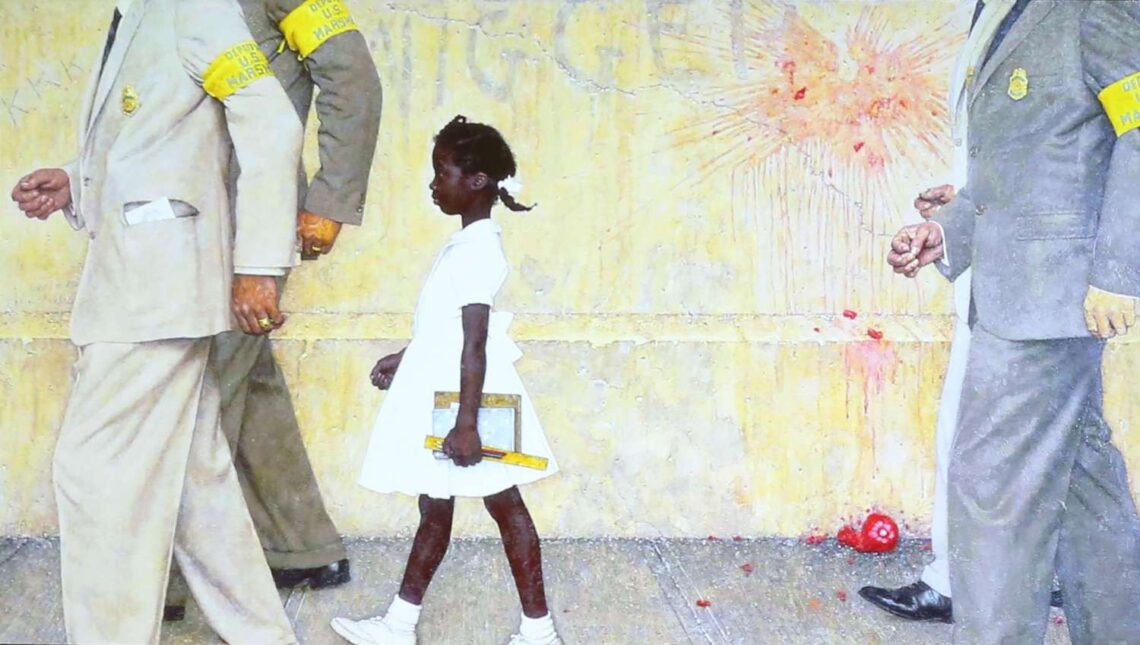
Alright folks, gather around because we’re about to dive into the world of Norman Rockwell, the granddaddy of American art. Picture this: charming illustrations, whimsical scenes, and a sprinkle of nostalgia—all brought to life by the master himself. But hold onto your hats because amidst the laughter and smiles, Rockwell had a knack for hitting us right in the feels with some real talk. Enter “The Problem We All Live With” (1964), a masterpiece that’s more than just colors on canvas—it’s a punch in the gut, wrapped in a warm hug, and delivered straight to your soul. So buckle up, folks, ’cause we’re about to take a wild ride through art history.
Who was Norman Rockwell?
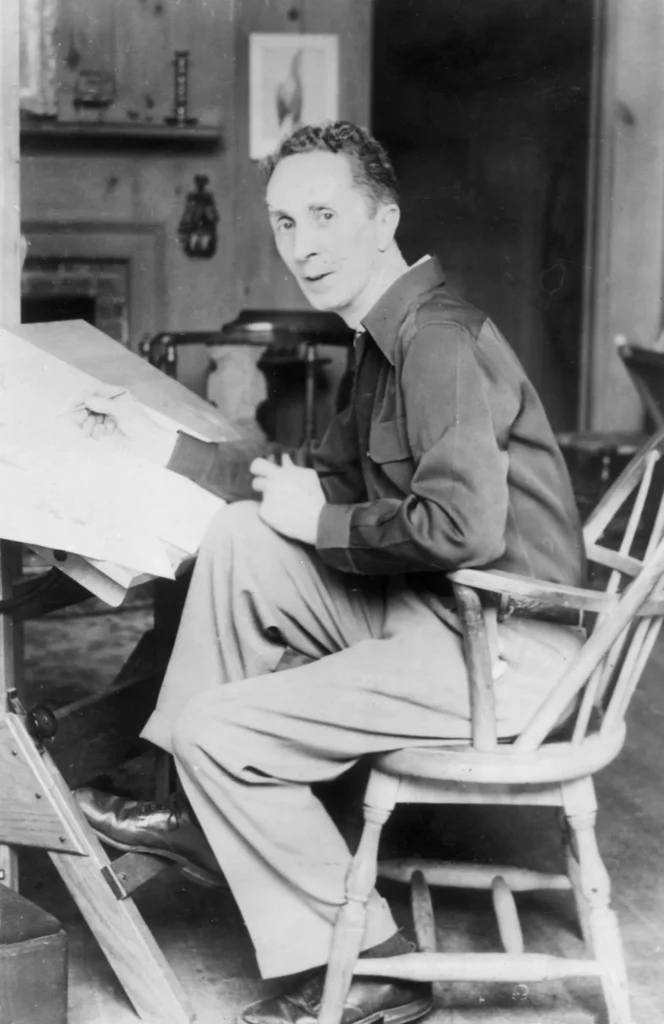
Norman Rockwell, born in 1894, was an American painter and illustrator whose works have become synonymous with the country’s cultural heritage. Known for his keen observation and portrayal of everyday life, Rockwell’s art captured the spirit of American society with warmth, humor, and pathos.
FUN FACT: Norman Rockwell was an avid collector of toy soldiers! Rockwell had a passion for these miniature warriors and amassed a sizable collection throughout his life.
The Career of Norman Rockwell
Rockwell’s career spanned six decades, during which he created more than 4,000 individual works. His most famous works were his cover illustrations for “The Saturday Evening Post,” which were beloved by the American public for their charm and simplicity, yet profound insight into the human condition.
What is Happening in The Problem We All Live With (1964)?
| Artist | Norman Rockwell |
| Date Created | 1964 |
| Medium | Oil on Canvas |
| Genre | Social Realism |
| Period | 20th Century |
| Dimensions | 36 in × 58 in (91 cm × 147 cm) |
| Series / Versions | One version |
| Where is it housed? | Norman Rockwell Museum, Stockbridge, Massachusetts |
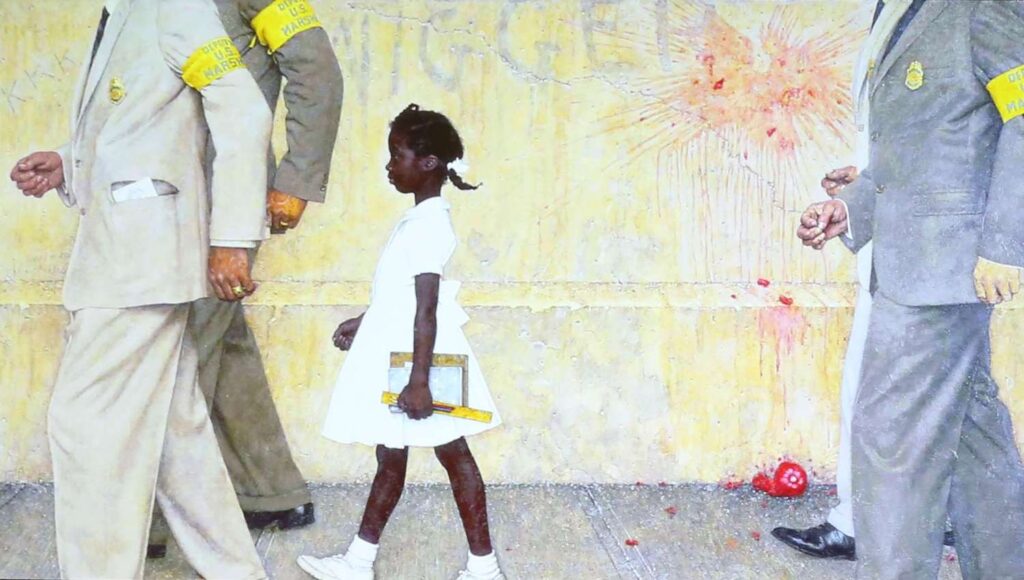
Here we go, people, hold on tight for a rocking trip through the Art History with Norman Rockwell as our guide and leader! Picture this: It is 1964, and Rockwell, who is known as the artist who mastered the art of depicting everyday life with a twist, chooses to paint something which will make your heart skip a beat. Walk up to “The Problem We All Live With.” This is not a just a couple of colors on a canvas—this one paints a whole mood, creates a vibe and wakes you up all at once.
So, what is the story of this masterpiece? What if you picture a courageous little girl named Ruby Bridges being escorted into school by U.S. Marshals on the other hand, a bunch of people from a neighboring block throwing all sorts of insults like they were throwing confetti? Ruby, her dear soul, is on a crusade—to integrate a school in New Orleans during the time of civil rights movement.
Rockwell in his greatness captures this moment with all the emotions possible. There you have Ruby right there, looking bold and witty, but the audience is throwing the plate of hostility to her face. The contrast is so stark you could cut it with butter knife. However, in the midst of all this confusion, there is a ray of light—a bright spark that shines as bright as the tallest beacon in the dark.
Interesting Facts
Inspiration Behind the Painting: Rockwell was inspired to create “The Problem We All Live With” after reading about Ruby Bridges’ courageous journey in the newspaper. He was deeply moved by her story and felt compelled to capture the moment in his art.
Symbolism of the Composition: The composition of the painting is carefully crafted to convey its powerful message. Ruby Bridges is depicted in the center of the canvas, symbolizing her significance in the struggle for civil rights. The U.S. Marshals flanking her represent the protection of the law and the federal government’s role in enforcing desegregation.
Subtle Details: Despite the simplicity of the scene, Rockwell included several subtle details that add layers of meaning to the painting. For example, the splattered tomato on the wall serves as a stark reminder of the violence and hostility faced by Ruby Bridges and other African American students during desegregation.
Artwork Spotlight: Untitled
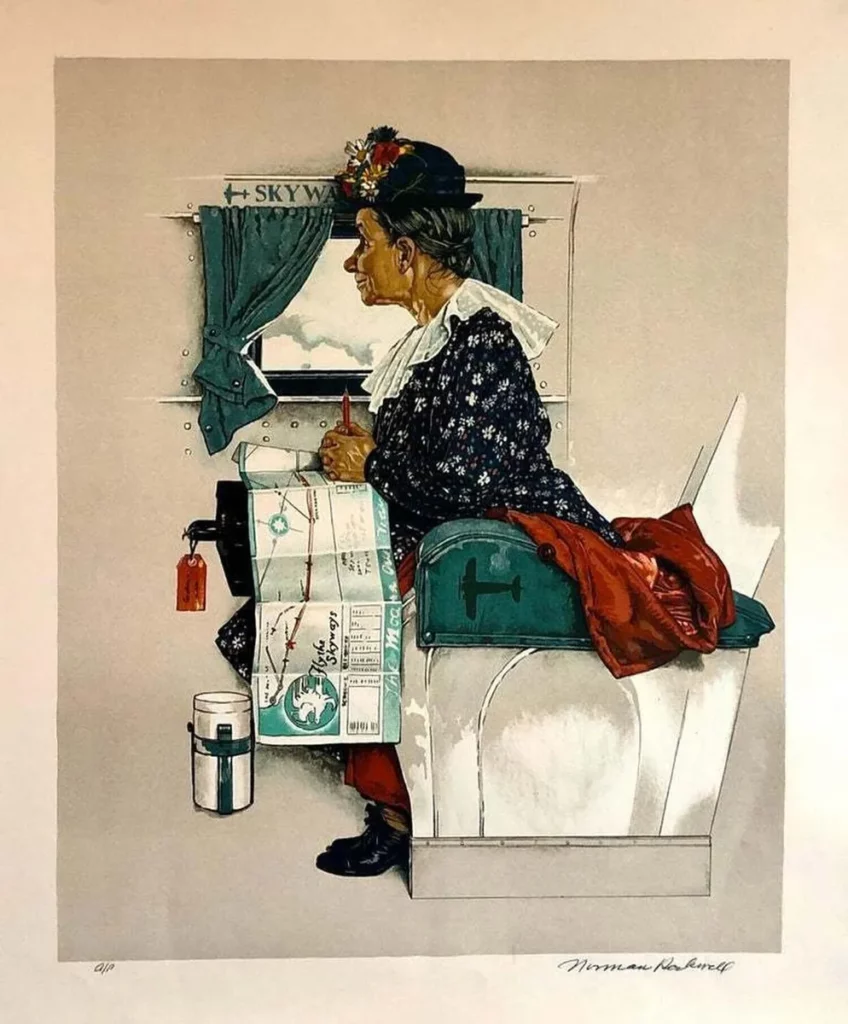
Norman Rockwell’s most iconic pieces is Untitled which is also available on Singulart. This artwork depicts a scene that illustrates an improbability of everyday occurrence of a mundane activity. This is not one of Rockwell’s popular pieces but the details done and the ability to spark emotion through ordinary subjects is well depicted in this piece.
Are you looking for a piece of artwork from Norman Rockwell?
Singulart has limited edition prints of Norman Rockwell. If you are looking for a piece of Rockwell‘s artwork for sale, simply click on the artwork or the button below to discover more!
Frequently Asked Questions
What is Norman Rockwell’s art style called?
Norman Rockwell’s painting technique is known as photorealism because, despite the fact that his works resemble photographs, they were created using genuine images that he took. Although Rockwell started out painting from life, he eventually turned to painting from pictures.
What influenced Rockwell’s style of art?
Norman Rockwell owes a great deal to the prominent and stylish illustrators of his day, including JC Leyendecker, Maxfield Parrish, Howard Pyle, and NC Wyeth. His workshop was filled with other artists’ paintings, including a Parrish, a Leyendecker, and multiple Pyles.
Conclusion
Norman Rockwell’s “The Problem We All Live With” is not just a painting; it shows the guts and courage of the people who fought for equality and justice. In his art, Rockwell elucidates the grotesque reality of racism as well as the indomitability of the human spirit. It has become almost a symbol of this never-ending battle for equal rights and the importance of resisting oppression.