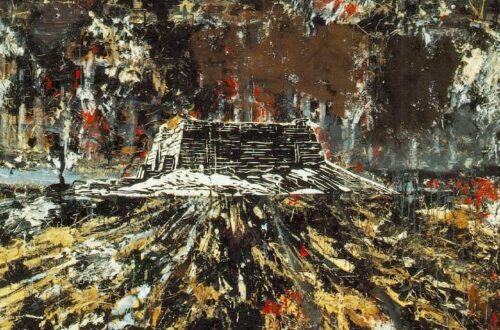
In the avant-garde art arena, names of such intriguing and fascinating artists as Lucio Fontana appear rather often. A hero of the 20th century, Lucio Fontana broke the mould and redefined what was possible in the history of art with his initiating Spatialist movement. As the lynchpin of his ideal, art should expand beyond the mere canvas, communicating with space and time by blending various senses in the pursuit of the universe. Among his most famous works is “The End of God”, a fascinating masterpiece of modernism that questions the conventional views of art and existence. In this article we enter the fascinating realm of Lucio Fontana and investigate the fundamental role that “The End of God” has within his visionary art.
Who was Lucio Fontana?
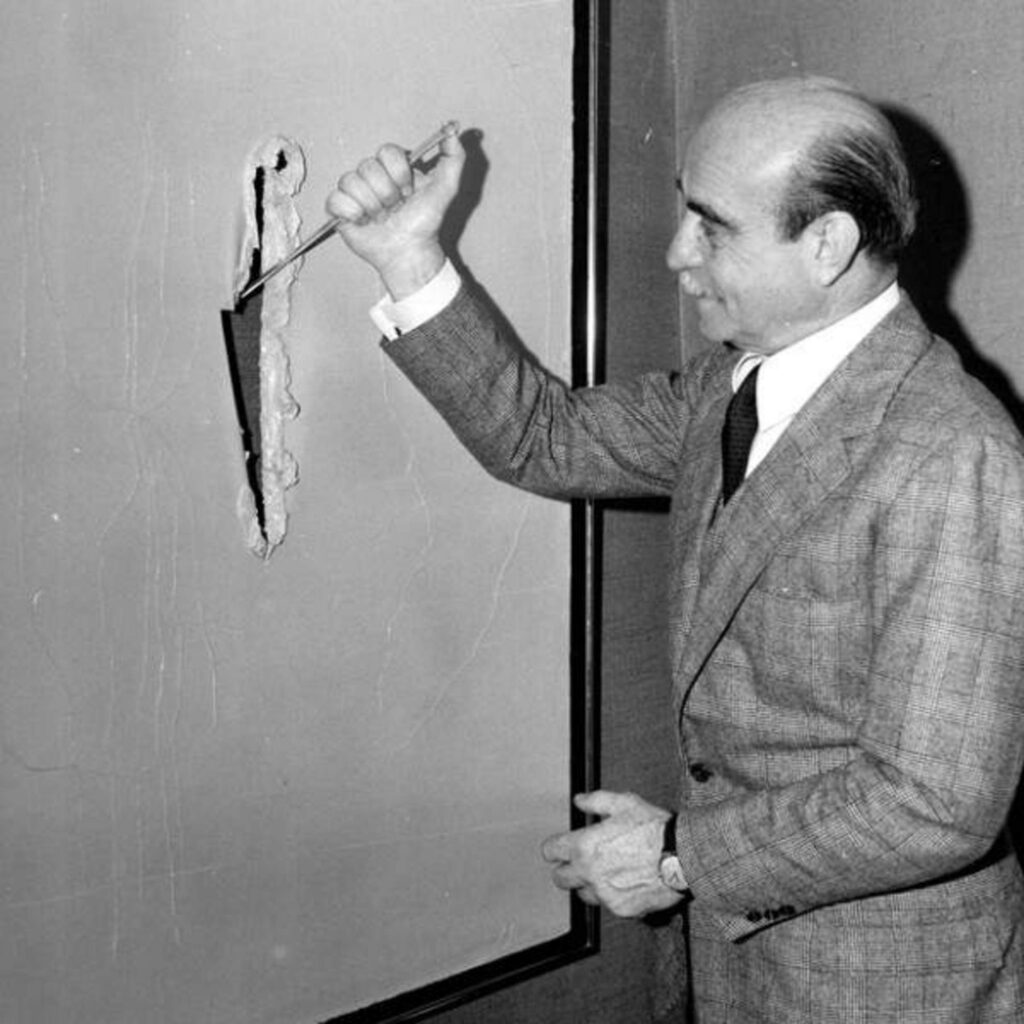
Lucio Fontana (1899-1968) was an eminent artist of Argentinean-Italian origin who created Spatialism, a new movement of artistic expression that involved space as an important artistic element. Born in Rosario, Argentina, Fontana relocated to Italy in his youth, where he enrolled at the Academy of Fine Arts in Milan to study sculpture and painting. His earliest works of his clearly suggest his predilection for the interrelation of light, space, and form which would ultimately be the main focus of his later artistic period.
FUN FACT: Lucio Fontana was known for his charismatic and flamboyant personality. Often seen sporting colorful suits and eccentric accessories.
His Career
Fontana’s professional career extended over many decades and covered a wide range of artistic activities, such as painting, modeling, and ceramics. Nevertheless, he has become recognized above all for his innovative concept of canvas as a three-dimensional space, which he discovered and explored through his famous “Spatial Concepts” series of paintings. These pieces, with their striking holes and slashes, deviated from tradition and encouraged the audience to explore the inner depths of space within the artwork.
Fontana’s artistic path was paved with unending search for novelty and experimentation. In the 1940s, he established the Spatialist Manifesto, wherein he laid down his idea of the new art form that would go beyond the limits and borders of traditional art forms. All the time, Fontana was pushing the limits of artistic forms, looking for new ways of implementing the space and time in his masterpieces.
What is Happening in The End of God?
| Artist | Lucio Fontana |
| Date Created | 1963 |
| Medium | Mixed Media |
| Genre | Spatialism |
| Period | 20th Century |
| Dimensions | Variable |
| Series / Versions | N/A |
| Where is it housed? | Private Collection / Museums worldwide |
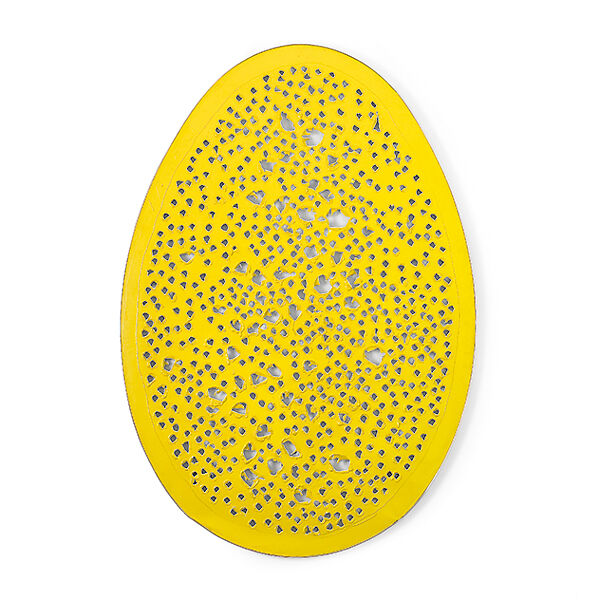
“The End of God” one of most well known works by Fontana, which is an embodiment of his Spatialist ideas on the highest level. Considered as a work of art in 1963, it goes beyond aestheticism to probe depth, texture, and form. In doing this, it takes the spectators into a fascinating voyage through space that will make them wonder about the infinite reaches of the universe as they leave behind ordinary ways of art presentation.
Interesting Facts
The Cut: One of the most striking features of “The End of God” is Fontana’s signature slashes or “cuts” across the canvas. These incisions were not acts of destruction but rather deliberate gestures intended to liberate space. Fontana viewed these cuts as portals to the unknown, inviting viewers to peer into the depths of the universe.
Interactive Experience: Fontana believed that art should be an immersive experience, engaging the viewer on a visceral level. “The End of God” embodies this philosophy, inviting viewers to explore its textured surfaces and contemplate the mysteries of existence. Each encounter with the artwork is a journey into the unknown, prompting reflection on the nature of reality and perception.
Influence on Contemporary Art: Fontana’s Spatialist ideas continue to resonate with contemporary artists exploring the boundaries of space and time. His radical approach to art-making has inspired generations of creators to push beyond the constraints of tradition and embrace the infinite possibilities of the cosmos.
Symbolism: Despite its enigmatic title, “The End of God” is not a nihilistic statement but rather a celebration of the divine within the material world. Fontana saw art as a means of transcending earthly limitations and connecting with the spiritual realm. In cutting through the canvas, he sought to reveal the underlying unity of all existence, echoing the timeless quest for meaning and transcendence.
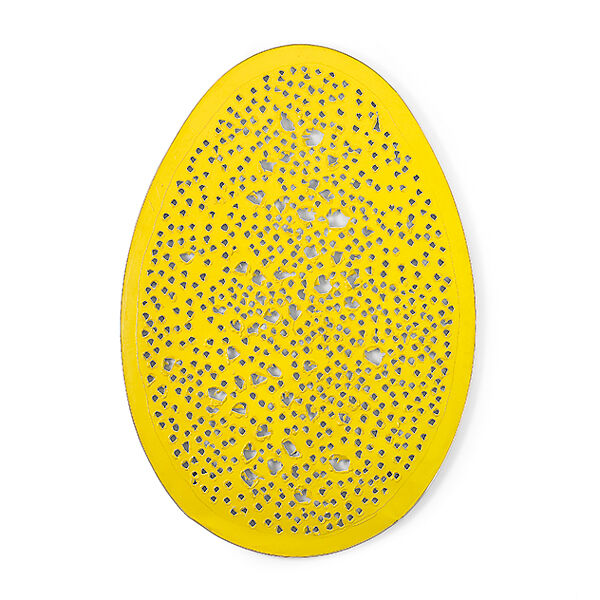
Artwork Spotlight: Concetto spaziale

“Concetto spaziale” by Lucio Fontana is available on Singulart. It is one of the first examples of spatialists’ works, which are based on the ideas of space and dimensions through the use of slashed canvases. This iconic series dramatically extended the parameters of traditional painting and merged art with space travel.
Are you looking for a piece of artwork from Lucio Fontana ?
Singulart has limited edition prints of Lucio Fontana. If you are looking for a piece of Fontana‘s artwork for sale, simply click on the artwork or the button below to discover more!
Frequently Asked Questions
How did Lucio Fontana cut his canvas?
Fontana would use a Stanley knife to make cuts in his canvases. He worked on the rips and used gauze to hold them in place when the paint had dry. He used both his hands and brushes in this process
What inspired Lucio Fontana?
The idea of space and space travel fascinated the artist. Shortly after the globe saw the first images of Earth taken from space, he established the Spatialism art movement in 1947.
Conclusion
It is through “The End of God” that Fontana manifests his creative imagination and shows the power of his artistic legacy. With his groundbreaking venture into space, he contested the basic nature of art, which led to the emergence of new horizons of possibilities for the coming artists. In appreciating his incredible masterpiece, we remember that the human mind is capable of so much. It can go beyond everything that is known and have the courage to explore the undiscovered regions of the universe.