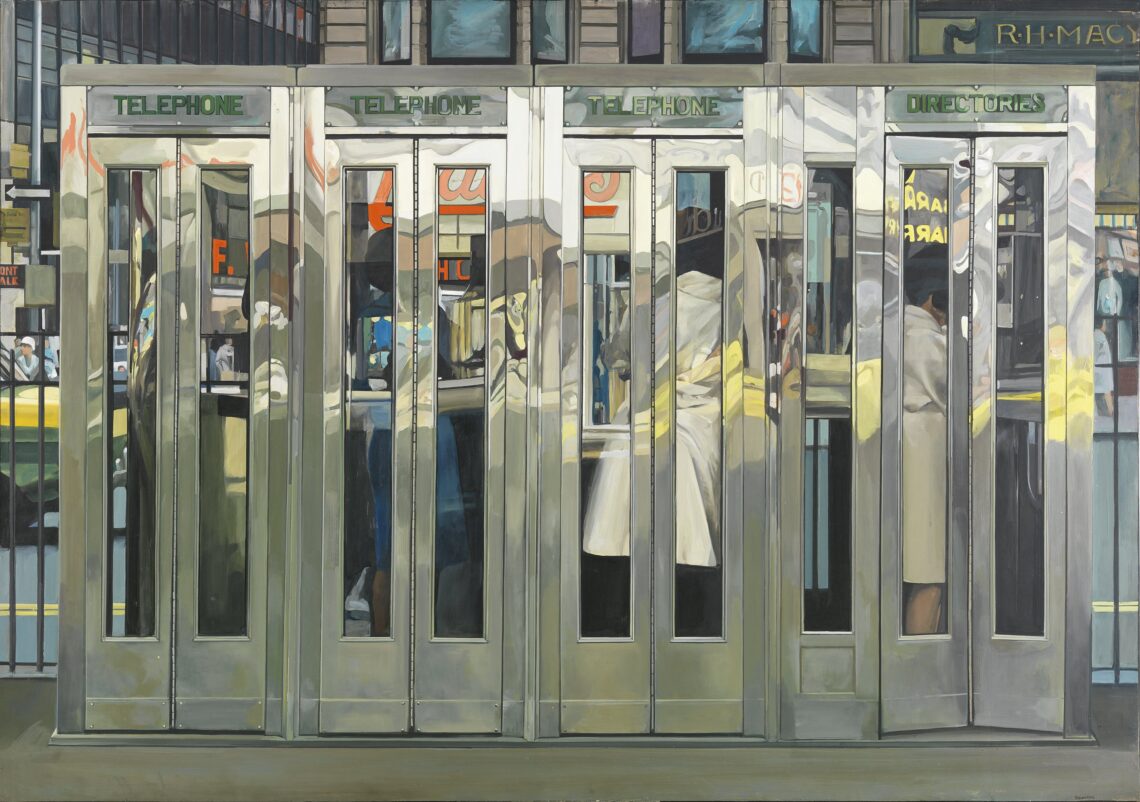
In the busy sidewalks of New York City, among the crowd of pedestrians and the buzzing of cars, someone may come across a brief moment in history—the Richard Estes‘ phone booths that captured time. These seemingly everyday constructional patterns become the most captivating through Estes’ brilliant command of detail and composition. Let’s venture into the magical universe of Richard Estes’ work, especially the hypnotizing representation of telephone booths, where we can explore the artist, his oeuvre, and the captivating nature of his masterpieces.
Who was Richard Estes?
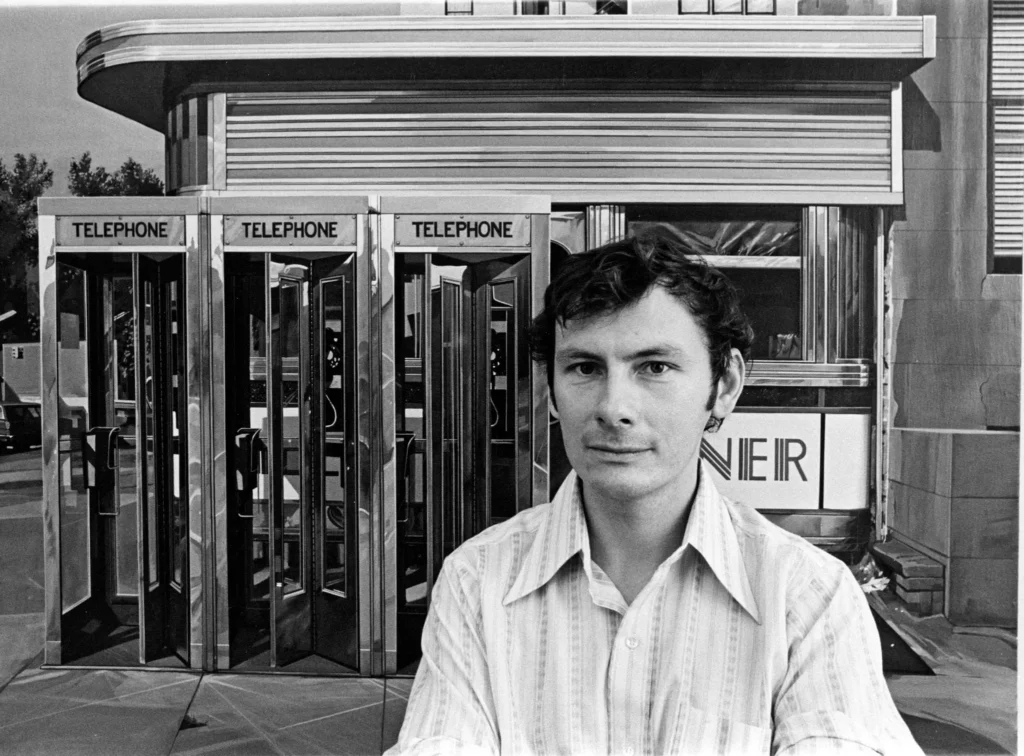
Richard Estes is famous for his photorealistic paintings depicting the very nature of urban existence. He became an important figure in the Photo-realist movement of the late 20th century that also included artists including Chuck Close and Audrey Flack. Estes’ careful attention to details and exceptional accomplishments in the use of light and perspective contributed to his well-deserved recognition in the world of art.
FUN FACT: Despite his incredibly detailed and realistic paintings, Estes is actually colorblind! Yep, you heard that right. This master of capturing vibrant urban scenes and intricate reflections on canvas sees the world in a slightly different hue.
His Career
Estes’ journey as an artist began in the 1960s when he moved to New York City, where he found inspiration in the vibrant cityscape. His early works primarily focused on urban scenes, reflecting the dynamic energy and diversity of city life. Through his paintings, Estes sought to celebrate the beauty found in everyday surroundings, often highlighting overlooked elements such as reflections in storefront windows or the play of light on city streets.
As his career progressed, Estes gained recognition for his distinctive style, characterized by precise rendering and meticulous detail. He became known for his ability to capture the intricacies of urban architecture with remarkable accuracy, earning him the title of a master of Photorealism.
What is Happening in Telephone Booths?
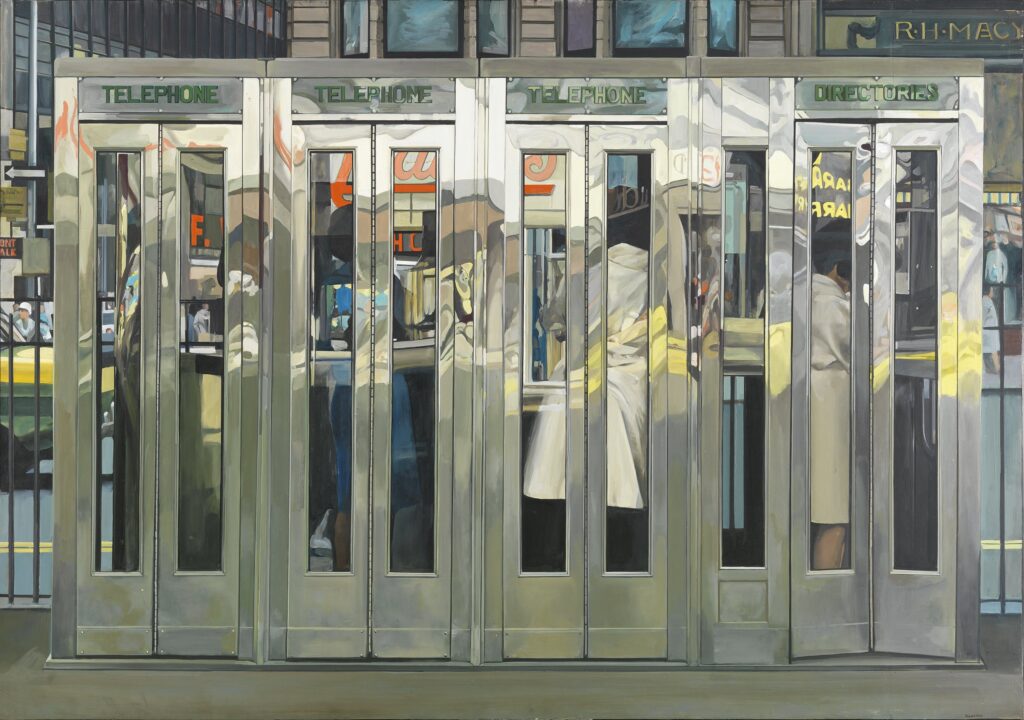
| Artist | Richard Estes |
| Date Created | 1967 |
| Medium | Oil on canvas |
| Genre | Photorealism |
| Period | Contemporary |
| Dimensions | 45.5 x 35.5 inches |
| Series / Versions | N/A |
| Where is it housed? | Private Collection |
Estes’s art career began in the 60’s when he resided in New York and observed the bustling environment of the city. The majority of his early pieces mainly concentrated on portraying the dynamism and diversity of metropolitan life. With his paintings, Estes intended to capture the splendor of the simple surroundings, sometimes indicating overlooked details like a reflection in the shop windows, or the interaction of light and the city streets.
Throughout the course of his career, Estes emerged as a distinctive artist thanks to his distinctive style comprising of accurate rendering and careful detail. He became famous as an architectural urban photographer with pinpoint accuracy, which earned him the title of the master of Photo-Realism.
Analysis
One of the key features of Estes’ work is the careful attention to details, which can be detected in every single part of “Telephone Booths.” Starting with the impeccably drawn architectural parts to the extremely subtle reflections on the glass, each detail is amazingly precise and well-done. In terms of this level of accuracy, the painting not only looks realistic but also gets the viewer to immerse in every corner of the streetscape.
Estes skillfully uses light and shadow to bring about depth and dimension, giving the painting an atmosphere as well as a mood. The interaction of the street lights with those across the cityscape brings the scene to life, as the sunlight filters through the buildings and even draw intricate patterns on the pavement below. The meticulous arrangement of light and shade is utilized to highlight the textures and surfaces in the composition that only reinforce its realism and visual appeal.
Interesting Facts about the Artwork
Illusion of Depth: Despite being a two-dimensional painting, “Telephone Booths” creates a remarkable illusion of depth, drawing viewers into the scene as if they were standing on the bustling city street themselves.
Reflections: One of the most striking aspects of Estes’ work is his skillful portrayal of reflections, which add an extra layer of complexity to his compositions. In “Telephone Booths,” the reflections in the glass surfaces of the booths add depth and dimension to the scene, further enhancing its realism.
Exploration of Light: Estes’ mastery of light is evident in “Telephone Booths,” where he skillfully captures the interplay of light and shadow across the urban landscape. The subtle variations in light add a sense of atmosphere and mood to the painting, infusing it with a sense of life and vitality.
Symbolism: While telephone booths may seem like ordinary objects, they hold symbolic significance in Estes’ work, representing a connection to the past in an ever-changing urban environment. By immortalizing these relics of a bygone era, Estes invites viewers to reflect on the passage of time and the fleeting nature of human existence.
Frequently Asked Questions
Why is Richard Estes famous?
Over the course of a career spanning more than fifty years, Estes has been hailed as a premier painter of American cityscapes. Along with Duane Hanson, Chuck Close, Ralph Goings, and John Baeder, he is credited with helping to start the global Photorealism movement in the late 1960s.
How did Richard Estes paint?
Estes begins his paintings using photographs. He goes out and takes numerous photos of the same subject from various viewpoints, such as street corners, diners, and reflections in plate glass windows. He then edits, copies, and modifies the photos.
Conclusion
Richard Estes’ “Telephone Booths” becomes a proof of the artist’s superb capacities in searching for perfection even in the most unthinkable of places. With his skillful handling of detail and imaginative use of light and perspective, Estes urges viewers to take a new look and discover the wonder in the city. With the timelessness of the phone booths in the painting, we are reminded how art can elevate the ordinary to extraordinary, creating a prevailing effect on those in front of it.