Let’s talk about Bridget Riley, a famous British artist known for her mind-bending artworks. One of her coolest pieces is called “Movement in Squares.” It’s like stepping into a magic world of shapes and patterns that seem to dance before your eyes. In this article, we’ll dive into Bridget Riley’s story, her awesome career, and what makes “Movement in Squares” so special.
Who was Bridget Riley?

Bridget Riley was a fascinating artist from the vibrant city of London. She was born in the year 1931. She had this incredible knack for playing with colors and shapes, turning them into mesmerizing works of art. Her journey into the world of art began when she enrolled in art school, where she had the privilege of learning from some of the most renowned artists of her time.
FUN FACT: Bridget Riley initially started her artistic journey as a figurative painter before venturing into the realm of abstraction and optical art.
Her Career
Bridget Riley’s career was a colorful journey filled with experimentation and innovation. She was deeply fascinated by the interaction of colors and shapes, constantly exploring how they could create optical illusions that mesmerized viewers. Her artworks weren’t just paintings; they were gateways into captivating worlds where lines seemed to sway, and shapes danced before your very eyes.
As the swinging 1960s dawned, Bridget Riley burst onto the art scene with a bang. Her unique style, known as Op Art, short for Optical Art, grabbed everyone’s attention. Op Art was all about playing tricks on your eyes, making static images appear to move and pulsate with energy. People were blown away by Bridget Riley’s creations. They couldn’t believe that something as simple as paint on a canvas could have such a mind-bending effect.
What is Happening in “Movement in Squares”?
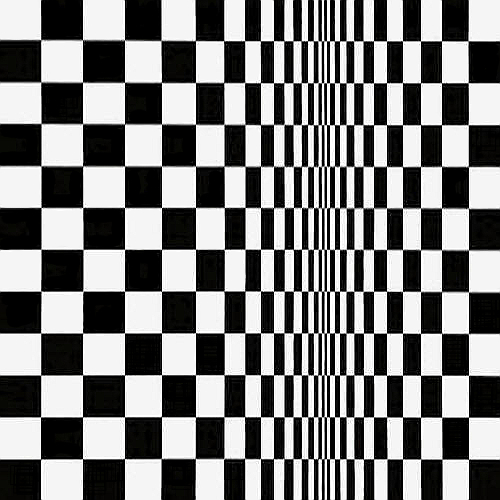
| Artist | Bridget Riley |
| Date Created | 1961 |
| Medium | Oil on canvas |
| Genre | Op Art |
| Period | Contemporary |
| Dimensions | 122 x 122 cm (48 x 48 inches) |
| Series/Versions | – |
| Where Housed | Tate Britain, London |
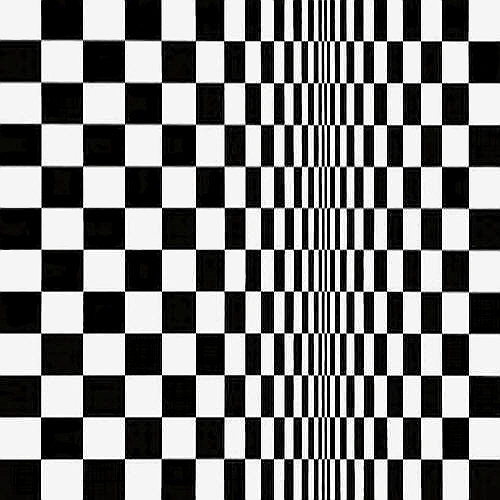
Let’s delve deeper into the mesmerizing world of “Movement in Squares,” created by Bridget Riley in 1961. At first glance, the artwork may appear to be a simple grid of squares, but upon closer inspection, a fascinating optical illusion unfolds before your eyes. The squares seem to come alive, as if they’re in constant motion, dancing and shifting with an energy of their own. It’s an enchanting sight that captures the imagination and leaves viewers spellbound.
But how does Bridget Riley achieve this captivating effect? The secret lies in her meticulous arrangement of colors and shapes. By carefully selecting contrasting hues and arranging the squares in a precise manner, she creates a visual rhythm that tricks the brain into perceiving movement where none actually exists. It’s a brilliant example of how art can play with our perceptions and challenge our understanding of reality.
As you gaze upon “Movement in Squares,” allow yourself to be drawn into its hypnotic embrace. Let your eyes roam across the canvas, following the ebb and flow of the squares as they seemingly glide and sway before you. It’s a mesmerizing experience that reminds us of the boundless creativity of artists like Bridget Riley and the endless possibilities of the artistic imagination.
Interesting Facts
Bridget Riley’s fascination with optical illusions stems from her interest in psychology and perception. She often cites the work of Gestalt psychologists as a source of inspiration for her art.
“Movement in Squares” is part of a series of paintings Riley created in the early 1960s, exploring the effects of color and form on visual perception. Each artwork in the series offers a unique variation on the theme of movement and rhythm.
Despite its seemingly simple composition, “Movement in Squares” requires meticulous attention to detail in its execution. Riley spent weeks carefully planning and executing the precise arrangement of squares to achieve the desired optical effects.
The hypnotic quality of “Movement in Squares” has made it a favorite among collectors and art enthusiasts worldwide. It has been exhibited in galleries and museums around the globe, cementing its status as an iconic work of contemporary art.
Artwork Spotlight: Leap
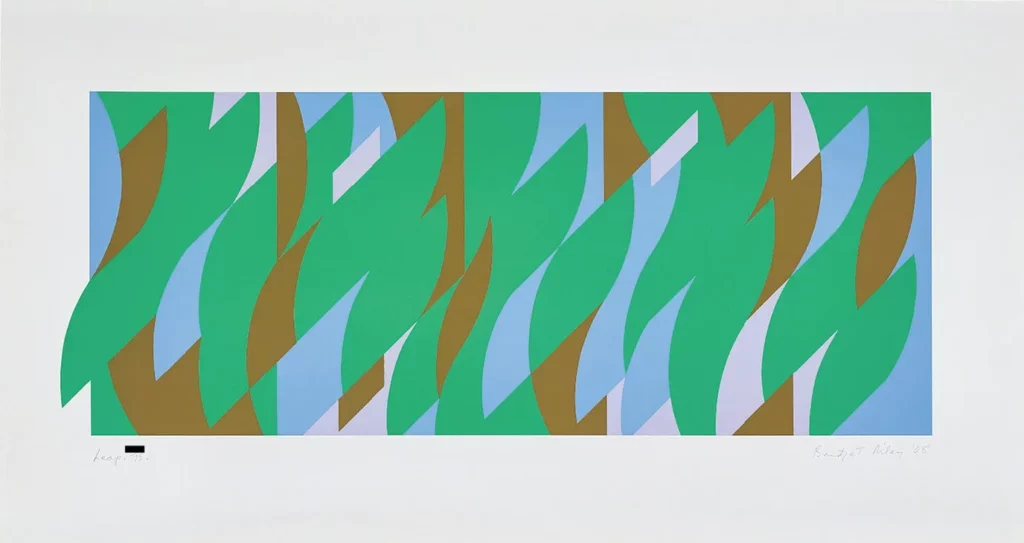
Bridget Riley’s ‘Leap’ is available on Singulart. This artwork shows how the artist established herself as a world-renowned practitioner of Op Art; the bright patterns give the impression of sprinting up the canvas, or at least along the curves of two gymnasts. The colors and shapes in the artwork are harmonized actively, which means that the warm/cold binary not only captures the viewer’s attention but also leads to the sensation that the depicted image is palpitating.
Are you looking for a piece of artwork from Bridget Riley?
Singulart has limited edition prints of Bridget Riley. If you are looking for a piece of Riley’s artwork for sale, simply click on the artwork or the button below to discover more!
Frequently Asked Questions
Why is Bridget Riley so important?
Riley rose to fame in the 1960s as a representative of both Op art and modern British painting, and in 1968 she became the first female winner of the painting prize at the Venice Biennale. Richard Allen and Richard Anuszkiewicz were among the wave of Op artists who drew inspiration from Riley’s artistic breakthroughs.
What techniques does Bridget Riley use?
In order to achieve visual rhythm in her paintings, Bridget Riley employs geometric shapes, lines, and colors. Her distinctive style is characterized by recurring patterns that create optical illusions and draw the viewer’s eye across the canvas.
Conclusion
Bridget Riley’s “Movement in Squares” stands as a testament to the artist’s unparalleled skill and creativity. Through her masterful manipulation of color, shape, and form, Riley invites viewers into a captivating world of optical illusions and visual intrigue. As one of the defining works of the Op Art movement, “Movement in Squares” continues to inspire and delight audiences, proving the enduring power of Riley’s artistic vision.