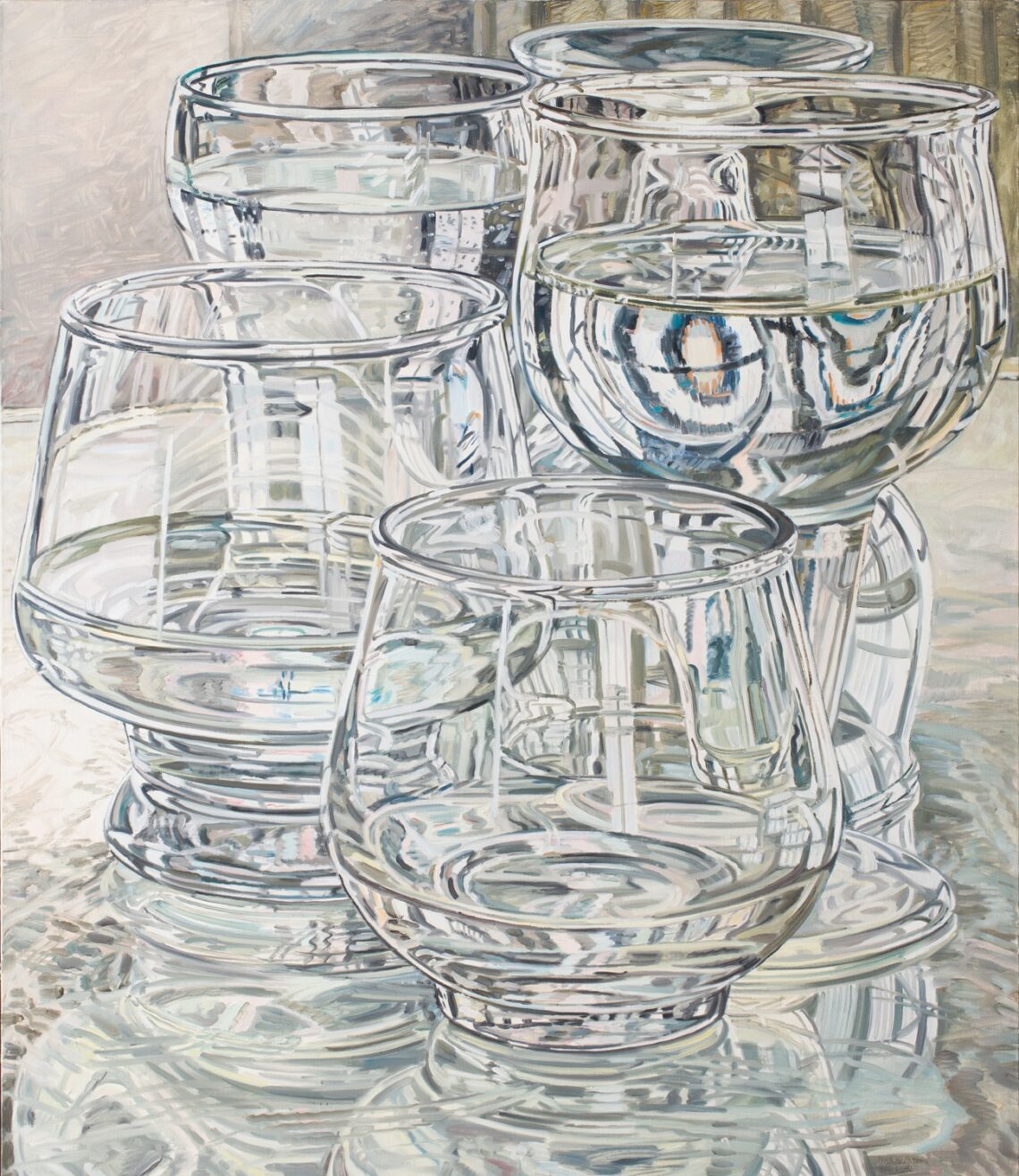
Janet Fish, a prominent American painter is known for her lively still life compositions. In her paintings, she frequently uses glass and plastic objects. Her approach to bring out the effect of light and color on simple things has made her a distinctive personality among the present-day artists. Let us now examine one of her celebrated paintings, titled “Glass and Plastic,” and explore into the amazing environment it brings to the viewer.
Who was Janet Fish?
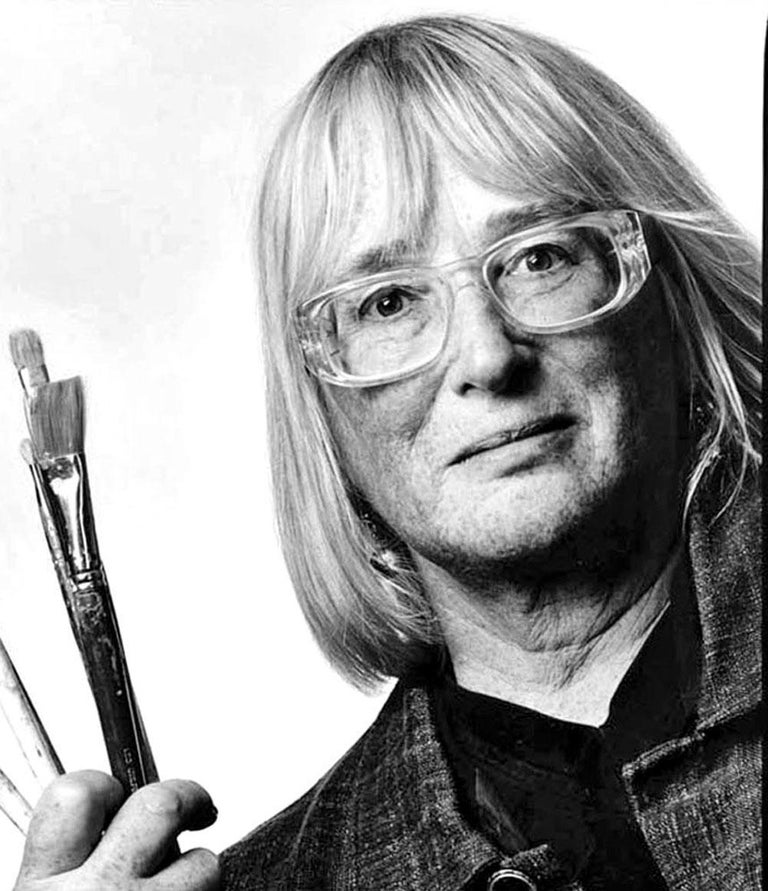
Janet Fish was born in Boston, Massachusetts. Her family was known for its contribution to the arts. Her grandfather was Clark Voorhees, an American Impressionist painter, and her mother, Florence Whistler Fish, was also artistically inclined. This family impact was quite principal in the development of Fish’s art vision.
She dedicated herself to formal art education by going to Smith College and finally earning her MFA degree at Yale University. Fish’s manner of painting altered step by step from the abstract expressionism to realism with still-life being her particular focus.
FUN FACT: Janet Fish loved to incorporate personal objects into her artwork. Fish often includes items from her own life in her still-life compositions.
Her Career
Fish’s career was boosted in the 1970s when she started attracting the attention of the art critics for her realistic still life paintings. She developed a reputation for patience and accuracy whilst endowing simply things with life and vigor.
Throughout her life and art career Fish experimented with various mediums and techniques, but she consistently returned to the theme of still life, depicting the interplay of light, color and texture. Her works have been featured in most of the renowned galleries and museums across the world and she is now one of the leading American contemporary painters.
What is Happening in “Glass and Plastic”?
| Artist | Janet Fish |
| Date Created | 1986 |
| Medium | Oil on canvas |
| Genre | Still Life |
| Period | Contemporary |
| Dimensions | 48 x 72 inches |
| Series / Versions | N/A |
| Where is it housed? | Private Collection |
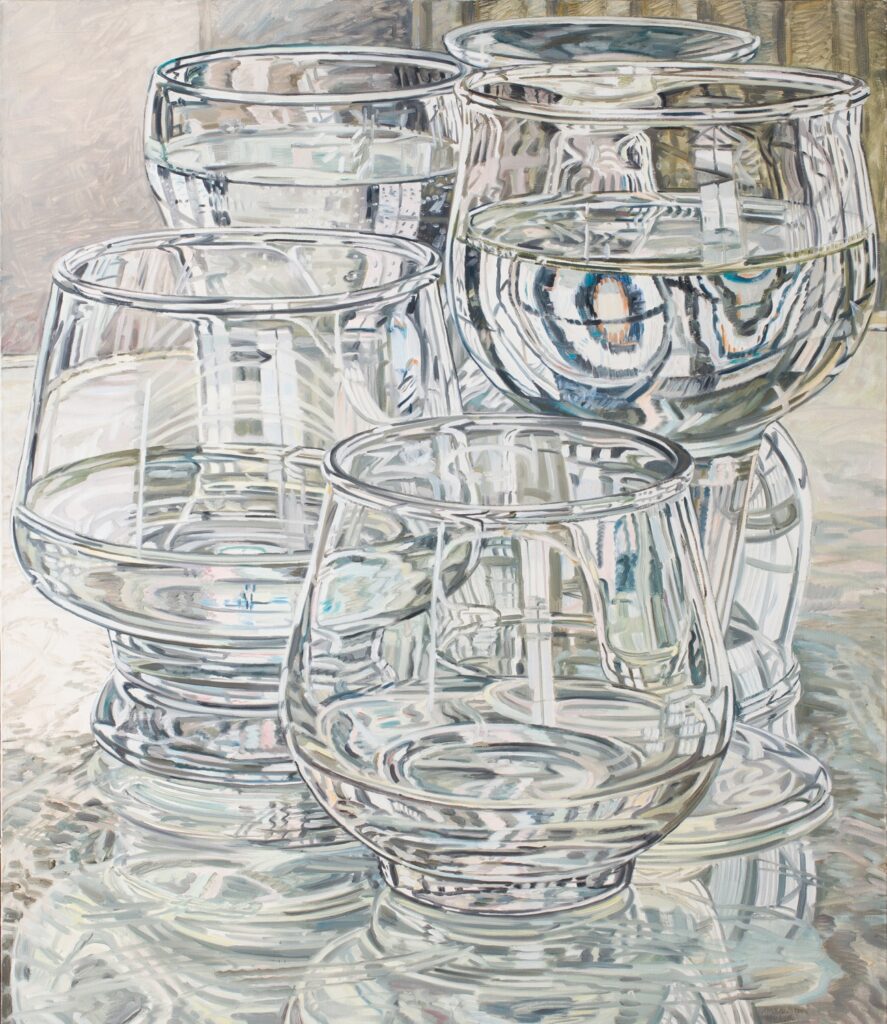
“Glass and Plastic” serves as the perfect metaphor of Janet Fish’s talent at depicting the luminosity and translucence of glass and plastic objects. Dating back to 1986, this painting is yet another masterpiece of Fish that is well known for it’s lively colors, intricate details and spontaneity.
In this composition, Fish arranged assorted plastic and glass objects on a reflective surface, therefore inviting viewers to enjoy the dance of light and shadow. Every piece of the table is painted with attention to detail, from the refined edges of the glasses to the slight distortions in the plastics boxes.
The objects’ rich colors serve as a striking visual contrast on the neutral background, which enhances the depth and size of the painting. Improvisation with light and colors undoubtedly gives depth of life and expression to the scene, turning mundane things into matters of interest.
Interesting Facts about “Glass and Plastic”
Janet Fish often incorporated personal objects into her still-life compositions, infusing them with layers of meaning and nostalgia.
Fish’s meticulous attention to detail meant that her paintings often took weeks or even months to complete, as she painstakingly rendered each object with precision.
Despite the apparent realism in her works, Fish often played with perspective and scale, creating visually dynamic compositions that challenge the viewer’s perception.
Fish’s use of bold, saturated colors reflects her fascination with the visual impact of light on objects, inviting viewers to immerse themselves in the vibrant world she creates.
“Glass and Plastic” exemplifies Fish’s ability to transform ordinary scenes into extraordinary works of art, inviting viewers to rediscover the beauty in the everyday.
Frequently Asked Questions
What is Janet Fish best known for?
Fish has garnered acclaim for her captivating large-scale still lifes, rendered in a meticulous realist style. Her paintings celebrate the beauty of everyday objects, particularly transparent glassware partially filled with water. Through her masterful technique, Fish captures the intricate forms and mesmerizing play of light on their surfaces. Each object becomes a testament to her keen eye and ability to transform the ordinary into extraordinary works of art.
Who was in Janet Fish’s family?
Janet Fish’s artistic journey began in a vibrant and inspiring environment. Surrounded by art and light during her formative years in Bermuda, she was influenced by a family lineage. Her grandfather, a renowned Impressionist painter; her uncle, a skilled woodcarver; and her mother, a talented potter and sculptor. All undoubtedly nurtured her creative spirit. Then, that Fish embraced her artistic calling from a young age.
Conclusion
Janet Fish’s “Glass and Plastic” is a manifestation of her skill in bringing the abstract quality of ordinary objects to life with her individual perspective. By employing the techniques of close observation and vivid color, Fish draws the viewers into the depths of the insignificant and evokes emotions about the beauty of the ordinary.