In the world of contemporary art, very few names elicit as much mystery and reflection as Jenny Holzer does. The powerful text-based artworks of Holzer have given her a unique place in the art world, for her deep exploration of social norms, power relations and the human existence. Among her works, the part that really stands out is the “Survival Series,” a group of thought-provoking aphorisms that touch people at their deepest level. Today, we will look at Jenny Holzer’s biography, the core concept behind the “Survival Series,” and the massive influence of her thought-provoking art.
Who was Jenny Holzer?

Jenny Holzer, who was born in 1950, in Gallipolis, Ohio, is an American conceptual artist who has gained both nationally and internationally to scrutinize political issues and instill contemplation on personal questions. Holzer’s artistic career started by creating abstract paintings but in the late 70s she began using language, incorporating words to express her strong messages in public places.
FUN FACT: Ever heard of a “talking bench”? Well, Jenny Holzer made it a reality! In 2009, Holzer created a series of benches called “Blue Purple Tilt” that feature engraved texts from her “Truisms” and “Inflammatory Essays” series.
Her Career
Holzer gained immense popularity in the 1980s when she created the Truisms series, a collection of aphoristic statements that she placed in public spaces using LED signs, posters, and other mediums. It was then that she embarked on an investigation of the relation between language, power, and the public realm. Throughout the years Holzer has proved to be a controversial artist who carries her torch in the area of installations, sculptures and projections that touch on the reality of war, violence, and consumerism.
What is Happening in Survival Series?
| Artist | Jenny Holzer |
| Date Created | Early 1980s |
| Medium | Various (LED signs, projections, installations) |
| Genre | Conceptual Art |
| Period | Contemporary |
| Dimensions | Variable |
| Series / Versions | Multiple iterations |
| Where is it housed? | Various public and private collections worldwide |
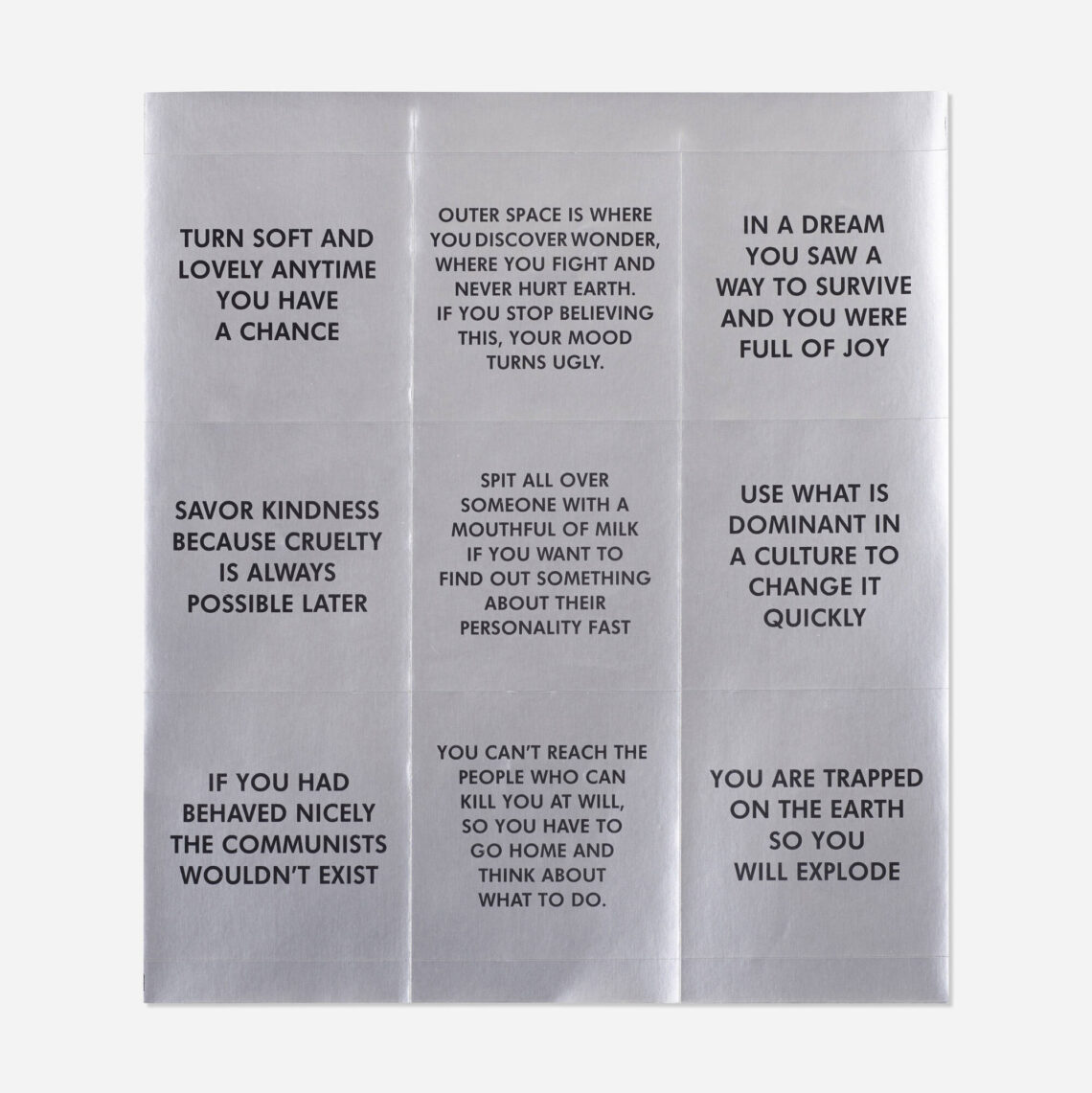
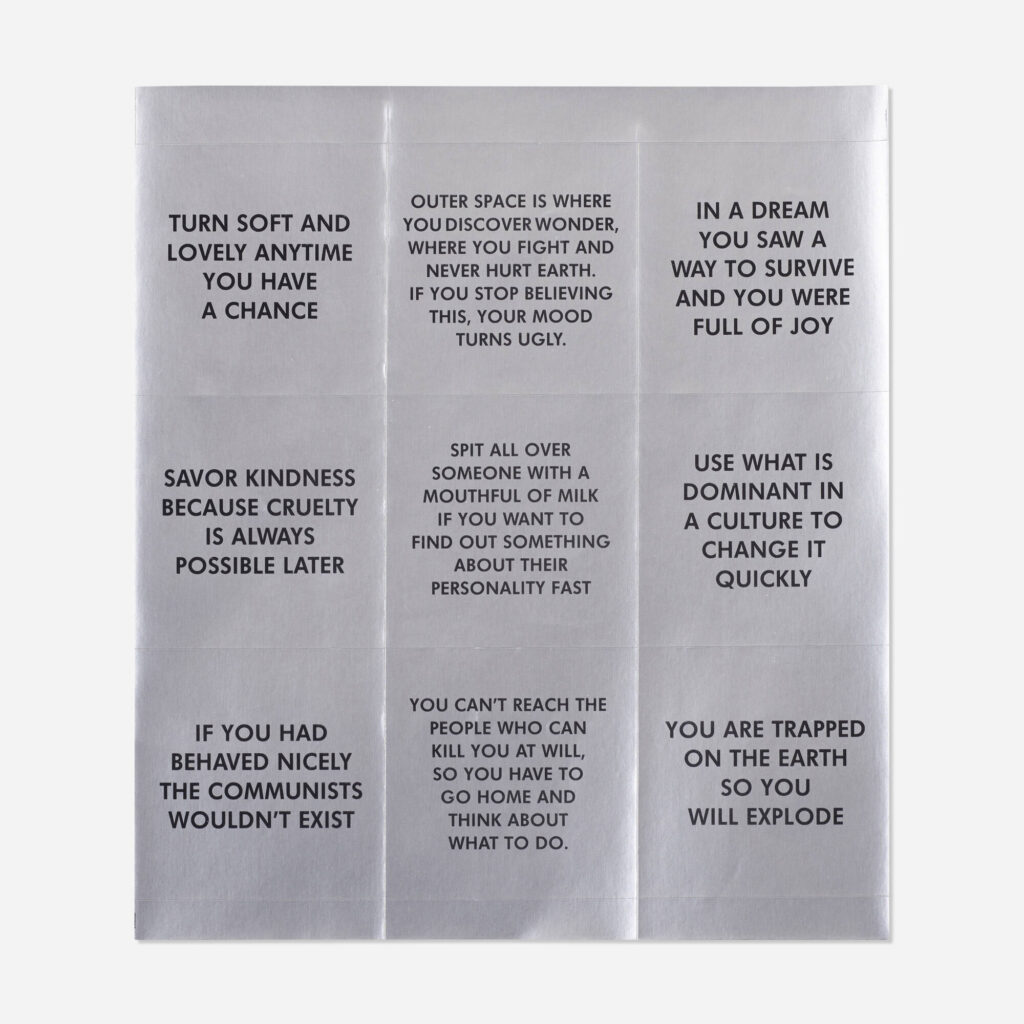
One of Holzer’s most legendary works is the “Survival Series”, produced in the early 1980s. This series is comprised of aphorisms which cover the themes of survival, power, and oppression. Holzer brings aesthetic and emotional dimensions to the way we see the world by contrasting the text and context, thus making us wrestle with the complexities and challenges of our existence.
In the “Survival Series”, Holzer combines her typical use of language to address the viewers from both a visceral and intellectual standpoint. Whether exhibited on the massive LED billboards of our urban centers or chiseled into the stone benches of our serene parks, these expressions ask to be acknowledged and compel reflection.
Interesting Facts About Survival Series
Holzer often draws inspiration from historical texts, literature, and political speeches, infusing her work with layers of meaning and cultural resonance.
The “Survival Series” emerged during a tumultuous period marked by political unrest, social upheaval, and the threat of nuclear war, reflecting the anxieties and uncertainties of the era.
Holzer’s use of unconventional mediums and public spaces challenges traditional notions of art and its accessibility, democratizing the viewing experience and inviting dialogue beyond the confines of traditional art institutions.
Artwork Spotlight: Sensibility

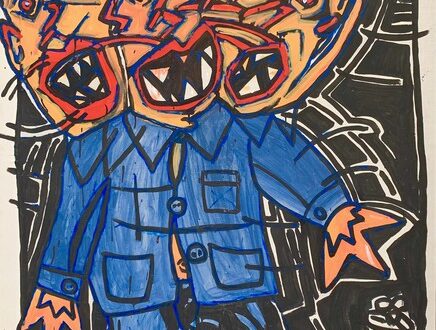
“Sensibility” is also available on Singulart. This artwork is particularly striking piece that urges the audiences to think about the vulnerability of empathy as it is going against the tough and indifferent world. Through her usual wit and penetrating insight, she reminds us how compassion and understanding are essential whilst we are faced with struggles.
Are you looking for a masterpiece from Jenny Holzer?
Singulart presents exclusive limited edition pieces by Jenny Holzer. To discover and acquire Holzer’s art, click on the artwork or the button below for more information!
Frequently Asked Questions
When did Jenny Holzer become famous?
In an iconic 1982 event, Holzer displayed on the massive Spectacolor electric signboard in Times Square, made possible by sponsorship from the New York Public Art Fund. With the 1986 piece Under a Rock, Holzer started distributing her texts across larger media.
What materials does Jenny Holzer use?
Jenny Holzer uses a variety of mediums, such as printed materials, billboards, paintings, carved stone, electronic signs, and billboards, to place text in public areas.
Conclusion
Jenny Holzer’s “Survival Series” still causes a stir with its sharp observations of human existence and the constant validity of a dynamic world. The artist, through her creative language and imagery, welcomes the audience to face the difficult issues and embrace the transformative power of art.