The mysterious world of modern art, few names can elicit as much respect and curiosity as Georg Baselitz. A nonconformist by tradition and inventor, Baselitz has made his own niche in the artistic world with his provocative and expressive pieces that are neither conforming to the norms of art. At the heart of his oeuvre is “The Naked Man,” a groundbreaking work that conveys the raw emotion and the hopelessness that imbue Baselitz’s artistic mission. This article takes us into the bare soul of Baselitz’s masterpiece, investigating its significance, context, and unfailing effect on the world of art.
Who was Georg Baselitz?

Georg Baselitz was born in 1938 in Deutschbaselitz, Germany. He is a key figure among contemporary artists, famous for his controversial and uncommon way of painting, sculpturing, and printing. Baselitz gained his prominence in the 1960s along with other German neo-expressionists who were his contemporaries. He often subverts established artistic conventions by dealing with topics like identity, history, and the mystery of people.
FUN FACT: Did you know that he often paints his artworks upside down during the creative process? Yes, you read that right! Baselitz has a unique approach to painting where he flips the canvas upside down as he works on it.
His Career
Baselitz’s career covers more than 60 years of experimentation with forms and a restless passion for artistic innovation. His popularity spread in the 1960s with his unique style representing some inverted figures which contrasted with conventional representations. Throughout his entire career, Baselitz has used different media, various techniques, and different themes, making him one of the most important artists of his generation.
What is Happening in The Naked Man?
| Artist | Georg Baselitz |
| Date Created | 1962 |
| Medium | Oil on canvas |
| Genre | Expressionism |
| Period | Contemporary |
| Dimensions | 200 cm × 150 cm |
| Series/Versions | – |
| Where is it housed? | Private Collection |
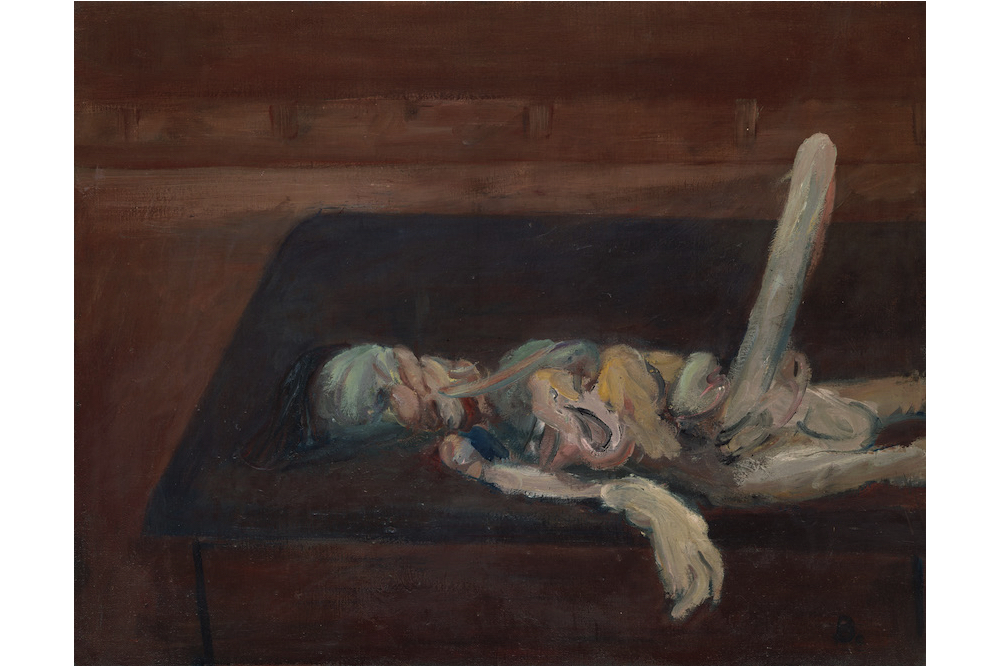
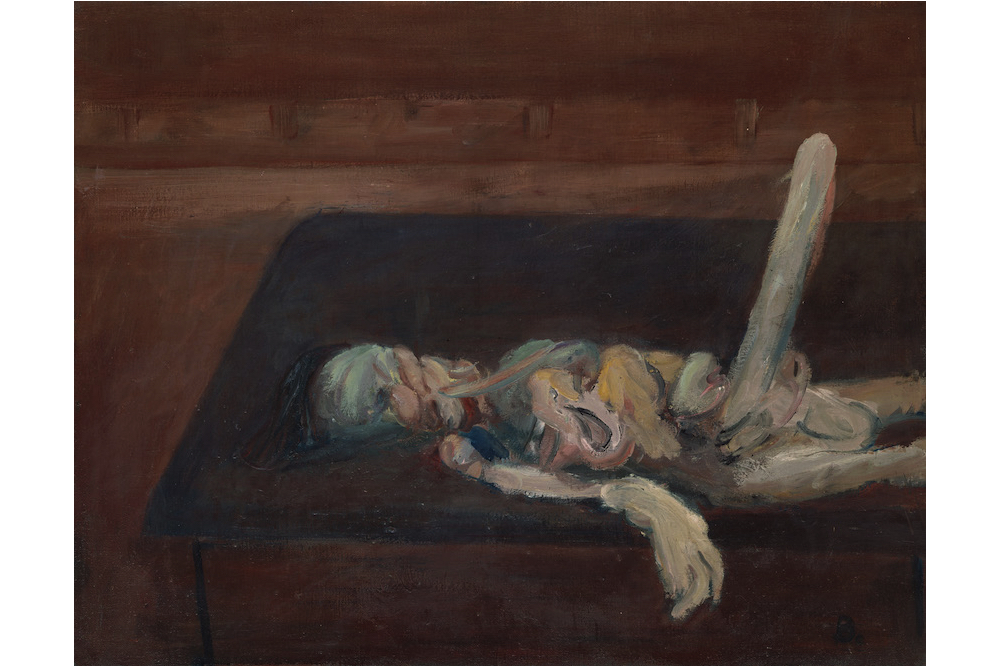
“The Naked Man” basically captures Baselitz’s signature artistic style and thematic concerns. This masterpiece was put together in 1962 by him and it portrays the central theme of existentialism so bluntly and vividly. Placed on a monochrome background, the central character is represented in a distorted and stretched-out pose, attracting the attention of the audience with an almost shocking immediacy.
It can be immediately noticed that the man without any clothes is in a state of desperation with his limbs all jumbled and twisting and the dance that he is doing is not orderly and is of agony. The absence of facial features reinforces the sense of anonymity and universality so that the painting sees viewers to attribute their own experiences onto the canvas.
What’s So Special about The Naked Man?
What is unique about “The Naked Man” by Georg Baselitz compared with other pieces of artwork? Let’s open the curtains and discover what it is that makes this work of art so extraordinary.
First and foremost, the raw emotion that pervades each brushstroke is what stands out the most. Baselitz is an extraordinary artist who can achieve the depths of human experience and the power of it is evident in “The Naked Man.” The twisted figure seems like it’s the personification of an emotional vortex – despair, anguish, and vulnerability. Baselitz has seized the financial heart of the human condition, laid bare before everyone.
After that comes Baselitz’s attempts to turn away from the normal, traditional approach. The artist highlights the distorted, almost ugly representation of the human figure that stands against the traditional notions of beauty, and asks viewers to face themselves and their preconceptions about it. In a society where the majority of people choose the safe and familiar path, the boldness of Baselitz proves to be a great example of the effect of artistic freedom and individual expression.
Interesting Facts about The Naked Man
Controversial Reception: “The Naked Man” initially sparked controversy upon its unveiling, with some critics condemning its perceived vulgarity and obscenity. However, this backlash only served to solidify Baselitz’s reputation as a provocateur and trailblazer in the art world.
Influence of Expressionism: Baselitz’s form and color in “The Naked Man” reflects his deep admiration for the German Expressionist movement. He drew inspiration from artists such as Ernst Ludwig Kirchner and Emil Nolde, whose bold and emotive works resonated with his artistic sensibilities.
Continued Exploration: Despite its creation over five decades ago, “The Naked Man” continues to captivate audiences around the world with its timeless relevance and emotional resonance. Baselitz’s exploration of the human condition transcends temporal boundaries, offering a poignant reflection on the complexities of existence.
Evolution of Style: Over the years, Baselitz has revisited the theme of the naked figure in various iterations, each imbued with its own unique narrative and emotional weight. From bold brushstrokes to delicate lines, his stylistic evolution reflects a constant quest for self-discovery and artistic reinvention.
Artwork Spotlight: Le guerrier aux lances

“Le guerrier aux lances” by Georg Baselitz is available on Singulart. It is an expressive work of art that portrays a warrior with lances and was painted in an upside-down position by the artist. The artwork transforms usual conventions, paying much attention to passion and active shapes.
Are you looking for a piece of artwork from Georg Baselitz ?
Singulart has limited edition prints of Georg Baselitz. If you are looking for a piece of Baselitz‘s artwork for sale, simply click on the artwork or the button below to discover more!
Frequently Asked Questions
What materials does Georg Baselitz use?
Baselitz carved these sculptures directly from tree trunks, frequently with chainsaws and axes. In 1983, he stated that he avoided all manual dexterity, all elegance, and all related to construction by working with wood.
What inspired Georg Baselitz?
He created his unique visual language by referencing various sources, such as African sculptures, Mannerist paintings, and Soviet graphic art.
Conclusion
“The Naked Man” exhibits Georg Baselitz’s intersection with contemporary artists. Artistically breathtaking and emotionally rich, this work not only transports the audience into the depths of the human soul but also brings vulnerability and resilience into a symphony of an ever-ongoing existential query.