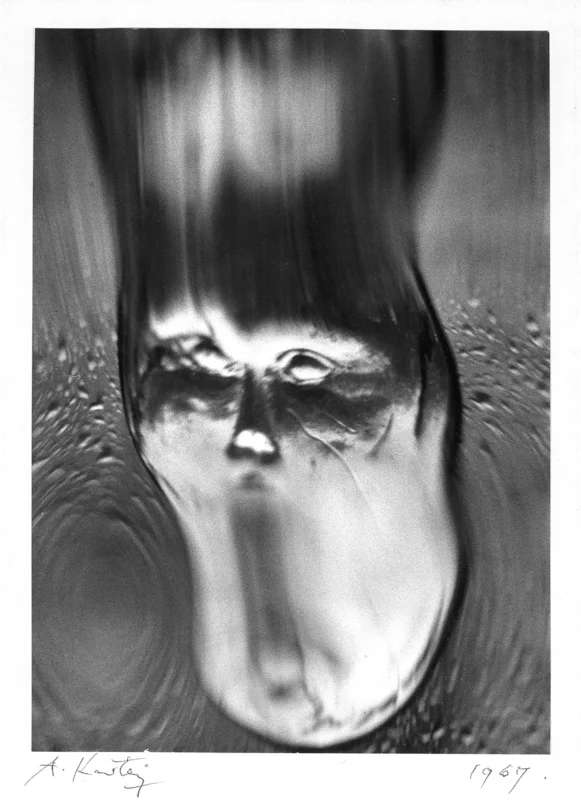
In the field of photography, André Kertész is well known as a genius and pioneer with a unique eye through which he shows the world as it is. Kertész was born in 1894 in Hungary, and his photographic journey was spread across continents and decades, influencing photography in a lasting way. His evolution in different styles including street photography and surrealism ultimately set new standards of what photography was able to express. In his exhilarating body of work, “Distortion #29, Paris” reveals Kertész par excellence. In this article, we are going to travel to the mysterious realm of André Kertész where we will uncover the secret of “Distortion #29, Paris” which is formed by both innovative and imaginative features.
Who was André Kertész?
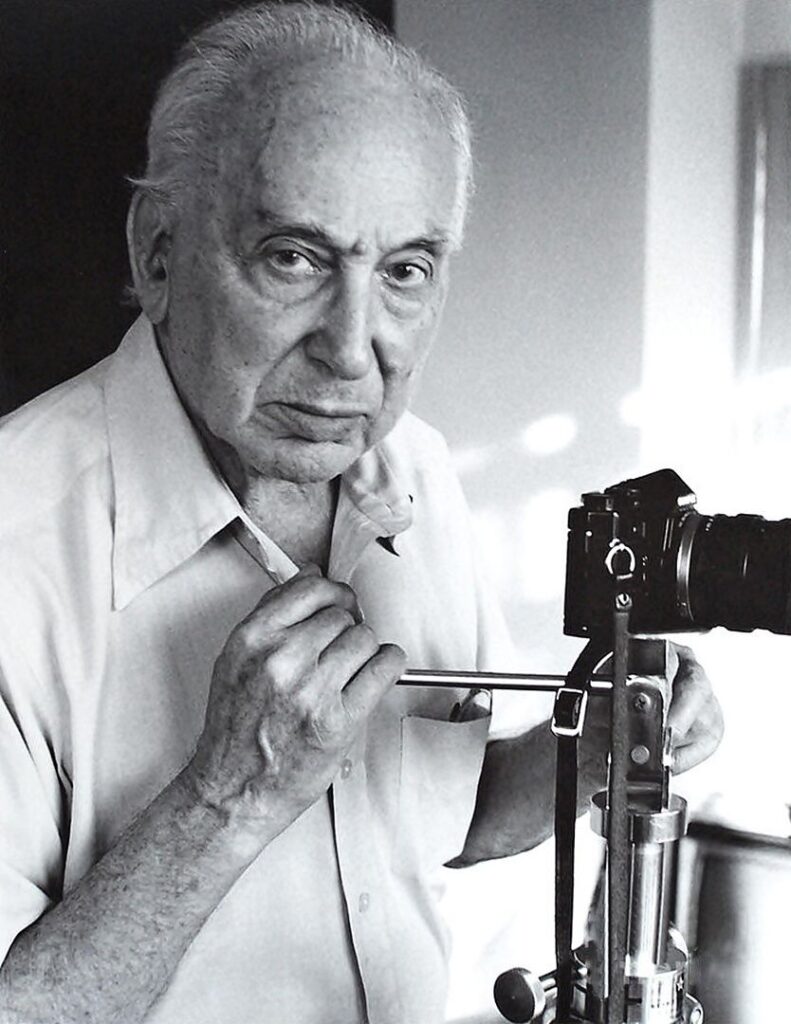
André Kertész, an emigrant from his homeland of Hungary, is appreciated internationally as one of the greatest photographers. In 1894, Kertész was born. He took up photography in the early 20th century, and until his death, he remained a dominant force and left a legacy of his distinct vision and style. His paintings often dealt with common situations, poetically developing them, and thus turning the usual into the extraordinary.
In his early years, Kertész was experimenting with different photographic techniques and improving his skills so that he was able to create his style, which is characterized by its closeness and emotionality. His photographs were telling, they unveiled the hidden poetry that was wrapped into the texture of the daily world. Through the capturing of fleeting moments of urban life and the quiet beauty of nature, Kertész imbued his photographs with timeless qualities, allowing viewers to reflect on the mysteries of existence.
FUN FACT: André Kertész was often known as the “Father of the Photo Essay.” While he’s celebrated for his individual photographs, Kertész also played a significant role in pioneering the photo essay format, where a series of photographs are used to tell a cohesive story or convey a narrative.
His Career
Kertész’s relocation to Paris in the 1920s brought the necessary change in his career. Immersion in the lively cultural field of the city became a source of his art inspiration from the works of other artists and intellectuals who went to the cafés and the salons of Montparnasse. This is a period in which he built connections with famous people, such as Piet Mondrian (whose studio was the background of one of Kertész’s most famous photos).
He was a real trailblazer in photography and went ahead to try new techniques while remaining faithful to his artistic vision. Through his images, he pictured urban life modernly, showing the essence, beauty, and complexity of the human experience. Whether it was the busy streets of Paris or the towering skyscrapers of New York City, Kertész’s lens was enough to create a portrait of the chaotic world in transition, amidst which one could find beauty and transcendence.
What is Happening in Distortion #29, Paris?
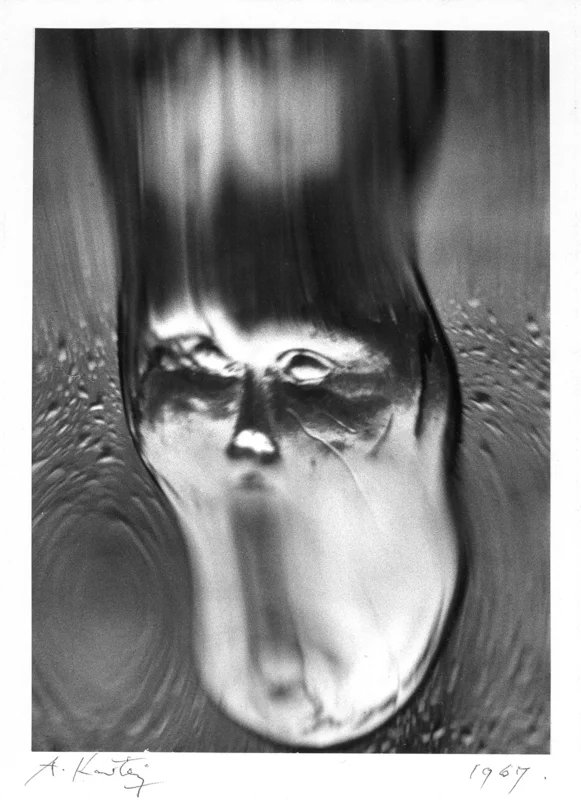
| Artist | André Kertész |
| Date Created | 1933 |
| Medium | Gelatin silver print |
| Genre | Surrealism |
| Period | Modern |
| Dimensions | 9 7/16 x 7 9/16 in. (24 x 19.2 cm) |
| Series / Versions | Distortion series |
| Where is it housed? | International Center of Photography, New York |
In “Distortion #29, Paris,” Kertész leads viewers into a surreal dreamscape. Captured in 1933, this iconic image transports us to Paris streets. Buildings distort, reflecting the photographer’s thoughts. Amid surreal scenes, a lonely figure wanders, observing perception games. Through the sharpened lens, space, perspective, and reality seem as malleable as light.
What’s So Special about Distortion #29, Paris?
The basis of “Distortion #29 Paris” is André Kertész’s innovative approach to photography. Unlike some photographers who would only use post-processing methods to create surreal results, Kertész had a more daring approach which was to undertake experiments with in-camera techniques. With a concave mirror ahead of his lens, he modified reality by distorting the Parisian scene in an interesting manner of art. This non-conventional approach helped Kertész get beyond the constraints of traditional photography, thus ensuring the spectator’s vision is challenged as to space and forms.
Interesting Facts About Distortion #29, Paris
Innovative Technique: Kertész achieved the distortion effect using a convex mirror. This unconventional technique warped the image in camera.
Unconventional Composition: The composition of “Distortion #29, Paris” is strikingly unconventional. Distorted lines and angles defy traditional perspective. Kertész’s willingness to experiment showcases his fearless approach.
Timeless Appeal: Despite its age, “Distortion #29, Paris” captivates with timeless allure. Its surreal atmosphere transcends temporal boundaries, resonating across generations.
Artwork Spotlight: Hazy Day, Budapest, November
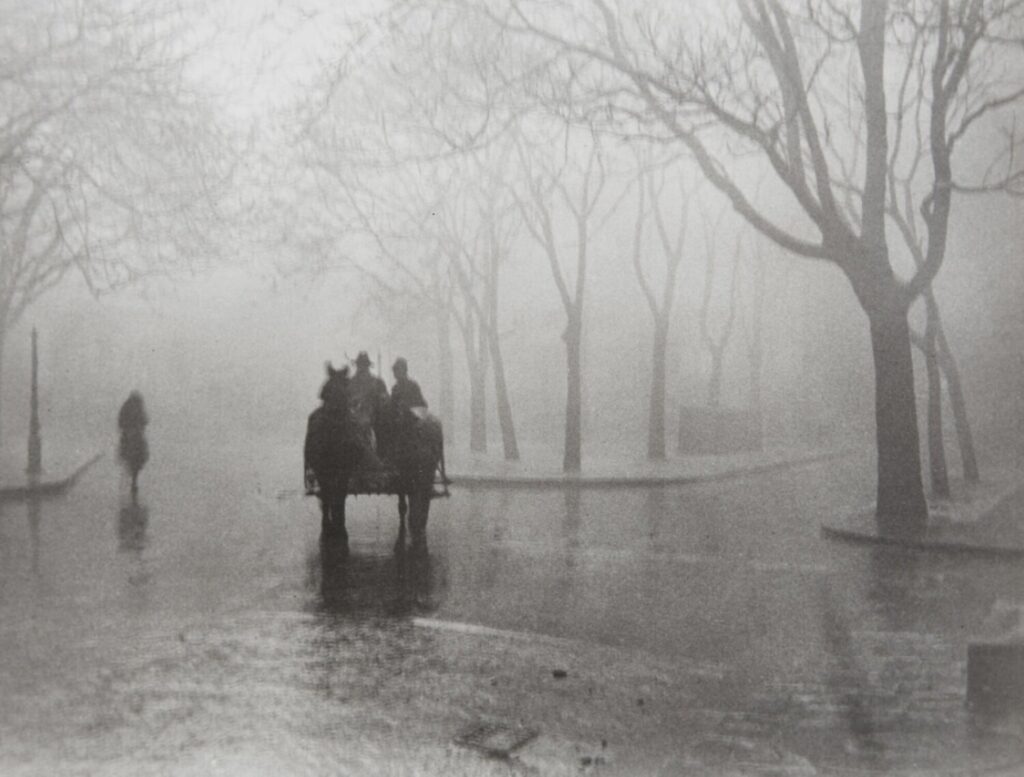
“Hazy Day, Budapest, November” by Kertész is available on Singulart. It is a reflection of the fragility and ethereal charm that a misty day brings to his town. The soft and wavy light and the airy setting bring back memories and provoke some thoughts of contemplation that make viewers lose themselves in the peace and quietness of the moment.
Are you looking for a piece of artwork from André Kertész ?
Singulart has limited edition prints of André Kertész. If you are looking for a piece of Kertész‘s artwork for sale, simply click on the artwork or the button below to discover more!
Frequently Asked Questions
What is André Kertész famous for?
His own photography in the 1960s and 1970s served as an inspiration to many other modern photographers. In all spheres of postwar photography, Kertész’s work is historically significant because he fused a formalist concern for abstract shapes with a photojournalistic interest in movement and gesture.
What camera did André Kertész use?
Kertész used a Leica camera to capture what appears to be a straightforward street scene in this mysterious image. Three years before Henri Cartier-Bresson, in the 1920s, Kertész was seen with a Leica from 1928. Because it was lightweight and simple to use, photojournalists quickly began to like the camera.
Conclusion
André Kertész‘s “Distortion #29, Paris” embodies his progressive spirit and enduring influence. His creative approach and dedication inspire photographers and art lovers alike. This masterpiece reminds us of the immense expression contained within a single frame.