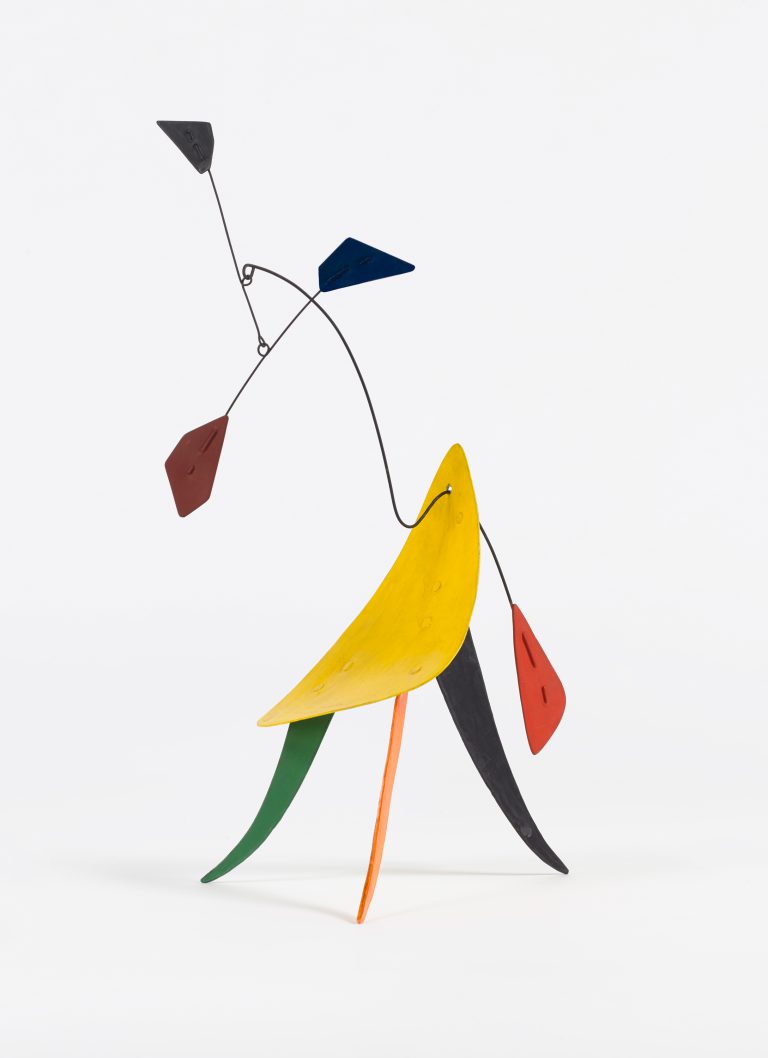
Modern art, as we know it today, is incomplete without the mention of the name, Alexander Calder. The maestro of kinetic sculpture, Calder’s works live, defy gravity, and push the boundaries of the conventional. Among his countless masterpieces, one stands out for its mysterious fascination—Untitled, 1942. During that period which was a fundamental part of Calder’s outstanding career, the sculpture embodies his artistic thought in the dance-like unfolding of shape, motion, and equilibrium. We invite you to join us on a journey to untangle Untitled, 1942 and unveil the enchanting world of Alexander Calder.
Who was Alexander Calder?
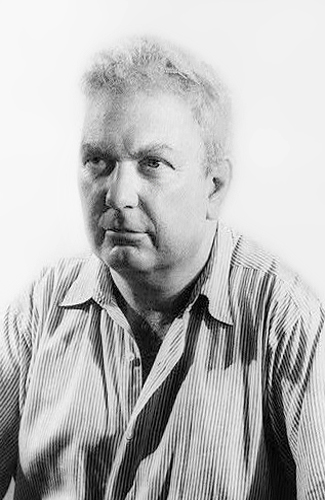
Alexander Calder – an American sculptor, who conquered the art world through his revolutionary works of modern art – represents a unique and unconventional vision of the world. The first steps of Calder as a sculptor were not expected as he was born into a family of artists and later on he trained as an engineer before embracing a career in sculpture. Whether it was his playful use of bright colors and dynamic shapes or his bold approach to art, Calder undoubtedly became one of the greatest artists of the 20th century.
FUN FACT: Did you know that he created a miniature circus made entirely of wire, cloth, and other found materials? Calder’s “Circus” was a whimsical and interactive spectacle featuring tiny acrobats, animals, and even a ringmaster, all meticulously crafted by the artist himself.
His Career
Calder’s career lasted multiple decades, and during this time he created a great deal of work ranging from miniature mobiles to gigantic outdoor sculptures. He experimented with various types of materials such as wire, sheet metal, and wood as a medium for creating his artistic ideas. Among many other stunts, Calder’s pioneering use of space and motion-based art defied the traditional concept of sculpture, which, in turn, earned him great international success and made him a real innovator of modern art.
What Is Happening in Untitled, 1942?
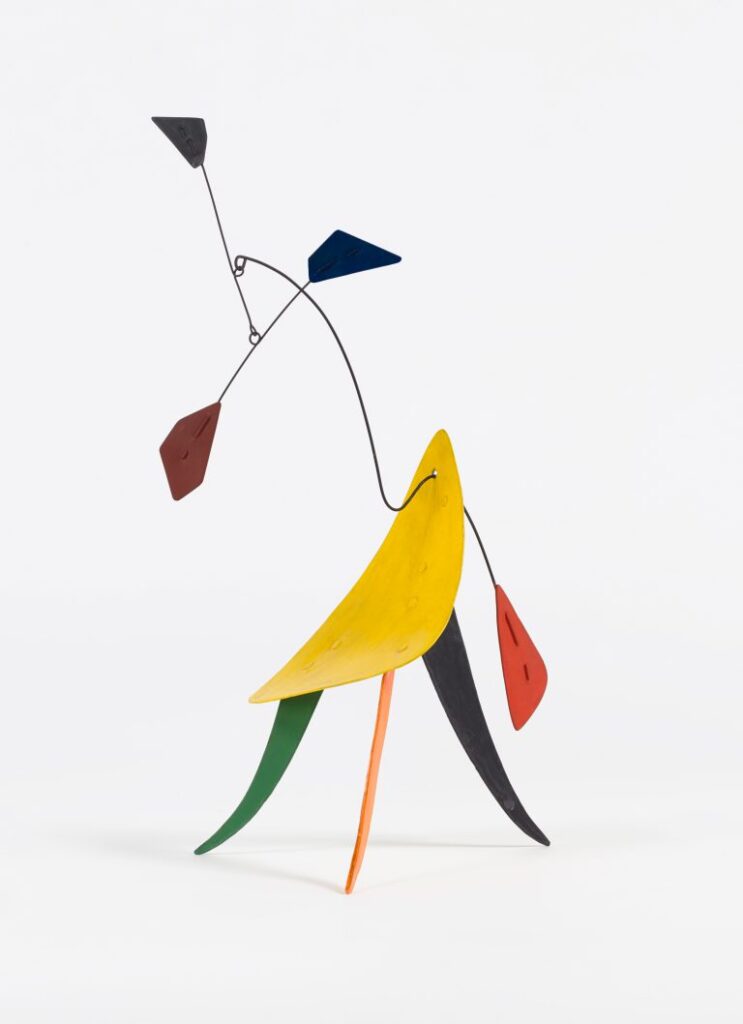
| Artist | Alexander Calder |
| Date Created | 1942 |
| Medium | Metal, Paint |
| Genre | Abstract Sculpture |
| Period | Modernism |
| Dimensions | Approximately 3 ft x 4 ft |
| Series/Versions | Part of a series |
| Where Housed | Private Collection |
This work, Untitled,1942, shows that Calder had a great command of form, movement, and balance. Conceived at a crucial juncture of his artistic journey, this statue is a defining feature of the artist’s style and also reflects his artistic preoccupation with motion and balance.
To the untrained eye, Untitled, 1942, seems to be a delicately balanced combination of geometric shapes frozen in time. Seemingly electronic, the structure up close attracts the viewer into a mysterious dance of lines and curves, as the individual parts appear to interact and intertwine in a harmonizing choreography.
What’s So Special About Untitled, 1942?
The sculpture’s dynamic composition implies that it is always on the move; each component seems ready to sway and shift with even the slightest touch of the wind. Calder’s colorful forms add much visual effect while creating movement and the liveliness of the art.
Like many of Calder’s mobiles, Untitled, 1942, makes one pause and consider the relationship between form and function as well as the play of light and shadow. The seemingly effortless equilibrium hides the intricate artistry required to accomplish this kind of perfection, thereby disclosing Calder’s technical skill together with artistic vision.
Interesting Facts about Untitled, 1942
Despite its abstract appearance, Untitled, 1942, was inspired by Calder’s fascination with the natural world. The artist often drew inspiration from organic forms and phenomena, translating them into his unique visual language.
Calder’s mobiles were not only admired for their artistic merit but also for their scientific significance. His innovative use of balance and counterbalance influenced the field of aerodynamics and inspired advancements in engineering and design.
Untitled, 1942, is part of a series of mobiles created by Calder during the early 1940s. Each sculpture in the series exhibits variations in form, color, and composition, showcasing the artist’s ongoing exploration of movement and space.
Artwork Spotlight: Red Boomerang
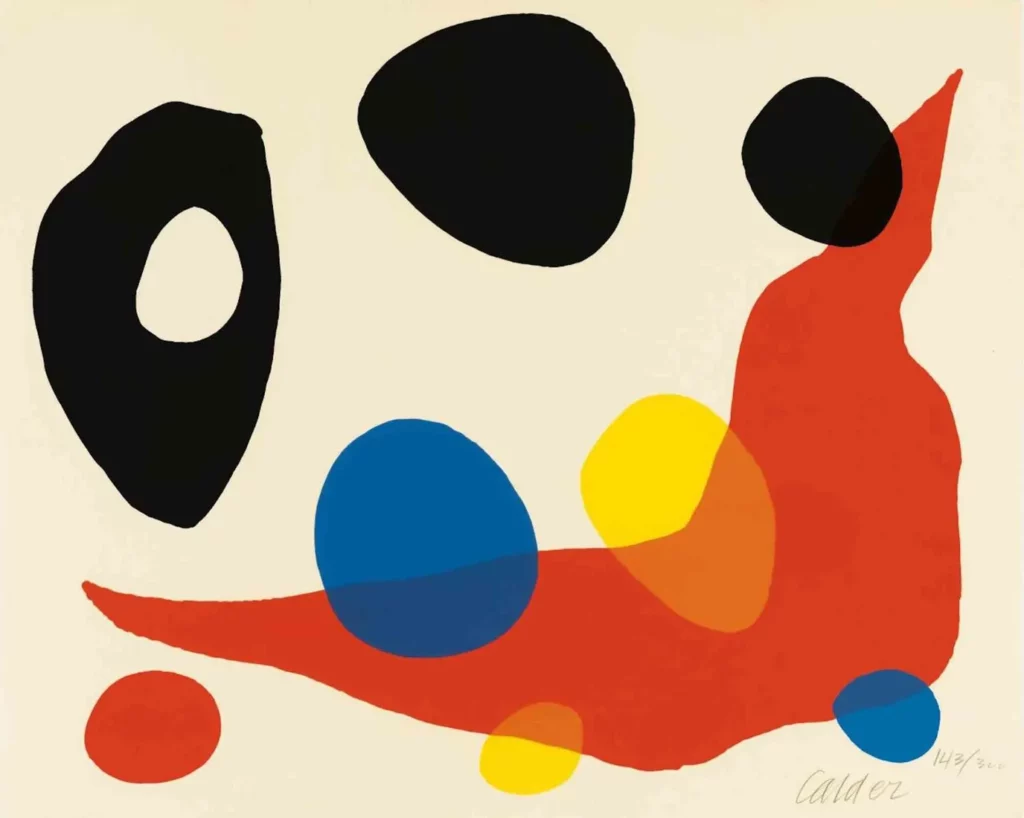
Calder’s “Red Boomerang” is available on Singulart. It is a spectacular demonstration of how he combines bright colors, and strong geometric lines to create intense pictures. This artwork’s red colors and unusual shape attract viewers who can then delve deeper into the connection between art and movement.
Are you looking for a masterpiece from Alexander Calder?
Singulart presents exclusive limited edition pieces by Alexander Calder. To discover and acquire Calder’s art, click on the artwork or the button below for more information!
Frequently Asked Questions
What was Alexander Calder best known for?
In addition to creating wire sculptures, Alexander Calder is credited with creating the mobile, a kind of kinetic art that required precise balancing to achieve equilibrium and suspension in air. At first, Calder employed motors to move his pieces, but he quickly gave up on this approach and started relying only on air currents.
When did Alexander Calder become famous?
After returning to the US in 1933, Calder’s mobile and stationary abstract-organic sculptures gained a great deal of praise and attention. After relocating to Connecticut, he carried on creating inventive pieces for both big and small audiences. Calder lived in France for a portion of every year after 1950.
Who inspired Alexander Calder?
Calder met Joan Miró in Paris, and the two became close friends and a significant influence. Calder started making jewelry out of the same wire he used for his sculptures in 1929. Throughout his career, he kept up his jewelry-making, mostly creating bracelets, rings, necklaces, and brooches for friends.
Conclusion
The legacy of Alexander Calder continues to endure, with works like Untitled (1942) serving as pillars of his prowess. This sculpture, made up of interplaying curves and color, is a perfect example of Calder’s creativity and technical expertise. While departing from our contemplation of this marvelous masterpiece, we can comprehend Calder’s lasting influence on art, his skill to cross boundaries and to reshape the very core of sculpture.