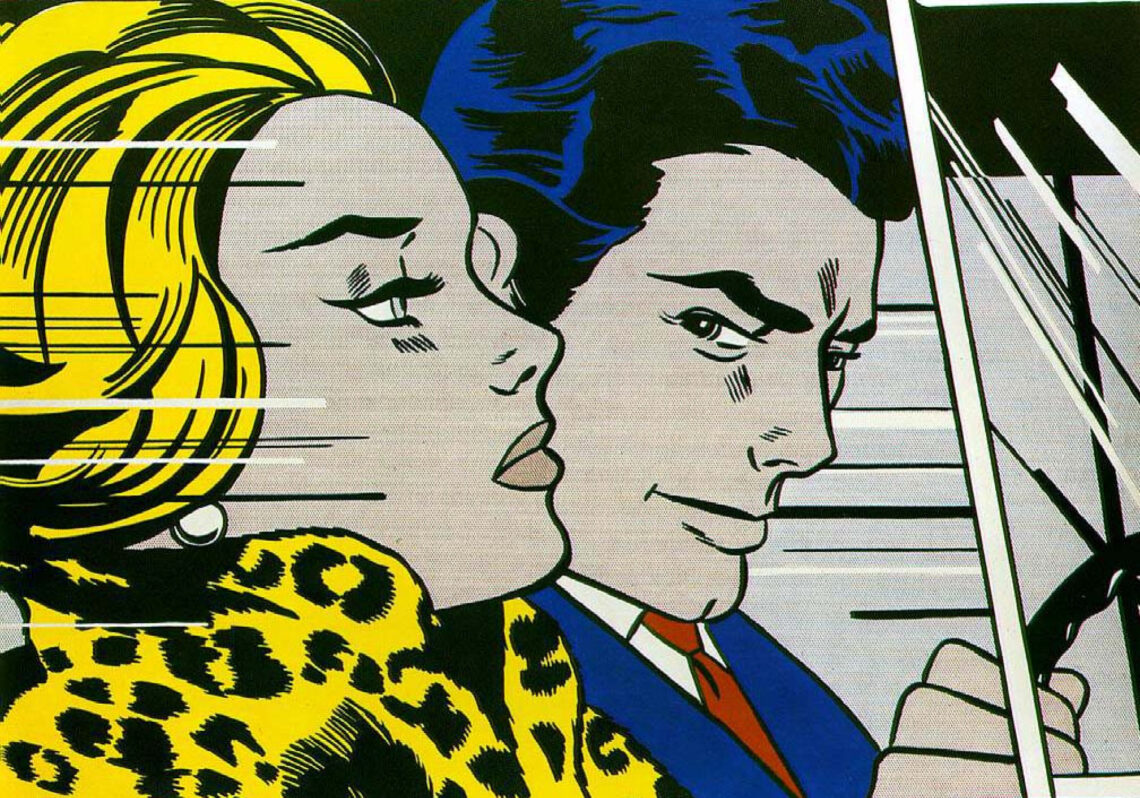
In the glittering world of pop art where comic book features collide with high art, only a few names stand out as much as that of Roy Lichtenstein. Using his bright colors, prominent Ben-Day dots, and sarcastic critique of consumerism, Lichtenstein created for himself a firm foothold in the art world, which still can not be compared to anyone else. He has presented one of his most important works – “In the Car” – in which he masterfully combines humor, fantasy, and reflection to show the magic of pop art.
Who was Roy Lichtenstein?
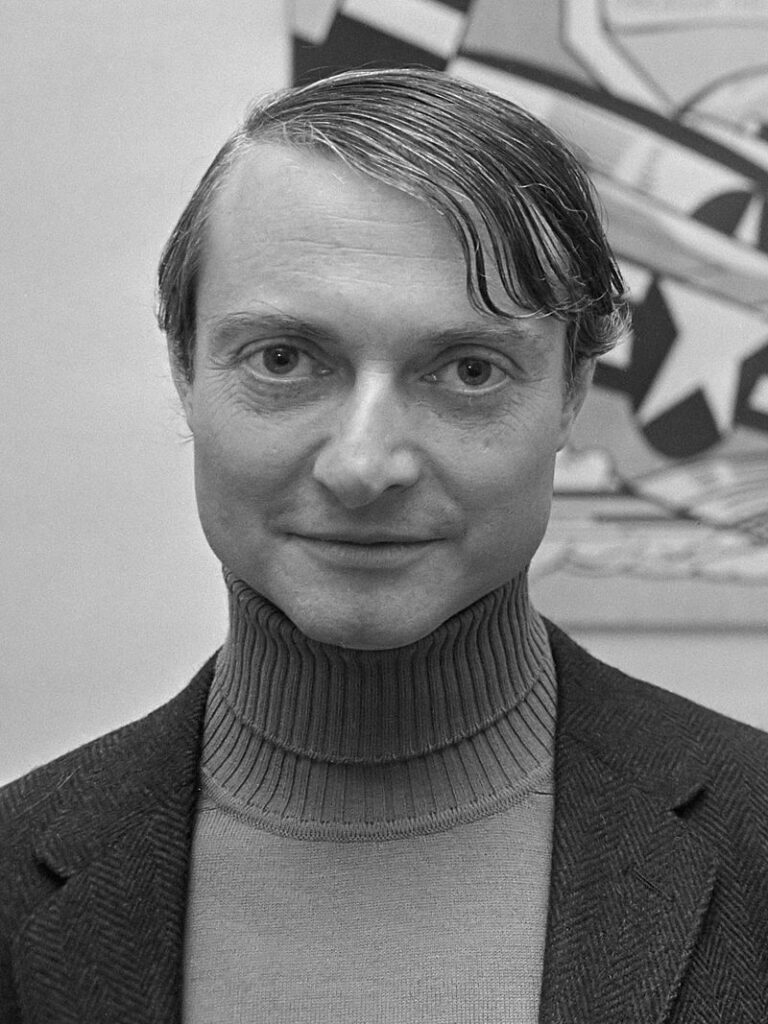
Roy Lichtenstein, an emblematic figure of the Pop Art movement, was born on October 27, 1923, in New York City. At first, he followed either a career in artistic education or painting, eventually becoming famous for his unique comic book-like paintings. Lichtenstein’s art frequently used bold colors, exact lines, and half-tone dots, which were taken from the mass-produced comic strips and ads.
FUN FACT: Roy Lichtenstein was once mistaken for his own artwork! While attending an exhibition of his own works, Lichtenstein was approached by a gallery visitor who asked him what he thought of “that Lichtenstein guy’s art.”
His Career
Lichtenstein’s artistic career took off in the early 1960s when he started painting works that eventually became the signature pieces of the Pop Art movement. His reinterpretation of popular culture images, which are distinguished for satire and irony, broke the conventional fine art concept and ushered in a fresh art effect.
What is Happening in In the Car?
| Artist | Roy Lichtenstein |
| Date Created | 1963 |
| Medium | Oil and Magna on canvas |
| Genre | Pop Art |
| Period | Contemporary Art |
| Dimensions | 172.7 cm × 203.2 cm (68 in × 80 in) |
| Series/Versions | Unique artwork, no known series |
| Where is it housed? | Museum of Modern Art (MoMA), New York City |
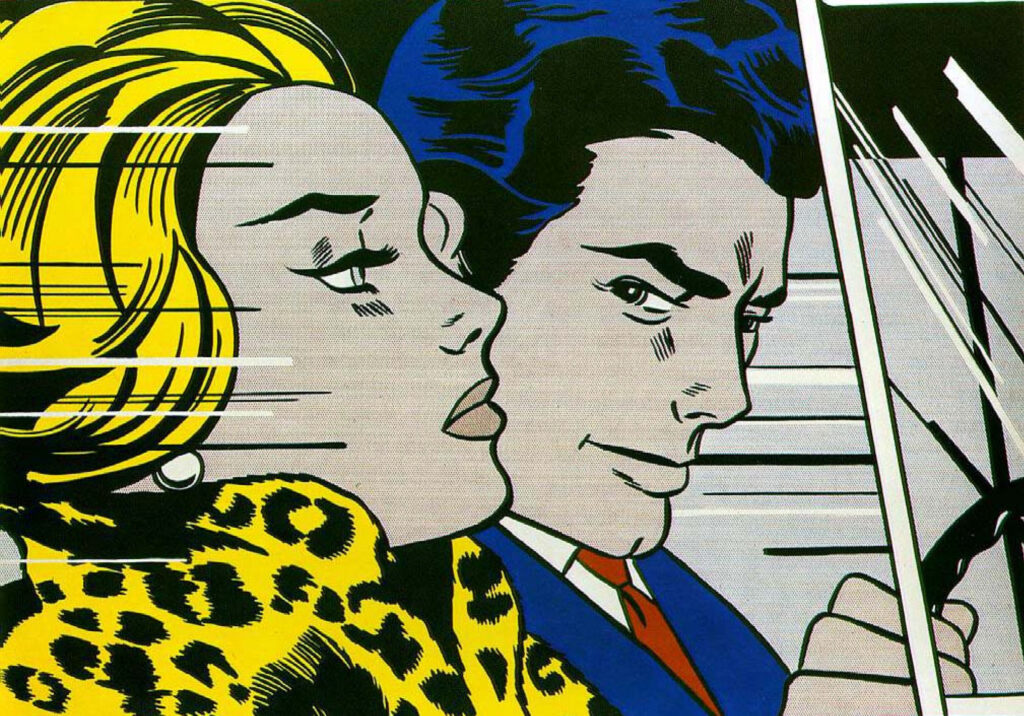
“In the Car,” painted by Roy Lichtenstein in 1963, illustrates his characteristic style and perennial motives. The painting has a female figure in the car, her face covered by a speech bubble that carries a challenging phrase. From Lichtenstein’s typical comic book style, sharp lines, and intense colors emphasize the drama.
What’s So Special About In the Car?
“In the Car” by Roy Lichtenstein showcases his seamless fusion of pop culture and fine art. Through vivid colors, striking lines, and intriguing narration, Lichtenstein transports viewers into a world where comic book aesthetics intertwine with deeper issues of identity and language.
Interesting Facts About In the Car
Narrative Ambiguity: One of the intriguing aspects of “In the Car” is its narrative ambiguity. The obscured dialogue within the speech bubble invites viewers to speculate about the conversation taking place, prompting interpretations ranging from mundane to surreal.
Gender Dynamics: Lichtenstein often explored themes of gender and identity in his work, and “In the Car” is no exception. The portrayal of the woman in the driver’s seat challenges traditional gender roles, offering a subversive commentary on power dynamics and autonomy.
Artistic Process: Despite its seemingly simplistic appearance, “In the Car” required meticulous planning and execution. Lichtenstein meticulously replicated the halftone printing technique used in comic books, hand-painting each dot to achieve the desired effect.
Artwork Spotlight: Litho/Litho

Lichtenstein’s “Litho/Litho” (1966) is also available on Singulart. This artwork questions the idea of reproduction in art jovially, with two lithographic stones inscribed with the word “litho”. Indeed, in two short lines, this art captures the theme of creativity versus industrial production.
Are you looking for a masterpiece from Roy Lichtenstein?
Singulart presents exclusive limited edition pieces by Roy Lichtenstein. To discover and acquire Lichtenstein’s art, click on the artwork or the button below for more information!
Frequently Asked Questions
What is Whaam inspired by?
Whaam! is a remake of a 1962 All-American Men of War comic book panel, with an appropriate theme for the history of the female fighter jet body.
What was Roy Lichtenstein famous for?
He has gained popularity due to his vibrant and bright paintings of comic strip cartoons and also everyday items. One of a group of artists who were contemporary in the 1960s and were called pop artists because they made art about ‘popular’ things such as TV, celebrities, fast food, pop music, and cartoons, was this man.
Conclusion
“In the Car” by Roy Lichtenstein is proof of the artist’s remarkable talent to make the ordinary interesting. In his unique approach to color, form, and layout, Lichtenstein opens the way to a new worldview, questioning the established ideas and initiating debates on society, art, and the human experience.