


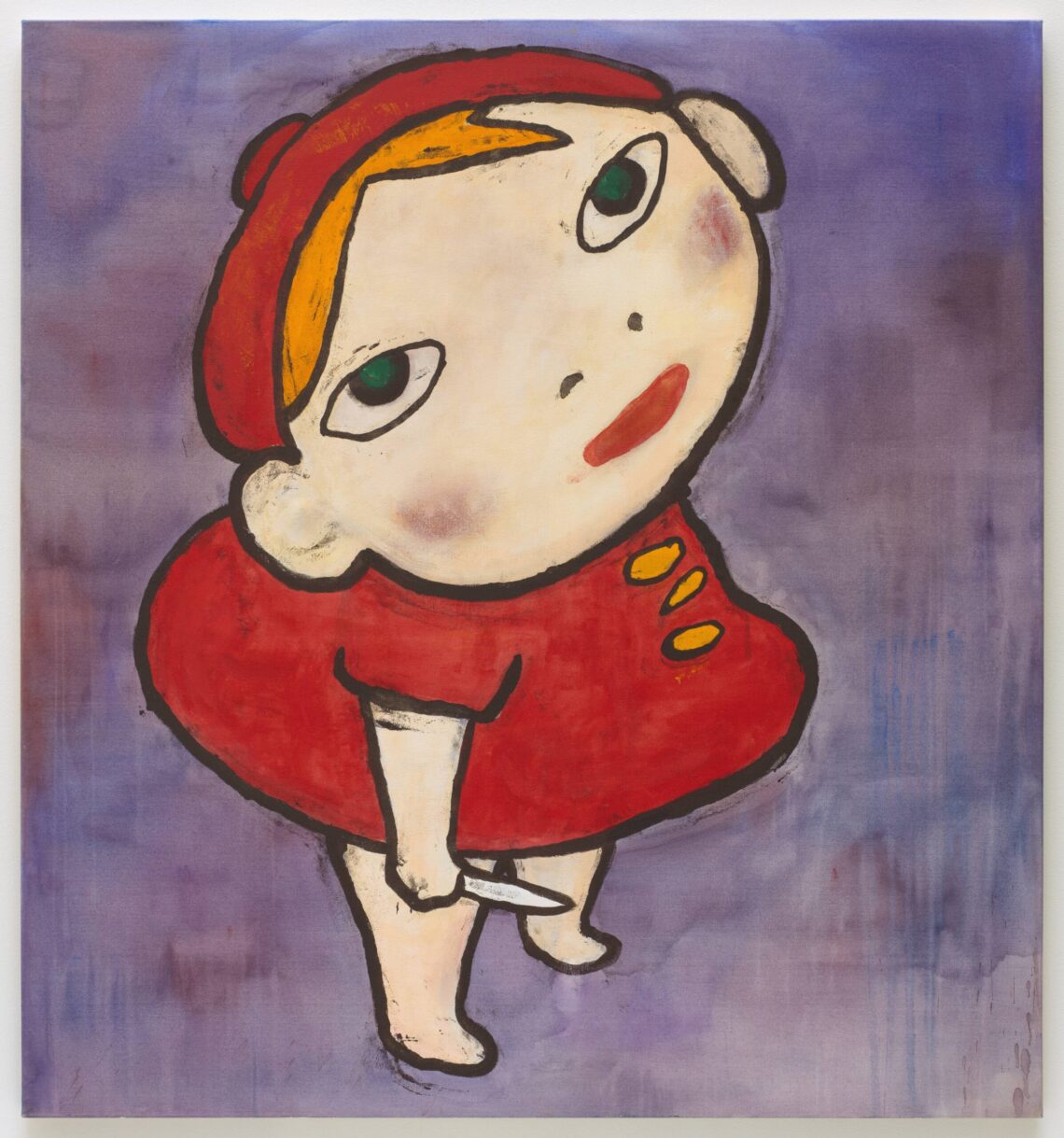
Yoshitomo Nara, a prominent figure in contemporary art, has mesmerized global audiences with his unique blend of innocence and defiance. Among his most compelling works, “The Girl with the Knife in Her Hand” skillfully combines childlike simplicity with emotional depth. This article explores Yoshitomo Nara’s life, his art, and the intricacies that define it as a hallmark of modern art.
Who was Yoshitomo Nara?
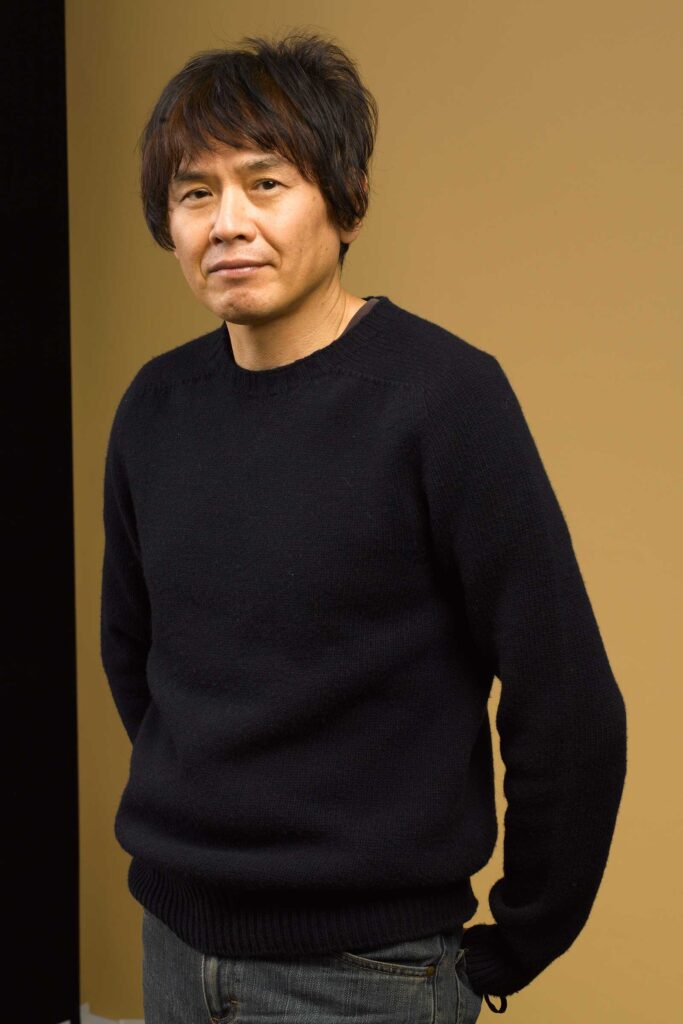
Yoshitomo Nara is one of the most recognized contemporary artists known for his emotionally charged and sometimes creepy works. Primarily his art is about solitary, adolescent figures whose apparent simplicity is a misleading sign of deeper and more complex feelings. In post-war Japan, Nara was affected by a blend of traditional Japanese culture and Western pop culture, for example, punk rock music which influenced his artistic creation a lot.
FUN FACT: Yoshitomo Nara is a huge fan of punk rock music, which significantly influences his artwork. In fact, Nara often listens to punk rock while he works, and this rebellious, raw energy seeps into his creations.
His Career
The beginning of Nara’s artistic journey was guided by the period that followed his graduation from the Aichi Prefectural University of Fine Arts and Music after the 1980s. His education continued at the Kunstakademie Düsseldorf in Germany where he was introduced to Western artistic movements and shaped his unique style. By the 1990s, Nara had already been quite successful in the art world being one of the leading painters known for his poignant pictures of children and animals that are often suggestive of hidden resentments and sinister themes.
He soon became a recognized artist, participating in exhibitions at several leading galleries and museums from all over the world. Nara’s skill in incorporating Japanese and Western motifs and at the same time telling powerful emotional stories has brought him an enviable fan base. Among his most important pieces is “Y”. One of the pieces is “N. LAMP,” where the face of a girl seems to shine from the inside. Combining art and functionality, it creates a strong, yet gentle expression.
What is Happening in The Girl with the Knife in Her Hand?
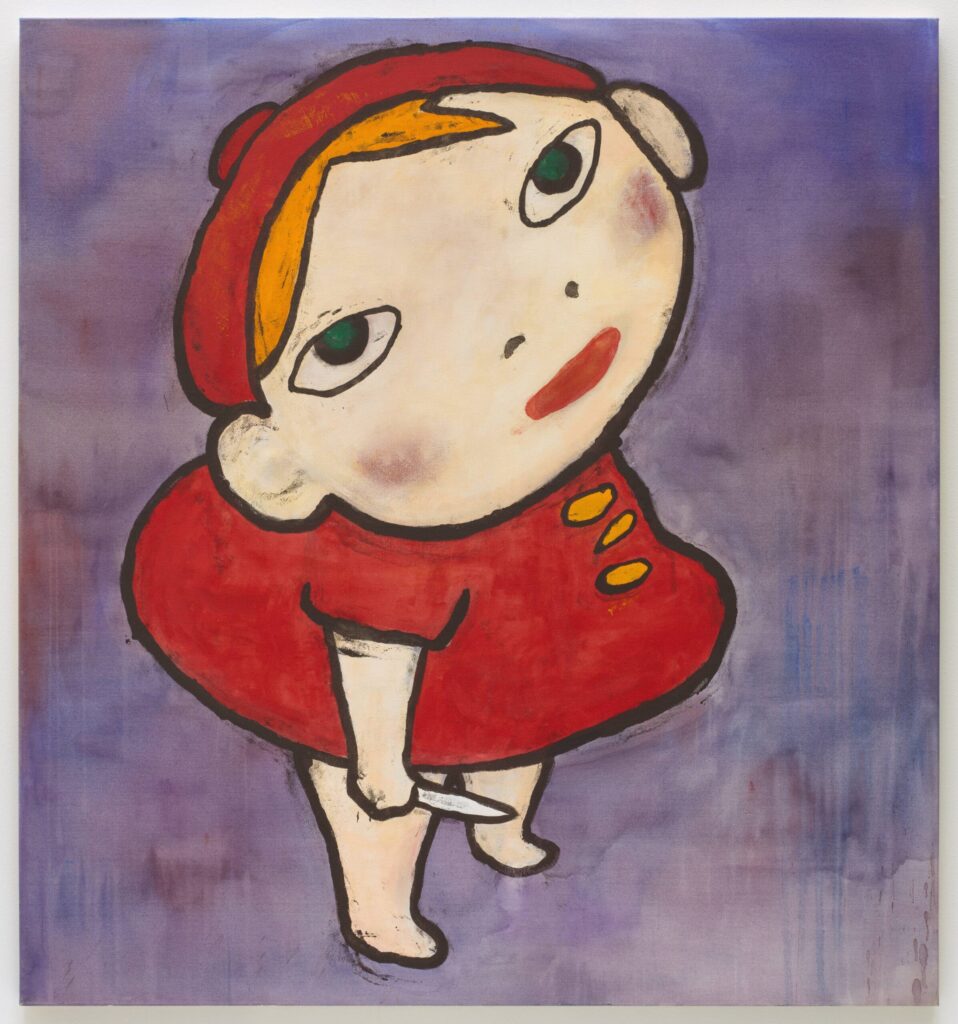
| Artist | Yoshitomo Nara |
| Date Created | 1991 |
| Medium | Acrylic on canvas |
| Genre | Contemporary Art |
| Period | Postmodernism |
| Dimensions | 120 cm x 110 cm (47.2 in x 43.3 in) |
| Series / Versions | Part of a series featuring defiant children |
| Where is it housed? | Private collection (frequently exhibited) |
“The Girl with the Knife in Her Hand”, the artwork of Yoshitomo Nara, epitomizes his particular talent to merge innocence with the feeling of concern. The girl, her face stern and challenging, is holding a knife in her hand. This combination of an angelic figure with a destructive object provokes viewers to dig deep into the emotional and psychological aspects of the piece of art.
The gigantic head and big eyes full of emotion reflect Nara’s style that attracts viewers with eagerness. The way she stands tells us that she is eager and even ready for something, but the knife she holds makes the story even more intriguing. Is she defending herself? Expressing anger? The artwork suggests these answers but leaves them open for conceptualization and introspection.
What’s So Special About The Girl with the Knife in Her Hand?
“The Girl with the Knife in Her Hand” by Yoshitomo Nara stands out in contemporary art due to its emotional ambiguity and unique visual style. Depicting a young girl with a resolute gaze and clutching a knife, it presents a juxtaposition of innocence and threat. This prompts viewers to delve into deep interpretations of the girl’s emotional state, exploring themes of vulnerability and resilience. Nara’s signature style, characterized by the girl’s oversized head and expressive eyes, immediately captivates viewers, drawing them into an emotional journey where profound and sometimes unsettling ideas are confronted.
Interesting Facts About The Girl with the Knife in Her Hand
Dual Interpretations: The artwork’s ambiguity is one of its most compelling features. Some viewers interpret the girl as a symbol of childhood trauma and resilience, while others see her as an embodiment of rebellion against societal norms.
Musical Influence: Nara is heavily influenced by punk rock music, and this painting reflects that ethos. The girl’s defiant posture and the raw, almost confrontational energy of the piece echo the rebellious spirit of punk culture.
Cultural Impact: The painting has become iconic in contemporary art circles, often reproduced in various forms of media, from posters to album covers, highlighting its broad cultural resonance.
Exhibition History: Though privately owned, “The Girl with the Knife in Her Hand” has been exhibited in numerous high-profile art exhibitions worldwide, allowing a wide audience to experience its power firsthand.
Artwork Spotlight: Y. N. LAMP
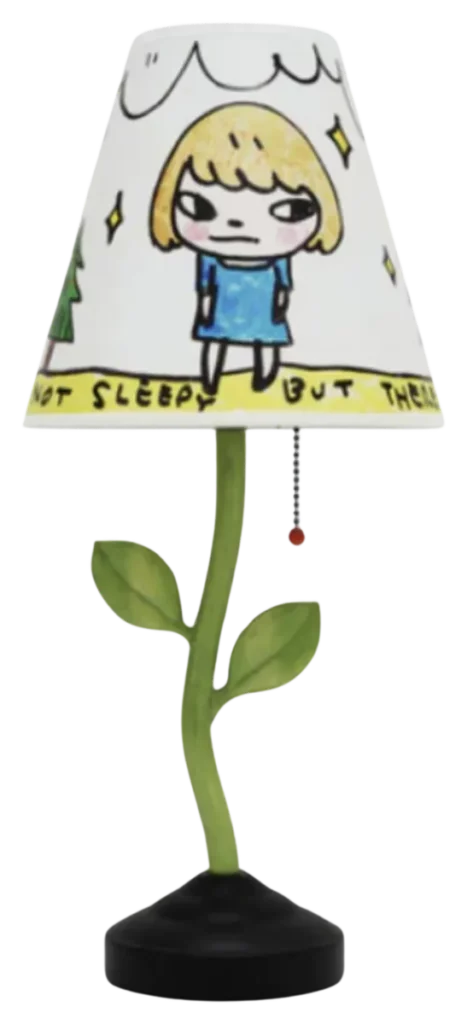
Nara’s “Y. N. LAMP” is also available on Singulart. This artwork is a perfect example of how art can blend with function, being a sight of a girl’s whimsical face, bringing a magical touch to a room.
Are you looking for a masterpiece from Yoshitomo Nara?
Singulart presents exclusive limited edition pieces by Yoshitomo Nara. To discover and acquire Nara’s art, click on the artwork or the button below for more information!
Frequently Asked Questions
What is Yoshitomo Nara’s artwork about?
Yoshitomo Nara is a trailblazing personality in contemporary art whose distinctive style honors the introspective freedom of the imagination and the individual by expressing children in a variety of emotional complexities from resistance and rebellion to quietude and introspection.
What is the most expensive Nara painting?
Knife Behind Back (2000) set a record for Nara auctions when it sold for HK$195.7 million (about $24.9 million) at a Sotheby’s Hong Kong auction in October 2019. The artist’s second-highest auction price was achieved in June 2021 when his piece Missing in Action sold for HK$123.7 million at Phillips in Hong Kong.
Conclusion
Nara’s work endures due to his ability to convey complex stories through simple compositions. Additionally, “The Girl with the Knife in Her Hand” reflects our inner worlds, encompassing fear, courage, and self-expression.


