Imagine a reality where the line between the real and the dream-like world blurs effortlessly. In this world, everything you see can transform into something magical. Jerry Uelsmann invites us into this universe with his photograph “The Mind’s Eye,” created in a time before digital tools like the clone tool existed. “The Mind’s Eye” is not just a photo; it is an enigma, a dreamlike painting that urges you to search beyond the surface. In this article, we will explore the works of Jerry Uelsmann, delve into “The Mind’s Eye,” and uncover the stories and methods behind this surreal masterpiece.
Who Was Jerry Uelsmann?
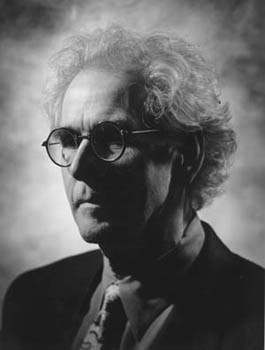
Jerry Uelsmann represents an avant-garde figure in the framework of the history of photographers and photography, a rather surrealistic approach characterizes his work. Uelsmann was born in Detroit, Michigan in the year 1934 and throughout his childhood, he nurtured an interest in photography and the need to take this art to the next level. He is most famous for his works that utilized photomontage, a process in which several photographs were assembled into one picture. This approach could help Uelsmann build scenes that were impossible according to the laws of physics and create photographs that were both full of a certain sort of magic and mystery.
FUN FACT: Jerry Uelsmann was a self-proclaimed “collector of useless objects.” He loved scouring flea markets and garage sales for odd, quirky items that he found intriguing.
His Career
Jerry Uelsmann began his career in the 1960s, and that is when his rather unorthodox approach began to draw interest. As opposed to his many contemporaries, Uelsmann did not utilize the available means of new digital technologies and instead developed his work in the darkroom. There are elements of surrealism in his work since he used multiple photographic negatives in developing magical and intricate images with what can be described as dream scenery.
Due to these differences, Uelsmann became a famous photographer and his work became widely respected in the art community. He was involved in many exhibitions and was awarded and honored for his creativity. His contributions were not limited to his artworks; he was an equally great photographer teacher at the University of Florida.
What is Happening in The Mind’s Eye?
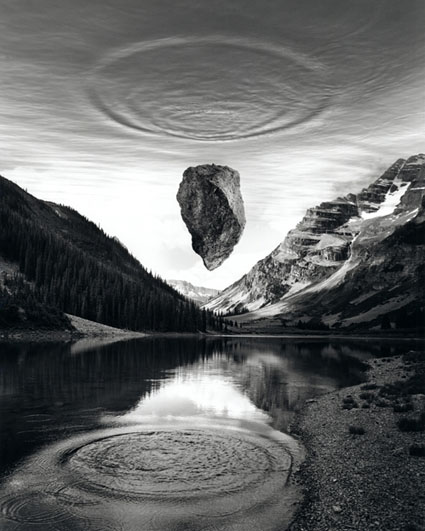
| Artist | Jerry Uelsmann |
| Date Created | 1969 |
| Medium | Gelatin silver print |
| Genre | Surrealism |
| Period | Mid-20th Century |
| Dimensions | Variable |
| Series / Versions | Part of Uelsmann’s broader exploration of surrealism and photomontage |
| Where is it housed? | Various private collections and galleries |
Now let’s delve into the details of “The Mind’s Eye” itself. Perhaps, one day you find yourself facing an image that shatters every single assumption and perception you ever counted as true. Indeed, Uelsmann’s piece does exactly that: it specializes in capturing surrealism and does not leave the viewer’s mind at rest.
In the composition of “The Mind’s Eye”, the main object is an eye that seems to be in space; this eye is enclosed with forms similar to landscapes, clouds, and human figures. One can feel that the eye is not simply regarding the world but contemplating something beyond it. Indeed, it was a quite provocative picture as if our existence is just a curtain beyond which there is much more.
What’s So Special About The Mind’s Eye?
This photograph highlights one of Uelsmann’s major achievements as a photomontage artist. Each component of the image is carefully planned and assembled. Consequently, they coordinate seamlessly with one another. The eye, which symbolizes perception and consciousness, is particularly accentuated. This emphasis guides the viewer into the surreal world crafted by Uelsmann.
Interesting Facts About The Mind’s Eye
Analog Magic: One of the most fascinating aspects of Uelsmann’s work is that it was all done in the darkroom. That’s right—no digital editing here. Uelsmann used multiple enlargers and a complex process of masking and exposure to create his photomontages. The fact that “The Mind’s Eye” was created using such meticulous, hands-on techniques adds an extra layer of awe to the piece.
Ahead of His Time: Uelsmann was creating these surreal images in the 1960s, long before the digital age. His work predated Photoshop by several decades. However, he was already achieving effects that many digital artists strive for today. This is a testament to his creativity and technical skill, which remain impactful even in today’s digital world.
Symbolism Galore: The eye in “The Mind’s Eye” is more than just a visual element—it’s packed with symbolism. Typically, the eye represents perception, consciousness, and awareness. In this context, it can also be seen as a metaphor for seeing beyond the surface. It encourages us to look deeper into the subconscious or the unknown.
Artwork Spotlight: Burden of Dreams

Burden of Dream by Jerry Uelsmann is available on Singulart. This photograph clearly illustrates Uelsmann’s abilities in photomontage due to the numerous elements that have been combined in the image. Every object and detail in the image is purposefully arranged and combined to make complete sense.
Are you looking for a piece of artwork from Jerry Uelsmann?
Singulart has limited edition prints of Jerry Uelsmann. If you are looking for a piece of Uelsmann‘s artwork for sale, simply click on the artwork or the button below to discover more!
Frequently Asked Questions
What makes Jerry Uelsmann unique?
Uelsmann creates a single, cohesive image by combining several negatives and enlargers. Keeping this in mind, Uesmann frequently takes pictures, picking out particular objects to isolate and then combining them with other negatives in the darkroom.
What was Jerry Uelsmann famous for?
Jerry Uelsmann is most renowned for his inventive use of the photomontage process. Using a laborious handcrafted collage, Uelsmann’s technique produces bizarre and allegorical compositions.
Conclusion
Looking at “The Mind’s Eye,” one immediately recalls art’s ability to be vast and limitless. Through Jerry Uelsmann’s work, he ventured into the unknown, redefining what a photo could be. By playing with the possibilities of the lens, he pushed creative boundaries. This work truly manifests creativity and imagination. Consequently, it encourages viewers to see life from a different perspective.