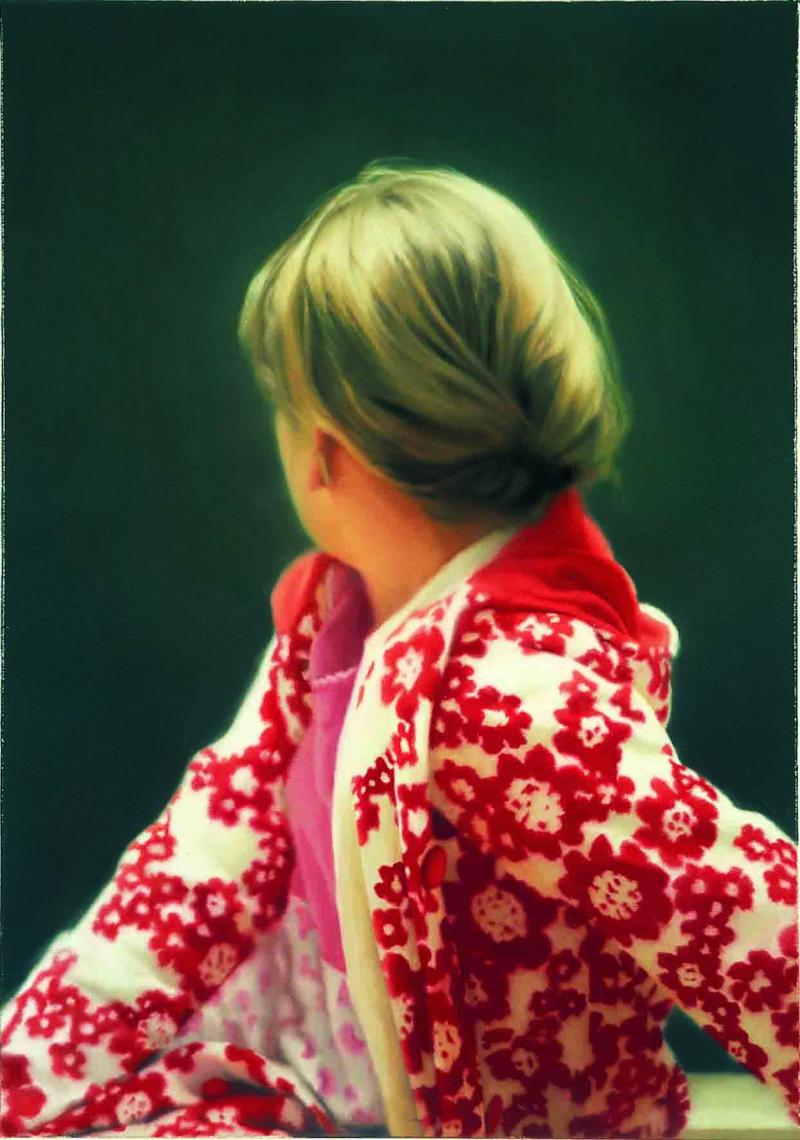
Gerhard Richter has been described as one of the most topical artists of the twentieth century, as he never ceased to experiment with his understanding of painting. Perhaps the most famous of his portraits is the one he produced in 1988 titled Betty. But who is Gerhard Richter and what is the story of this mesmerizing piece? So let us enlighten you on the life of the artist, the relevance of Betty’s character, and how this masterpiece is still receiving accolades today.
Who was Gerhard Richter?

Born on February 9, 1932, in Dresden, Germany, Gerhard Richter is one of the most versatile and influential postgraduate artists who worked in multiple genres and media. He is an icon of figurative art, each dimension of photorealism and symbolism. Richter began his career in post-war Germany, a place that was traumatized by war and this formed his art career.
Richter was certainly one of the most diverse artists of his era, and it is this aspect that differentiates him from many of his counterparts. He makes a lot of different topics in his works: from the semi-realistic portraits with nearly imperceptible blurs to bright abstractions. The fact that he was able to switch between techniques has made him recognized as a pioneering artist. And, frankly, he keeps art critics on their toes while they are trying to define his style!
FUN FACT: Gerhard Richter once created an artwork with squeegees! Yep, instead of brushes or traditional tools, Richter used large squeegees to drag layers of paint across the canvas.
His Career
Richter started his career in the 1960s and even from the starting stage, he was bent on subverting conventions. He arrived in West Germany in 1961 after he escaped from East Germany and here he came across American pop art and abstract expressionism. These influences started entering his early works and thus, introduced his blurred painting style into the world.
Dreamlike depictions seem to be a common theme in Richter’s works with emphasis on breaking the barrier of what is real, especially in his oil painting titled Betty, which looks more like an actual photograph of a woman although painted with oils. Still, he employs the methods, such as blurring, which make the viewer visually distanced from the object and perceive it as a dream. The blurring of the image is one of the hallmarks of Richter’s works that compels the viewers to stand and stare at it in disbelief.
What is Happening in Betty?
| Artist | Gerhard Richter |
| Date Created | 1988 |
| Medium | Oil on canvas |
| Genre | Photorealism |
| Period | Contemporary Art |
| Dimensions | 102 cm x 72 cm |
| Series / Versions | Part of Richter’s family portraits |
| Where is it housed? | St. Louis Art Museum, Missouri, USA |
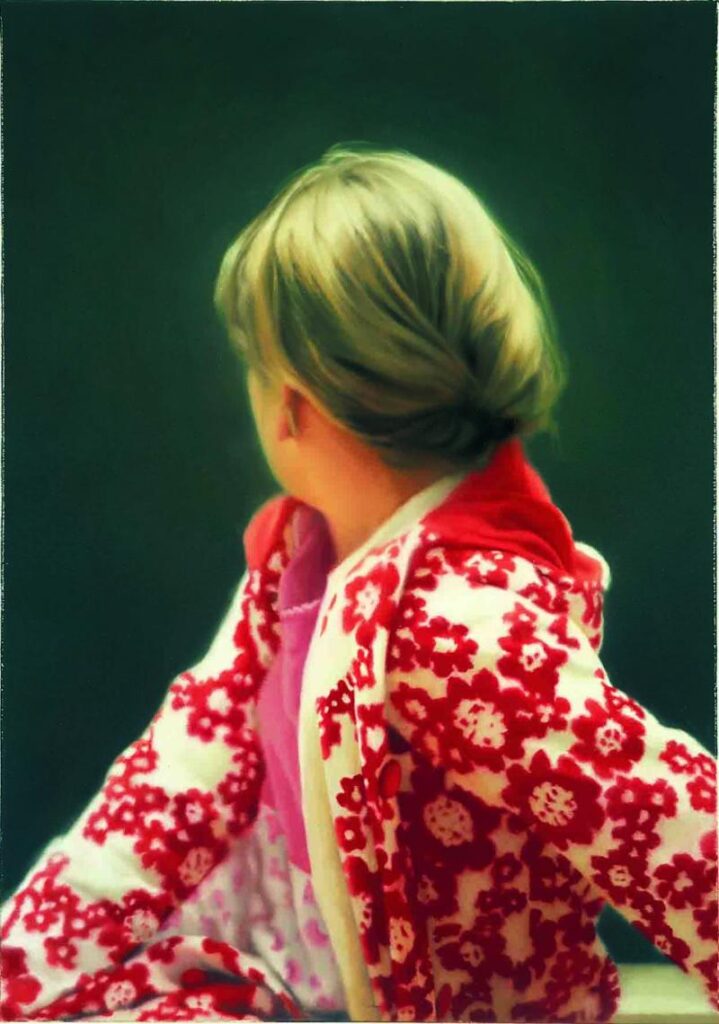
At first glance, Betty could be thought of just as a painting that depicts a person. But let’s take a closer look. Her back is slightly bent, not painfully though. You get the impression that she might be caught in mid-dance. She is depicted in the painting as deep in thought or even in a state of pause; this makes the viewer question what the woman is focusing her attention on—or what she is even considering.
But there is something warm about Betty, something that seems to call out for your attention even though she was refused entrance. This is as if we have caught the subject at her moment of intimacy with whatever she has her focus and attention on. It is a very intimate painting but it can identify with so many individuals who have found themselves in a position where they are thinking yet are speechless.
Why Betty Stands Out?
More than just a painting of a girl, the subject of the art, Betty, provides a fusion of hyperrealism and abstraction, an investigation of line and mass, and a deviation of perspective. It has become one of the most famous works of Richter for good reason, as it perfectly demonstrates his control over photorealism while subverting the traditional ideas of the portrait. Furthermore, the technique that he employs of blurring at a slight level adds a sense of unreality and realism that feels like we are looking at a painting of a bygone memory.
Richter’s decision to turn Betty away from the viewer creates an aspect of mystery. This shift from the typical frontal depiction of the subject forces viewers to ponder the issues of identification. We’re left wondering: Who is she? What is she looking at? Why is she hiding her face?
The lack of information that is intentionally left in the painting makes it easier to assign one interpretation or the other before interacting with the painting. It is a relationship between the artist, the subject, and the viewers that makes it even more interesting in terms of painting.
Take a look at our partners website where you can find works inspired by Betty: Laura Wood: In the Spirit of Gerhard Richter: Aedra Fine Arts Publishing
Interesting Facts About Betty
Not a Photograph, but Close: Betty is often mistaken for a photograph because of its hyperrealism. This is a testament to Richter’s incredible technical skill in replicating the sharpness of a camera’s lens.
Part of a Family Tradition: Richter has painted many portraits of his family members, especially his children. Betty stands out as one of the most celebrated works in this series.
It’s All About Perspective: The painting is deliberately enigmatic. By turning Betty away from the viewer, Richter makes us curious. We want to see her face, but instead, we’re left to imagine her expression, which adds to the painting’s mystery.
Why Betty Still Captivates Audiences Today
Even though Betty was painted in 1988, interest in the painting remains undiminished. The portrait continues to intrigue viewers because it showcases impeccable craftsmanship while evoking a range of emotions. Since themes like childhood, contemplation, and aging are timeless, Betty will keep attracting attention decades after its first exhibition.
Artwork Spotlight: Eis (Ice)

Richter’s artwork Eis (Ice) is another gem that is also available on Singulart. This painting captures the cold beauty of nature with abstract icy textures, showing yet another facet of his artistic genius. It’s a chilling reminder of his range!
Are you looking for a piece of artwork from Gerhard Richter?
Singulart has limited edition prints of Gerhard Richter. If you are looking for a piece of Richter‘s artwork for sale, simply click on the artwork or the button below to discover more!
Frequently Asked Question
1. What is Gerhard Richter’s most expensive painting?
The biggest amount Gerhard Richter has ever received at auction is $46.3 million for Abstraktes Bild from 1986.
2. Is Gerhard Richter German?
Visual artist Gerhard Richter is from Germany. Richter has created glass sculptures, pictures, and both realistic and abstract paintings.
Conclusion
Betty by Gerhard Richter is one of the finest works of art he created as a painter. This piece portrays reality in an incredibly realistic way, especially in terms of image quality. However, its content and positioning remain enigmatic, prompting viewers to reflect on its deeper meaning. It encourages them to ponder the nature of existence and its connection to time. With Betty turning her back, we are left wanting more—showing how art can evoke thought, emotion, and curiosity.
Our partners at Artfacts offer an in-depth look into the remarkable career of Gerhard Richter, providing a rich collection of data that highlights his artistic journey and impact. Explore his profile here.