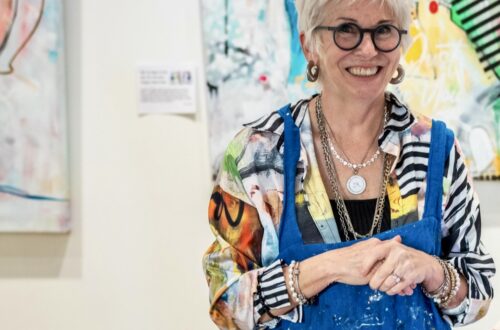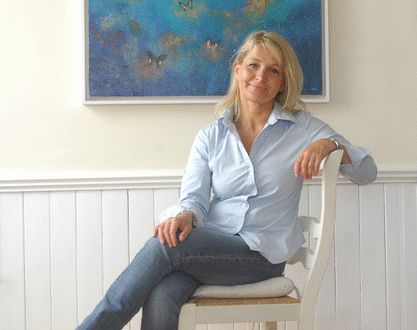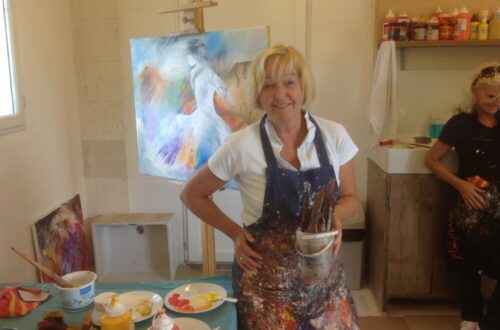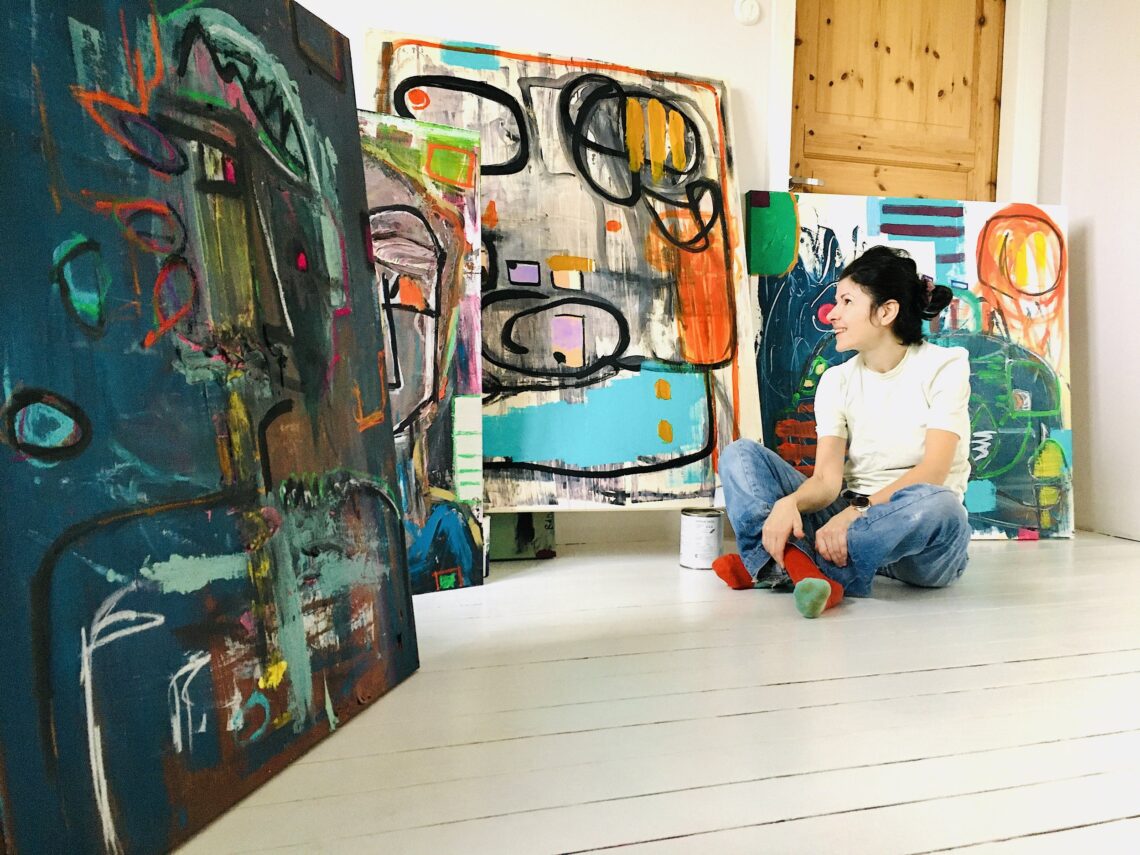
Unless we see a piece of art hanging in an exhibition alongside its accompanying literature, we rarely have the chance to peel back the canvas and understand, first-hand from an artist, how or why they painstakingly crafted a particular personal piece. Some artists like to let their artwork speak for itself, creating a sense of mystery around their name in the process. Not so for Barbara D’Angelo Mansson, who has tried her hand at everything from illustration to photography and abstract painting. For her, talking to us about her creative process is something that, rather than detracting from her strikingly singular, impacto paintings, bolsters and adds life to them – if such a thing were needed in Mansson’s case (see what we mean, in our selected edit here).
Mansson’s art fuses Scandinavian heritage (she is based in Sweden) with American Abstract Expressionism, and she often utilises unconventional materials such as sand and metal. Her artistic exploration delves into human nature, identity, and our interconnectedness, encouraging viewers to reflect on their own emotions and experiences through her thought-provoking pieces. But when and where does inspiration strike, and how exactly does she produce her work? We sat down with this irreverent artist to find out more.
Describe a typical working day
“My typical work is characterized by both spontaneity and a more analytical approach to my art. I start my mornings by immersing myself in the spontaneous process of creation, often letting instinct guide me. This hands-on experimentation reflects my desire to push artistic boundaries.
Afternoons are a whirlwind of refinement and idea exploration, where I embrace a more analytical approach to defining the next step. As the day concludes, I reflect on my artistic journey, always open to new ideas, emotions, and experiences that will shape my ever-evolving body of work.”
Do you have a favorite space for creating your artwork?
My studio, which is in a corner of my house with plenty of natural light is very quiet. It is a place where I allow myself to be carefree and chaotic.
Describe your style of art in a sentence:
Spontaneous
Who and what inspired you to be an artist?
“My journey as an artist has been profoundly inspired by the powerful work of abstract expressionists, particularly Jackson Pollock, Mark Rothko, and Willem de Kooning. Their ability to convey deep emotions through vibrant colors and dynamic forms resonates with me. De Kooning’s passionate and often chaotic brushwork, in particular, showcases the rawness of human emotion, reminding me of the beauty found in vulnerability.
As an introvert, I often find it challenging to express myself verbally, and art becomes my sanctuary—a means to channel my internal world into a tangible form. Through canvas and color, I can communicate the complexities of my emotions and experiences. This connection to abstract expressionism inspires me to delve deeply into my feelings, creating pieces that reflect my innermost thoughts in a way that feels authentic and liberating. Each brushstroke is an invitation to explore the rich tapestry of my emotional landscape, transforming personal struggles into art that speaks volumes.”
Name three inspirations for your work right now:
In my current exploration of art, I find inspiration from contemporary artists who employ similar styles and the impasto technique to create dynamic, textured works. Three artists that resonate with my approach are:
- Anselm Kiefer: Known for his monumental pieces, Kiefer often uses thick layers of paint and various materials to build texture and depth. His work evokes a sense of history and emotion, much like the abstract expressionists I admire.
- Jenny Saville: Saville’s expressive, impasto portraits harness thick applications of paint to convey raw emotion and complexity. Her ability to capture the human experience through texture inspires me as I aim to convey similar themes in my own work.
- Joaquín Sorolla: Although primarily recognized for his impressionist style, contemporary reinterpretations of Sorolla’s work often utilize impasto techniques to enhance color and light. This approach inspires me to experiment with texture to create a more visceral connection to my emotions. These contemporary artists exemplify the impactful use of impasto, encouraging me to explore the tactile qualities of paint as a means of deepening my artistic expression.
Is there a particular color palette that you prefer to work with, and what inspires your choice?
“In my artistic practice, I gravitate towards a color palette that revolves around soft pastel hues, evoking a sense of calm and tranquility. I enjoy working with gentle shades like pale pinks, mint greens, soft lavenders, and buttery yellows, as they create an inviting atmosphere and allow for a subtle exploration of emotion and depth.
To enhance this serene foundation, I often incorporate contrasting tones, such as deeper jewel tones or muted earth colors. These contrasts not only add dynamism to my work but also emphasize the pastel shades, creating a more balanced and visually engaging composition.
My sources of inspiration include various aspects of nature, particularly the beauty of sunrises and sunsets, where pastel skies collide with more vibrant colors. Additionally, I draw from modern design movements and interior aesthetics that celebrate minimalism and softness. Together, these elements allow my artwork to resonate with viewers on both a visual and emotional level.”
We imagine that inspiration could strike anytime. How do you separate work from free time?
“In my life, I prioritize separating my work from my free time to maintain a healthy balance. During work hours, I focus intently on my projects, establishing a structured routine to maximize productivity. I set specific goals and deadlines, which helps me stay organized and efficient.
Once the workday is over, I make a conscious effort to disconnect. I often create a clear boundary, whether it’s shutting down my computer, turning off notifications, or even setting aside a dedicated workspace. This transition allows me to shift my mindset, making space for relaxation and creativity.
In my free time, I indulge in activities that recharge me, such as exploring nature, enjoying hobbies, or spending quality time with loved ones. By keeping these aspects of my life distinct, I ensure that I remain both productive and fulfilled, giving my mind the rest it needs to return to my work with fresh energy and perspective.”
What reforms would you like to see in the art world?
“In the art world, there are several reforms I would love to see that could foster inclusivity and accessibility. First, I would like to see more opportunities for emerging artists from diverse backgrounds. This includes not only financial support through grants and scholarships but also platforms for showcasing their work. By amplifying underrepresented voices, we can enrich the artistic landscape with a variety of perspectives.
I also believe that art education should be more accessible, both in schools and community programs. By ensuring that everyone, regardless of their socioeconomic background, has access to quality art education, we can nurture creativity and inspire the next generation of artists.
Another reform I envision is a shift in how art is critiqued and valued. I would like to see a move away from elitism and commercialism, allowing for a broader understanding of art’s impact beyond monetary value. Emphasizing emotional and societal relevance could lead to a deeper appreciation for diverse artistic expressions.
Lastly, creating more inclusive spaces within galleries and museums would be transformative. This involves not just physical access but also an openness to different forms of engagement, inviting dialogue and interaction with a wider audience. Together, these changes could create a more vibrant and equitable art community that celebrates creativity in all its forms.”
And how do you think we could change it together?
“I believe Singulart has the potential to play a crucial role in bringing about the reforms I envision for the art world. First and foremost, as an online platform that showcases a diverse range of artists, Singulart can amplify the voices of emerging and underrepresented artists. By providing them with a global stage, the platform can help foster visibility and opportunities that they might not find elsewhere.
Additionally, Singulart’s emphasis on art education through resources, articles, and workshops could be instrumental in making art more accessible. By offering educational content that demystifies the art world, the platform encourages engagement and understanding, which is vital for nurturing talent from all backgrounds.
In terms of critiquing and valuing art, Singulart can champion diverse perspectives by highlighting various forms of creative expression, moving beyond traditional norms. By showcasing art that emphasizes emotional and societal relevance, the platform can help shift the conversation around what constitutes valuable art.
Moreover, Singulart’s user-friendly interface makes it easier for people to explore and purchase art, breaking down barriers to access. This inclusivity can invite a broader audience to appreciate and interact with art, fostering a sense of community.
By leveraging its platform to advocate for these changes, Singulart can contribute significantly to building a more equitable and vibrant art world, one that celebrates creativity in all its rich forms.”
Discussing the topic of artistic creative process with Barbara D’Angelo Mansson is a refreshing exercise. This exciting young artist quickly dispels the myth of a tortured soul who wakes up at noon and, amidst a dishevelled studio strewn with ashtrays and easels, begins to paint their previous night’s reveries. Despite her leftfield style, for Mansson, creating artwork requires methodical, time-scheduled work – a set boundaries within which she can confidently bring her personal brand of ‘chaos.’
You can explore more of this exciting young artist’s work – which has been featured in various exhibitions across Europe – on the Singulart online gallery, here.