Known as the architect of peculiar universes in which strange becomes beautiful, Tim Burton has been a long-time friend of the weird. Burton’s beats, as well as his films, include Beetlejuice and The Nightmare Before Christmas, the last of which embodies not just Burton the artist, but Burton the storyteller and, most importantly, Burton the weird. The Melancholy Death of Oyster Boy & Other Stories is one of his lesser-known (but most amazing and delightful) works. The title suggests these poems and illustrations are as strange, sad, and sweet.
Who Was Tim Burton?
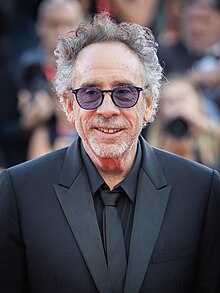
So, who is Tim Burton anyway? Burton is that guy with the wild hair and the dark wardrobe, whose imagination too often feels like it’s dwelling inside of an incredibly whimsical Halloween fever dream. Although born in 1958 in Burbank California, the sun-soaked life of California doesn’t suit him or fit him. So instead, he moved toward old monster movies, gothic literature, and fairy tales with a twist. His work shows you how he’s always pushing and pulling between whimsy and horror.
Tim Burton’s style was a bit too avant-garde for Mickey Mouse’s world, but he began his career at Disney. And, back then, can you imagine this gothic flair of Burton’s finding its way into a Disney movie? Parfait, right? His early work at Disney didn’t exactly look like ‘Tim Burton,’ but it provided him entry. Finally, he would go on to direct Beetlejuice, Batman, and Edward Scissorhands, dripping with that quirky gothic flair that would become his calling card.
His Career
Tim Burton’s career path is almost enough of a roller coaster, with steep ascents, surprising twists, and more than a few weird turns. Burton left Disney’s animation studio to turn to live-action films which he marked with Beetlejuice in 1988. Wildly imaginative, this supernatural comedy involved a ‘bio-exorcist’ ghostly character assisting against a house. The movie was eccentric, funny, and spooky all at once, a perfect primer for watching Tim Burton.
After that, Burton directed Batman (1989) and Batman Returns (1992), both pushing Batman into a moodier and darker place than before. Edward Scissorhands (1990) was another successful film, in which a man with scissors for hands turns into a suburban outcast, something Burton enjoys mining for material. As Burton’s career moved on he directed some huge animation babies like Corpse Bride (2005) or Frankenweenie (2012), both tied together with his brand of gothic charm, with a pinch of innocence.
FUN FACT: Tim Burton is a massive fan of Halloween—so much so that he once said he’d happily celebrate it all year long!
What is Happening in The Melancholy Death of Oyster Boy?
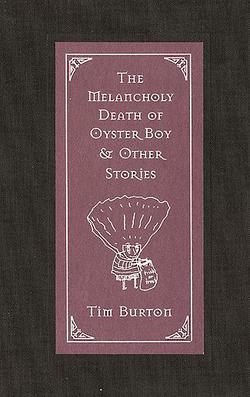
| Artist | Tim Burton |
| Date Created | 1997 |
| Medium | Illustrated Poetry |
| Genre | Dark Humor, Surrealism, Gothic |
| Period | Contemporary |
| Dimensions | 5.8 x 7.5 inches (book) |
| Series / Versions | Original publication, reprints |
| Where is it housed? | In Tim Burton’s published collection, available in bookstores and libraries worldwide |
So what goes on in The Melancholy Death of Oyster Boy? Picture this: ordinary human parents have a child, but here is one major twist: he’s part oyster. Yes, you read that right. His parents thought it would be romantic to reignite their love during their trip to the beach, but all they had was a sad little boy with a shell for a head—they dubbed him Oyster Boy.
Oyster Boy’s life is lonely and outcasted. His parents can’t stand to look at him. His father, desperate to “fix” the situation, turns to the most absurd and tragic solution: Exhaustively eating Oyster Boy in a futile attempt to rekindle the romance with his wife. Oyster Boy’s story ends in absurdity and sorrow, with him dying at the hands of the very people who should have saved him. As with many of Burton’s works, this story melds humor and tragedy. Sadly, Oyster Boy exists but there’s an absurdity to the whole thing that makes you chuckle, despite yourself. Burton can build the darkest moments into the light.
What’s So Special About The Melancholy Death of Oyster Boy?
The special thing about The Melancholy Death of Oyster Boy is that it seems an open channel of the pure essence of Burton’s soul. That’s personal, raw, and unfiltered without that Hollywood gloss, without those blockbuster budgets. Each poem of this collection is its own little story with characters like Match Girl (a girl made entirely of matchsticks), or Stain Boy (a boy that leaves stains everywhere he goes). These characters are odd, but their emotions are entirely relatable. They want to belong. They want to be loved. In many ways, they are exaggerated reflections of all of us.
These poems are whimsical and strange, and they are heavy with emotion. Burton makes use of universal themes such as alienation, identity, and the desire for acceptance but in his quirky style. What’s compelling about the book is the balance of whimsy and depth. Reading about characters who are so bizarre but so easy to relate to, it’s almost a strange comfort. Oyster Boy and his companions speak to the inner misfit in all of us.
Interesting Facts about The Melancholy Death of Oyster Boy
A Passion Project: Burton didn’t create The Melancholy Death of Oyster Boy with the goal of mass appeal. It began as a personal project, a creative outlet for him to express ideas that didn’t quite fit into his films. The result is something far more intimate and strange than you might expect from such a famous director.
Filmic Feel: The poems are short, but they have the feel of mini-films. Each one is like a snapshot, a moment in time, complete with its own mood, arc, and visual style. You can almost imagine Burton storyboarding each poem as if he were planning to shoot a short film.
Cult Following: Though it’s not as famous as his films, The Melancholy Death of Oyster Boy has developed a devoted following. Fans of Burton’s work love the way the book delves into his signature themes of loneliness, alienation, and the beauty of being different.
The Aesthetic: The illustrations are pure Burton. Spindly characters with exaggerated limbs, huge eyes, and forlorn expressions populate the pages. There’s something hauntingly beautiful about the simple black-and-white drawings, as if they’re echoing the emotional complexity of the poems.
Artwork Spotlight: Penguin Boy
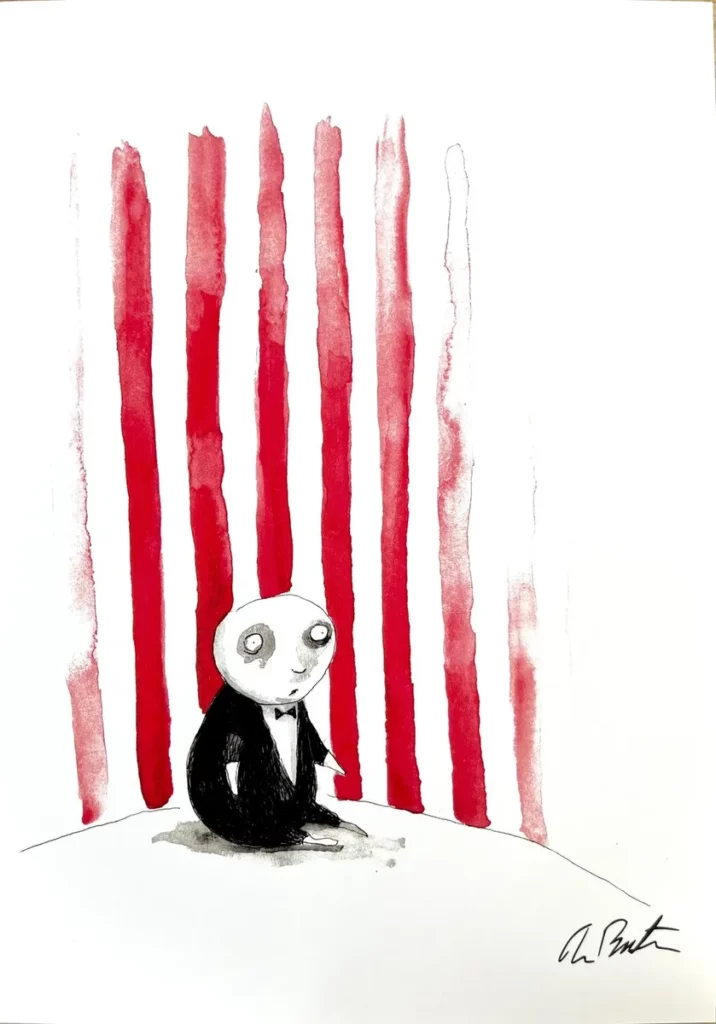
Another character from the collection, Penguin Boy which is also available on Singulart. In this artwork, a penguin is struggling with being too cold for the human world and too warm for the Antarctic.
Are you looking for a piece of artwork from Tim Burton?
Singulart has limited edition prints of Tim Burton. If you are looking for a piece of Burton‘s artwork for sale, simply click on the artwork or the button below to discover more!
FAQs
1. Why is Tim Burton’s style so unique?
Tim Burton’s style is typified by vivid, striking colors as well as 1960s vehicles and buildings. It is the complete opposite of Burton’s theatrical side, which is characterized by mechanical machinations and Gothic connotations.
2. What is Tim Burton’s greatest achievement?
His contribution to reviving the stop-motion business, beginning with the making of Tim Burton’s cult hit The Nightmare Before Christmas in 1993, maybe his greatest professional accomplishment.
Conclusion
The Melancholy Death of Oyster Boy is such a treasure. It’s not some big-budget Hollywood production, featuring a star-studded cast, just Burton, his imagination, and his sheets of paper. That intimacy makes it resonate, and it’s a project that feels like it came straight from his heart.
Oyster Boy is the sort of character who sticks with you long after you’ve finished the book, especially in all his tragic glory. If you’ve yet to visit Burton’s illustrated world of poetic oddities, this is your opportunity. It’s a journey into the strange, the beautiful, the utterly singular.