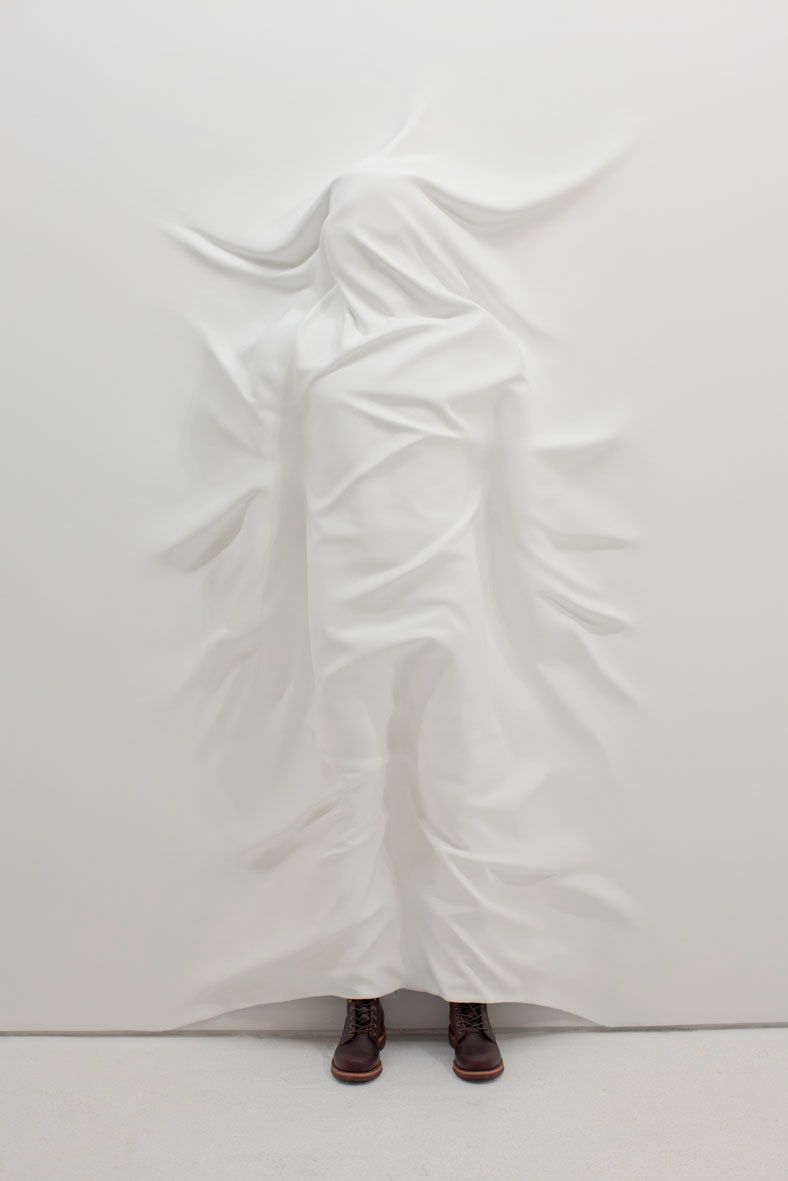
Picture a figure, half flesh hammering out of half fossil, in a dim, in quiet room, its form falling apart, but into something other than dust. In place of that, it’s shimmering crystals like something secreted beneath layers of time. Daniel Arsham’s Hiding Figure a sculpture, feels ancient and futuristic, but vulnerable and always timeless. First off, Arsham has quite the knack for making the ordinary seem foreign, and the unnoticed, look valuable. His work has become such a household name in contemporary art that it should be no surprise.
Well, who is Daniel Arsham, and what made this piece so interesting? So let’s look into his world of eroded sculptures, crystal-filled figures, and hidden stories. In this article, we will work through Arsham’s journey, inspect the enigmatic Arsham Hiding Figure in close detail, and find out why it’s so good. We might even learn a little French on the way.
Who Was Daniel Arsham?

Does the name Daniel Arsham sound familiar? If it doesn’t yet, it will. Arsham was born in Cleveland, Ohio, in 1980 and grew up in a world that always captivated him. He was, after all, once a man who had survived a hurricane that swept through his home, leaving no wreckage behind but that would inform his vision as an artist. When time and the elements have had their way with things, what’s left? Almost all of his art is dotted with that question.
He is now one of the most sought-after contemporary artists. Being temporary, he mixes the eternal with the new. As with his famous eroded sculptures, or collaborations with larger names like Dior, Arsham has a talent for making quotidian objects ‘future relics.
FUN FACT: Daniel Arsham is colorblind! Yep, the artist famous for his visually striking, often monochromatic works has a limited ability to see colors. But that didn’t stop him.
His Career
In New York City, Arsham learned his skills from the Cooper Union and eventually developed his unique style. His first major exhibition came in 2004, and he broke out. His star only rose from there. From Paris (bonjour!) to worldwide exhibitions, to collaborating with musicians such as Pharrell Williams and the choreographer Merce Cunningham, he’s showcased himself. He’s also gotten into fashion, theater design, and even sneaker culture.
Arsham’s treatment of time distinguishes him from other contemporary artists. His sculptures are dug up from an archaeological dig, but instead of bones and pottery, you find eroded sculptures of people, sports cars, and even video game consoles. It’s like going into a museum of a future past. Pretty wild, right?
What Is Happening in Hiding Figure?
| Artist | Daniel Arsham |
| Date Created | 2022 |
| Medium | Plaster, quartz, and other minerals |
| Genre | Sculpture |
| Period | Contemporary |
| Dimensions | 57 x 24 x 15 inches (approx) |
| Series / Versions | Part of the “Hidden Figures” series |
| Where is it housed? | Galerie Perrotin, Paris (on rotation) |
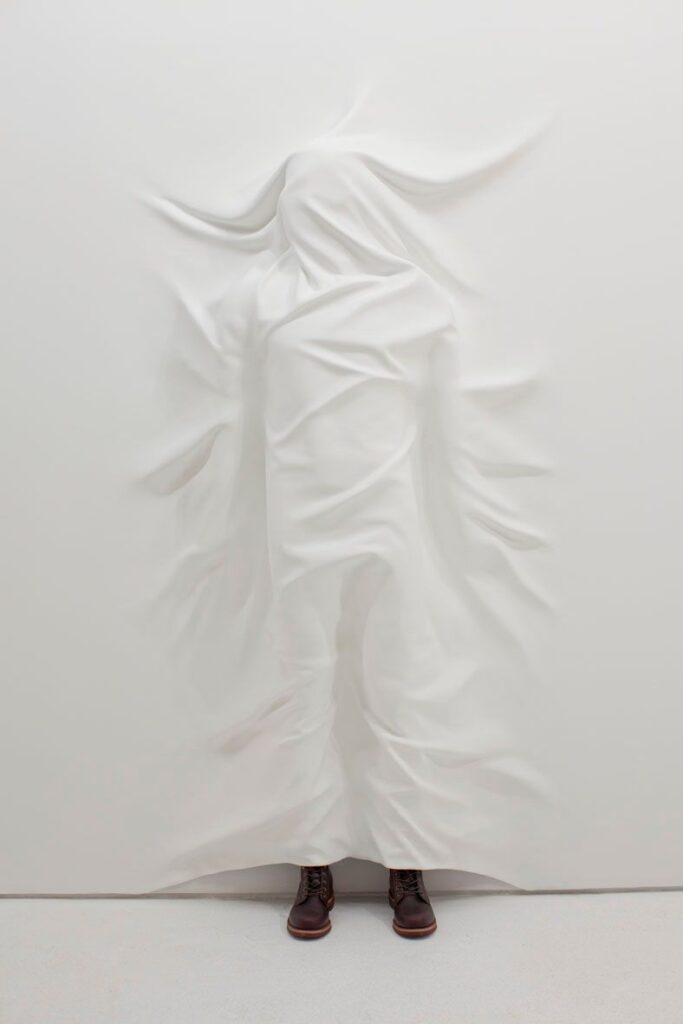
Let us now take a look at the Hiding Figure. You can imagine standing in front of it. You’re staring at a human being of life-size, but something is wrong. Perhaps the figure is hiding from something, or maybe hiding from itself, as it buried its head in its hands. Then there’s the veritable spire and veritable cracks weeping from the body, as though the body is breaking down into these gorgeous magical things.
Hiding Figure is an eroded body, a signature element in Arsham’s work. The figure seems to break apart in parts, but instead of breaking into dust, it rips away layers to show gleaming quartz or selenite crystals. The whole juxtaposition of decay and precious minerals lends to this piece an air of dreaminess. But it is fragile, and somehow it’s eternal.
What’s happening in this piece then? That’s up to you. Is the figure trying to hide from the world? Or is it running from time itself? Arsham keeps these questions as open-ended as possible, encouraging us to think about what we’re seeing and, more importantly, what we’re feeling.
What’s So Special About Hiding Figure?
Hiding Figure stands amongst Arsham’s other works for a reason. Real minerals such as quartz give the figure a mystical, earthy quality, which Arsham uses. Like nature is itself reclaiming the body, transforming it into some good and time immemorial. This piece is more than a sculpture, it is a statement, with the contrast of the eroded figure against the shimmering crystals.
Arsham’s use of erosion is also important here. Erosion, in his hands, is not only about decay but also about transformation. The figure is disappearing, one by one, until nothing is left but destruction. The erosion makes us see that the body has always been hiding something more precious deep underneath the surface.
Hiding Figure is special because of this blend of decay and renewal. It’s not an image, it’s a commentary on space, time, and the belief that even when things end, something incredible can happen.
Interesting Facts About Hiding Figure
Real Crystals: The crystals in the sculpture are genuine minerals, often quartz or selenite, adding an earthy, magical quality.
Unique Erosion Patterns: Each Hiding Figure is unique, with different erosion patterns and crystal placements, making every piece one-of-a-kind.
Part of a Series: Hiding Figure isn’t a standalone. It’s part of Arsham’s larger “Hidden Figures” series, where he explores themes of visibility, fragility, and time.
Future Relic: Like many of Arsham’s works, this sculpture is often described as a “future relic,” as though it’s an artifact from a civilization yet to exist.
Artwork Spotlight: Veiled Porsche

Veiled Porsche is another one of Arsham’s famous works which is also available on Singulart. In this artwork, he draped a sports car in fabric, creating a sense of mystery and intrigue.
Are you looking for a piece of artwork from Daniel Arsham?
Singulart has limited edition prints of Daniel Arsham. If you are looking for a piece of Arsham‘s artwork for sale, simply click on the artwork or the button below to discover more!
FAQs
1. Is Daniel Arsham colorblind?
The colorblindness of Arsham was another factor. A large portion of his art has been in shades of gray or white because of his color blindness.
2. How does Daniel Arsham make his pieces?
Artist Daniel Arsham initially made a plaster mold, which was subsequently utilized to cast the sculptures in bronze.
Conclusion
Daniel Arsham’s Hiding Figure isn’t just another contemporary sculpture. It’s a glimpse at a world where time, memory, and material meet. It is the raw, eroded plaster combined with glittering crystals that makes it feel like it has been brought to us from the future, or from the far-off past. Yet fragile, yet powerful, he’s hidden, and yet revealed.