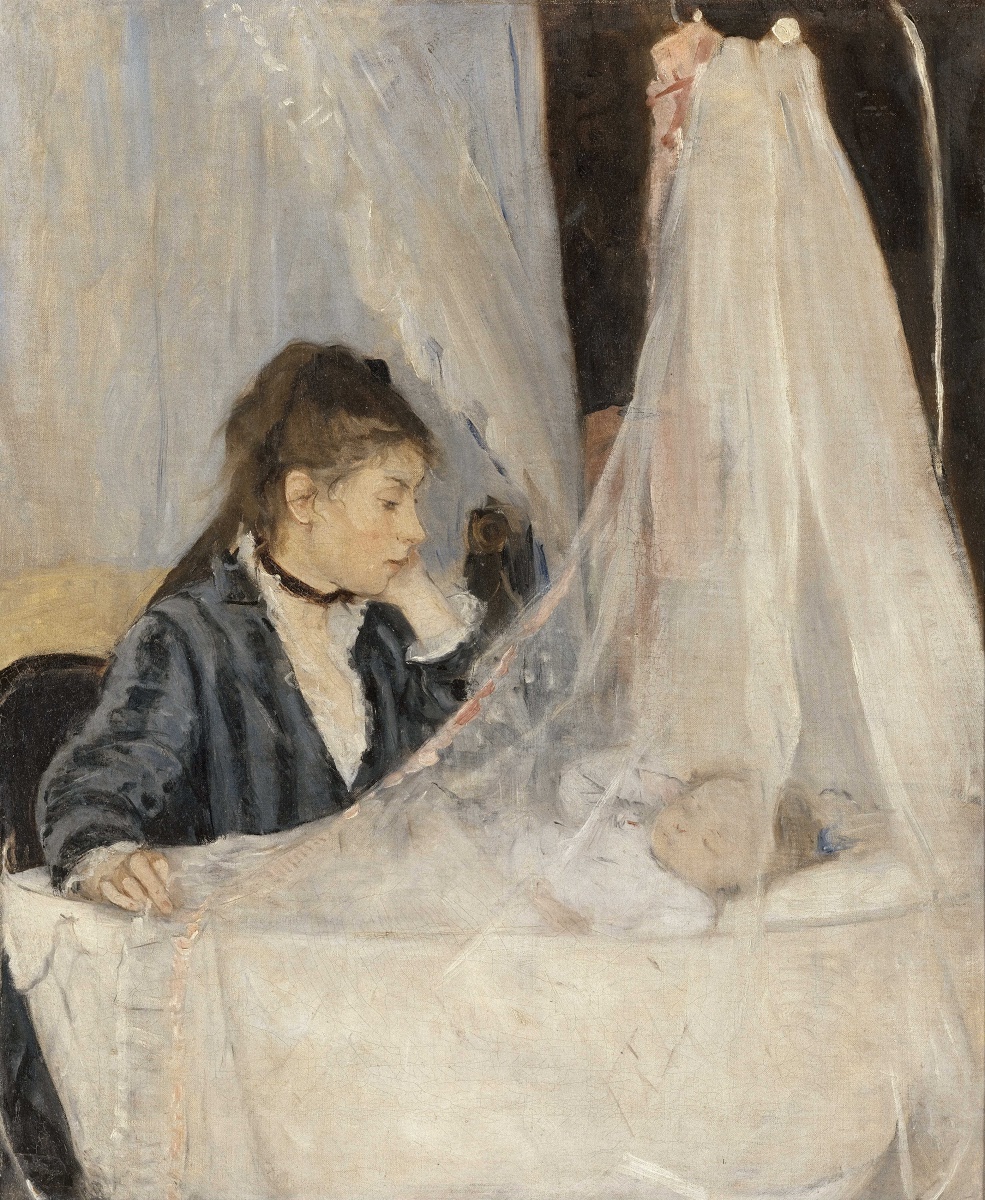
Back in 1872, to a small Parisian studio where Berthe Morisot was sitting gently painting the serene image of her sister, Edma, sleeping over her newborn. The Cradle is a masterpiece that imbues you with the pleasant surroundings of motherhood, and the mother-child bond given in such a tender and intimate scene. As a warm up let’s get to know the genius behind this touching work, Berthe Morisot.
Who Was Berthe Morisot?
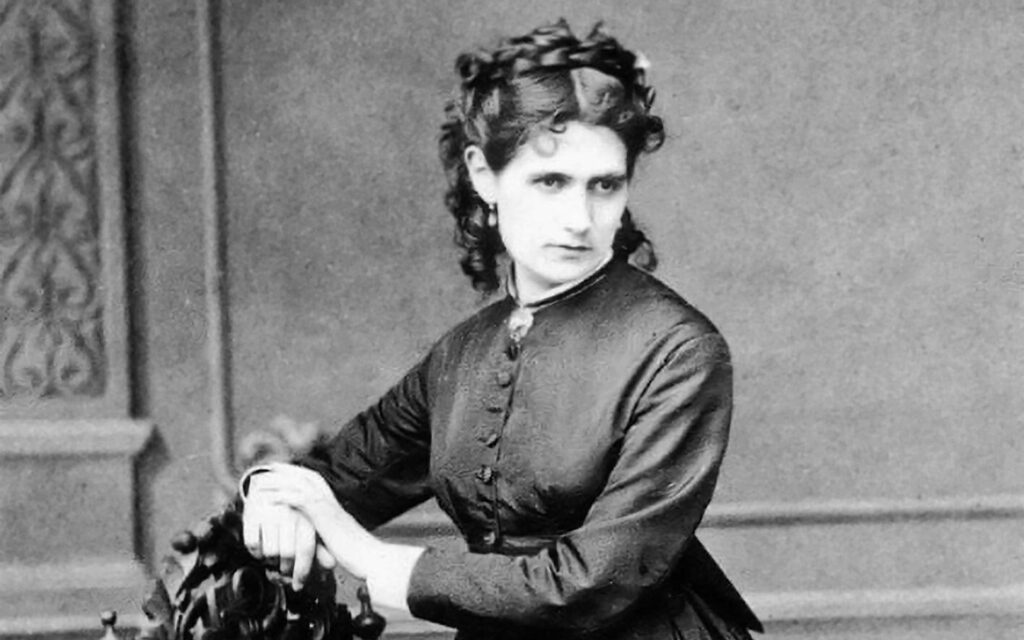
She wasn’t just any artist, not by any means, she was a force of nature when it came to 19th-century French painting. Born in Bourges, France, in 1841, into a wealthy bourgeois family, Morisot was fortunate enough to have been encouraged to take up painting from an early age, something women did not do at the time. By the 1860s, she was regularly exhibiting her works alongside established artists at the prestigious Paris Salon. However, it wasn’t long before she felt constrained by the rigid conventions of the Salon and joined the up-and-coming rebels: the Impressionists.
Morisot was known for her soft brushstrokes, a small palette, and a treatment of domestic scenes and landscapes. Her art was not about big historical subjects, her art was about the here and now, and often was women’s art. She did all that, and she did it while being a wife and mother, something that makes her even more impressive. Édouard Manet wasn’t just a close friend of Morisot’s but he also painted a few portraits of her! Their relationship resulted in a great deal of artistic exchange, producing some of the most beautiful works of the Impressionist era.
FUN FACT: Berthe Morisot was such a trailblazer that she became the first woman to join the Impressionist group!
Her Career
She was a co-founder of the Société Anonyme Coopérative des Artistes Peintres, Sculpteurs et Graveurs—otherwise known as the very first Impressionist exhibition. Always a shining piece, The Cradle was one of the pieces she presented at this exhibit in 1879. She defined her career as an ability to translate the ephemeral action of light and atmosphere, especially in her representations of women, children, and gardens. She got the intimate, serene scenes—like The Cradle and her viewers resonated with them.
What is Happening in The Cradle?
| Artist | Berthe Morisot |
| Date Created | 1872 |
| Medium | Oil on Canvas |
| Genre | Portrait / Domestic Scene |
| Period | Impressionism |
| Dimensions | 56 cm × 46 cm (22 in × 18 in) |
| Series / Versions | None |
| Where is it housed? | Musée d’Orsay, Paris |
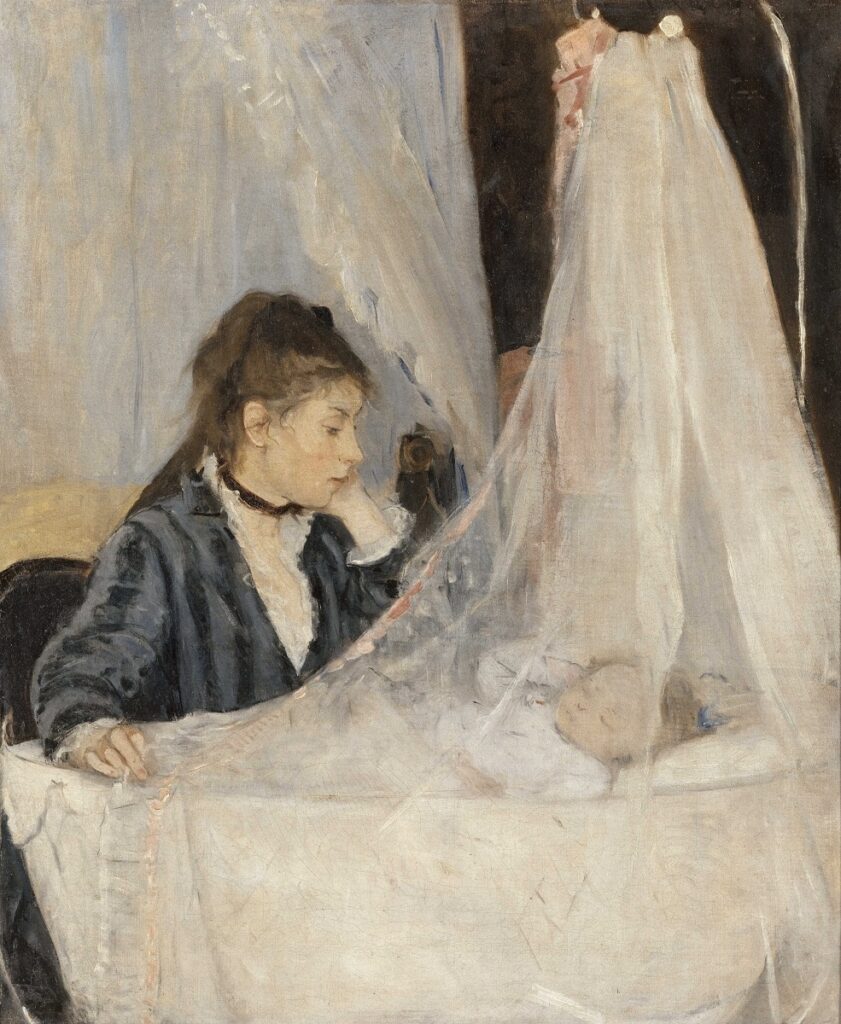
So let’s zoom in on The Cradle. What’s going on here? Interpreting the meaning of this painting, Morisot pictures her sister, Edma, looking down at her sleeping infant, Blanche. Edma’s hand is lightly placed against the baby’s cradle which is covered in a delicate veil as if she is about to adjust it so that the outside world cannot see her little one.
It’s an intimate, personal scene, with nothing grandiose, no bombastic colors or intricate arrangements. Morisot instead pulls us into a quiet tenderness of motherhood and offers us a glimpse of a fleeting moment. The baby slumbers peacefully, and Edma’s face is soft, urging you to stop, breathe deeply, and just experience this scene of normal, peaceful joy.
Morisot’s touch, with its characteristic lightness and soft blending of colors, gives a sense of warmth and safety. The combined soft whites, muted grays, and soft pastels make you want to whisper in the tranquility of such tranquility. You can almost smell the fabric of the veil, hear the quiet of the sleeping baby, and feel the calm love of the room.
What’s So Special About The Cradle?
Why is The Cradle such a huge piece? This painting marked the very first Impressionist exhibition in 1874 and it was indeed Morisot’s breakout work. Although The Cradle wasn’t sold immediately (unfortunately female artists didn’t get the same shine as their male counterparts), it later became one of her most celebrated pieces.
What makes this unique is how Morisot flips the narrative. Idealizing motherhood was common at that time, but Morisot gives us a more personal and honest look at it. She wasn’t just painting a mother and child for the sake of an uplifting scene, she was revealing the real connection between mother and child as they feel all the warmth that goes with it.
Morisot uses light and texture in a way that was very revolutionary for that period. You notice the contrast between the soft fabrics and the bright illumination coming through the window tugging at your eye towards the baby.
Interesting Facts About The Cradle
Here are a few fun tidbits about this painting:
Morisot’s Sister Is the Star: Yep, the woman in the painting is none other than Berthe’s sister, Edma. And the baby? Her niece, Blanche. It’s a real family affair!
Rejected at First: Even though The Cradle was exhibited at the first Impressionist exhibition, it didn’t find a buyer at the time. It wasn’t until years later that this masterpiece found its home.
A Groundbreaking Work: This was one of the first pieces where Morisot truly showcased her signature Impressionist style—light brushwork, soft colors, and a focus on intimate moments.
Part of a Bigger Conversation: Although Morisot created intimate, domestic scenes, she wasn’t alone. Fellow artists like Mary Cassatt also explored similar themes, putting a spotlight on the importance of women’s experiences.
Artwork Spotlight: Jeunes filles cueillant des cerises, Lithographie signée

Morisot’s work Jeunes filles cueillant des cerises, Lithographie signée which is also available on Singulart. This lithograph is yet another beautiful exploration of the delicate relationship between girls and nature—light, airy, and wonderfully tender.
Are you looking for a piece of artwork from Berthe Morisot?
Singulart has limited edition prints of Berthe Morisot. If you are looking for a piece of Morisot‘s artwork for sale, simply click on the artwork or the button below to discover more!
FAQs
1. When did Berthe Morisot paint?
In 1864, at the age of twenty-three, Morisot debuted at the Salon de Paris with the approval of two landscape works. Until 1873, the year before the First Impressionist Exhibition, she kept up her usual Salon exhibition schedule and received generally positive reviews.
2. Who was Berthe Morisot friends with?
Morisot had strong relations with numerous Impressionists throughout her career, including the poet Mallarme, Degas, Monet, and Renoir. Except in 1878, she remained a regular exhibitor with the Impressionist group.
Conclusion
The Cradle is timelessly charming and mesmerizes art lovers around the world. This painting still makes you stop and think about those tiny, personal moments that we miss all the time in a world that is so fast. This is a reminder that life’s biggest moments, like a mother sleeping over her baby, are the quietest.