What if we imagined a world where mythology and contemporary art fused to create something beautiful? A world where an ancient, mythological god isn’t just a figure in a dusty book, but something real and alive, brought to life on canvas. Prometheus is exactly the kind of world Jean Cocteau creates. His interpretation of the ancient Greek legend feels like a cinematic dream. It is lush with bold lines, sharp contrasts, and an energy that ripples just beneath the surface.
Prometheus is more than just a painting, it’s an emotional trip with Cocteau’s usual flair for mixing the real and the fantastical. The inspiration drawn from ancient stories feels very personal, as though Cocteau himself had seen the workings of the infamous Titan. In this article, we will discuss the man who created it and the story behind it.
Who Was Jean Cocteau?
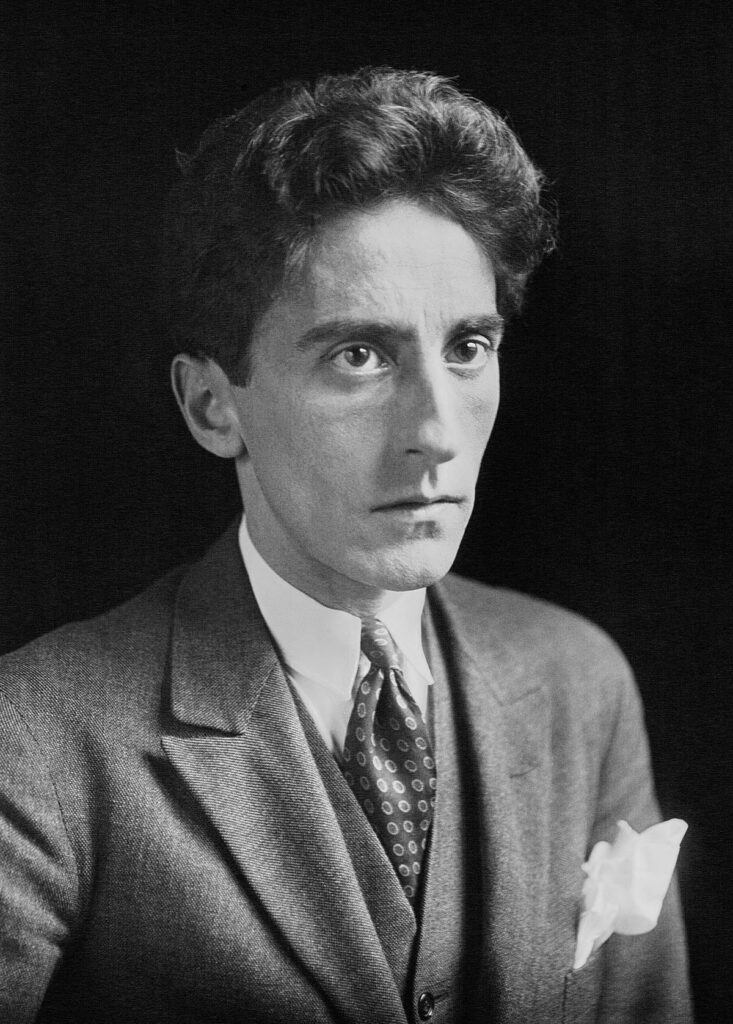
Jean Cocteau was a multi-faced artist who wore a lot of hats throughout his life. He was born in 1889, and time spent growing up saw Paris at the epicenter of artistic innovation. By his early 20s, his career took off, and he started horn mingling with an equally creative set of Pablo Picasso and Erik Satie. His literature, theater, and film works such as Beauty and the Beast (1946) had great success and brought him his reputation as a creator of avant-garde. As already said, this did not stop in words and film, but in artistic matter, he painted and sketched his perspective of the world.
He was more widely influential than in his lifetime, and his works are still praised not only for their daring and creativity but for their emotional depth. It is evident in Cocteau’s work, especially in Mythologie Blonde, that his world was a place where dreams and reality intersect.
FUN FACT: In 1953, Cocteau was given the honorary title of a “bullfighter” by a group of Spanish matadors.
His Career
Cocteau’s life is quite a grand and complex story. His poetry and writing helped to thrust him into the spotlight during his earliest years. La Voix Humaine showed him combining emotion with experimental form. This wasn’t good enough, Cocteau concluded. He had an insatiable thirst for creation, wandering into the world of cinema to create timeless films that played out in the margins between dream and reality.
Beauty and the Beast (1946), his film masterpiece, left audiences with an impression of its surreal stories and visually beautiful scenes. Cocteau also worked with ballet composers and choreographers, creating a portfolio of work exploiting the interplay of visual and auditory senses. But Cocteau did much more in literature and film, and his work as a visual artist usually played no small role, which is a shame because it’s just as fascinating.
What is Happening in Prometheus?

| Artist | Jean Cocteau |
| Date Created | 1929 |
| Medium | Gouache on Paper |
| Genre | Mythological |
| Period | Modern Art |
| Dimensions | 29.5 x 41 cm |
| Series / Versions | N/A |
| Where is it housed? | Musée d’Art Moderne de la Ville de Paris |
This artwork represents the story of the ancient Greek Titan, Prometheus, who stole fire from the gods and gave it to humanity. It’s one of the most famous myths and human creativity that probably helped resonate with Cocteau, the man who would go on to defy the boundaries of the art form.
Unlike typical Prometheus interpretations, Cocteau’s version of Prometheus feels different. Instead of dwelling on the suffering of Prometheus, Cocteau elevates the beauty of the moment when fire was given to humanity. Fire itself, which is the symbolic manifestation of the creative spark, is being celebrated, the very spark that lights the artistic inspiration’s flame.
What’s So Special About Prometheus?
So what sets Prometheus apart in the genius body of work? The mythological theme gives it depth but it’s not the subject matter. For Cocteau, transforming a classic story into something thoroughly personal and, well, stunning is his way.
The figures in this piece are fluid, almost whimsical, while his use of clean, bold lines contrasts greatly. What makes it more than just a beautiful picture is that the emotion behind the myth is simple enough for his forms to shine through.
But Cocteau’s take on Prometheus is different, modern, and yet quite timeless. You realize this wasn’t just about telling a story but, about making you understand, and feel the weight and significance of Prometheus’s act.
Interesting Facts About Prometheus
Prometheus was part of a larger project that included not only paintings but also a stage play written by Cocteau. He was fascinated by how different mediums could tell the same story in diverse ways.
Cocteau often referred to Prometheus as a symbol of the artist’s role in society—rebelling against norms to bring something new and essential to humanity.
Cocteau’s lifelong fascination with mythology wasn’t limited to Prometheus. Throughout his career, he returned to themes of gods, heroes, and the supernatural, blending them with his unique modernist style.
In Greek mythology, Prometheus is known for his eternal punishment, but Cocteau focused on the act of giving fire to humanity—a small shift that changes the entire tone of the myth.
Artwork Spotlight: L’âge du verseau : mutation
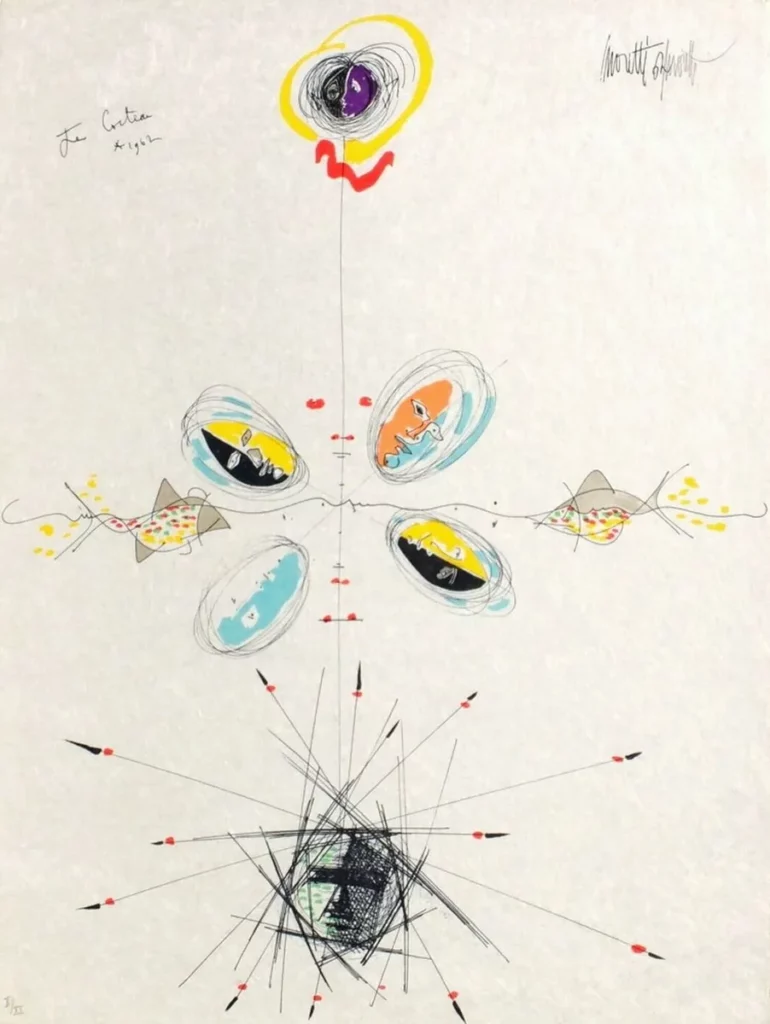
L’âge du verseau : mutation is available on Singulart. This piece captures astrological symbolism and cosmic transformation, blending his surrealist style with themes of change and rebirth.
Are you looking for a piece of artwork from Jean Cocteau?
Singulart has limited edition prints of Jean Cocteau. If you are looking for a piece of Cocteau‘s artwork for sale, simply click on the artwork or the button below to discover more!
FAQs
1. What happened to Jean Cocteau?
At the age of 74, Cocteau passed away from a heart attack in his château in Milly-la-Forêt, Essonne, France, on October 11, 1963.
2. Is Jean Cocteau a surrealist?
Cocteau’s films and the Surrealist movement of the late 1920s and early 1930s have been closely associated. However, Cocteau never saw himself as a Surrealist.
Conclusion
Jean Cocteau’s Prometheus is neither simply a piece of art, nor a reflection of his brain, but an experience, an encounter with the creative genius. Cocteau takes a familiar ancient myth and turns it into something utterly personal, presenting this as the artist’s defiance and unquenchable creativity.
Just like Prometheus gave fire to humanity, Cocteau’s work continues to inspire and ignite the imaginations of all who encounter it. It’s this lasting spark that makes Prometheus such a timeless and captivating piece.