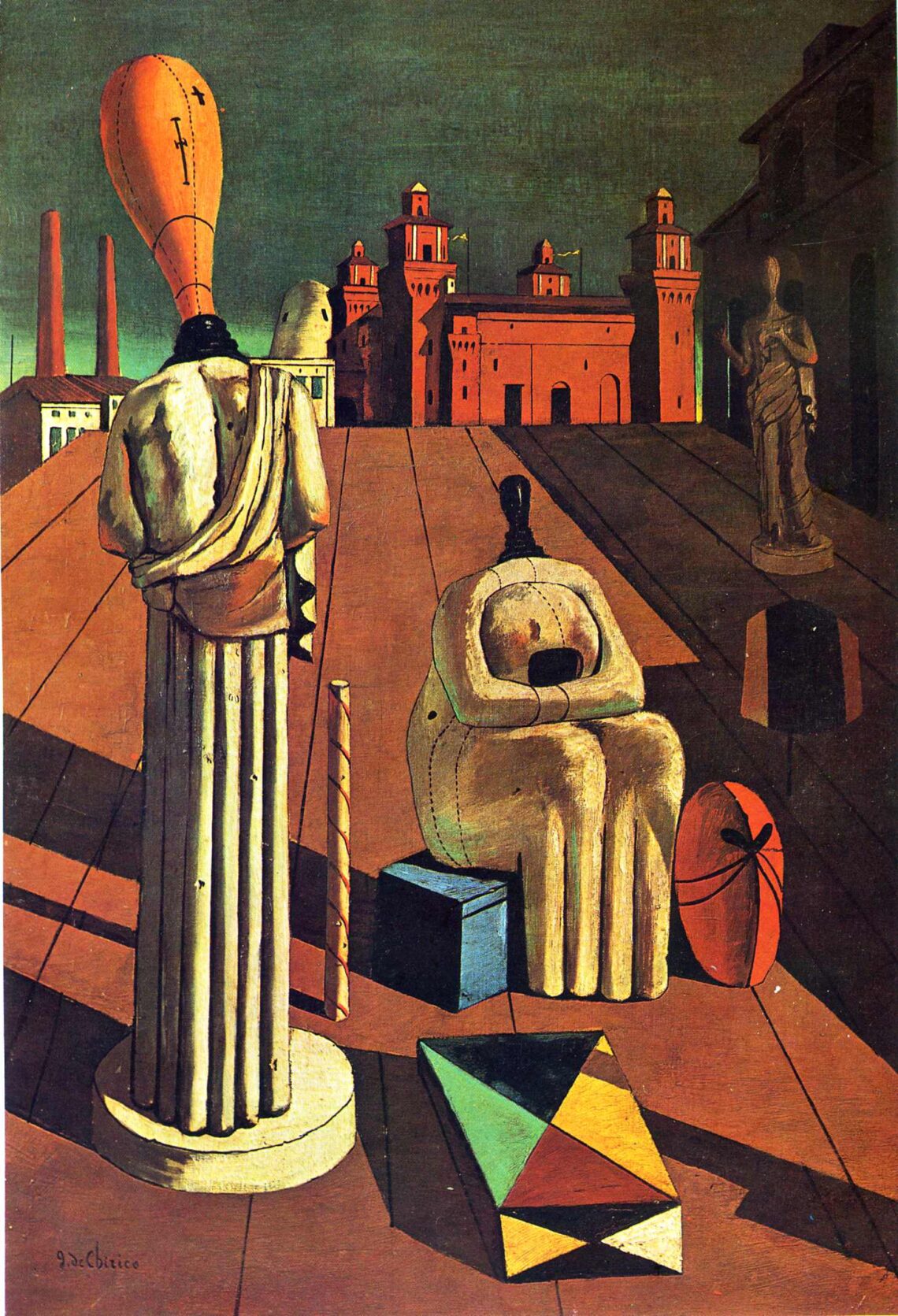
Picture yourself walking between two streets full of quiet, shadows growing longer as the dusk begins to catch up with the day. Air is still, not the friendly kind. There’s something not right, it feels like there’s something more to the scene. There are three faces, draped in heavy robes, and they are all statues that stand in the distance surrounded by classical architecture. It’s not your usual kind of muses; it’s full of life and inspiration. The Disquieting Muses is a painting by Giorgio de Chirico that sucks you into its strange, eerie world of silence, contemplation, and asking unanswerable questions.
There’s also something about Giorgio de Chirico’s artwork that makes you feel like you just missed something, something that happened, or—in fact—something about to happen. The Disquieting Muses, one of his best-known Metaphysical pieces, was created between 1916 and 1918 when his work was rich in mystery and surreal imagery. What is going on in this piece? Also, why is it so unsettling and so captivating? We’ll get into more detail about this interesting piece and the artist himself.
Who was Giorgio de Chirico?
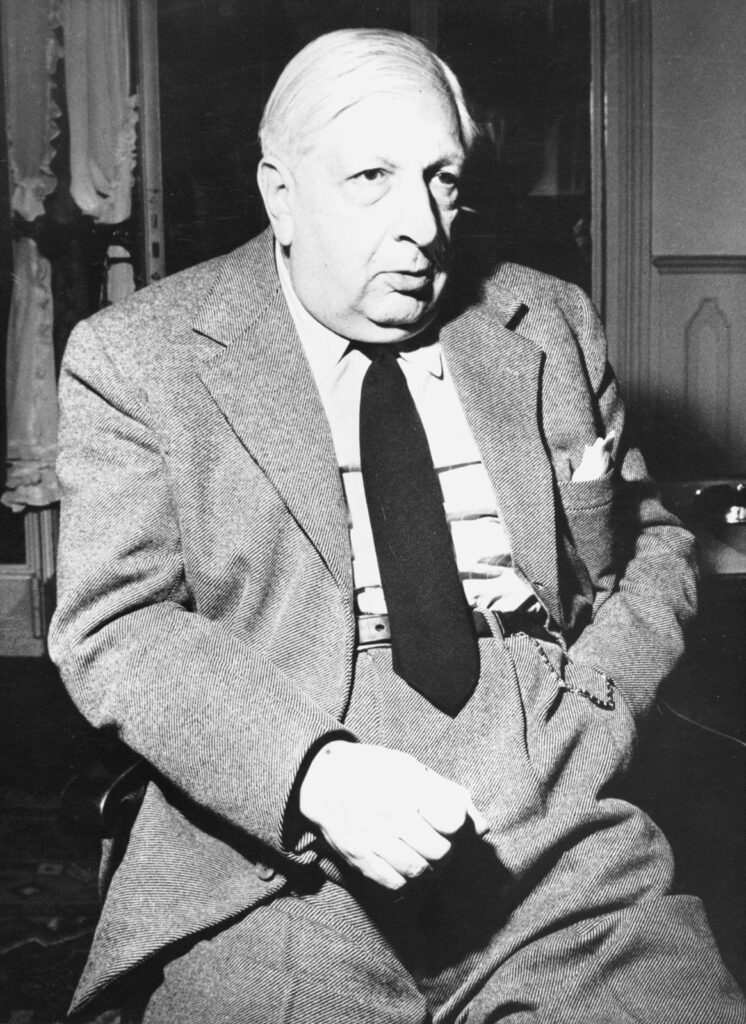
Giorgio de Chirico transformed art, forever changing how we see the world. Born in Greece in 1888, he grew up surrounded by ancient myths and stories. However, his work didn’t directly reflect these traditional tales. Instead, he took old ideas and gave them modern, unexpected twists. He blended the familiar with the strange, creating dreamlike scenes that feel both comforting and mysterious. His unique style eventually inspired the Metaphysical Art movement. While the term sounds grand, it simply explores deeper meanings and emotions hidden in everyday life.
You feel like you’re walking through a still, quiet city, wondering if you are awake or dreaming, as you do when you look at one of de Chirico’s paintings. His combination of shadows, long empty streets, and mysterious figures is unforgettable and a little spooky—in a good way. He wasn’t just a regular painter; he wanted to reinvent our perception of life, our clock, and the world around us in a new, magical way.
FUN FACT: He was a bit of a prankster in the art world! Later in his career, he created new versions of his earlier famous paintings, like The Disquieting Muses, and then he would “age” them to make them look like the originals.
His Career
After finishing studies in Athens, Florence, and Munich, De Chirico absorbed classical and contemporary art. From ancient Greek and Roman art to allusive dreamlike work in Paris after 1911, his early career was oriented on it. In Paris, he became friends with other artists and joined the avant-garde scene. He really developed his Metaphysical Art style there that would subsequently inspire movements like Surrealism.
Throughout his career, de Chirico continually chipped away at boundaries. He experimented with different techniques of light, shadow, and perspective. You quite often feel you have stumbled into a forgotten world with his paintings. Although there’s always something personal in his work, almost as if it’s a secret message waiting for you to discover.
What is Happening in The Disquieting Muses?
| Artist | Giorgio de Chirico |
| Date Created | 1916-1918 |
| Medium | Oil on canvas |
| Genre | Metaphysical art |
| Period | Early Metaphysical Period |
| Dimensions | 35.1 x 28.1 inches (89.2 x 71.4 cm) |
| Series / Versions | Several versions exist, varying slightly |
| Where is it housed? | Peggy Guggenheim Collection, Venice |
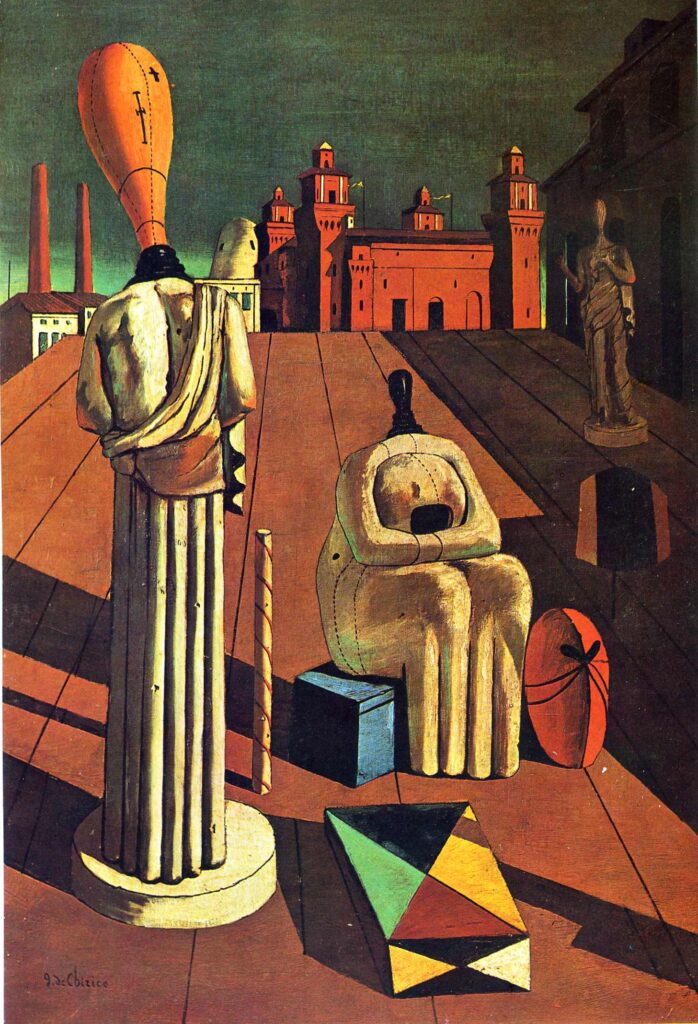
The Disquieting Muses lead us inside one of de Chirico’s haunting worlds. And now we are here in the vast, empty piazza among the three faceless figures in the foreground. These are the muses, but they’re nothing like the muses of classical mythology. Instead, they are stiff, draped in heavy robes, like the monoliths or mannequins they seemed. A factory-like structure rises against a muted sky in the background, looming dark and long shadows that reach past them. Everything is still in the scene, and a desperate amount of something is missing or must come.
The Disquieting Muses may be a contradiction in terms, but de Chirico was a master of clinging to tension in paintings. Here the muses, the traditional arbiters of the arts, are alienated and remote, more like a forgotten inspiration, or lost creativity. The presence of the looming factory makes the whole atmosphere seem unsettling as if it is the incursion of modernity over and above classical ideals. It all feels frozen, caught in a moment of eerie calm, and the more you look the more questions arise.
What’s So Special About The Disquieting Muses?
What makes this painting stand out is that it’s able to evoke so many feelings at the same time — it makes us uneasy, curious, and fascinated. De Chirico’s choice to portray the muses in such an unsettling manner calls into question our assumption about those figures. Are they creators or are they creators of the absence of creation? What is their connection to the architecture behind them and why are they faceless? What makes this artwork so interesting, though, isn’t that de Chirico doesn’t give us answers.
De Chirico’s work here clearly reflects the uncertainties of the time on which The Disquieting Muses was painted, during World War I. There’s an out-of-balance world in the empty piazza, the looming structures, the statuesque figures. This painting doesn’t just expect you to stalk it with your eyes; it expects you to think, wonder, and feel.
Interesting Facts About The Disquieting Muses
The Disquieting Muses wasn’t just a single painting—de Chirico created multiple versions of this eerie scene, each with slight differences. One version is housed in the Peggy Guggenheim Collection in Venice, while others can be found in museums across Europe.
De Chirico loved to use mannequins in his paintings, as seen here. Why mannequins, you ask? He felt they represented the modern world’s loss of individuality—a haunting reflection of growing industrialization.
De Chirico’s Metaphysical period was a huge influence on the Surrealists. Artists like Salvador Dalí and René Magritte took inspiration from his dreamlike worlds. Even though de Chirico didn’t love the Surrealists, they adored his work!
The architecture in the background is just as important as the museums. It resembles classical structures, but they feel lifeless, almost as if they’ve been abandoned. This is typical of de C`hirico, who often used architecture to symbolize lost ideals and forgotten histories.
Artwork Spotlight: Malinconia
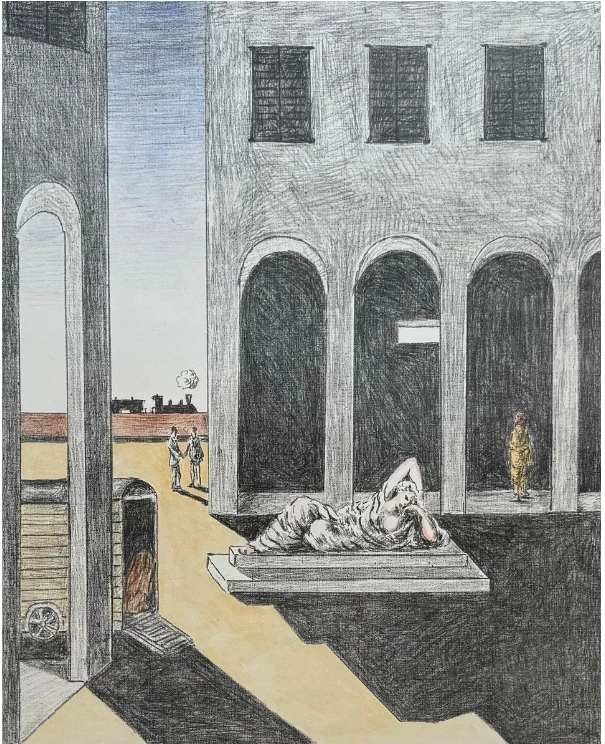
His painting Malinconia is available on Singulart. This artwork beautifully illustrates the concept of longing and silence, with faceless figures and deserted spaces adding to the mood. He mastered the art of making the familiar feel strange, a signature of his Metaphysical style.
Are you looking for a piece of artwork from Giorgio de Chirico?
Singulart has limited edition prints of Giorgio de Chirico. If you are looking for a piece of de Chirico‘s artwork for sale, simply click on the artwork or the button below to discover more!
FAQs
1. Was Giorgio de Chirico a futurist?
De Chirico seemed to be choosing the Renaissance in terms of plastics and even iconography, whilst the Futurists were building on the base of Cubism.
2. What was Giorgio de Chirico famous for?
The Italian artist Giorgio de Chirico (1888–1978) is most recognized for having established the metaphysical painting or metaphysical art movement.
Conclusion
The Disquieting Muses is one of those rare paintings that lodge with you long after you’ve seen it. It’s the same aged stillness, shadow, and faceless muses that keep you coming back. A blend of philosophy and architecture and eerie figures, he invites us to wonder about the forces that we can hardly see. Explore more art and philosophical works on DailyNous.