You have heard of Cubism — actually, you have heard of Georges Braque, one of the pioneers of Cubism, and he created some of the most interesting art from the early 20th century. Houses at L’Estaque is one of his best-known works. This is more than the French town painted by this artist, it is a view of form, shape, and perspective during a time of great change in the art world.
This painting challenges the way we look at landscapes and sets the scene in L’Estaque, a sleepy village in the south of France. Braque wanted to break away from tradition and create something entirely new. We hope this article takes you on a tour through Braque’s world, from his life to his career, and finally to Houses at L’Estaque. And we’ll throw in a few fun facts to keep things light and fun.
Who Was Georges Braque?
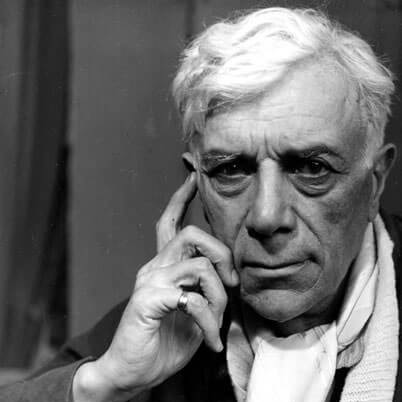
Georges Braque was born in 1882 in France in Argenteuil. He was always around color and design because his father was a house painter. When he grew up, his love for art developed and he chose to study painting. Braque experimented with different styles early in his career. His first foray was into bold colors and light via Impressionism and Fauvism.
When Braque encountered the work of Paul Cézanne, an artist famous for stripping natural forms of their angularity, something had changed. Braque was inspired to try a new way of painting, painting that would lead to Cubism with Picasso. With Cubism, an entirely new way of considering how we see objects and spaces was opened up.
FUN FACT: He was the first living artist to have a solo exhibition at the Louvre! In 1961, the Louvre honored Braque by displaying his work in its hallowed halls—a rare achievement, especially for a living artist.
His Career
Evolution is the right word for Braque’s career. Initially, his colors were bright but bold and inspired by Fauvism, and he later became fascinated with geometry and form. He worked closely with Picasso to develop Cubism, a style that breaks down objects into simple shapes and then reassembles the objects on the canvas from multiple perspectives.
From about 1908 to 1914, Braque and Picasso kept pushing one another toward great art. At this time, apart from Analytical Cubism, Braque’s paintings grew more abstract. Instead of coloring, he focused on the structure of what he was painting. Braque continued to develop as an artist after World War I. He resumed working in color and began to lose the fluidity while still being concerned with form.
What Is Happening in Houses at L’Estaque?

| Artist | Georges Braque |
| Date Created | 1908 |
| Medium | Oil on Canvas |
| Genre | Landscape |
| Period | Proto-Cubism |
| Dimensions | 28.7 in × 23.6 in (73 cm × 60 cm) |
| Series / Versions | Part of early Cubist works |
| Where is it housed? | Kunstmuseum Bern, Switzerland |
Houses at L’Estaque is a painting of a landscape but not that particular arrangement of houses and hills. This painting might seem like a very ordinary hillside in L’Estaque, a town Braque walked frequently, but it presents a completely fresh perspective. Between the houses, you can hardly tell one house from another, all of them seem to look like blocks that have stacked on top of each other. Everything seems to have the nature of being flattened out from the sky to the trees, to the ground.
Structurally, the braque uses earthy colors–green, brown, ochre–and it feels natural, but this is the painting’s most striking element. Braque breaks the landscape into simple shapes and forms rather than painting it the way it is. The houses are turning geometric shapes, no longer detailed buildings, blending into the landscape.
It gives the painting a modern almost abstract feel and helps you think about the space in a new way. Instead of just looking at a view, you are feeling it from different angles at the same time.
What’s So Special About Houses at L’Estaque?
At first glance, it looks like a normal landscape, but when you look closer you’ll see that Braque wasn’t portraying the scene exactly as it looks in real life. What he wanted to do instead was show the essence of the landscape. There is a blending of the houses, trees, and sky, in a way that breaks up traditional ideas about space and depth.
It is also a special painting because it represents a key moment in Braque’s life. This painting is one of his very earliest examples of moving in his direction towards Cubism, where he begins to break objects down into geometric shapes. Houses at l’Estaque is an early Cubist painting that changed the course of modern art.
Interesting Facts About Houses at L’Estaque
Let’s take a look at some fun facts about this iconic artwork:
Houses at L’Estaque is one of the key pieces that signaled the start of Cubism, a movement Braque co-created with Picasso. It marks the moment when Braque began to experiment with breaking down objects into simpler shapes.
The town of L’Estaque, where Braque painted this piece, was also a favorite of Paul Cézanne, who inspired Braque with his geometric approach to painting.
Braque didn’t just paint this scene because it was beautiful; he painted it to explore new ways of showing space and form. The stacked houses and flattened shapes show his interest in moving beyond traditional landscape painting.
Did you know that Braque often returned to L’Estaque? He painted the town multiple times, and each visit gave him new inspiration to continue pushing the boundaries of art.
Artwork Spotlight: Three Birds
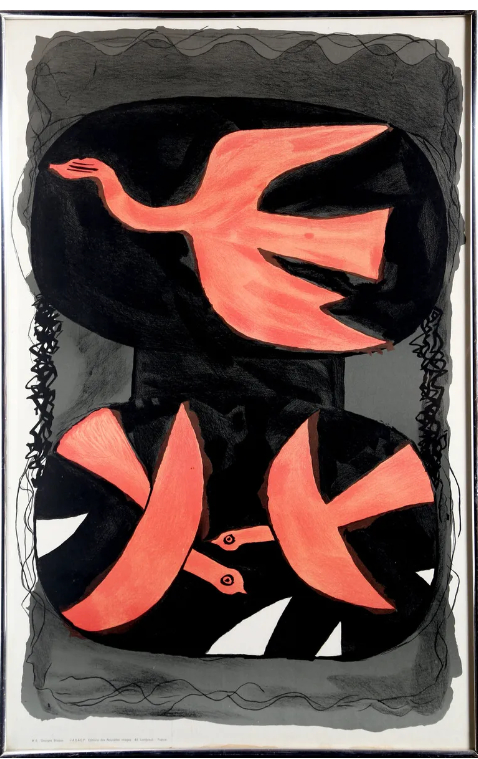
One of his later works, Three Birds is also available on Singulart. This artwork showcases his ability to blend abstraction and nature. It’s a simple yet powerful piece that reflects his unique style.
Are you looking for a piece of artwork from Georges Braque?
Singulart has limited edition prints of Georges Braque. If you are looking for a piece of Braque‘s artwork for sale, simply click on the artwork or the button below to discover more!
FAQs
1. How did Georges Braque contribute to Cubism?
Georges Braque was a leading figure in the groundbreaking Cubist art movement. Throughout his life, Braque’s art was primarily still lifes and ways to use color, line, and texture to see objects from different angles.
2. What was Georges Braque’s art style?
The Cubist style is the basis for George Braque’s well-known paintings. The reason it is termed Cubism is that the objects shown in the artworks appear to be constructed from cubes and other geometric shapes. Despite working on a variety of subjects, Braque is best known for his masterful still-life paintings.
Conclusion
Houses at L’Estaque by Georges Braque is one of the most important pieces to help you understand Georges Braque’s work as an artist. This is a painting of his love of nature and how art can cumulatively be pushed further.