Pedro Friedeberg’s Hand Chair is that quirky dream where you’ve ever wanted a piece of furniture that feels like it’s giving you a literal hand. In the early 1960s, when the world began to accept imagination and creative expression as never before, Friedeberg’s Hand Chair became known for its surreal and eccentric approach to art and design. It’s a sculpture, a statement, an artwork that asks you to consider where the functional ends and the fantasy begins. Every bit of this chair, from the palm seat to the supportive, poised fingers, is imbued with Friedeberg’s surrealist and playful vision.
What’s so special about the Hand Chair, and why is it an icon of the design world that still endures over fifty years since its release? Let’s find out in this article!
Who Was Pedro Friedeberg?
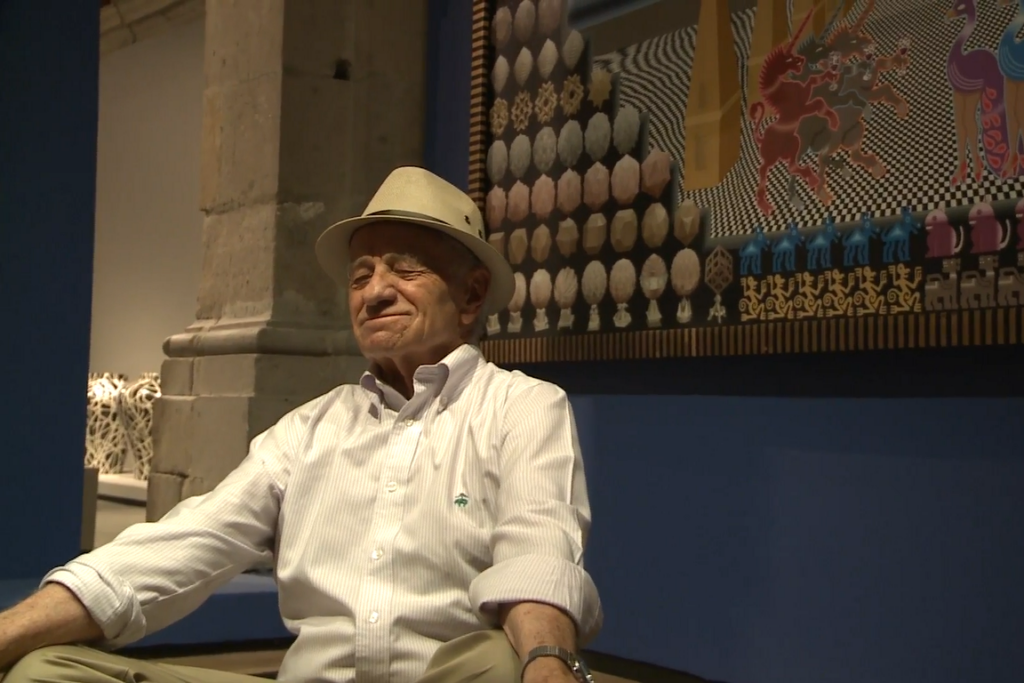
Pedro Friedeberg was born in Italy and raised in Mexico, and his mind is whimsical and surrealist. He fashioned this world of surrealism and European avant-garde into his one style. Friedeberg started with architecture, following a path that later closed to him and revealed itself to be too limiting. Friedeberg was a true surrealist with work that is impossible to look at just once, standing at the intersection of the ordinary and the magical.
FUN FACT: Pedro Friedeberg is an artist who doesn’t limit his imagination to just one style or medium. Alongside creating surreal furniture like the Hand Chair, he has a deep fascination with patterns and symmetry.
His Career
In the 1960s, Friedeberg discovered the art community with other like-minded creatives like the famous Remedios Varo, and Leonora Carrington. Friedeberg’s work was wedded to a world that used imagination more than realism and his creations were immediately popular. After honing his craft, he started churning out surreal and playful, symbolically rich, a little ironic, and a whole lot of personality.
What is Happening in Hand Chair?

| Artist | Pedro Friedeberg |
| Date Created | Early 1960s |
| Medium | Wood (often painted) |
| Genre | Surrealist Furniture |
| Period | Mid-20th Century |
| Dimension | Varies by edition |
| Series / Versions | Multiple versions exist, some in vibrant colors, others in natural wood. |
| Where is it housed? | Private collections and museums worldwide, including the Museum of Modern Art, in New York |
Think of a hand, large enough to sit on, its fingers poised elegantly as though waiting for you to arrive. The palm is the seat, and the fingers curl for a comforting backrest. This design has a kind of humanity in it: a hand reaching out ready to hold you, encouraging you to sit down and allow yourself to be swallowed up in its surreality. There are versions of the Hand Chair that are painted hues, but there are versions that stay in the natural wood tones, leaving the hand’s “personality” for interpretation.
What’s So Special About Hand Chair?
The Hand Chair is not just furniture, it is Friedeberg formulating a new way of designing. It’s funny and weird at first. Sit on it and you begin to understand that Friedeberg wanted his pieces to be functional and provoking. The chair’s structure embodies surrealism and it blurs the lines between art and utility, offering us something we can both appreciate and use.
Interesting Facts about the Hand Chair
Multiple Versions: There are several versions of the Hand Chair, each unique. Some are painted in bright, fantastical colors, while others are left in wood—a subtle nod to atelier design practices.
From Mexico to MoMA: While the Hand Chair was created in Mexico, it quickly found fans worldwide, earning a place in the Museum of Modern Art in New York.
Hand Symbolism: Friedeberg was inspired by the hand as a symbol. In many cultures, the hand represents strength, creativity, and generosity, all qualities Friedeberg felt connected to.
Part of the Surrealist Art Movement: The Hand Chair fits seamlessly into the surrealist art movement, where the ordinary becomes extraordinary. Friedeberg’s Hand Chair might be one of the most approachable ways to understand surrealism because it combines practicality with a dream-like design.
Artwork Spotlight: Mano roja

Mano Roja by Pedro Friedeberg is available on Singulart. This artwork explores the symbolism of the hand but in a two-dimensional, vibrant format.
Are you looking for a piece of artwork from Pedro Friedeberg?
Singulart has limited edition prints of Pedro Friedeberg. If you are looking for a piece of Friedeberg‘s artwork for sale, simply click on the artwork or the button below to discover more!
FAQs
1. What is Pedro Friedeberg best known for?
Friedeberg is best known for his Hand Chair, a surreal and functional sculpture in the form of a massive hand that is at once a seat and a piece of art.
2. How did Pedro Friedeberg get started in art and design?
At first, Pedro Friedeberg studied architecture and wasn’t too fond of its set structures and rules. He was a part of the avant-garde art scene in Mexico during the 1960s, where he became friends with surrealist artists Remedios Varo and Leonora Carrington, who profoundly influenced his style.
3. What themes are common in Friedeberg’s work?
Friedeberg’s work has often dealt with themes of surrealism and symbolism.
Conclusion
The Hand Chair is both a sculpture and a conversation starter, sparking curiosity and even a bit of joy. It embodies Friedeberg’s imaginative spirit and surrealist approach, capturing a sense of wonder that goes far beyond its wooden form. Whether you’re an admirer of surrealism, a lover of unique design, or someone simply looking to bring a bit of artful quirk into your space, Friedeberg’s Hand Chair is a piece that’s ready to give you a hand.