


Imagine an invitation to enter a world of ancient myth and surrealism and that world is Pedro Friedeberg’s The Pyramid of the Magician, which isn’t just a sculpture, but a sculpture that wants to invite you to the world in which it resides. Friedeberg’s creation is inspired by the Pyramid of the Magician at Uxmal, Mexico, and inspired by surrealist imagination with each twist and turn. There is not an inch of the piece that doesn’t pulse with ornate symbols, eccentric towers, and labyrinthine paths.
In this article, we are going to present you with the story behind The Pyramid of the Magician by Pedro Friedeberg and the fascinating life and career that brought the piece to the world. We’ll also explore Friedeberg’s signature style and how this sculpture takes a familiar form. If you’re ready for a spot of fun and French flair—Bonjour!—we’re here to show you how.
Who Was Pedro Friedeberg?
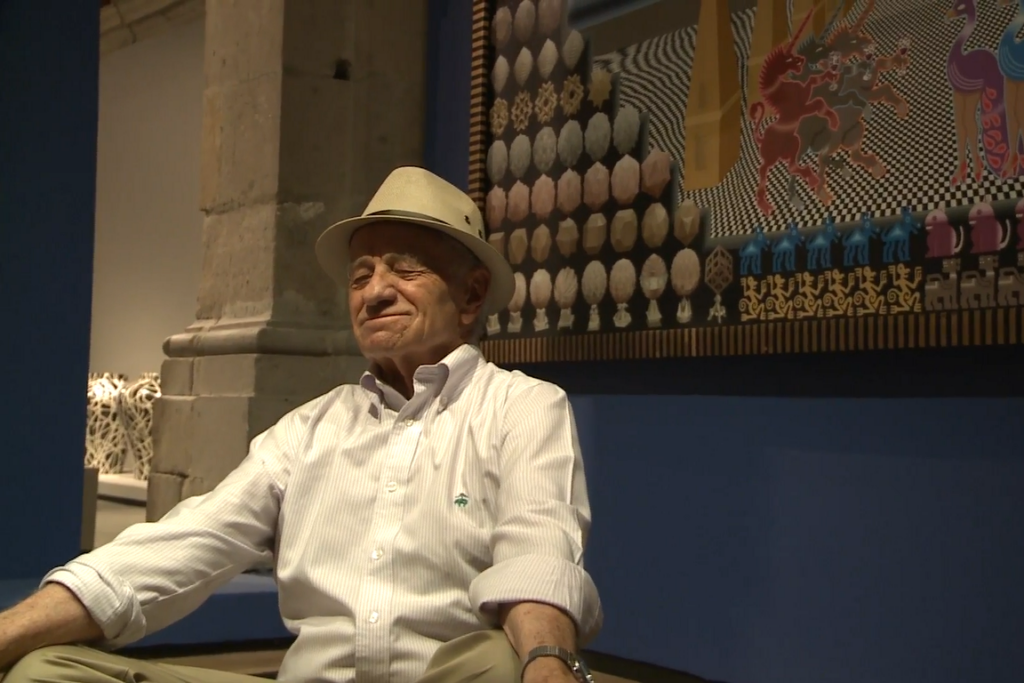
Pedro Friedeberg was born in Italy and raised in Mexico, and his mind is whimsical and surrealist. He fashioned this world of surrealism and European avant-garde into his one style. Friedeberg started with architecture, following a path that later closed to him and revealed itself to be too limiting. Friedeberg was a true surrealist with work that is impossible to look at just once, standing at the intersection of the ordinary and the magical.
His Career
In the 1960s, Friedeberg discovered the art community with other like-minded creatives like the famous Remedios Varo, and Leonora Carrington. Friedeberg’s work was wedded to a world that used imagination more than realism and his creations were immediately popular. After honing his craft, he started churning out surreal and playful, symbolically rich, a little ironic, and a whole lot of personality.
FUN FACT: He’s famously obsessed with patterns and intricate designs—so much so that he’s been known to spend hours (sometimes days!) adding tiny, detailed motifs to his artworks by hand.
What is Happening in The Pyramid of the Magician?
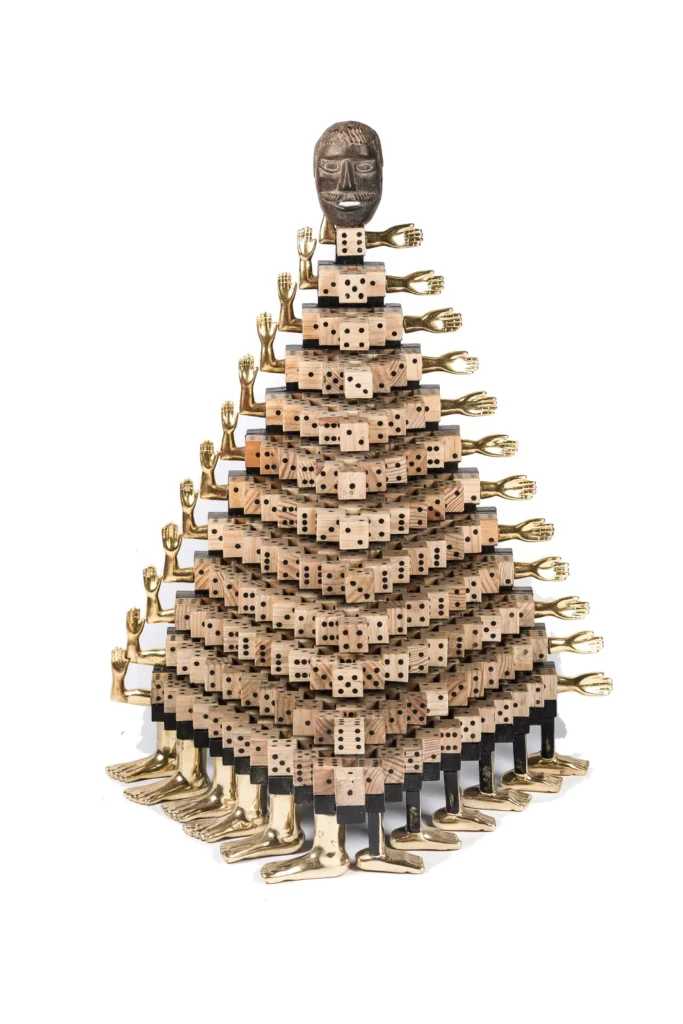
| Artist | Pedro Friedeberg |
| Date Created | 1968 |
| Medium | Wood, metal, painted surfaces |
| Genre | Surrealism |
| Period | Mid-20th Century |
| Dimensions | 28 x 28 x 34 inches |
| Series / Versions | Part of a series on architectural forms |
| Where is it housed? | Various private collections |
The Pyramid of the Magician is surreal architecture in dizzying terms. Friedeberg’s version of the pyramid is an inspired piece, a sort of homage but played out with a definite tongue-in-cheek slant. He inserts multiple towers, arches, and surrealistic stairways that wind their way up to nowhere like the pyramids’ sacred geometry, yet magically too, with an ‘abracadabra’ of architecture.
Now imagine intricate designs climbing up the wood surface like vines but also interspersed with metal detailing, and delicate hand-painted symbols. It is not a miniature of an ancient pyramid, but a mystic’s table, a conversation piece, an invitation to decode its mysteries.
What’s So Special About The Pyramid of the Magician?
The Pyramid of the Magician is alive, imbued with a wonderful, mysterious sense of wonder. Its unique interpretation fuses the ancient myths with 20th-century surrealism to produce something different. It has a spiritual aura about it, both in the sense of ancient Mayan civilization and playful modern architecture.
What’s so unforgettable about the artwork is its layered complexity. From far off, it’s a beautiful object, but close up, it’s layered, labyrinthine, and obscure. No wonder this became one of Friedeberg’s most iconic creations.
Interesting Facts About The Pyramid of the Magician
A Towering Muse: Friedeberg drew from the architectural grandeur of Uxmal’s Pyramid of the Magician in Mexico, letting its spiritual symbolism echo through his intricate reinterpretation. It’s surrealism meeting archaeology in the most delightful way.
Symbolism Galore: In true Friedeberg style, the pyramid overflows with symbols that defy explanation. You might catch everything from strange hieroglyphs to otherworldly shapes. Friedeberg’s works often feel like coded messages from a parallel universe.
Hand-Painted Detail: Every inch of this pyramid is covered in ornate, hand-painted designs. Each section feels like it belongs to a different part of an imaginary kingdom, blending history with the whimsical.
Architect’s Dream: Friedeberg’s love of architecture is central to this piece. Rather than creating a static sculpture, he gives us something that suggests movement and growth, hinting at endless possibilities.
Artwork Spotlight: BANCA ZIGURATICA NINIVESCA DE 3 PLAZAS

BANCA ZIGURATICA NINIVESCA DE 3 PLAZAS by Pedro Friedeberg is available on Singulart. This piece resonates with a wild blend of geometry and function that turns seating into an art form.
Are you looking for a piece of artwork from Pedro Friedeberg?
Singulart has limited edition prints of Pedro Friedeberg. If you are looking for a piece of Friedeberg‘s artwork for sale, simply click on the artwork or the button below to discover more!
FAQs
1. What is Pedro Friedeberg best known for?
Friedeberg is best known for his Hand Chair, a surreal and functional sculpture in the form of a massive hand that is at once a seat and a piece of art.
2. How did Pedro Friedeberg get started in art and design?
At first, Pedro Friedeberg studied architecture and wasn’t too fond of its set structures and rules. He was a part of the avant-garde art scene in Mexico during the 1960s, where he became friends with surrealist artists Remedios Varo and Leonora Carrington, who profoundly influenced his style.
3. What themes are common in Friedeberg’s work?
Friedeberg’s work has often dealt with themes of surrealism and symbolism.
Conclusion
Pedro Friedeberg’s The Pyramid of the Magician isn’t just a sculpture—it’s a whimsical journey through the surreal. Drawing on his love for architecture and fascination with ancient symbolism, Friedeberg has created a piece that reimagines what it means to look at a work of art. With each tower, symbol, and spiral, The Pyramid of the Magician becomes a labyrinth of imagination, inviting us to rediscover the joy of exploration.


