


Key Insights
• The global art market reached $59.6 billion in 2025, returning to growth after two years of decline
• The United States remained the largest art market, accounting for 44% of global sales, followed by the United Kingdom and China
• Growth was largely driven by high-end sales
• Female artists represented 45% of artists represented by dealers
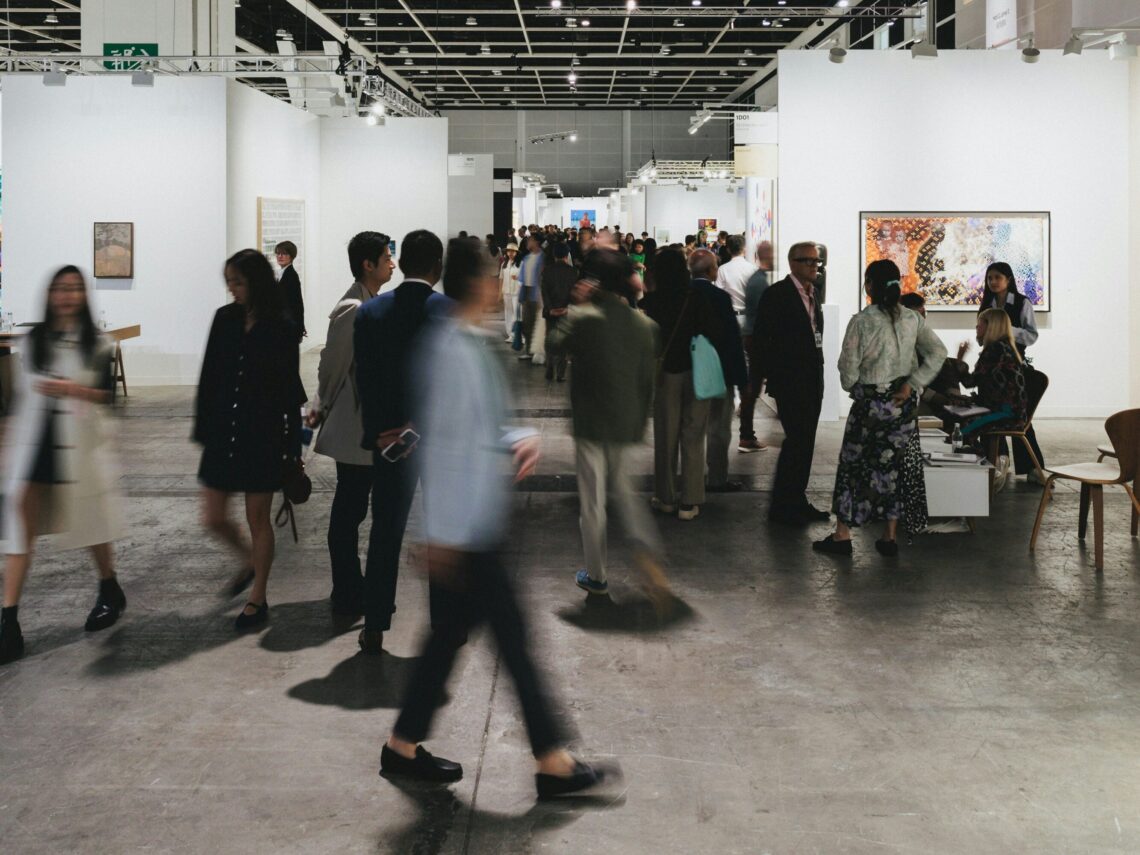
• Art fairs remained central to gallery sales
• Economic uncertainty and trade policy continued to shape the market
The report is authored by Clare McAndrew, founder of Arts Economics, and is based on extensive data from galleries, auction houses, collectors, and art fairs worldwide.
The 2026 edition focuses on art market trends in 2025, highlighting structural shifts shaping the global art economy.
1. The Global Art Market Returned to Growth in 2025
After two years of decline, the global art market returned to growth in 2025, reaching $59.6 billion in sales, with a 4% year-on-year increase.
The recovery was described in the report as moderate and uneven, with the market still below its 2022 peak.
The report suggests that current art market trends point toward stabilization rather than rapid expansion, following several years of volatility.
2. The Global Art Market Remains Concentrated in Key Regions
A major takeaway from the Art Basel & UBS report is that the global art market remains highly concentrated.
In 2025, the United States, United Kingdom, and China accounted for 76% of global art sales.
The United States alone represented 44% of the global art market, reinforcing its role as the dominant center for high-value transactions, auctions, and international collectors.
3. High-End Sales Are Driving Art Market Trends
One of the most defining art market trends in 2025 is the influence of high-value artworks.
Major auction sales and private transactions at the top end of the market significantly contributed to overall growth. In the United States, artworks sold for over $10 million increased sharply.
These high-end transactions continue to shape the global art market, even though they represent a relatively small share of total sales volume.
4. Galleries Are Facing Cost Pressures and Market Rebalancing
While the global art market returned to growth in 2025, the dealer sector expanded more modestly, with sales increasing by 2% to $34.8 billion.
The report highlights that growth remained uneven across segments, with stronger performance at the lower end of the market and more limited gains in the top-tier.
At the same time, galleries faced significant operational pressure. Inflation in operating costs was one of the most frequently cited challenges, with increases in:
– packing, shipping, and logistics (+10%)
– art fair participation (+9%)
– travel and accommodation (+6%)
Overall, operating costs rose by an estimated 5% on average, outpacing sales growth and putting pressure on margins.
In parallel, the report points to a structural rebalancing of the market, with demand shifting toward more established artists and secondary market works, while sales of ultra-contemporary art remained stagnant.
Galleries continue to operate across multiple channels — including physical spaces, art fairs, and online platforms — but rising costs and uneven growth highlight ongoing challenges in sustaining profitability.
5. Art Fairs Remain Central to the Art Market Ecosystem
Art fairs continue to play a crucial role in the global art market in 2025.
They bring together galleries, collectors, curators, and institutions, enabling international visibility and direct engagement.
In 2025, art fairs accounted for 35% of dealer turnover, their highest level since 2022, underlining their continued importance despite rising participation costs.
Despite the rise of digital platforms, art fairs remain a key driver of art sales and collector relationships, acting as the physical backbone of the art market.
6. Economic and Geopolitical Factors Are Reshaping the Art Market
The Art Basel & UBS report highlights how global economic conditions are increasingly shaping art market trends.
Trade tensions, tariffs, and geopolitical uncertainty are affecting cross-border transactions and the movement of artworks.
“Policy unpredictability associated with tariffs was a significant concern for the art trade in the US and globally.”
Imports of art and antiques to the US rose by 13% to $9.9 billion, while exports declined slightly, reflecting shifts in global trade dynamics.
As the global art market depends heavily on international circulation, these factors are becoming central to its evolution.
7. Female Artists Gain Representation in the Art Market
Another important art market trend in 2025 is the continued progress toward gender balance.
– Female artists represented 45% of artists represented by dealers
– They accounted for 37% of dealer sales by value
– In primary market galleries, they generated 44% of sales
However, disparities remain at the top end of the market, where representation and sales value are still lower.
8. Changing Collector Dynamics in the Global Art Market
The report highlights important shifts in collector dynamics in 2025.
The average number of buyers per dealer declined to 57, the lowest level since 2021, with the sharpest drop among smaller galleries. This suggests a more concentrated and competitive market environment.
At the same time, sales shifted toward local collectors, particularly among smaller dealers, reflecting increasing complexity and costs associated with cross-border transactions.
While the share of online-only sales declined as high-value transactions returned to in-person channels, digital platforms remain a structural and essential part of the art market, continuing to play a key role in discovery and research.
Together, these trends point to a more selective and locally anchored collector base, operating within a global but increasingly fragmented art market.
9. A Polarized Art Market: Growth at the Top
One of the defining characteristics of the art market in 2025 is its increasing polarization.
Growth was concentrated at the top end of the market, particularly in high-value transactions. In the United States, the value of artworks sold at auction for over $10 million increased by nearly 40%, while globally, sales above $1 million also rose significantly.
In contrast, lower-priced segments saw weaker performance, with sales below $50,000 declining in both value and volume.
This divergence highlights a broader shift toward risk aversion, with collectors focusing on established artists and high-value works, while more accessible segments of the market faced greater pressure.
Conclusion
The Art Basel & UBS Global Art Market Report highlights a year of measured recovery and structural change.
While the global art market returned to growth in 2025, this recovery remained uneven, with performance varying across regions, segments, and price segments.
Growth was largely concentrated at the top end of the market, while galleries and mid-market segments faced continued pressure from rising costs and shifting buyer dynamics.
At the same time, the art market is becoming increasingly complex, shaped by geopolitical uncertainty, evolving collector behavior, and the continued integration of digital and physical sales channels.
As digital and physical experiences continue to shape the art market, platforms like Singulart are making it easier to discover and collect art globally.

Content writer on the marketing team at Singulart, where she started her journey in sales before moving into artist relations and marketing. Originally from Portugal and based in Paris, she writes about art market trends, collecting and artist spotlights. Holds a BA in International Relations. With a background in music, she has a personal understanding of the dedication and challenges that come with a creative career.


