How has growing up in an artistic family in Moldova shaped your outlook on creativity and the kinds of stories you want your sculptures to tell?
Growing up around art wasn't something I chose; it was simply the air I breathed. In my family, sculpture and craftsmanship were part of everyday life, not something separate or elevated. That closeness taught me early on that art doesn't need to explain itself with grand theory; it needs honesty. A form either holds truth in it, or it doesn't. Moldova itself shaped me too; a country with a quiet, layered history, often overlooked, but rich in resilience and human warmth. Growing up there gave me a sense that beauty doesn't need spectacle. It can live in a gesture, in the curve of a body, in stillness. That's probably why my work leans toward the human figure rather than abstraction for its own sake; I'm drawn to telling stories about people: their vulnerability, their strength, the tension between fragility and endurance. So when I sit down to sculpt, I'm not trying to invent a new language. I'm trying to continue one; one my family gave me, and one my country carries quietly; a language of patience, material, and truth to the human form.
You mention you love sculpture in all its dimensions and never set creative limits for yourself; can you describe a moment when this openness led you to an unexpected discovery in your practice?
There was a moment, working on a bronze piece, where the material itself pushed back against my plan. I had a very clear idea in my head; a smooth, closed silhouette, controlled and deliberate. But partway through shaping the form, I noticed that a small imperfection in the surface, something I would normally have corrected right away, was actually saying something truer than my original intention. It created a kind of tension, almost a wound in the form, that made the piece breathe instead of just exist. That's when I understood something important about staying open: discipline gives you the skill to execute an idea, but openness is what lets the material teach you something you didn't already know. I stopped trying to force the bronze into my vision and instead let the imperfection stay; even amplified it slightly. The final piece ended up being more honest, more human, than anything I had originally sketched. Since then, I try to treat every new piece the same way; I arrive with an intention, but I leave enough space for the material and the process to surprise me. Some of my favorite works exist precisely because I refused to correct what looked, at first, like a mistake.
Working primarily in bronze, what is it about this material that continues to draw you in and how do you approach the process of transforming it into both realistic and non-figurative forms?
Bronze has a paradox in it that I find endlessly compelling: it begins as something liquid, unstable, almost violent; molten metal poured into a mold; and it ends as something that will outlast me, outlast generations. That transformation, from fire to permanence, mirrors exactly what I want my sculptures to do emotionally: capture a fleeting human moment and give it weight, give it endurance. There's also the texture and depth bronze allows. Once patinated, it holds light and shadow in a way that few other materials can; it can look soft like skin one moment and ancient like stone the next. That range is what lets me move between realism and abstraction without feeling like I'm working in two different languages. When I approach a realistic figure, I let bronze do what it does best; hold subtle human detail, the tension of muscle, the quiet weight of a pose. I work slowly there, almost like I'm listening to the body I'm forming. But when I move toward non-figurative work, I use bronze almost like a sculptor uses silence; stripping away detail until only the essential gesture remains, the emotion behind the form rather than the form itself. In both cases, the process is really the same underneath: I'm not trying to dominate the material. I'm trying to have a conversation with it; pushing where it lets me push, and stepping back where it insists on its own nature. That dialogue is what keeps bronze exciting to me piece after piece, whether the result ends up looking human or nothing like a human at all.
Conveying positivism is central to your work; could you share how you infuse this sense of optimism into your sculptures and what you hope viewers feel when they encounter them?
For me, positivism in sculpture isn't about avoiding difficulty or pretending life is only light; it's about choosing, deliberately, to leave a door open. Even in a piece with tension or heaviness, I try to build in a gesture, a line, a lift somewhere in the form that says: this endures, this rises. Often it's something small; a tilt of the head, an open hand instead of a closed one, a curve that moves upward rather than collapsing inward. Bronze can easily feel monumental and cold if you let it, so a lot of my work is about warming it from the inside; through pose, through the softness of a surface, through where the light is allowed to land. I think optimism in sculpture also comes from restraint. I don't want to overload a piece with meaning or force an emotion onto the viewer. I'd rather leave enough openness in the form that people bring their own hope into it; the sculpture becomes a kind of mirror for whatever resilience they're already carrying. What I hope people feel when they stand in front of one of my pieces is a kind of quiet exhale; a small reminder that strength and gentleness aren't opposites, that a body (or a form) can hold weight and still feel light. If someone walks away feeling slightly more at peace than when they arrived, or simply feels seen in some human way, then the sculpture has done its job.
With each piece being born differently, are there personal rituals or sources of inspiration you return to that help guide your creative decisions from concept to completion?
I don't have one fixed ritual, because, as you say, every piece is born differently. But there are a few things I return to almost instinctively, like anchors. The first is silence. Before I touch clay or wax, I try to sit with an idea without rushing to sketch it or explain it to myself. I let an image sit in my mind for days, sometimes longer, until it starts to feel inevitable rather than invented. If I force a concept too early, it usually shows in the final form; it feels imposed rather than discovered. The second is observation of the human body in ordinary, unposed moments; someone resting, someone mid-thought, the way weight shifts naturally when a person isn't performing for anyone. Those small truths are more valuable to me than any dramatic reference pose. A lot of my inspiration comes from real gesture, not imagination alone. And the third, maybe the most personal one, is working with my hands early in the process even before I know exactly what I'm making; shaping a rough mass just to feel the material again, almost like a musician warming up on an instrument. Often the piece itself starts to reveal its direction through that physical contact, before my conscious mind has caught up. From there, the process becomes a back-and-forth: intuition proposes a form, discipline refines it, and I keep returning to that initial quiet feeling to check whether the piece is still honest to it. If a work starts feeling technically impressive but emotionally hollow, I know I've drifted from the ritual; and I go back to silence and start listening again.
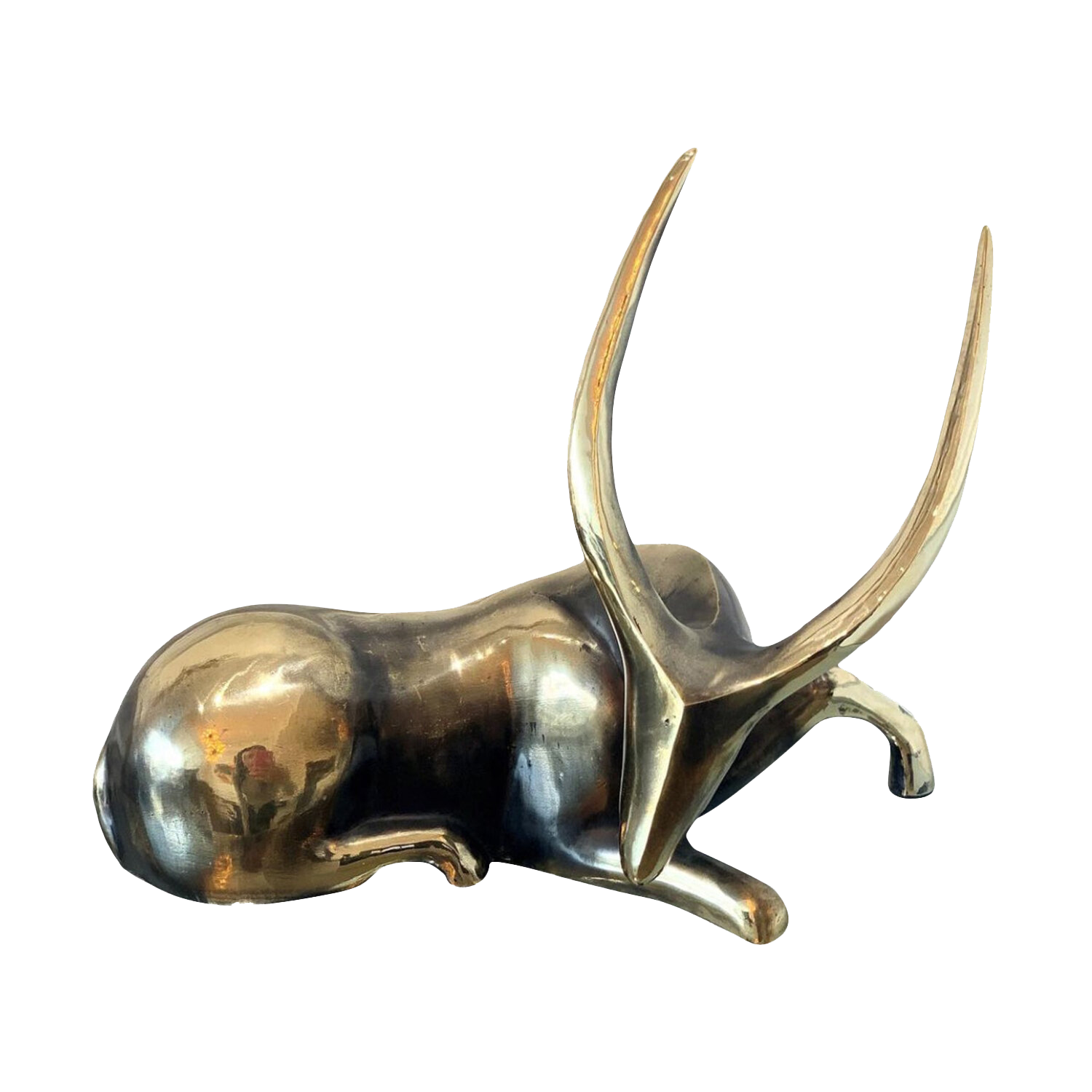
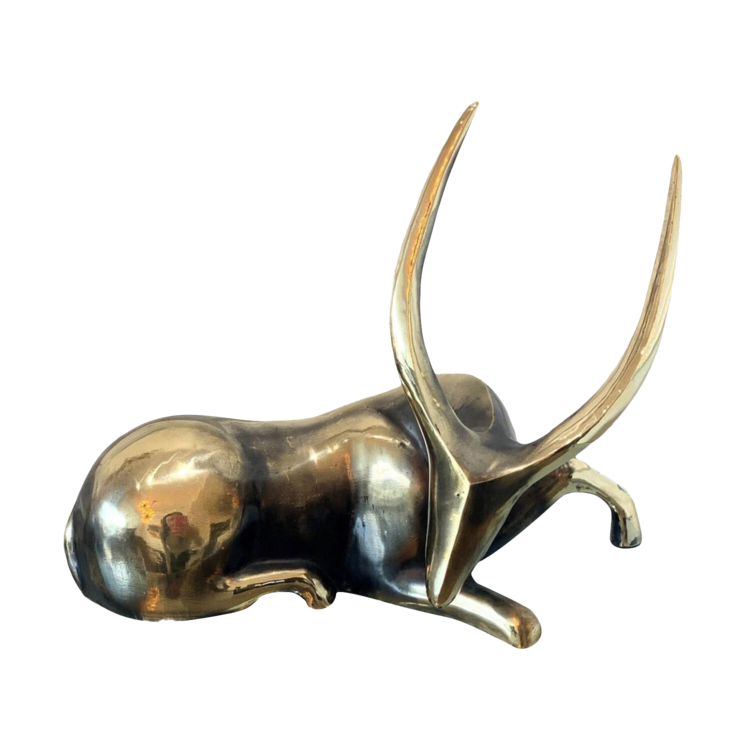 "Oryx" Contemporary Figurative Bronze Sculpture
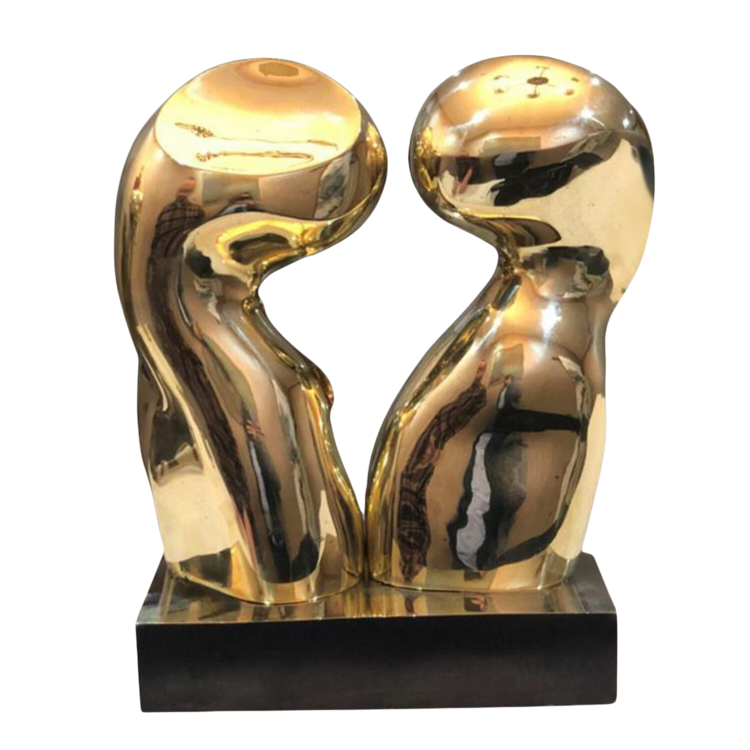 "The Kiss" Contemporary Abstract Bronze Sculpture