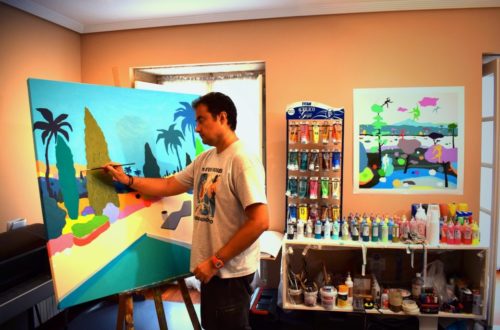
How did you come to art, or how did art come to you? Since my childhood I liked to draw and I was fascinated with a cartoonist who went on TV during a children’s program. Then I began to copy everything I saw at home: pots, chairs, people, etc. I feel art deeply but I can only express myself more…
-
-
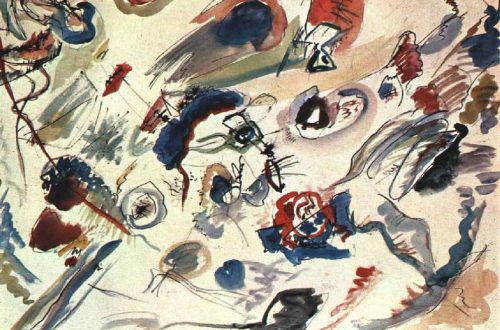
Abstract art is any art that is non-representational and does not intend to portray an accurate representation of visual reality. Artists who work with abstraction often employ color, form and mark-making in order to achieve the desired effect and to convey a message, emotion or their own perception of reality. What Makes Art Abstract? Abstract art is a broad and…
-
Acrylic painting is a relatively young medium, as it emerged in the mid-20th century. It was first made commercially available in the 1960s, and while it does not have the same long history as watercolour or oil painting, it was instantly incredibly popular. Its versatility means that it was presented as an alternative to traditional oil painting, and it opened…
-
Contemporary art resists easy definition, due to the incredible variety of art it encompasses. It is broadly defined as the art of today, created during the late 20th and early 21st century. It is characterised by its global nature, the diversity of cultures it explores, and the influence of technology and the digital age. Contemporary art involves experimental and dynamic…
-
Graffiti art is when text and images are drawn or spray painted onto walls and surfaces, usually in urban, public places and normally without permission. The notion of drawing words and images on to walls is not a modern one and can be dated back to Ancient Greece and the Roman Empire. But Graffiti art as we know it was…
-
Oil painting is arguably one of the best known and most used painting mediums. Oil paint consists of suspending various pigments in a drying oil that acts as the binder. A variety of oils can be used as the binding agent, such as linseed oil or safflower oil. Each oil lends a different property to the quality of the paint…
-
Pop Art is a movement that emerged in 1950s Britain and exploded into enormous and everlasting success in 1960s America. Pop art employed a new, bold aesthetic inspired by popular culture such as advertising, comic books, and was a celebration of the mundane and the kitsch. The movement, as a reflection of the times, was about multiples and mass reproduction,…
-
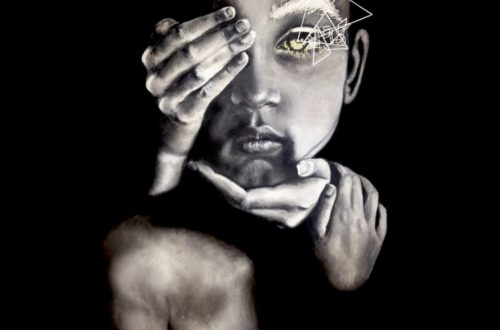
Portraiture and portrait painting focuses on depicting a human subject. Historically, portraits have often been commissioned and portray either public or private figures, which gives them importance as historical records; they recorded the past before the advent of photography. They are generally inspired by admiration for the subject, who is often the muse of the artist. While early portraits were…
-
Street art is visual art that is created in public locations, outside of traditional art venues. It is connected to graffiti art in that it is generally unsanctioned and in public spaces, but it includes a wide variety of media and is connected more closely to graphic design. The key differences between graffiti and street art are partly historic. Graffiti…
-
Watercolour paint consists of pigments suspended in water, which gives the paint a translucent effect. Watercolour artists often paint on paper, exploring the transparency of the paint and leaving sections unpainted to highlight certain areas of the paper. It is celebrated for its natural, luminous qualities and has been favoured by renowned artists such as Turner and Blake. Last day,…