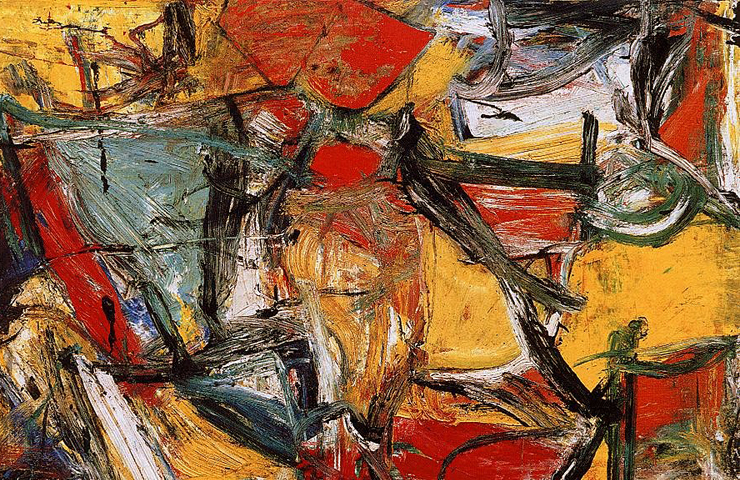
Willem de Kooning, a 20th century leading artist, has instilled a long-lasting impact on art through his pioneering works. His extensive body of work includes “Police Gazette“, a representative piece of abstract expressionism. This article is here to uncover in depth the story of Willem de Kooning, the details of the masterpiece “Police Gazette” and show its timelessness.
Who was Willem de Kooning?
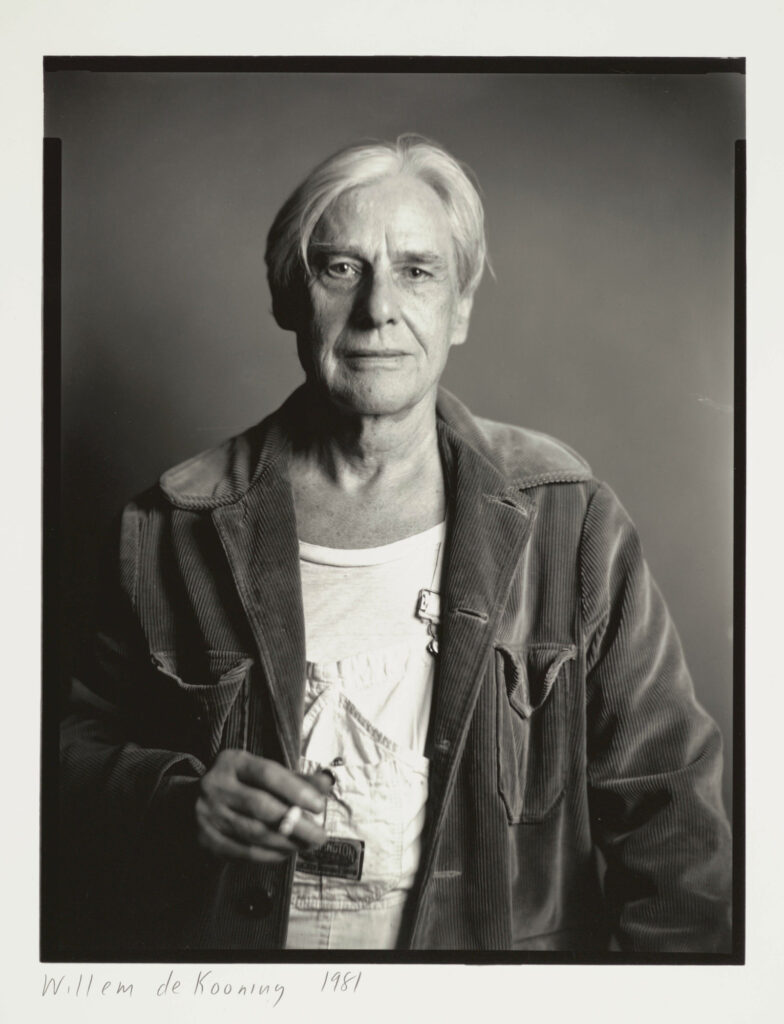
Willem de Kooning was born in Rotterdam, in the Netherlands, in 1904. His professional career in the arts started at an early age by working in a commercial art studio. In 1926 he made a brave decision to move to the United States, where he would later find a niche for himself in the vibrant art of New York City. De Kooning’s early work was distinguished by the figurative style, in which the forms of the human body were depicted in an abstract and expressive manner. Yet, it was his late exploration in abstract expressionism that would finally cement his position as a driving force in modern art.
FUN FACT: Willem de Kooning was a skilled carpenter before pursuing a career in art. De Kooning honed his woodworking skills during his youth in Rotterdam, Netherlands, where he worked as a carpenter’s assistant.
His Career

De Kooning’s artistic career was played out against the background of a fast-changing art world. In the 1940s, he became a member of the abstract expressionists, a group of artists who used abstract forms and gestural brushstrokes to express emotions and ideas. Kooning’s works of this period, including “Woman I” and “Excavation,” illustrate his bold exploration of color, line, and texture. His painting style reflected spontaneity and improvisation, as each brushstroke evoked a sense of energy and motion.
Over the decades, de Kooning’s style kept on changing. He was able to move with ease between abstraction and figuration, sometimes dissolving the boundaries between the two. His works became grander in scale and perspective, with the larger-than-life canvases that were designed to engulf the viewers in his colorful, animated sceneries. Despite the dynamic and evolving character of his art, de Kooning continued to search for the potential of painting as a medium of expression working at the limits of what was considered possible.
What is Happening in Police Gazette
| Artist | Willem de Kooning |
| Date Created | 1955 |
| Medium | Oil on canvas |
| Genre | Abstract Expressionism |
| Period | 20th century |
| Dimensions | 43.25 in. x 50.25 in |
| Series / Versions | N/A |
| Where is it housed? | Private Collection |
In 1955, “Police Gazette” was born, and it is one of the best demonstrations of abstract expressionism by de Kooning. The title of the painting is a wink to a common tabloid magazine of the same name, which is known for its sensational stories of crime and scandal. “Police Gazette” exploits the frenetic energy and chaotic imagery of tabloid culture in which de Kooning creates a visual cacophony of colors and forms.
On a superficial level, “Police Gazette” seems to be a hodgepodge of abstract shapes and chaotic brushstrokes. The paint is layered using bold and expressive brushstrokes that create a feeling of movement from one side of the canvas to the other. The colors clash and merge, becoming a festival of tones that blind the eye. In the midst of the chaos, shapes that are familiar begin to appear out of the mess—an arm here and a face there—but they are quickly overwhelmed by the whirlpool of abstraction.
Analysis of Police Gazette
“Police Gazette” is a piece that undermines artistic categories. The patterns are chaotic yet beautiful, abstract but symbolic, complex but orchestrated. The composition and color of De Kooning are a virtuosity that is clearly seen in the work that perfectly intertwines order and chaos. The painting entices the audience to get lost in its mazelike space, finding something new with each viewing because there are always new details and meanings for everyone.
A lot of motion is depicted in the painting called “Police Gazette”. The painting seems to beat almost as time and space melt into one, as living, breathing being. He uses this technique by means of his loosely brushed and vigorous style, which creates the impression of energy and life. Every single brushstroke laden with purpose making the overall piece more eloquent and sensitive.
Interesting Facts about Police Gazette
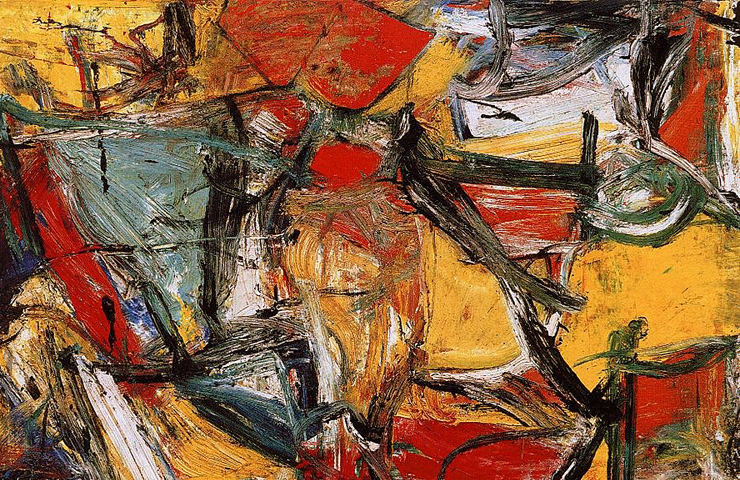
Inspiration from Tabloid Culture: De Kooning drew inspiration from the sensationalistic imagery found in tabloid newspapers like the “Police Gazette,” incorporating elements of violence and intrigue into his abstract compositions.
Experimental Technique: In creating “Police Gazette,” de Kooning employed innovative techniques such as scraping, dripping, and layering paint, pushing the boundaries of traditional painting methods.
Controversial Reception: Like much of de Kooning’s work, “Police Gazette” sparked controversy upon its release, with critics divided over its merits. Some hailed it as a triumph of abstract expressionism, while others dismissed it as chaotic and incomprehensible.
Legacy and Influence: “Police Gazette” remains a seminal work in de Kooning’s oeuvre and a touchstone for subsequent generations of artists exploring the expressive potential of abstraction.
Artwork Spotlight: Woman
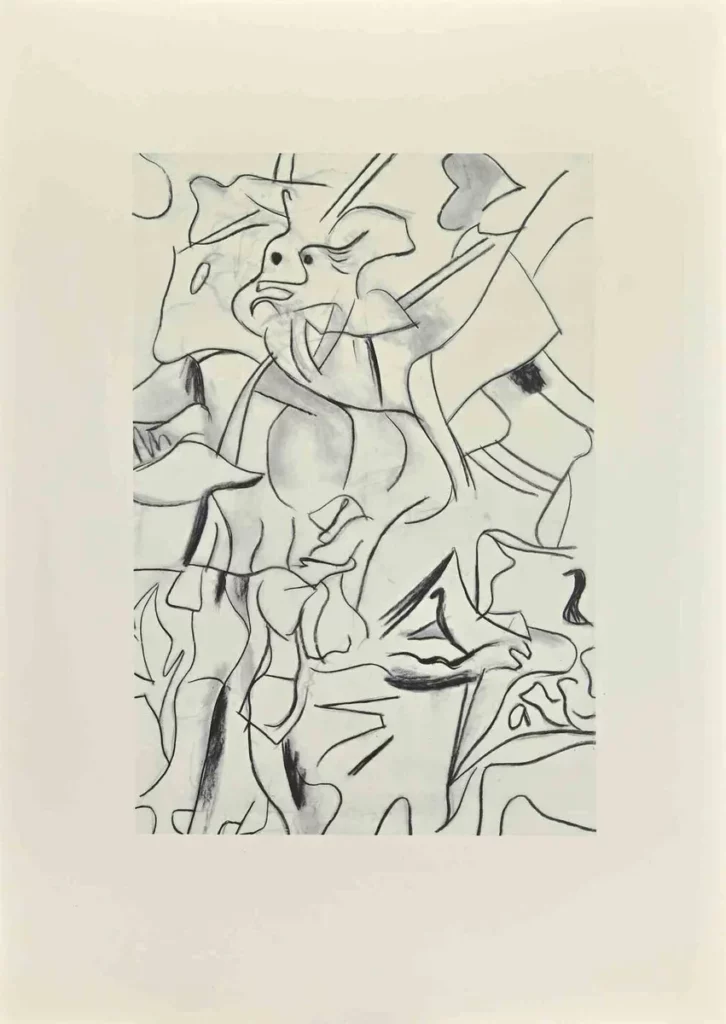
Willem de Kooning’s “Woman” series is also available on Singulart. This artwork is featuring the big strokes and lines which are less smooth, these artworks contradict the traditional concepts of beauty and femininity.
Are you looking for a masterpiece from Willem de Kooning?
Singulart presents exclusive limited edition pieces by Willem de Kooning. To discover and acquire Kooning’s art, click on the artwork or the button below for more information!
Frequently Asked Questions
What was Willem de Kooning famous for?
Willem de Kooning was an American painter of Dutch descent who was one of the most prominent proponents of Abstract Expressionism, especially the style known as Action painting. He was born on April 24, 1904, in Rotterdam, Netherlands, and passed away on March 19, 1997, in East Hampton, New York.
What techniques did Willem de Kooning use?
He made use of the possibilities presented by his materials—powders blended with a lot of white, smooth, opaque backgrounds for his supports, and a paint media that became more and more fluid—to produce paintings that evoked the Long Island landscape surrounded by water.
Conclusion
Police Gazette is an example of how wild Willem de Kooning’s experiment and free imagination are. It embodies both the vigorous texture and dynamic composition that are hallmarks of Abstract Expressionism, allowing the viewers to participate in the raw power of the art through a fresh and unconventional method. “Police Gazette” is one of the most recognizable masterpieces of de Kooning, which reflects his lifetime pursuit in art and consistently draws in and inspires people.