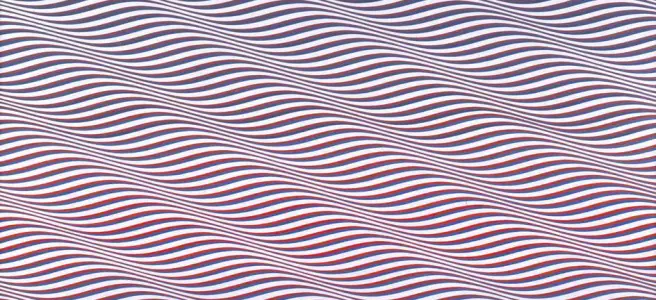
Bridget Riley is renowned for her mesmerizing abstract compositions that play with perception and sensation. Among her notable works, “Cataract 3” stands out as a unique example of her mastery in manipulating visual elements to create dynamic and engaging experiences for the viewer. In this article, we’ll delve into the world of Bridget Riley, explore her career, dissect the intriguing qualities of “Cataract 3,” and uncover some fascinating facts about this captivating artwork.
Who was Bridget Riley?
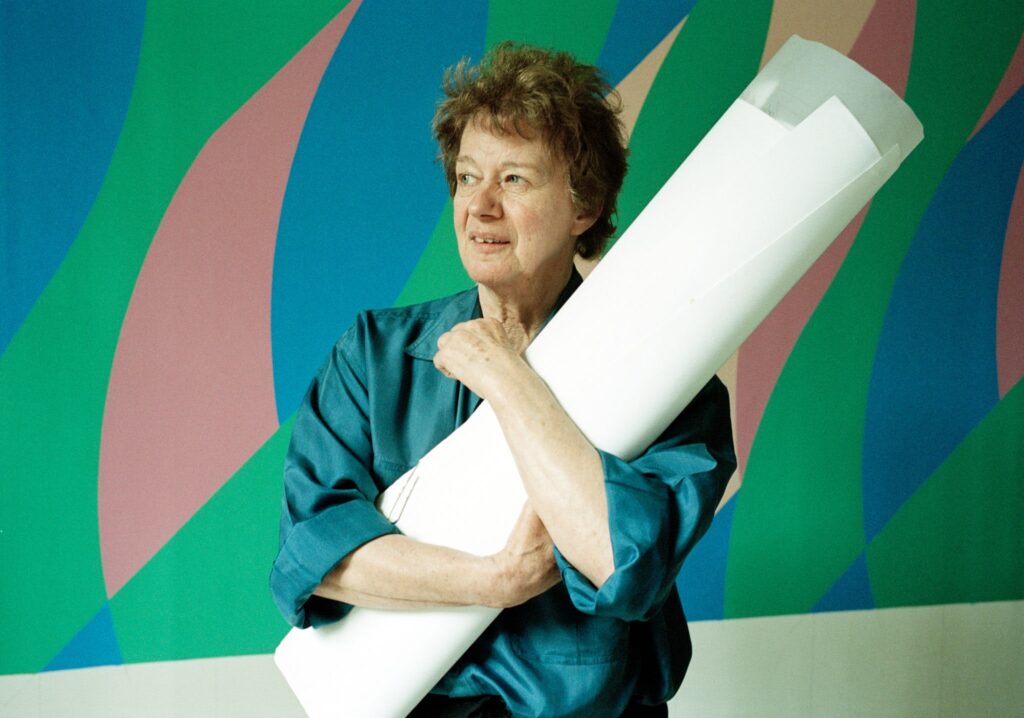
Bridget Riley was a fascinating artist from the vibrant city of London. She was born in the year 1931. She had this incredible knack for playing with colors and shapes, turning them into mesmerizing works of art. Her journey into the world of art began when she enrolled in art school, where she had the privilege of learning from some of the most renowned artists of her time.
FUN FACT: Did you know that Bridget Riley was once a set designer for the Royal Court Theatre in London? Before becoming famous for her mind-bending Op Art, she dabbled in creating sets for theatrical productions.
Her Career
Bridget Riley’s career was a colorful journey filled with experimentation and innovation. She was deeply fascinated by the interaction of colors and shapes, constantly exploring how they could create optical illusions that mesmerized viewers. Her artworks weren’t just paintings; they were gateways into captivating worlds where lines seemed to sway, and shapes danced before your very eyes.
As the swinging 1960s dawned, Bridget Riley burst onto the art scene with a bang. Her unique style, known as Op Art, short for Optical Art, grabbed everyone’s attention. Op Art was all about playing tricks on your eyes, making static images appear to move and pulsate with energy. People were blown away by Bridget Riley’s creations. They couldn’t believe that something as simple as paint on a canvas could have such a mind-bending effect.
What is Happening in Cataract 3?
| Artist | Bridget Riley |
| Date Created | 1967 |
| Medium | Oil on canvas |
| Genre | Op Art |
| Period | Contemporary |
| Dimensions | 116.8 × 116.8 cm (46 × 46 in) |
| Series/Versions | Part of the “Cataract” series |
| Where is it housed? | Private Collection |
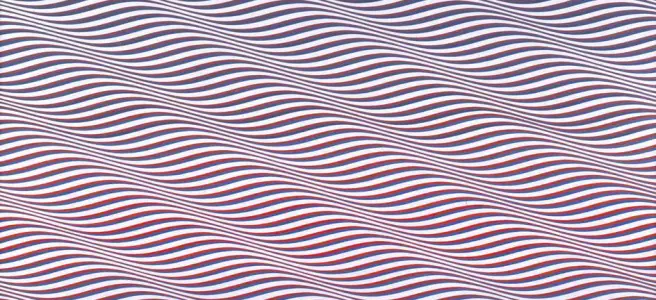
“Cataract 3,” created by Bridget Riley, is a creative artwork that captivates viewers with its hypnotic patterns and optical illusions. Created in 1967, during the peak of Riley’s exploration into Op Art, this piece exemplifies her adeptness at manipulating visual perception.
In “Cataract 3,” Riley used a meticulously calculated arrangement of black and white shapes to create a sense of rhythm and movement. The composition consists of a grid-like structure, with alternating bands of varying widths that oscillate across the canvas. Through subtle variations in line thickness and spacing, Riley generates a pulsating effect, as if the composition is in a perpetual state of flux.
One of the most captivating aspects of “Cataract 3” is its ability to induce optical effects that defy static interpretation. As viewers engage with the artwork, they may experience sensations of motion or vibration, despite the absence of actual movement. This phenomenon, known as the “Riley Effect,” highlights the artist’s skill in manipulating visual stimuli to evoke dynamic perceptual experiences.
Interesting Facts about “Cataract 3”
Inspired by Nature: Despite its abstract nature, “Cataract 3” draws inspiration from natural phenomena such as rippling water and shifting light, reflecting Riley’s interest in the intersection between art and the natural world.
Interactive Viewing: Riley encourages viewers to actively engage with her artworks, inviting them to explore the nuances of perception and sensation. “Cataract 3” rewards prolonged observation, as viewers may discover new patterns and rhythms emerging over time.
Influence on Psychology: Riley’s Op Art compositions, including “Cataract 3,” have garnered interest from psychologists studying visual perception. Her works serve as compelling subjects for research into phenomena such as motion perception and visual ambiguity.
Legacy of Innovation: “Cataract 3” exemplifies Riley’s enduring influence on contemporary art and design. Her innovative approach to abstraction continues to inspire artists, designers, and researchers exploring the potential of visual perception as a creative medium.
Artwork Spotlight: Shade
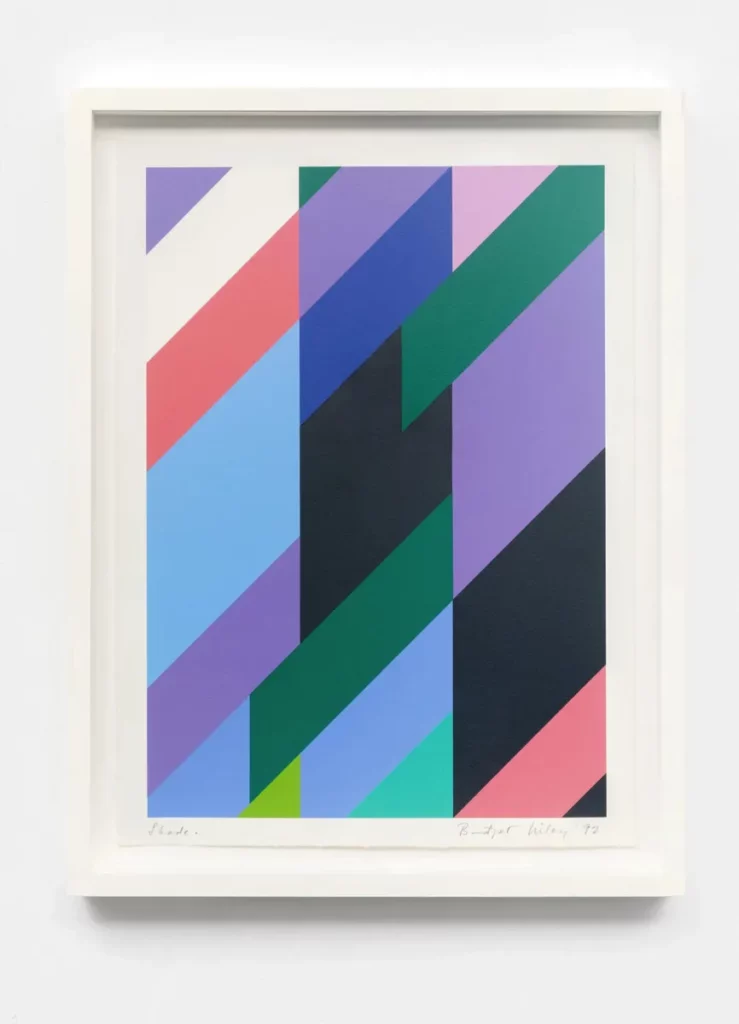
The painting, “Shade” by Bridget Riley is available on Singulart. This artwork draws viewers in with the optical effect, proving Riley’s command of geometric abstraction and kinetic patterns. The formal and color qualities of the artwork engage their audiences in a stimulating exercise in seeing and in movement.
Are you looking for a piece of artwork from Bridget Riley?
Singulart has limited edition prints of Bridget Riley. If you are looking for a piece of Riley’s artwork for sale, simply click on the artwork or the button below to discover more!
Frequently Asked Questions
Why is Bridget Riley so important?
Riley rose to fame in the 1960s as a representative of both Op art and modern British painting, and in 1968 she became the first female winner of the painting prize at the Venice Biennale. Richard Allen and Richard Anuszkiewicz were among the wave of Op artists who drew inspiration from Riley’s artistic breakthroughs.
What techniques does Bridget Riley use?
In order to achieve visual rhythm in her paintings, Bridget Riley employs geometric shapes, lines, and colors. Her distinctive style is characterized by recurring patterns that create optical illusions and draw the viewer’s eye across the canvas.
Conclusion
Bridget Riley’s “Cataract 3” stands as a testament to her unparalleled mastery in the realm of Op Art. Through its mesmerizing patterns and dynamic optical effects, this artwork invites viewers on a journey of perceptual discovery, challenging conventional notions of space, form, and movement. As one immerses oneself in the rhythmic interplay of black and white shapes, it becomes evident why Bridget Riley remains a towering figure in the annals of art history.