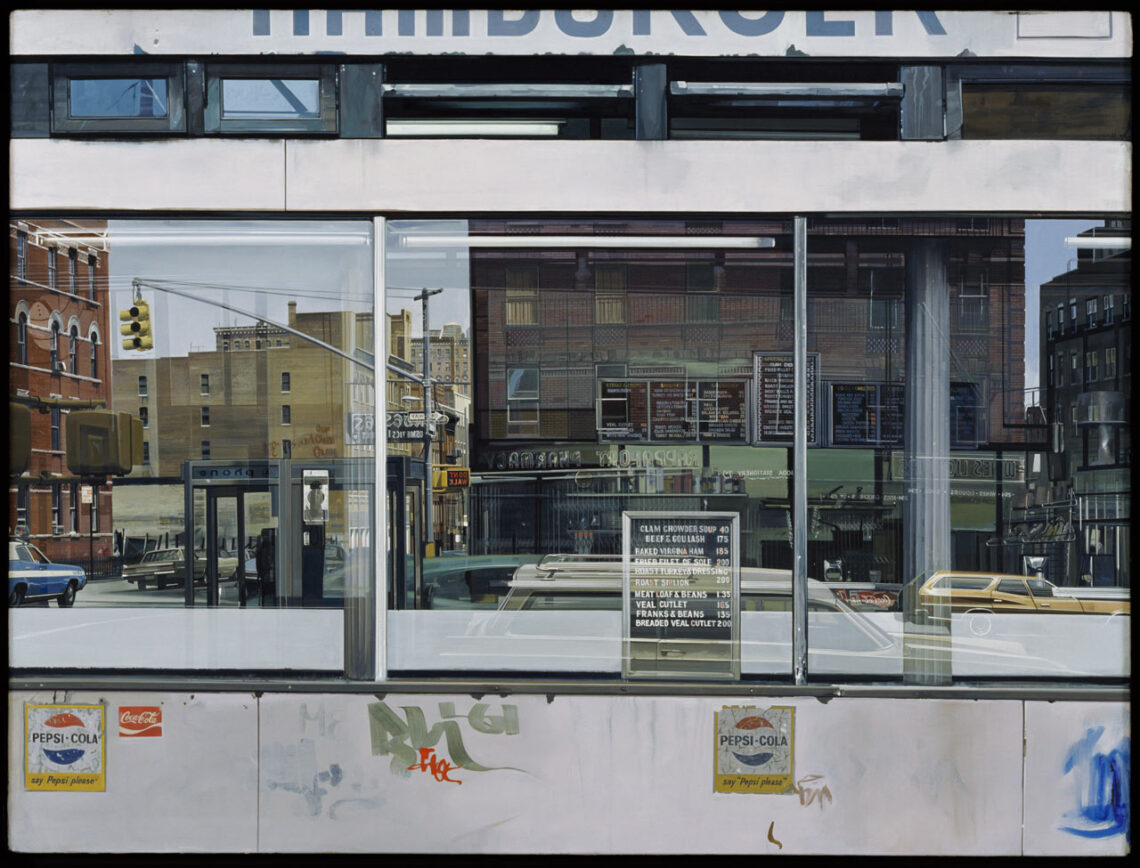
In the realm of modern art, very few names are as radiant as that of Richard Estes. An American artist who became recognized for his mastery of photorealism, Estes’s paintings reflect a remarkable detail-orientation, where every element of his works is crafted with incredible accuracy. Among those works that he created is the standout “Pharmacy” which highlights the wonder of the mundane with astonishing honesty. In this article, we will see the life and career of Richard Estes, discover the complexity behind “Pharmacy”, and find out hidden facts about this masterpiece.
Who was Richard Estes?
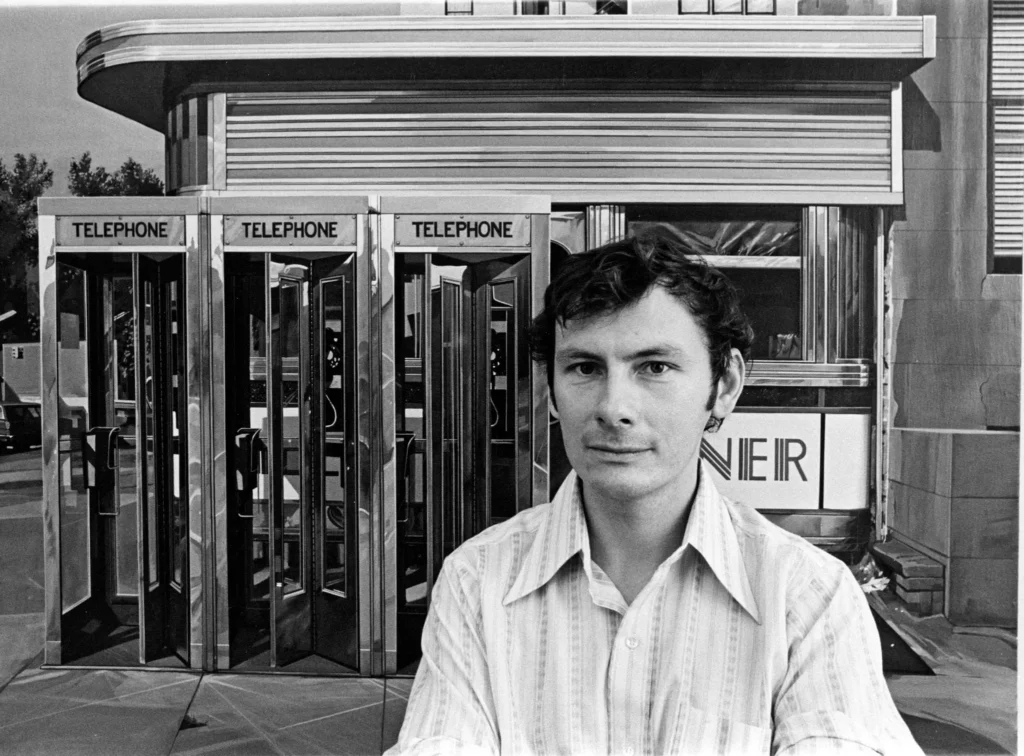
Richard Estes is famous for his photorealistic paintings depicting the very nature of urban existence. He became an important figure in the Photo-realist movement of the late 20th century that also included artists including Chuck Close and Audrey Flack. Estes’ careful attention to details and exceptional accomplishments in the use of light and perspective contributed to his well-deserved recognition in the world of art.
FUN FACT: Did you know that Richard Estes wasn’t just a master of the canvas, but also had a knack for puzzles? Yep, when he wasn’t busy mesmerizing the art world with his hyper-realistic paintings, Estes enjoyed spending his downtime tackling challenging jigsaw puzzles.
His Career
Estes’ journey as an artist began in the 1960s when he moved to New York City, where he found inspiration in the vibrant cityscape. His early works primarily focused on urban scenes, reflecting the dynamic energy and diversity of city life. Through his paintings, Estes sought to celebrate the beauty found in everyday surroundings, often highlighting overlooked elements such as reflections in storefront windows or the play of light on city streets.
As his career progressed, Estes gained recognition for his distinctive style, characterized by precise rendering and meticulous detail. He became known for his ability to capture the intricacies of urban architecture with remarkable accuracy, earning him the title of a master of Photorealism.
What is Happening in Pharmacy?
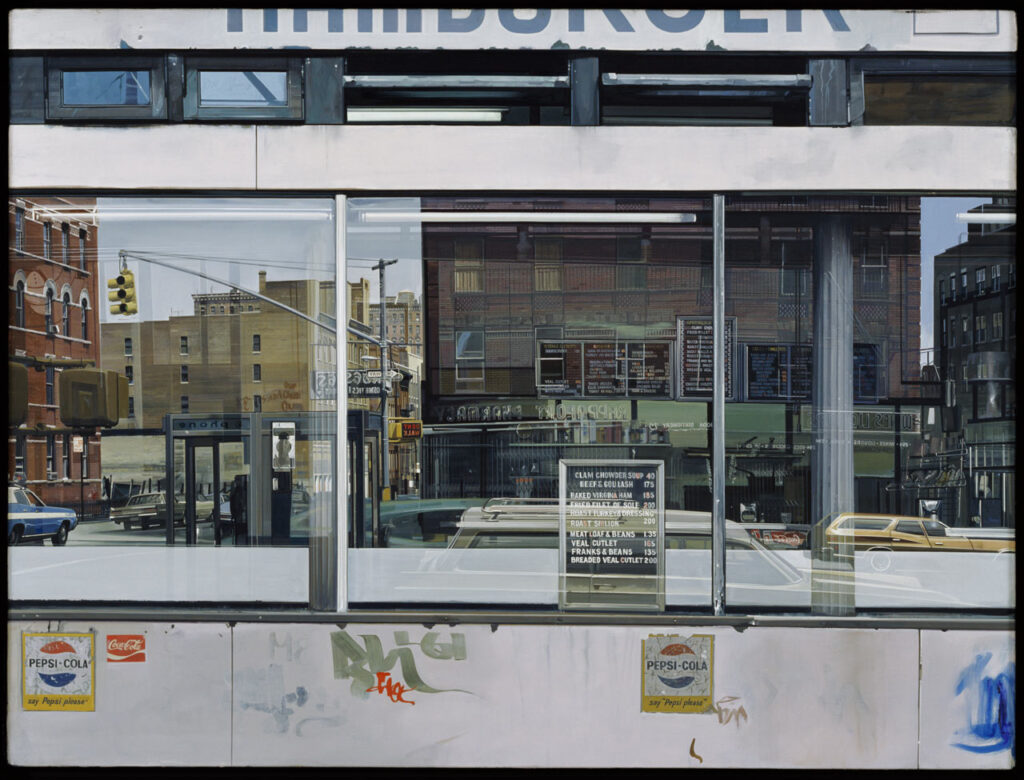
| Artist | Richard Estes |
| Date Created | 1968 |
| Medium | Oil on canvas |
| Genre | Photorealism |
| Period | Contemporary |
| Dimensions | 18 x 24 inches (45.7 x 61 cm) |
| Series/Versions | N/A |
| Where Housed | Private Collection |
One of Estes’ best known works is “Pharmacy,” the piece of a kind where he demonstrates his talent for hyperrealism. Made in 1968, “Pharmacy” shows the inside of a drugstore with a surprising realism. From the rows of pharmaceuticals neatly aligned on the shelves to the shining counter tops and the fluorescent lights, every single detail in the setting is rendered.
The painting brings the audience into the tiny details of the ordinary things. Every item is shown so realistically that the observer may almost reach out and touch them. The minute details such as the hand painted labels, glass bottles and reflections give depth and dimensionality to the image thus the spectator is drawn towards the scene.
Interesting Facts about “Pharmacy”
Reflections Galore: One of the most captivating aspects of “Pharmacy” is the intricate reflections captured in the glass surfaces. Estes’ attention to detail is evident in the way he meticulously renders each reflection, adding depth and complexity to the composition.
Hidden Details: Upon closer inspection, viewers may notice subtle details hidden within the painting. From the reflection of a passerby in the store window to the tiny text on the medication labels, each element contributes to the overall realism of the scene.
Time Capsule: “Pharmacy” serves as a snapshot of a bygone era, capturing the essence of 1960s America. The products lining the shelves, the signage, and even the fashion of the figures within the painting provide insight into the cultural landscape of the time.
Precision and Patience: Estes’ process for creating “Pharmacy” involved painstaking attention to detail and countless hours of meticulous observation. Each brushstroke was carefully planned and executed to achieve the desired level of realism.
Frequently Asked Questions
Why is Richard Estes famous?
Over the course of a career spanning more than fifty years, Estes has been hailed as a premier painter of American cityscapes. Along with Duane Hanson, Chuck Close, Ralph Goings, and John Baeder, he is credited with helping to start the global Photorealism movement in the late 1960s.
How did Richard Estes paint?
Estes begins his paintings using photographs. He goes out and takes numerous photos of the same subject from various viewpoints, such as street corners, diners, and reflections in plate glass windows. He then edits, copies, and modifies the photos.
Conclusion
“Pharmacy” proves that Richard Estes is a skillful painter and a farsighted man who preseve this craft. The more deeply one is diving into “Pharmacy,” the more obvious it is why Estes is considered a master of hyperrealism and a real innovator in the modern art world.
About The Author