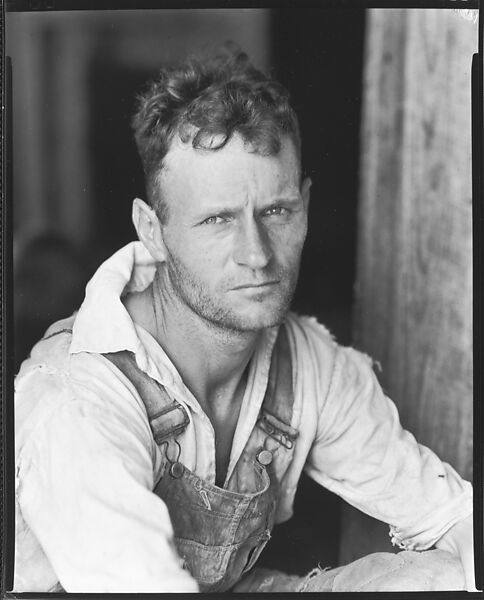
In the realm of the American photo canon, perhaps there are no names more studied than Walker Evans. Of all his works, “Floyd Burroughs, Hale County” is the most vivid one, and it possesses the power to communicate to the audience all facets of the depicted character’s life during the catastrophic period that was the 1930s in Alabama. In today’s article, we get on a trip of a career of Walker Evans, as well as the importance of “Floyd Burroughs, Hale County” and the role it has played in the world of photography up till now.
Who was Walker Evans?
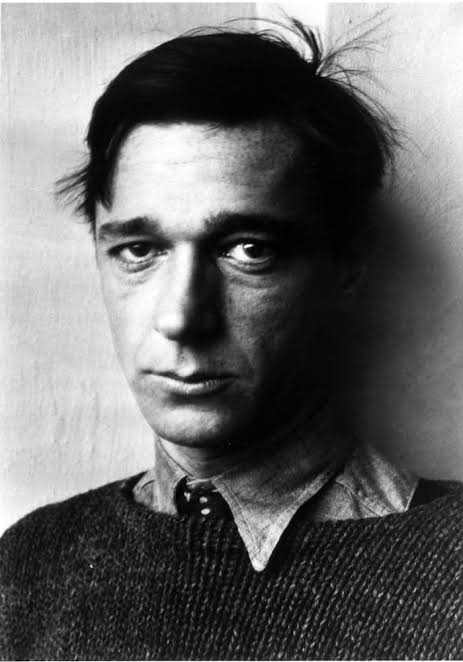
Walker Evans, an American photographer born in 1903, was known as a trailblazer in documentary photography. Evans, widely known for his stark and evocative photos of American life during the Great Depression, managed to simply capture not only individuals but also their environment with unmatched depth and authenticity. His work had a tremendous impact on the evolution of photography, and to this day he is considered among the most influential photographers of the 20th century.
FUN FACT: He had a quirky habit of collecting objects he found interesting or unusual during his travels. These items ranged from mundane everyday objects like signs and postcards to more eclectic finds like old tools and folk art.
His Career
Evans’ career was marked by many years and covered a great number of topics from the urban street scenes to the rural countryside. He became well known for his work during the 1930s when he wrote the defining piece with James Agee called “Let Us Now Praise Famous Men”. This piece documented the lives of tenant farmers in the American South, revealing shocking poverty and injustice during the Great Depression.
Evans’ keen eye for detail, as well as for the human experience in all its complexity, distinguish him as a peerless artist of his craft. During his entire career, he stuck to his idea that photography was a tool for social comment.
What is Happening in Floyd Burroughs, Hale County?
| Artist | Walker Evans |
| Date Created | 1936 |
| Medium | Gelatin silver print |
| Genre | Documentary photography |
| Period | Great Depression |
| Dimensions | 7 1/2 x 9 3/8 in. (19.1 x 23.8 cm) |
| Series/Versions | N/A |
| Where is it housed? | The Metropolitan Museum of Art, New York |
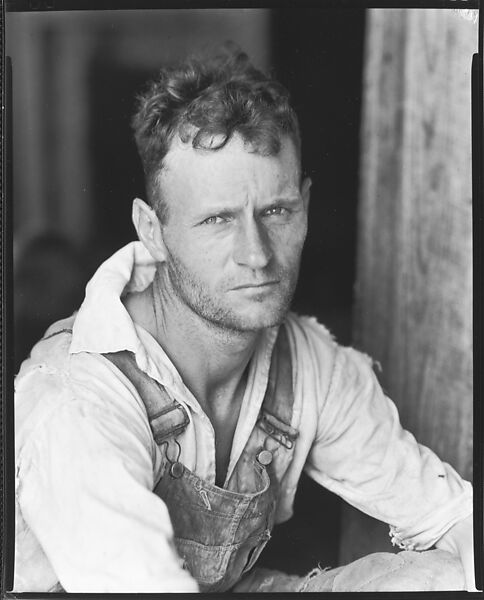
The central element of the striking depiction by Walker Evans of the Great Depression is “Floyd Burroughs, Hale County,” a mesmerizing photo shot in 1936. This highly evocative photograph tells the story of Floyd Burroughs, a sharecropper, originally from Hale County, Alabama, who stoutly stands in front of his weather-beaten home.
Burroughs’s face, aged with the wrinkles of hard-earned experiences and persistence, peers straight into the camera, exposing the grit and honesty of rural life as one of the country’s toughest eras. As he holds firm, his actions signify the courage and perseverance that epitomized the people during the Great Depression.
What’s So Special about Floyd Burroughs, Hale County?
Floyd stares right into the lens in the photograph. He is exhausted and his face is a reminder of what he has achieved.
Although things seemed complicated, Floyd is the brave kid there. He is standing by the wall with his head held high, an example for all of those who are facing tough times and didn’t quit. Walker Evans wanted to immortalise this power and determination in his photographs.
Interesting Facts about “Floyd Burroughs, Hale County”
Unassuming Subject, Powerful Impact: Despite its seemingly simple composition, “Floyd Burroughs, Hale County” is a powerful testament to Evans’s ability to capture the essence of his subjects. Burroughs’s direct gaze and weather-beaten visage speak volumes about the challenges faced by rural Americans during the Great Depression.
Symbolism in the Landscape: The desolate landscape surrounding Burroughs’s home serves as a powerful backdrop for the photograph, symbolizing the harsh realities of life in rural America. Evans’s careful composition draws attention to the stark contrast between the barren land and the resilience of its inhabitants.
Influence on Documentary Photography: Evans’s work, including “Floyd Burroughs, Hale County,” had a profound influence on the development of documentary photography as an art form. His commitment to truth and realism paved the way for future generations of photographers seeking to capture the human experience in all its complexity.
Frequently Asked Questions
What was Walker Evans known for?
Walker Evans, a photographer who lived from 1903 to 1975, left his mark on American social, cultural, and artistic history with his iconic shots throughout the Great Depression.
What inspired Walker Evans to become a photographer?
After a year in Paris, Evans came back to New York City where he worked as a secretary for a Wall Street firm and made friends with various writers and artists, including the poet Hart Crane. In the late 1920s, he developed an interest in photography after being influenced by Frenchman Eugène Atget’s documentary style.
Conclusion
Furthermore, “Floyd Burroughs, Hale County” stands as a perfect manifestation of Walker Evans’s unmatched skills in documentary photography. Through his composition and portrayal, Evans not only eternalizes the dignity and strength of his subject but offers the audience a reminder of the importance of resilience and true values.