Strap on your time-traveling mustache and join us in the fantastical universe of Salvador Dalí paintings. This whimsical escapade promises a kaleidoscope of melting clocks, gravity-defying elephants, and a touch of divine absurdity. In this merry-go-round of eccentricity, we’re set to explore 15 of Salvador Dalí’s paintings, each a rabbit hole into the mind of the mustachioed genius.
FUN FACT: Salvador Dali had a fascination with the concept of time, which is reflected in many of his artworks.
1. The Persistence of Memory (1931)

| Date Completed | 1931 |
| Dimensions | 24 x 33 cm |
| Location | Museum of Modern Art (MoMA), New York |
Picture this: One of the famous Salvador Dali paintings”The Persistence of Memory” (1931), a fiesta with surrealism where time throws a siesta! Completed in 1931, this Dalí’s masterpiece introduces us to Dalí’s wacky world where clocks drip like Salvadoran cheese in the sun. Join the party at MoMA, where time doesn’t fly but does the flamenco.
2. The Elephants (1948)

| Date Completed | 1948 |
| Dimensions | 25 x 35 cm |
| Location | Salvador Dalí Museum, St. Petersburg, Florida |
Marching into our next carnival tent is “The Elephants” (1948). Dalí’s whimsy is in full swing as these elephants defy gravity with legs that seem to have skipped leg day. In this Floridian spectacle, the pachyderm pirouette on the canvas invites us to join the circus of Dalí’s imagination.
3. The Sacrament of the Last Supper (1955)
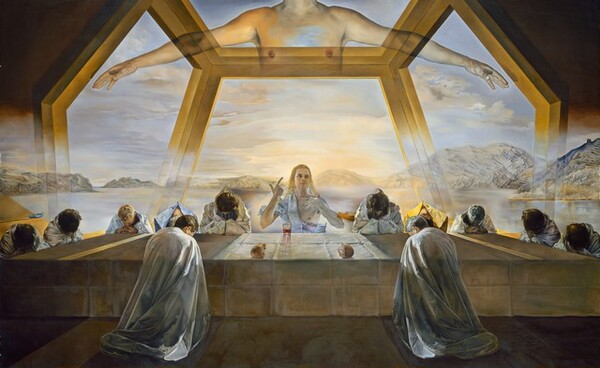
| Date Completed | 1955 |
| Dimensions | 167.5 x 268.6 cm |
| Location | National Gallery of Art, Washington, D.C. |
Dalí throws a divine dinner party in “The Sacrament of the Last Supper” (1955), where biblical figures get a surreal makeover. Completed in the year 1955, this is one of the epic Salvador Dali paintings which is kept at the National Gallery of Art and is a spiritual smorgasbord served with a side of surreal spice.
4. Christ of Saint John of the Cross (1951)
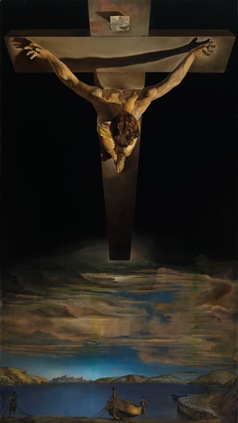
| Date Completed | 1951 |
| Dimensions | 205 x 116 cm |
| Location | Kelvingrove Art Gallery and Museum, Glasgow |
Dive into the divine disco of “Christ of Saint John of the Cross” (1951). In this Glaswegian gala, Dalí flips the crucifixion narrative on its head, suspending Christ in a cosmic cube. Completed in the year 1951, it’s a religious rumba with a surrealist twist.
5. Galatea of the Spheres (1952)
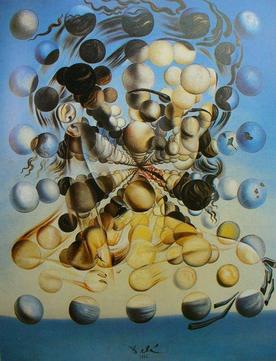
| Date Completed | 1952 |
| Dimensions | 65 x 54 cm |
| Location | Dalí Theatre-Museum, Figueres, Spain |
Hold on to your hats as we twirl into “Galatea of the Spheres” (1952). Salvador Dalí, the cosmic choreographer, orchestrates a ballet of spheres in this surreal soirée. It’s a dance of dimensions in Figueres, Spain, where the celestial and the artistic pirouette are in perfect harmony.
6. Swans Reflecting Elephants (1937)
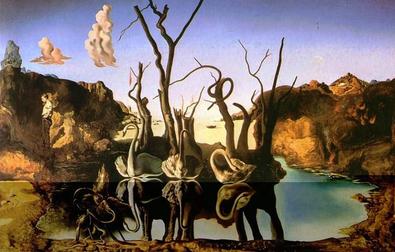
| Date Completed | 1937 |
| Dimensions | 51 x 78 cm |
| Location | Private Collection |
Get ready for a swan song that echoes with surreal symphonies! In “Swans Reflecting Elephants” (1937), Dalí invites us to a lakeside masquerade where swans and elephants switch roles like partners in a surrealist tango. A private collection soirée where reality waltzes with imagination. This is one of the surrealist Salvador Dali paintings.
7. The Metamorphosis of Narcissus (1937)
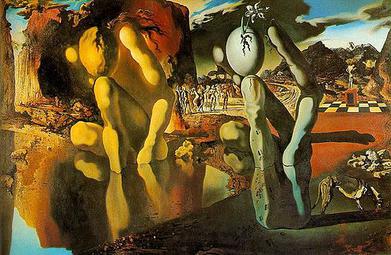
| Date Completed | 1937 |
| Dimensions | 51 x 78 cm |
| Location | Tate Modern, London |
Dalí takes us down the rabbit hole of self-reflection in “The Metamorphosis of Narcissus” (1937). Completed in 1937, this painting at the Tate Modern is a Freudian funhouse where Narcissus undergoes a surreal makeover. It’s a mirror maze of meaning that leaves us pondering our own reflections.
8. The Enigma of Hitler (1939)
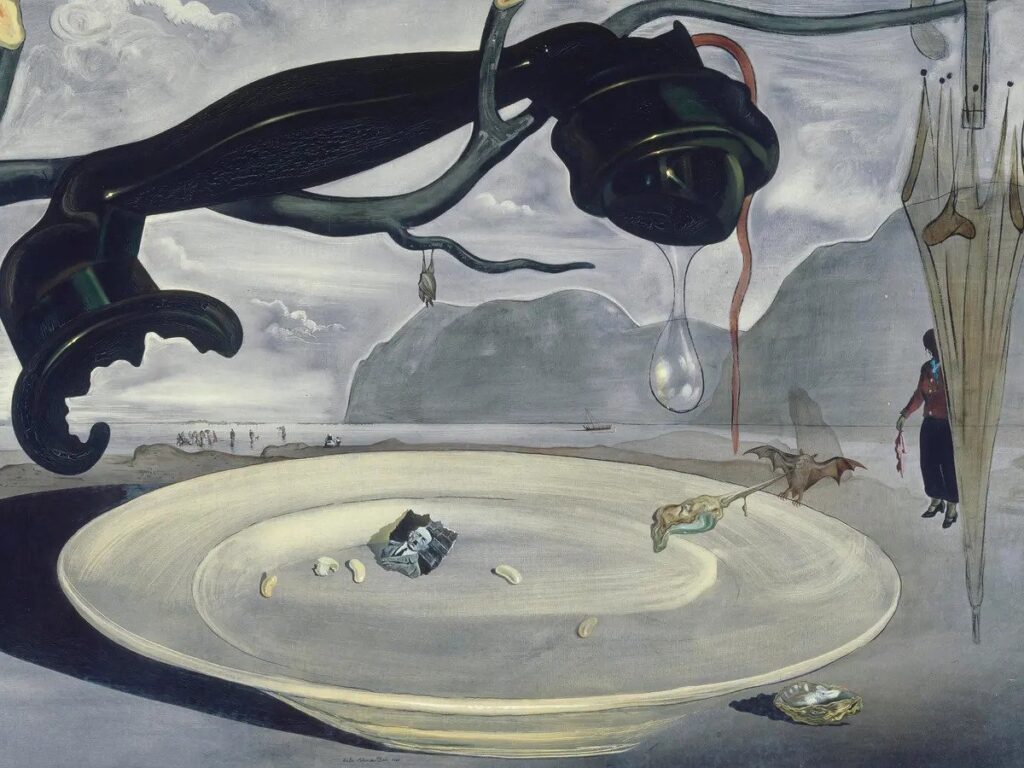
| Date Completed | 1939 |
| Dimensions | 61 x 50 cm |
| Location | Private Collection |
Brace yourselves for “The Enigma of Hitler” (1939), where Dalí, the provocateur, paints a surreal portrait of the mustachioed dictator. Completed in 1939, this canvas is a political piñata that challenges our perception of power. A private collection conundrum that’s part surreal, part controversial, and all Dalí.
9. The Madonna of Port Lligat (1949)

| Date Completed | 1949 |
| Dimensions | 78 x 58 cm |
| Location | Dalí Theatre-Museum, Figueres, Spain |
Return to the hometown hubbub in “The Madonna of Port Lligat” (1949). Dalí, the local lad, paints a divine portrait of the Virgin Mary with a surreal twist. Completed in 1949, it’s a Figueres fête where sacred meets quirky.
10. The Swallow’s Tail (1983)
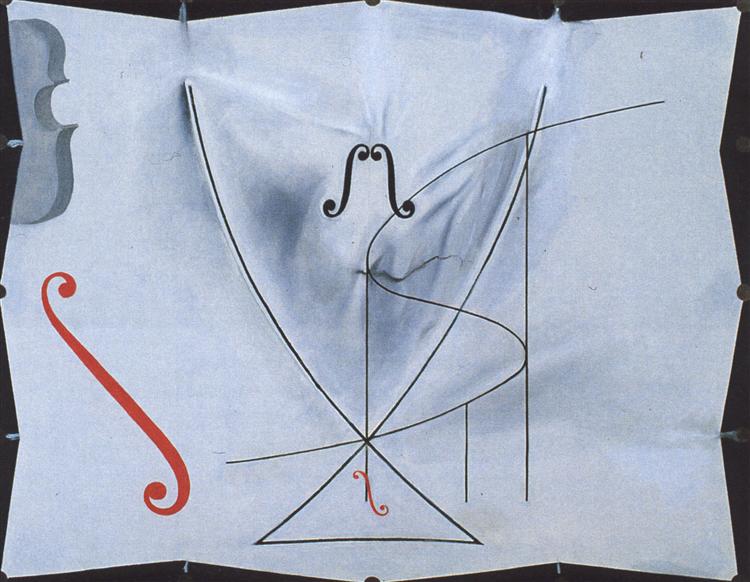
| Date Completed | 1983 |
| Dimensions | 64 x 54 cm |
| Location | Dalí Theatre-Museum, Figueres, Spain |
In “The Swallow’s Tail” (1983), Dalí, the whimsical wizard, crafts a cosmic caper of chaos and order. Completed in 1983, this final flourish at the Dalí Theatre-Museum in Figueres is a surreal symphony that swirls with scientific whimsy.
11. Dream Caused by the Flight of a Bee Around a Pomegranate a Second Before Awakening (1944)

| Date Completed | 1944 |
| Dimensions | 51 x 41 cm |
| Location | Thyssen-Bornemisza Museum, Madrid |
Enter the dream realm of “Dream Caused by the Flight of a Bee Around a Pomegranate a Second Before Awakening” (1944). In this Madrid madhouse, Dalí paints a fantastical narrative where bees and pomegranates lead us on a surreal siesta. Completed in 1944, it’s a masterpiece of dreamy delirium.
12. The Great Masturbator (1929)
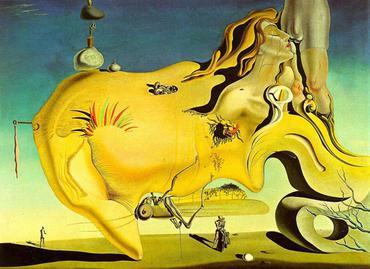
| Date Completed | 1929 |
| Dimensions | 110 x 150 cm |
| Location | Museum Boijmans Van Beuningen, Rotterdam |
Dalí turns up the cheeky charm in “The Great Masturbator” (1929), a saucy exploration of Freudian fantasies. Completed in 1929, this Rotterdam romp is a bold brushstroke in Dalí’s audacious evolution.
13. The Burning Giraffe (1937)

| Date Completed | 1937 |
| Dimensions | 35 x 27 cm |
| Location | Private Collection |
Amidst the flamenco of the Spanish Civil War, Dalí ignites a surrealist bonfire in “The Burning Giraffe“. Completed in 1937, this painting from a private collection is a haunting dance of destruction and rebirth. A surrealist flamenco that echoes with the heat of war.
14. The Galacidalacidesoxiribunucleicacid (1963)
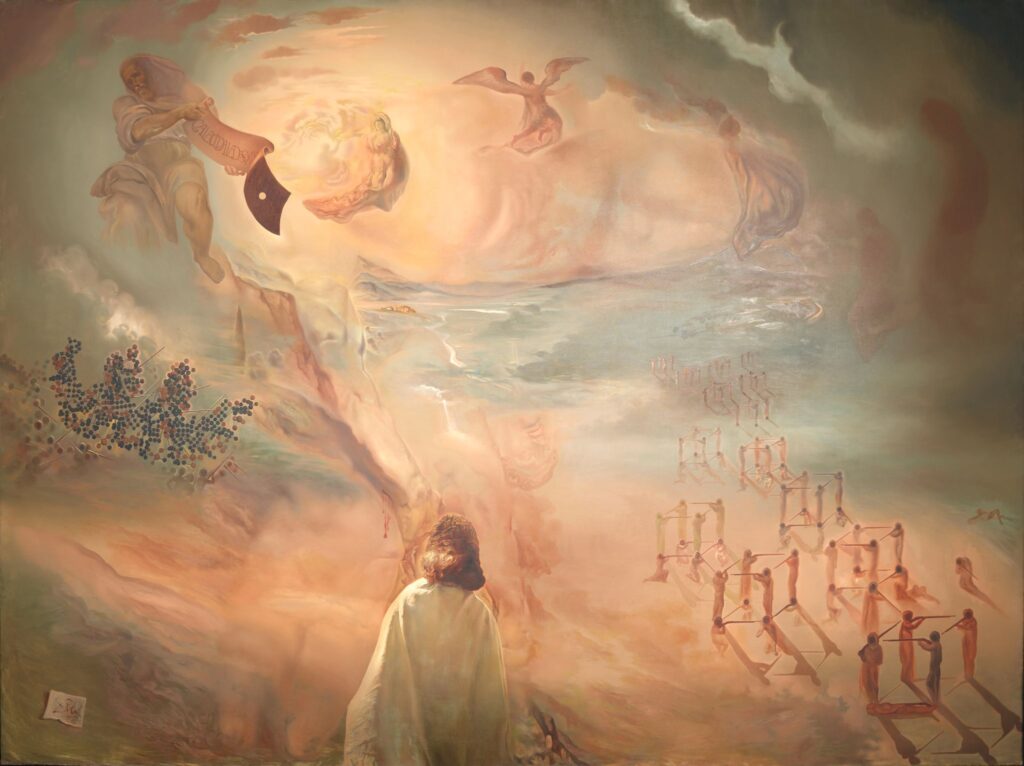
| Date Completed | 1963 |
| Dimensions | 100 x 80 cm |
| Location | Dalí Theatre-Museum, Figueres, Spain |
Our surreal circus concludes with “The Galacidalacidesoxiribunucleicacid” (1963), a tongue-twisting title for a whimsical wonder. In this Figueres finale, Dalí, the cosmic comedian, paints a fantastical landscape where creatures cavort in a surreal salsa. Completed in 1963, it’s a DNA dance of Dalí proportions.
15. The Discovery of America by Christopher Columbus (1958-1959)
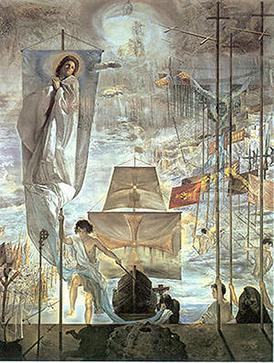
| Date Completed | 1958-1959 |
| Dimensions | Not specified (Please refer to the specific source for accurate dimensions) |
| Location | Gala-Salvador Dalí Foundation, Figueres, Spain |
And finally, we reach the grand finale with “The Discovery of America by Christopher Columbus” (1958-1959). In this epic at the Gala-Salvador Dalí Foundation in Figueres, Spain, Dalí revisits the historical narrative with a surreal twist, inviting viewers to embark on a voyage through the artist’s unique interpretation of history.
Artwork Spotlight: MADONNA OF PORT LLIGAT
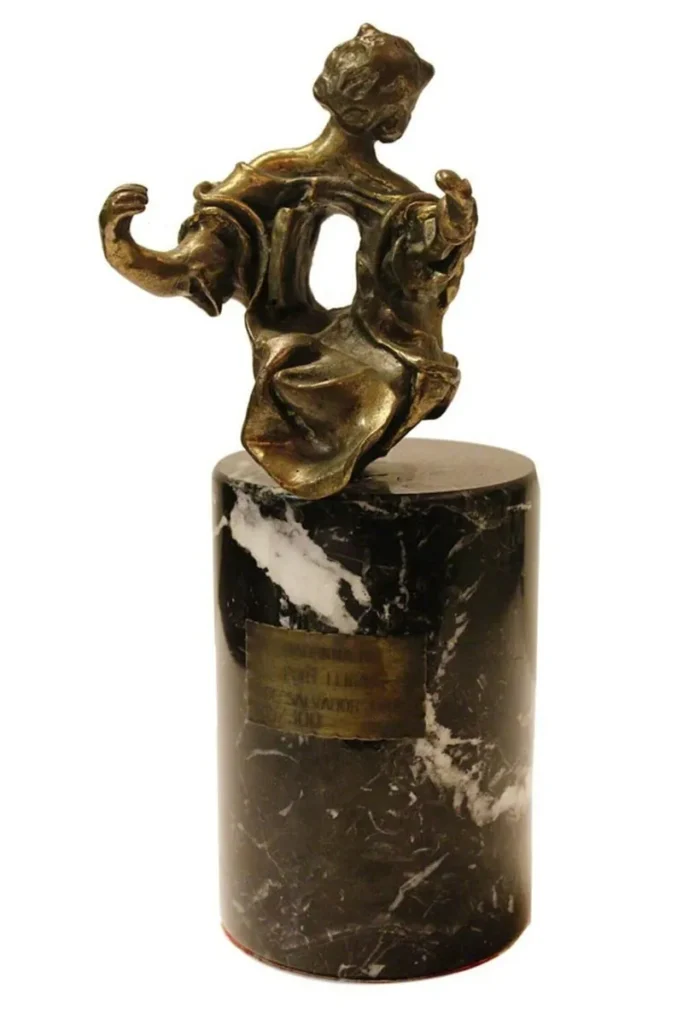
”MADONNA OF PORT LLIGAT” is a surrealist painting by Salvador Dalí which is also available on Singulart. In translating the concept of passion and tragedy, the artwork is very symbolic via imagination and surrealism.
Are you looking for a piece of artwork from Salvador Dalí?
Singulart has limited edition prints of Salvador Dalí. If you are looking for a piece of Dalí‘s artwork for sale, simply click on the artwork or the button below to discover more!
Frequently Asked Questions
What is Salvador Dali’s most famous piece?
Dali created some of the most well-known surrealist works between 1929 and 1973, including his most famous masterpiece The Persistence of Memory.
How much is Salvador Dali paintings worth?
Salvador Dali paintings have been put up for auction numerous times, with realized prices varying from 4 USD to 21,743,488 USD based on the size and material of the piece.
Why was Salvador Dali so special?
Salvador Dali’s style, which he invented and nurtured, was the most well-known and inventive of the 20th century since it was unremarkable before his time.
Conclusion
As we bid adieu to this whimsical romp through the surreal wonders of Salvador Dalí, each painting becomes a chapter in the tale of a man who juggled reality like a circus performer with too many balls. These paintings by Salvador Dalí, with their melting clocks, leggy elephants, and cosmic chaos, etch Dalí’s legacy into the whimsical wall of art history. In the carnival of Dalí’s imagination, we find not just paintings but tickets to a sideshow of the fantastical, where reality wears a mask and dreams dance in surreal delight. So, hats off to the maestro, and may your mustache forever twist in the winds of artistic eccentricity!