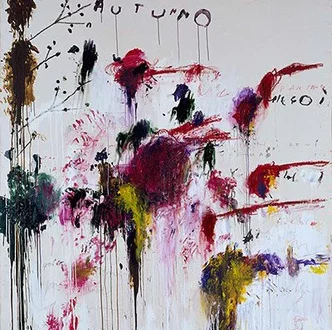
In the realm of art, certain masterpieces transcend the canvas and become timeless symbols of creativity and contemplation. One such iconic work is Salvador Dali’s “The Persistence of Memory,” a surreal symphony that invites viewers to step into a dreamscape where time melts away, and reality dances with the subconscious. At the heart of this enigmatic painting are Dali’s famous melting clocks – a whimsical disintegration of time that conceals profound reflections on the nature of temporality and existence.
Who Was Salvador Dali?
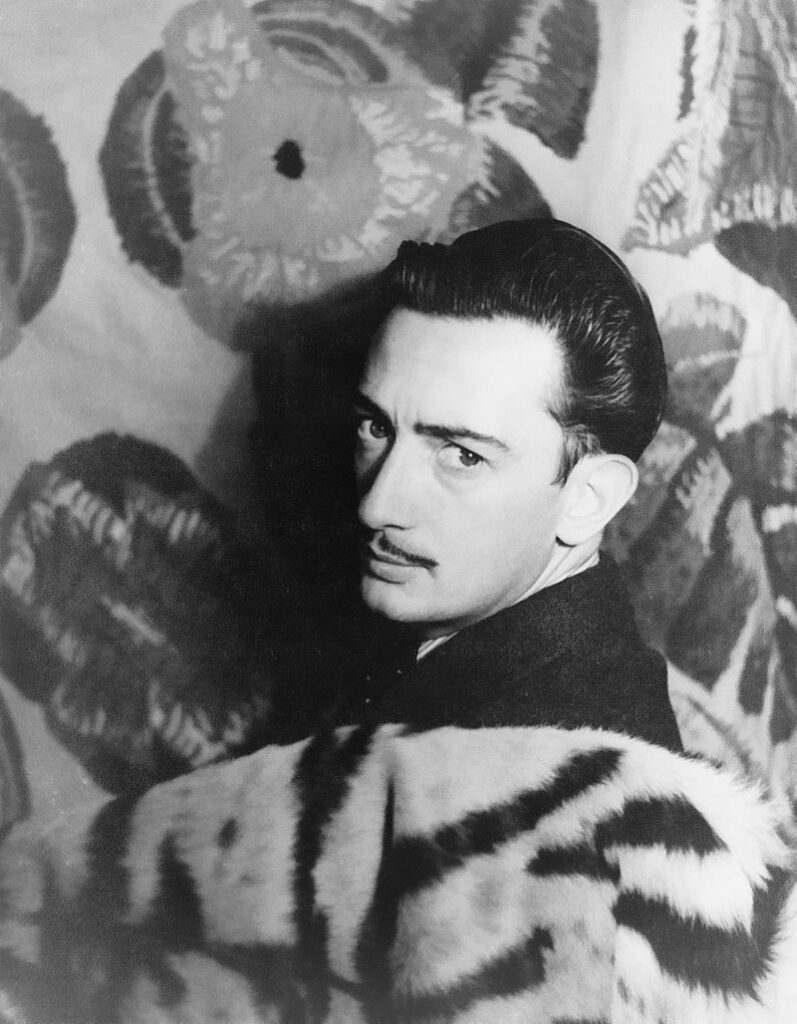
Picture a mustachioed man of the surreal, stirring up the art world with his eccentricity and boundless creativity. That’s Salvador Dali – not just an artist but a wild orchestrator of dreams and visions. Born in 1904 in the vibrant canvas of Spain, Dali was destined to be more than just a painter; he was a maestro conducting the symphony of the surreal.
FUN FACT: Salvador Dali had a fascination with the concept of time, which is reflected in many of his artworks.
His Career
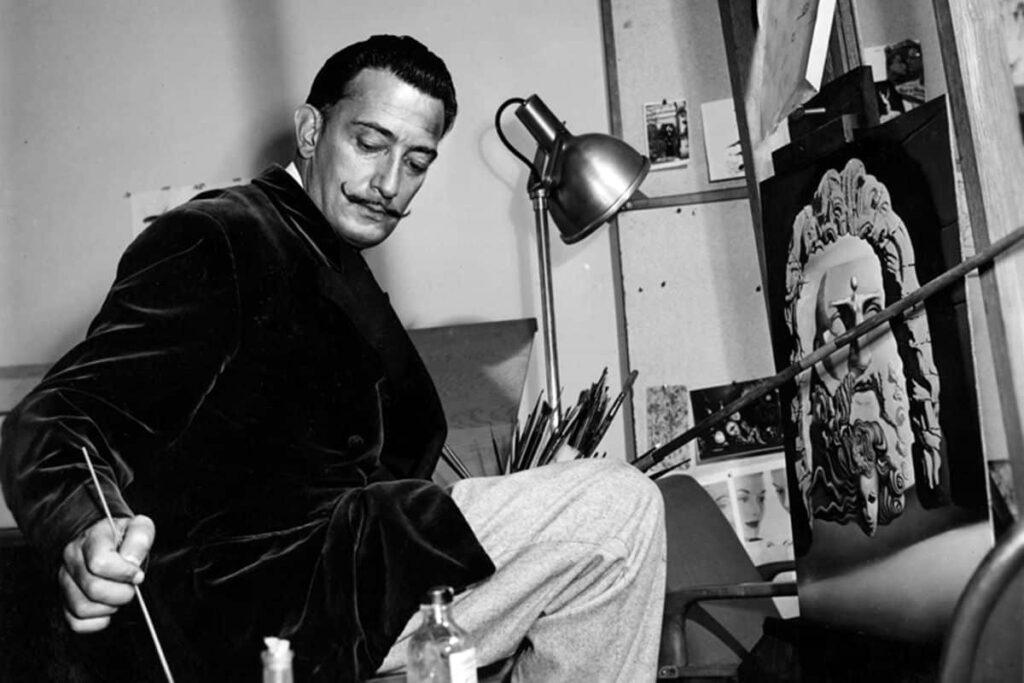
Dali’s artistic journey wasn’t a straight line; it was a rollercoaster of avant-garde exploration. Trained initially in the traditional realms of Impressionism and Cubism at the Royal Academy of Fine Arts of San Fernando in Madrid, Dali quickly diverged into the uncharted waters of Surrealism. Andre Breton led this movement, and provided the perfect stage for Dali’s eccentricity to unfold.
Dali wasn’t content with just painting. He was a Renaissance spirit trapped in the 20th century, venturing into realms beyond the canvas. His collaboration with filmmaker Luis Buñuel birthed films like “Un Chien Andalou” (1929) and “L’Age d’Or” (1930), cinematic excursions into the bizarre and the dreamlike. Dali’s art wasn’t confined to brush and canvas; it was an exploration of the subconscious, a journey into the fantastical corridors of the mind.
What’s Happening in The Persistence of Memory

Now, let’s dive headfirst into the surreal abyss of one of Dali’s most iconic piece – “The Persistence of Memory,” painted in 1931. This masterpiece isn’t just a painting; it’s a portal into Salvador Dali’s dreamscape.
| Artist | Salvador Dali |
| Date Painted | 1931 |
| Medium | Oil on Canvas |
| Genre | Surrealism |
| Period | Modern |
| Dimensions | 24 cm × 33 cm (9.5 in × 13 in) |
| Series/Versions | Original |
| Where is it housed? | The Museum of Modern Art (MoMA), New York City |
Picture this: a landscape that feels both alien and strangely familiar, part Dali’s native Catalonia, part otherworldly dream. The stage is set with distorted cliffs, a distant body of water, and trees that seem to be pirouetting through a surreal ballet. But the true protagonists of this enigmatic theater? Melting watches – time itself liquefied and draped over the scene.
The Surreal Landscape of Time
Dali crafts a dreamscape where reality blurs and time becomes an entity. The cliffs are like a rollercoaster, bending and morphing in defiance of gravity. The trees, with their elongated and distorted forms, are characters in a Salvador Dali-themed collection. The distant body of water mirrors the warped cliffs, creating a harmony between the familiar and the uncanny.
Yet, stealing the spotlight are the melting watches, draped languidly over the landscape like Salvador Dali’s version of a surrealist fondue.
The Meaning of The Persistence of Memory
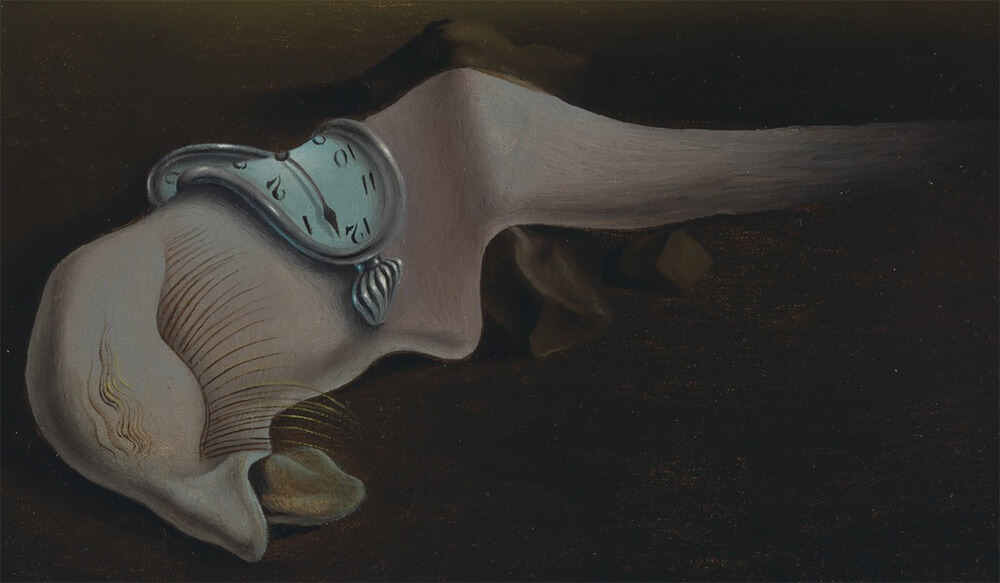
Beyond the brushstrokes and the surreal landscape, there lies a deeper narrative in the composition of The Persistence of Memory. Dali’s melting watches are not just a distortion of time; they are a profound subject on the relativity and subjectivity of our perception of time.
Time, in this surreal symphony, is not a rigid, linear force but a soft, fluid concept. The melting clocks signify the fleeting nature of moments, the transience of time, and the elasticity of our temporal experiences. The drooping clocks draped over various objects evoke a sense of surrender to the inexorable passage of time.
The distorted face draped over a tree branch adds another layer to the narrative. It’s a visage in decay, merging with the natural elements. This amalgamation blurs the boundaries between humanity and the environment, suggesting an interconnectedness that transcends the conventional separation of living beings and the world around them.
Dali’s choice of a barren landscape enhances the dreamlike quality of the painting. The absence of life, except for the surreal objects, emphasizes the timeless and universal nature of the depicted scene. It’s a dreamscape where the constraints of reality are dissolved, and the subconscious takes center stage.
The Persistence of Memory invites us to reflect on the nature of time, the fluidity of our experiences, and the interconnectedness of existence. Dali beckons us into a realm where time is not an oppressive force but a tapestry of moments waiting to be unraveled.
The Legacy of The Persistence of Memory
This painting isn’t just a timepiece; it’s Salvador Dali’s legacy encapsulated in a 24 cm by 33 cm canvas. Beyond the melting clocks and dreamy landscapes, Dali’s influence ripples through the fabric of art and perception.
The Persistence of Memory challenges us to rethink our relationship with time. It’s not just about clocks losing their structure; it’s a profound statement about the relativity of time, the fluidity of moments, and the intricate dance between reality and dreams.
Dali’s legacy isn’t limited to the canvas. It echoes through the door of art history, inspiring generations to think beyond the ticking hands of a clock. Artists find peace in his daring exploration of the surreal, scientists ponder the mysteries of time, and dreamers revel in the idea that reality is a canvas waiting to be distorted.
Artwork Spotlight: The Creation of Flying Things
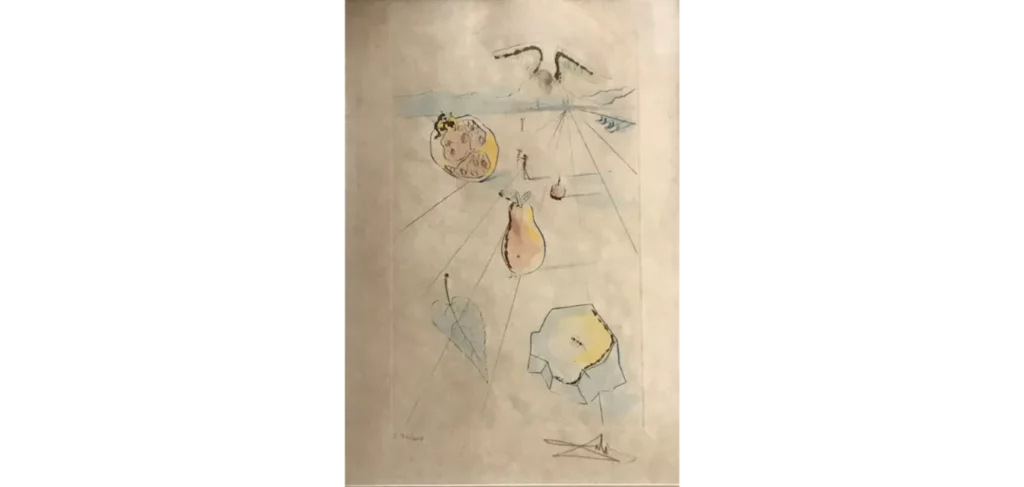
“The Creation of Flying Things” is available on Singulart. It is a surrealist masterpiece by Salvador Dali, is a jaw-dropping scene where human-animal hybrids and flying devices arise out of an egg-shaped form.
Are you looking for a surrealist piece of artwork from Salvador Dali?
Explore Singulart’s exclusive collection of limited-edition prints by Salvador Dali. If you’re in search of a Dali masterpiece, click on the artwork or the button below to find out more!
Frequently Asked Questions
What is the message of The Persistence of Memory?
Many people read Salvador Dalí’s “The Persistence of Memory” as a surrealist reflection on the ephemerality and fluidity of time. It challenges our conventional ideas about time by depicting traditional “hard objects” like clocks as pliable, dissolving forms.
What time period is The Persistence of Memory?
When Dalí created The Persistence of Memory in 1931, the Surrealist movement was at its peak, and he was only 28 years old. At this point, he had established his “paranoiac-critical method” for producing art and was officially affiliated with the Surrealists.
Conclusion
In conclusion, Salvador Dali’s The Persistence of Memory is not only a painting; it’s a symphony of the surreal. As the clocks melt and time dissolves, Dali invites us to question our understanding of reality and embrace the dreamlike landscapes that lurk within the recesses of our consciousness. It’s a journey into the surreal corridors of our minds, guided by the hand of a maestro who dared to defy the ticking constraints of time.