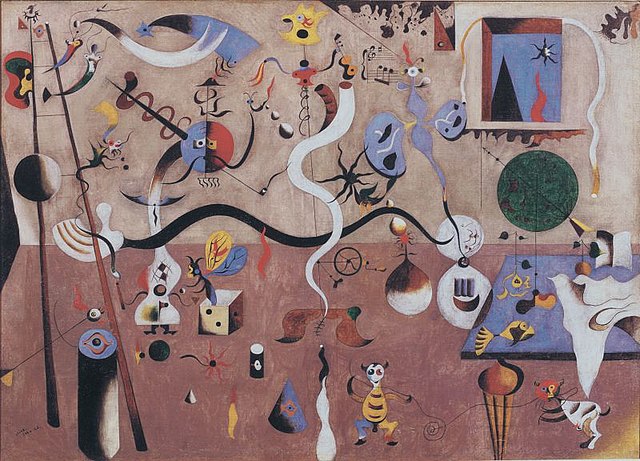
Joan Miró, a renowned artist hailing from Spain, left an indelible mark on the art world with his captivating painting, “The Harlequin’s Carnival.” Completed in 1924, this masterpiece is celebrated for its unique and dreamlike qualities. In this comprehensive exploration, we will delve into the life of Joan Miró, tracing his artistic journey, unraveling the significance of “The Harlequin’s Carnival,” and uncovering fascinating details about this iconic artwork.
Who was Joan Miró?
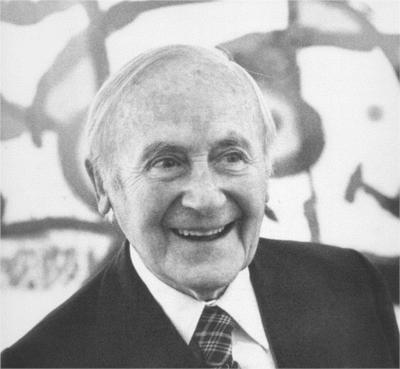
Born in Barcelona in 1893, Joan Miró emerged as a multifaceted artist, excelling in painting, sculpture, and ceramics. His art was characterized by a vibrant palette, whimsical shapes, and dreamy compositions. Miró, intrigued by various art movements like Fauvism, Cubism, and Dadaism, eventually became a prominent figure in Surrealism. Surrealism aimed to tap into the creative potential of the unconscious mind, and Miró’s work became a testament to this exploration.
FUN FACT: Joan Miró was not only a painter but also delved into other artistic forms such as sculpture, ceramics, and printmaking.
His Career
Miró’s artistic career spanned several decades, during which he experimented across various mediums, including paintings, sculptures, prints, and ceramics. His work defied traditional artistic norms, embracing a playful and imaginative style that resonated with audiences worldwide. Miró’s artistic evolution can be traced through his commitment to pushing the boundaries of visual language, creating a unique visual poetry that transcended conventional representation.
What is Happening in “The Harlequin’s Carnival”?
| Artist | Joan Miró |
| Date Created | 1924 |
| Medium | Oil on canvas |
| Genre | Surrealism |
| Period | 20th Century |
| Dimensions | 66 cm × 92 cm |
| Series/Versions | N/A |
| Where is it housed? | Albright-Knox Art Gallery, Buffalo, New York, USA |
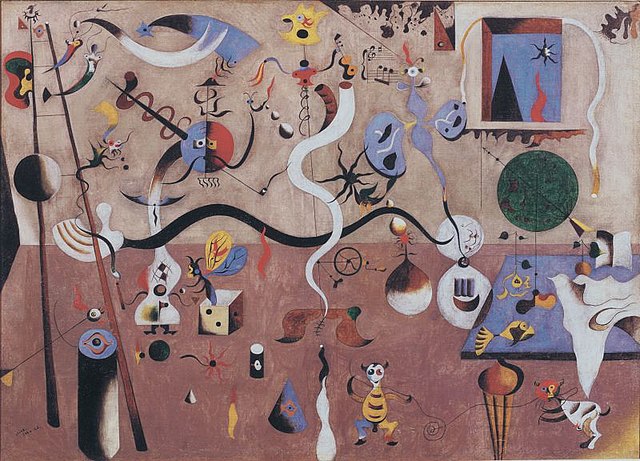
Painted in 1924, “The Harlequin’s Carnival” serves as a captivating example of Miró’s surrealist vision. The painting unfolds a whimsical scene where abstract forms dance across the canvas. At the center stands a harlequin, a recurring motif in Miró’s repertoire, rendered in bold, primary colors. The harlequin, symbolizing comedy and mischief, gazes at the viewer with a playful intrigue.
Surrounding the central figure, a multitude of enigmatic symbols and shapes create a sense of spontaneity and movement. Miró’s vibrant hues and dynamic lines infuse the painting with rhythm and energy, inviting viewers into a surreal dreamscape where reality and imagination intertwine. Each element pulsates with life, encouraging viewers to delve into the depths of Miró’s subconscious.
Interesting Facts about “The Harlequin’s Carnival”
Symbols and Ideas: Miró used symbols in The Tilled Field to make it interesting and mysterious. The best part is that you get to decide what they mean to you!
Nature’s Influence: Miró loved nature, and you can see that in The Tilled Field. It’s like a magical garden full of strange plants and animals.
In a Famous Museum: The Tilled Field is so special that it lives in a famous museum called the Museum of Modern Art (MoMA) in New York City. People from all over the world come to see it and be inspired.
Inspiring Other Artists: Miró’s art, especially The Tilled Field, has inspired many other artists to be creative and try new things.
Understanding Miró’s Journey in Detail
Early Years and Influences
Miró’s artistic journey began with formal training, but he quickly moved towards avant-garde movements that challenged traditional artistic norms. Fauvism, with its bold use of color, and Cubism, which played with geometric shapes, left a lasting impact on Miró’s early works. These influences laid the groundwork for his later experimentation with surrealism.
Surrealism and Miró’s Unique Style
Surrealism became a pivotal influence on Miró’s art, inspiring him to explore the world of dreams, the subconscious, and the irrational. His paintings often featured biomorphic shapes, celestial bodies, and fantastical creatures, reflecting his belief in the power of the imagination. Miró’s unique style, marked by spontaneity and a childlike quality, set him apart in the Surrealist movement.
Playful Elements in Miró’s Art
Miró’s art exudes a sense of playfulness, akin to a child’s uninhibited creativity. His use of bright colors, seemingly simple shapes, and imaginative forms suggests a connection to the joy of creation. “The Harlequin’s Carnival” is a prime example of this playfulness, inviting viewers to join in the artist’s whimsical exploration.
Symbolism in “The Harlequin’s Carnival”
The harlequin, a character from the traditional Italian Commedia dell’arte, holds symbolic significance in Miró’s work. Beyond its theatrical associations, the harlequin becomes a vehicle for Miró to express deeper ideas about identity, transformation, and the performative nature of life. The vibrant colors and dynamic composition further enhance the symbolism, creating a rich tapestry of meaning.
Artwork Spotlight: Grand Palais
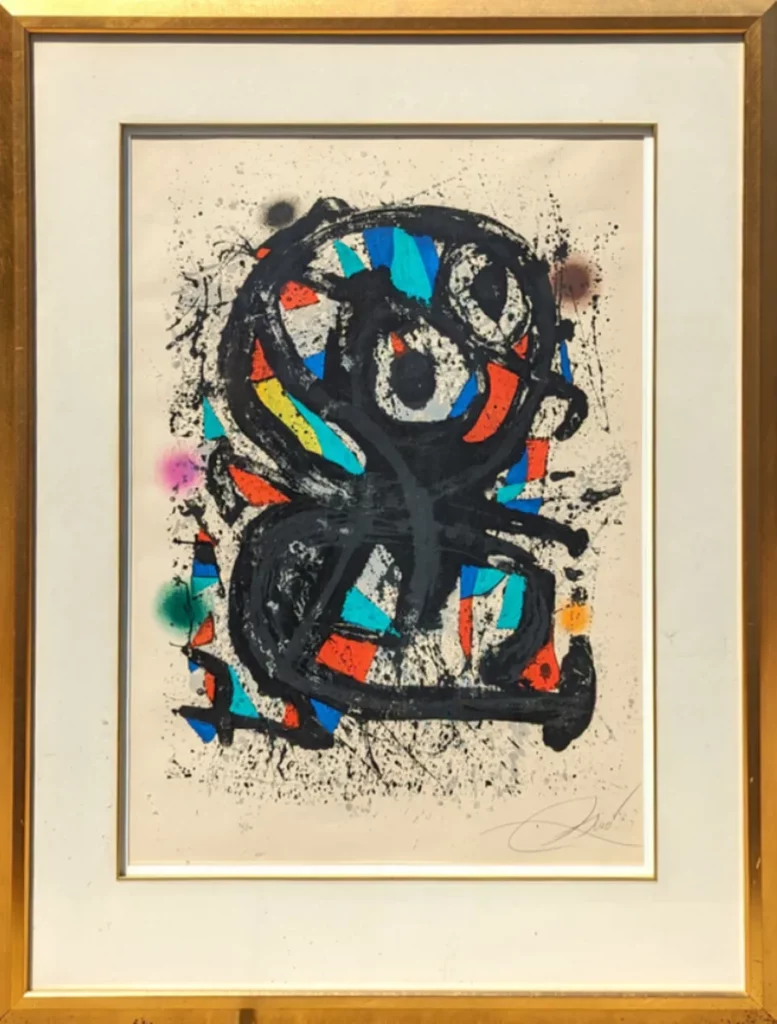
Joan Miró’s ‘Grand Palais’ is available on Singulart. It is an impressive and animated painting; beaming with primary colours and nonsensical shapes, which perfectly embody the spirit of the artist’s surrealist art. The piece was shown at the Grand Palais in Paris to present Miró’s new approach and his work for contemporary art.
Are you looking for a piece of artwork from Joan Miró?
Singulart has limited edition prints of Joan Miró. If you are looking for a piece of Miró’s artwork for sale, simply click on the artwork or the button below to discover more!
Frequently Asked Questions
What is the meaning of the Harlequin Carnival painting?
The painting’s title is thought to allude to Mardi Gras, the festive occasion preceding the period of fasting observed during Lent in the Catholic liturgical calendar. Within the artwork, numerous celebrants exhibit traits blending human and animal features, while certain elements take on anthropomorphic qualities, such as a ladder adorned with an eye and ear.
What was Joan Miró famous for?
Born on April 20, 1893, in Barcelona, Spain, Joan Miró was a Catalan painter renowned for blending abstract art with Surrealist elements. Throughout his career, he grappled with the interplay between his whimsical, poetic tendencies and his perception of the stark realities of contemporary society. Miró passed away on December 25, 1983, in Palma, Majorca.
Conclusion
In conclusion, “The Harlequin’s Carnival” is a testament to Joan Miró’s boundless creativity and his profound impact on the art world. Through its vibrant colors, enigmatic symbols, and dynamic composition, the painting invites viewers on a journey into the realm of the imagination. Miró’s playful exploration of Surrealism and his unique artistic vision continues to captivate audiences, reaffirming his status as one of the most influential artists of the 20th century.