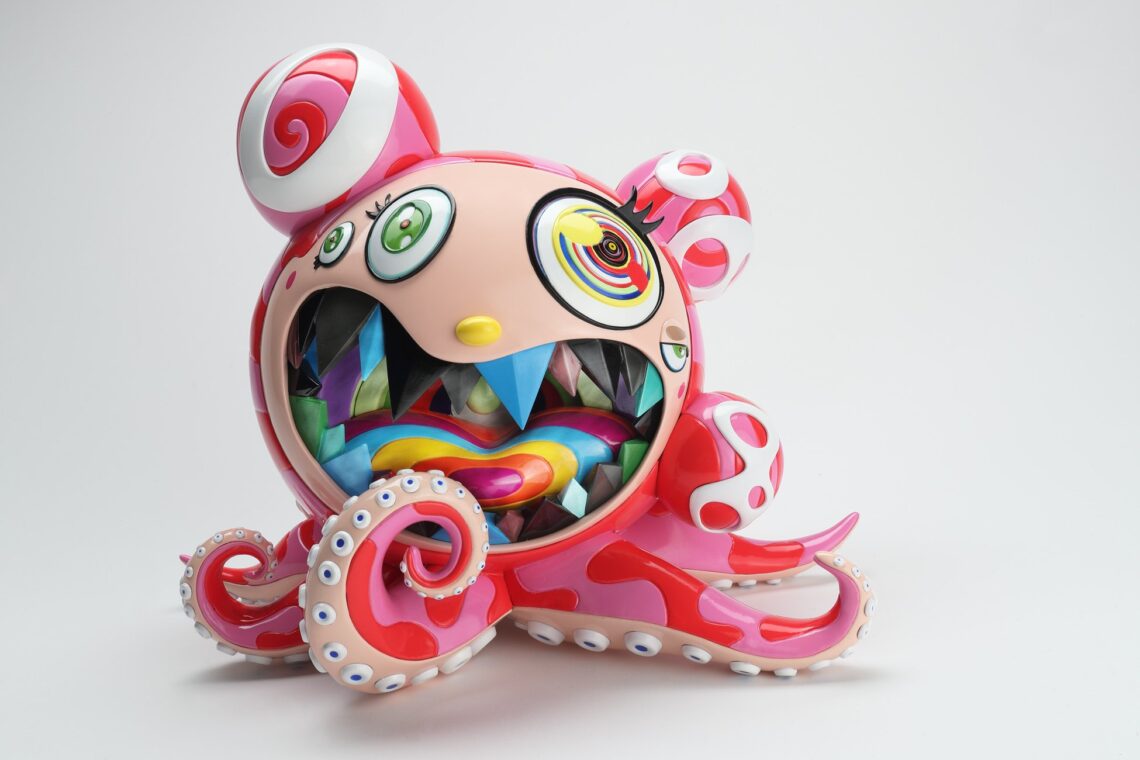
Takashi Murakami, being one of the brightest stars in the universe of contemporary art, is famous for his unique blend of traditional Japanese art styles and modern pop culture. Apart from the numerous stories that he has created, “Mr. DOB” seems to be the symbol of Murakami’s unique style evident in many parts of the world. In this essay, we delve into the fascinating character of Mr. DOB, dissecting its symbolic importance in Murakami’s work and the wider realm of modern art.
Who was Takashi Murakami?

Takashi Murakami, born on February 1st, 1962 in Tokyo, Japan, is an iconic artist, known for his energetic and daring style. The Tokyo University of the Arts graduate in the Nihonga, which is the traditional Japanese painting style, blended traditional techniques with modern themes, creating a new art identity style. He created the term “Superflat,” which stands for both his artistic style and his satiric commentary on the flattening of high and low in modern society.
FUN FACT: Takashi Murakam has a fascination with anime and manga, which greatly influences his artistic style. In fact, he even earned the nickname “the Warhol of Japan” due to his ability to blend elements of high and low culture seamlessly in his work.
His Career
Murakami’s career is built upon his dedication to innovation and working together. He set up Hiropon Factory in the early 1990s, which developed into multi-dimensional art production and artist management company, Kaikai Kiki Co. Ltd. Murakami’s association with fashion brands such as Louis Vuitton and celebrities such as Kanye West have popularized his art to the masses, a blurring of the line between fine art and commercialism.
What is Happening in Mr. DOB?

| Artist | Takashi Murakami |
| Date Created | 1993 |
| Medium | Acrylic on canvas |
| Genre | Contemporary Art |
| Period | Postmodernism |
| Dimensions | 54.1 x 54.1 inches |
| Series/Versions | Multiple iterations exist |
| Where is it housed? | Private collections, and galleries worldwide |
In the world of art created by Mr. Murakami, Mr. DOB, a witty figure, travels from innocence to naughtiness. Mr. DOB came into being in the 1990s, representing Murakami’s captivation with the otaku culture of Japan and the spread of anime and manga. The name of the character was inspired by the Japanese phrase “Dōbutsu ōi,” meaning “lots of animals,” which is typical of Murakami’s habit of punning.
Mr. DOB charms the crowd with his immense eyes and a mysterious smile that conveys a story to be decoded but at the same time makes it impossible to define. Murakami applies splashes of bright colors and even extreme styles to Mr. DOB, thus dissolving the border between high and low art. The various versions of the artwork portray Murakami’s long-term inquiry into consumer culture, mass media and the globalization of modern art.
Analysis
Mr. DOB, the whimsical character created by Takashi Murakami, embodies a deeper ideology for the analysis of the emerging realm of modern art. Through Mr. DOB, Murakami conveys the complexity of the narrative and social values as he urges the viewer to ponder on how culture, commercialism, and identity correlate. Symbolism and interpretation are essential aspects of Mr. DOB. The vagueness of Mr. DOB’s identity permits different interpretations. Some consider him to be a symbol of childhood innocence and beauty, resonating with Murakami’s love for childhood and vintage, while others view Mr. DOB as a critique of the all-encompassing consumer culture where his exaggerated features and colossal size symbolize the overwhelming sensory input.
In addition, the Cultural Critique can be found in the representation of Mr. DOB as a recurring motif. By including elements of Japanese Otaku culture, anime, and manga, Murakami investigates how the process of globalization impacts traditional identity structures. Mr. DOB has been transformed through the years, from his earliest versions in the 1990s to more recent renaissances. Mr. DOB reflects the changeable nature of culture in the age of digital media.
Interesting Facts about Mr. DOB
Symbol of Pop Culture: Mr. DOB encapsulates Murakami’s fascination with the proliferation of consumer culture and its impact on contemporary society. Through this character, Murakami explores themes of globalization, consumerism, and the commodification of art.
Cultural Ambiguity: Mr. DOB’s origins lie in the Japanese otaku subculture, yet his appeal transcends cultural boundaries, resonating with audiences worldwide. Murakami’s use of manga-inspired imagery reflects his belief in the universality of pop culture as a unifying force.
Evolution of Identity: Over the years, Mr. DOB has undergone various transformations, symbolizing Murakami’s evolving artistic vision. From playful and whimsical to dark and introspective, each iteration of Mr. DOB offers a glimpse into Murakami’s multifaceted exploration of contemporary society.
Artwork Spotlight: “Flowers Blooming in This World and the Land of Nirvana”
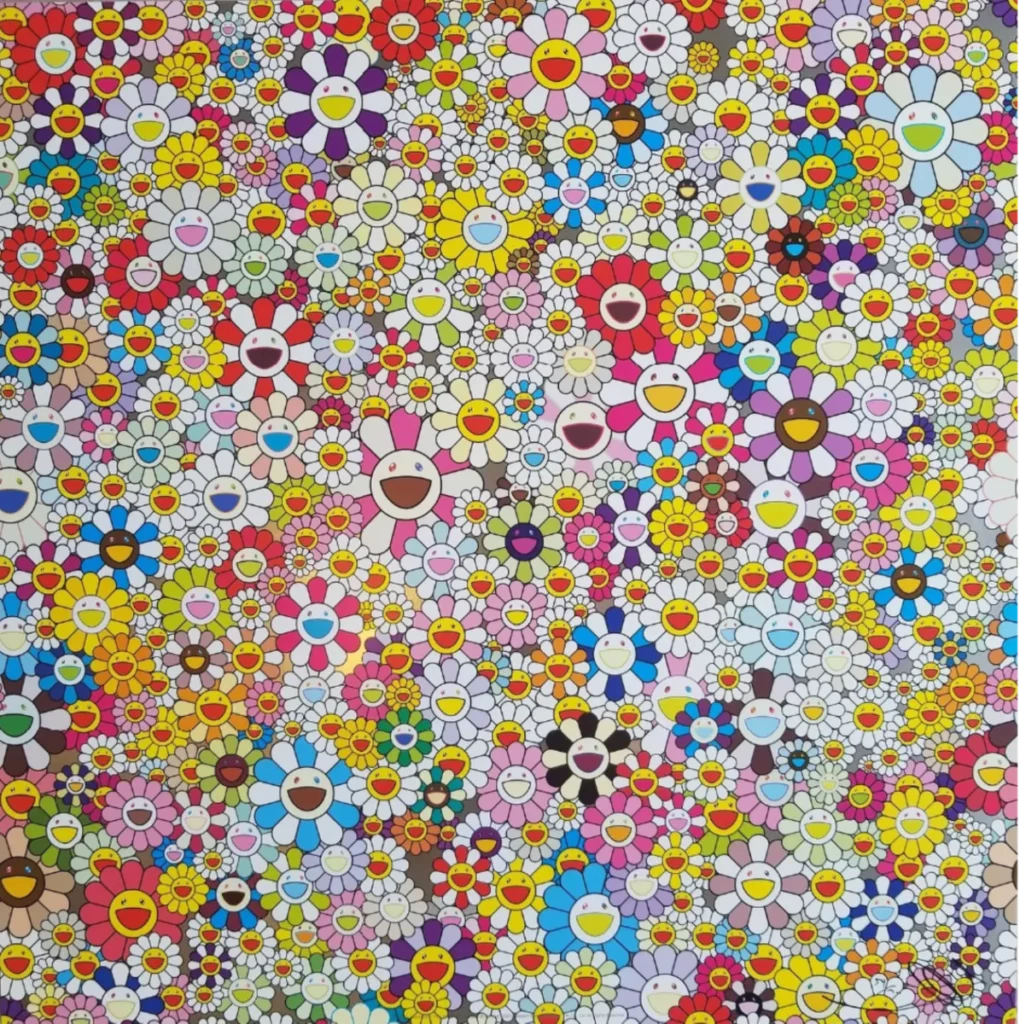
“Flowers Blooming in This World and the Land of Nirvana” by Takashi Murakami is available on Singulart. This piece is exemplary of his fascination with the fusion of traditional Japanese style with contemporary pop culture. Using bright colors and detailed motifs, Murakami lures the audience into a surreal world where wonder and transcendence meet.
Are you looking for a masterpiece from Takashi Murakami?
Singulart presents exclusive limited edition pieces by Takashi Murakami. To discover and acquire Murakami’s art, click on the artwork or the button below for more information!
Frequently Asked Questions
What is Takashi Murakami’s most famous drawing?
Take My Lonesome Cowboy, one of Murakami’s earliest works of art that continues to retain the artist’s highest auction record of $15.2 million.
Why is Murakami art so popular?
Murakami skillfully erases the line between high art and commodities by fusing references to Japanese mass culture with the nation’s rich cultural heritage. Because of his business-oriented approach to art and his enormous factories employing people to create, market, and sell his works of art, he has been compared to Andy Warhol.
Conclusion
Takashi Murakami’s Mr. DOB breaks through the boundaries of conventional art with an energetic and colorful style that reflects the essence of contemporary culture. Mr. DOB as a symbol of pop culture penetration calls for exploration and introspection, helping dismiss unintended perspectives of art and identity. Through Murakami’s kaleidoscopic view, Mr. DOB takes the throne, showing how creativity and innovativeness are forces to reckon with in the modern age.