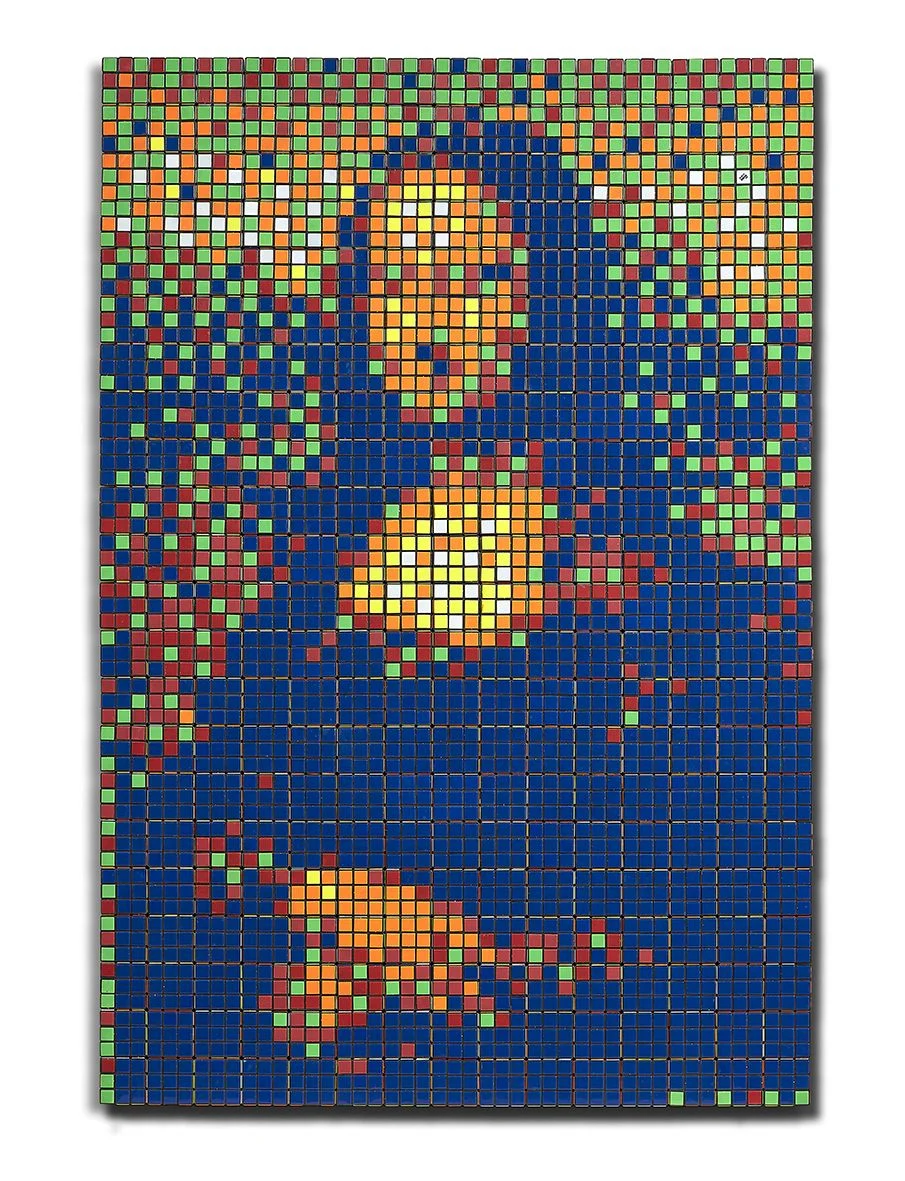
Imagine the famous Mona Lisa, but instead of soft brushstrokes and oil paint, she’s built from a thousand colorful squares taken from a classic toy: the Rubik’s Cube. Invader, a French street artist, is known for his playful, pixelated works that bring pop culture and high art together. His Rubik Mona Lisa, made from over 300 Rubik’s Cubes, uniquely and surprisingly merges past and present. It’s both a puzzle and a painting, inviting you to smile and think simultaneously.
Who Was Invader?

The name behind the creative Invader is a mysterious French artist who is famous for his incredibly unique street art. We don’t know his real name, but thanks to his colorful mosaics, he’s become famous all over the world. The first tile artworks that Invader created (sometimes referred to as ‘artworks on walls’) appeared in Paris in the late 1990s, inspired by the pixelated characters from the arcade game Space Invaders. His work is about making public spaces joyful and surprising and is all about encouraging people to look up and find something unexpected in their everyday surroundings.
FUN FACT: Invader’s mosaics aren’t limited to city streets—he’s even installed one underwater! In 2007, he placed a pixelated artwork on the seabed near Cancun, Mexico. Known as Space One.
His Career
As Invader spread his art across cities worldwide, his career quickly took off. Today, his playful mosaics appear in cities from Paris to New York, peeking out from walls, bridges, and sidewalks. By blending street art with his love for video games, he challenges the notion that art belongs only in galleries. Through his work, Invader has carved out a unique space in urban art, making cities feel more vibrant and alive with fun and nostalgia. His career isn’t just about creating art; it’s about sparking conversations and encouraging new perspectives on the world.
What’s Happening in Rubik Mona Lisa?
| Artist | Invader |
| Date Created | 2005 |
| Medium | Rubik’s Cubes |
| Genre | Street Art, Rubikcubism |
| Period | Contemporary |
| Dimensions | 85 x 65 cm |
| Series / Versions | Rubikcubism |
| Where is it housed? | Private Collection |
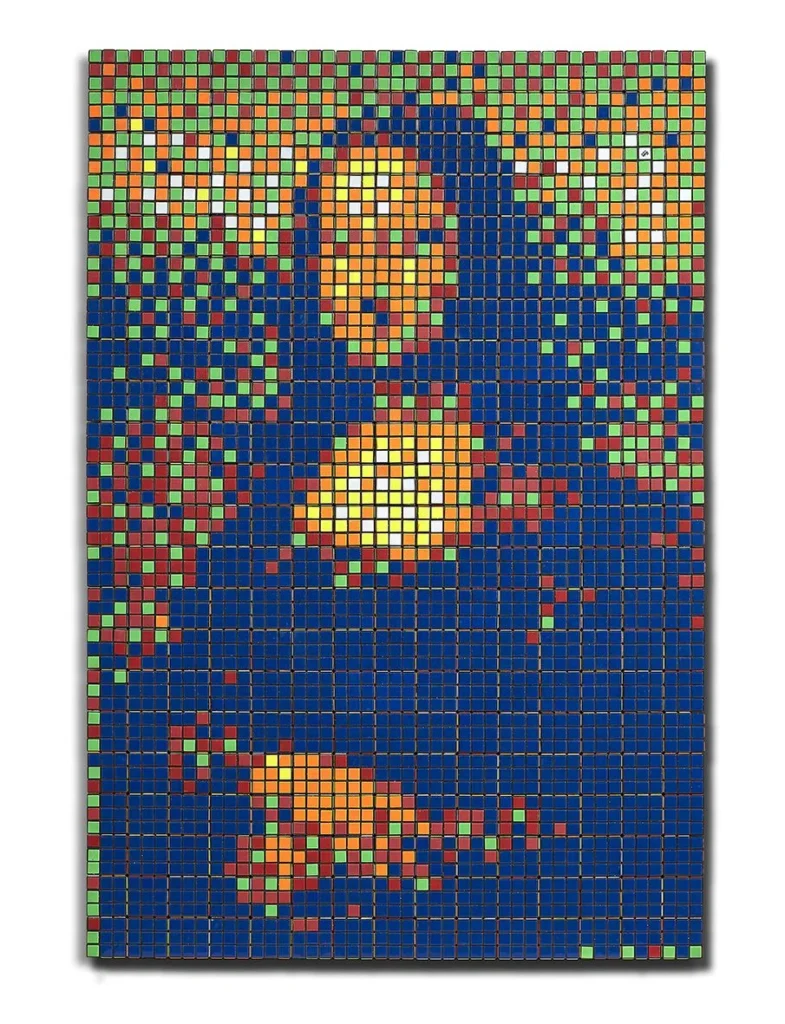
The Rubik Mona Lisa is exactly what it sounds like a version of da Vinci’s Mona Lisa, but composed of Rubik’s Cubes. Each pattern of dark and light colors in the cubes fills into the paint on her face. That’s that familiar smile, and that familiar gaze, that you know from far away but now see up close — it’s a vibrant mix of colors that becomes an image. It’s almost as if the Mona Lisa was turned into a game – each cube has to twist and turn just so for it to form that image.
‘The Rubik Mona Lisa’ for Invader was like solving a giant puzzle. The colors needed to be aligned just right on each cube and each had to be rotated. When you look up close, each tiny square is critical to the entire picture.
What’s So Special About Rubik Mona Lisa?
This artwork is special because it brings together two worlds: classic art as well as modern pop culture. Out of one of the most recognized faces in history, Invader has transformed this into a colourful and playful piece made from a toy. His Rubik Mona Lisa is a part of his series called Rubikcubism where he places an image on a Rubik’s Cube in a similar way where people can only see a certain part when seen from certain angles.
So using Rubik’s Cubes here is a clever choice as well. They look familiar, but they’re also a symbol of patience and skill. Invader transforms fine art into something we can relate to on a more personal level, by simply using a everyday object.
Interesting Facts about Rubik Mona Lisa
It’s a Puzzle and a Painting: Each square in every Rubik’s Cube needed to be rotated just right to fit the final image. Imagine the patience!
Rubikcubism: Invader’s series called Rubikcubism is inspired by Cubism, a movement that deconstructs and reconstructs reality in new ways. Invader takes this idea further, using Rubik’s Cubes to recreate famous icons and images.
A New Take on Pop Culture: The Rubik Mona Lisa isn’t the only famous face he’s recreated. Invader has also used Rubik’s Cubes to make mosaics of movie characters, pop icons, and even scenes from video games.
Every Detail Matters: The Rubik Mona Lisa isn’t random—it’s calculated. Invader planned each cube’s placement so that, from a distance, the colors and shapes come together perfectly to form her face.
Artwork Spotlight: Rubik Camouflage
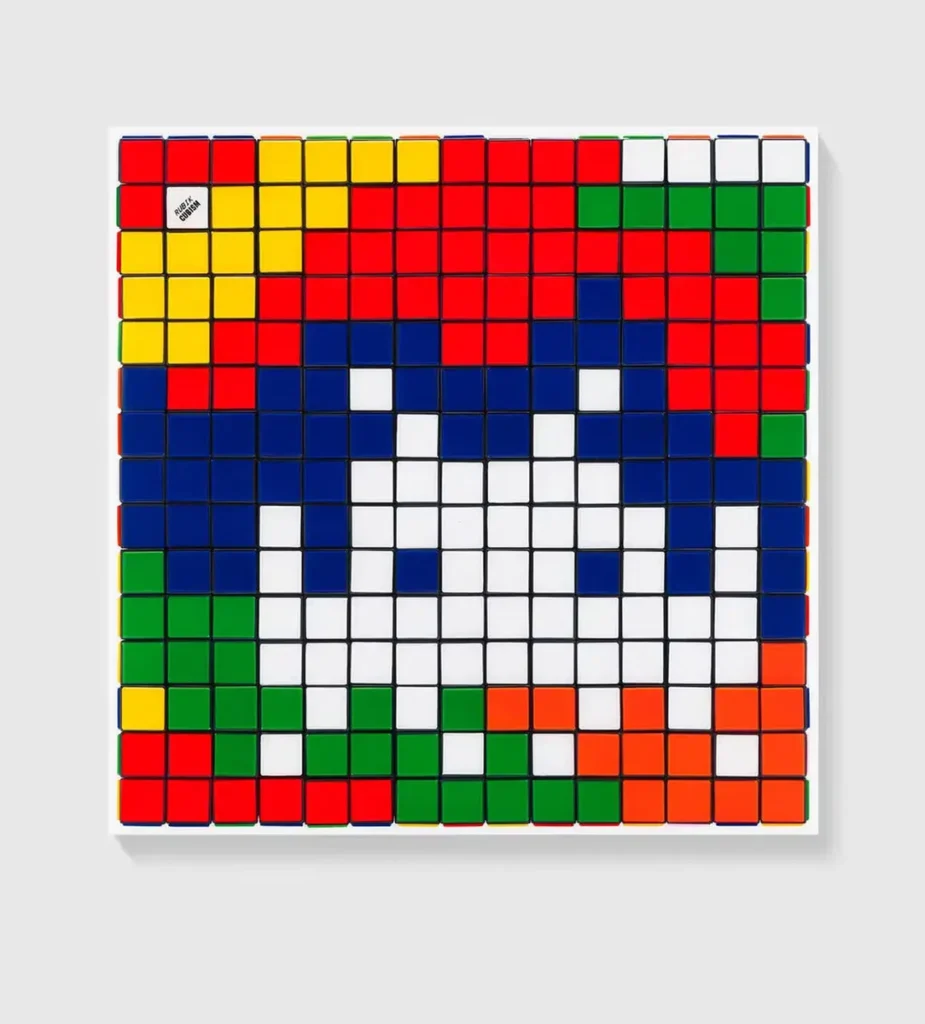
Another piece in this playful series is Rubik Camouflage which is also available on Singulart. This artwork explores patterns and colors to create optical illusions. It’s another example of how Invader uses Rubik’s Cubes to challenge our perspective on art.
Are you looking for a piece of artwork from Invader?
Singulart has limited edition prints of Invader. If you are looking for a piece of Invader‘s artwork for sale, simply click on the artwork or the button below to discover more!
FAQs
1. When did Invader start his art?
In 1998, Invader created his debut installation in Paris. This character appeared in the Atari game in 1978 and shortly afterward ‘occupied’ 31 cities in France, 65 cities overall, and 33 countries.
2. How does Invader make his mosaics?
Weather-resistant tiles, which stand in for the pixels used for visuals in early video and computer games, are utilized to create the mosaics. Scouting, recording, and mapping places are all part of the installation procedure, which usually takes a week or more.
Conclusion
Invader is a master at blending nostalgia and creativity. His Rubik Mona Lisa takes one of the most recognized portraits in history and turns it into a piece we can relate to freshly. Each cube feels like a mini-game, and the entire piece invites you to look closer and appreciate the fun side of art.
There’s a certain “bonjour” charm to Invader’s approach. He’s not afraid to make art that’s accessible and engaging, something that invites us to have a bit of fun while still admiring its craftsmanship. The Rubik Mona Lisa reminds us that art doesn’t always have to be serious—it can be colorful, playful, and even a bit puzzling.
So, if you’re ever lucky enough to see an Invader piece up close, whether it’s on a city wall or in a gallery, take a moment to enjoy the journey. His work is about finding joy in the unexpected, one mosaic at a time.