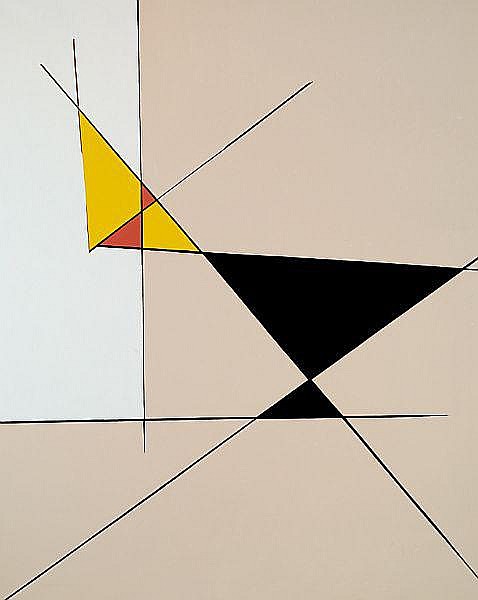
What if shapes and colors could speak about stories? In his Geometric Compositions series, that’s exactly what Richard Mortensen does. He has been a dance of triangles and circles and squares, each one moving to its rhythm but all done so perfectly.
Mortensen wasn’t creating shapes, he was creating moods and emotions. This series, made in the 50s and 60s, is all about simplicity yet feels so rich and alive. It’s the kind of art that had you stop, think, and feel.
Let’s explore who Mortensen was, what makes his Geometric Compositions so special, and why this series still captivates hearts today.
Who Was Richard Mortensen?
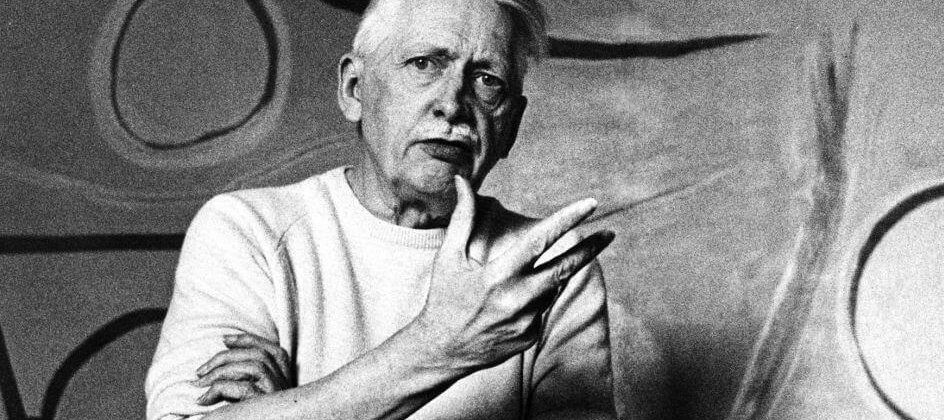
Richard Mortensen was a Danish artist who was born in 1910. He was also famous for his unique take on abstract art. Over time, his style evolved until Mortensen loved to explore shapes and colors in his paintings. He began with surrealism, but then he found himself in abstract art. His often bold, geometric forms are both highly ordered and deeply emotional.
In the 1940s he moved to Paris (Bonjour, Paris!), where Mortensen made himself a part of the new city’s thriving modern art scene. His approach to abstraction was shaped by artists such as Mondrian and Kandinsky; they were inspiring here. Not only did Mortensen paint shapes, but he also painted feelings.
FUN FACT: Richard Mortensen had a bit of a rebellious streak. In his early days, he was so inspired by modern art movements like Surrealism and Cubism that he challenged traditional Danish art styles head-on.
His Career
It was in the 1930s that Mortensen’s art career began to flourish when he co-founded Linien, a group of artists who wanted to severely break from traditional art. But, over a few years, he has developed his style and became well-known for his skill in mixing bold and clean colored lines.
If Mortensen lived in Paris during the 1940s it was the source of inspiration for many of the works. He started focusing more on abstract art, with those pieces showing lots of emotion and energy, and he began to head there. Mortensen’s work quickly attracted attention in Europe and he made his way into teaching as a professor at the Royal Danish Academy of Fine Arts as the next generations of artists.
What is Happening in the Geometric Compositions Series?
| Artist | Richard Mortensen |
| Date Created | 1950s-1960s |
| Medium | Oil on Canvas |
| Genre | Abstract, Geometric Art |
| Period | Post-war Modernism |
| Dimensions | Various sizes |
| Series / Versions | Geometric Compositions Series |
| Where is it housed? | Multiple locations: Statens Museum for Kunst, private collections, etc. |
This series is something of a playground for shapes and colors. Mortensen separates triangles, squares, and circles and places them in a manner that feels alive. And between shapes and colors, there’s no random; each has its place, and the other has its reason.
The Geometric Compositions series is a puzzle. It doesn’t mean anything or have a story, but that’s the beauty of it. Mortensen wanted his viewers to feel some sense of it when they looked at his art.
Reds, blues, and yellows are boldly on stage, and black and gray remain in the shadows. They can create harmony and they can move. They aren’t just shapes, they’re feelings.
What’s So Special About the Geometric Compositions Series?
It’s the simplicity of this series that makes it magical. The forms Mortensen uses are pretty basic, but in how he puts them together, they’re quite fresh and filled with energy.
Another thing is his use of colors. He didn’t randomly pick shades either. The colors were chosen to create each color’s feeling: red for energy, blue for calm, and yellow for joy.
It also makes it feel modern. As this series was created many decades ago, it still feels fresh and appropriate to the age we live in today. It works whether you hang one in a gallery or your living room.
Interesting Facts About Geometric Compositions Series
Inspired by Math: Mortensen loved geometry. Many of his paintings follow mathematical rules, which gives them a perfect balance.
Aerial Views: Some people think his art looks like the view of a city from above. Maybe it’s inspired by his travels?
Feel the Colors: Mortensen used primary colors like a mood board. They’re simple but packed with emotion.
Nordic Style: Even with all the boldness, there’s a quiet, minimal vibe in his work. Very Scandinavian, right?
Why We Love Geometric Compositions?
Symmetry makes Mortensen’s Geometric Compositions satisfying. The triangles, circles, and squares seem peaceful, but there’s energy in how they’re arranged. The colors and forms combine in such a clear and thoughtful way. They don’t have to be complicated, but they keep your attention with quiet strength and harmony.
The second component that makes these paintings so distinct is that they never feel old-fashioned. Despite being created many decades ago, it still seems current. As bright colors and clean designs, they go perfectly with a sleek apartment or a cozy home.
Artwork Spotlight: Tidselbillede

Tidselbillede by Richard Mortensen is available on Singulart. This artwork shows how he used bold shapes to create something emotional and unique.
Are you looking for a piece of artwork from Richard Mortensen?
Singulart has limited edition prints of Richard Mortensen. If you are looking for a piece of Mortensen’s artwork for sale, simply click on the artwork or the button below to discover more!
FAQs
1. What inspired Richard Mortensen’s artistic style?
Richard Mortensen was heavily inspired by European modernisms, primarily Constructivism and Bauhaus. In Paris, his time exposed him to artists like Mondrian and Kandinsky and his concentration on abstract art and geometric shapes.
2. What is Richard Mortensen’s contribution to abstract art?
Contemporary art fans love Mortensen for his unique way of merging bold geometric forms with emotional depth. His abstract works had an impact on the modernist art scene all across Europe, and he co-founded Linien, a group that took issue with established art in Denmark.
Conclusion
In Richard Mortensen’s Geometric Compositions series, it’s not just about shapes or colors, it’s about feelings. His art encourages you to stop, take a better look, and assign yourself your meaning.
Whether you’re a seasoned art lover or just curious, this series offers something for everyone. It’s bold, thoughtful, and timeless. So, if you ever get the chance to see one of these works in person, don’t miss it. You might just find a piece of yourself in those shapes and colors.