Singulart guarantees reliability and traceability.
All the artists on the platform have been specially selected and certify to only sell works, of which they are the artist. Whatever the medium, the work is sent to the buyer with a certificate of authenticity. Photographs are numbered and signed.
Every customer can be given a copy of their certificate of authenticity by contacting support@singulart.com
With Singulart, you can pay safely by credit card or bank transfer.
For all transactions exceeding your credit limit, contact us. We are required to verify every transfer, as part of the fight against fraud and money laundering.
Singulart prices include:
Price of an artwork defined by an artist.
Insurance. Your order is 100% protected in case of any damage or loss.
All customs fees, taxes, and document preparation.
Third-party logistic provider shipping costs.
A dedicated Singulart customer care specialist that will assist you with any questions or problems during shipment.
The measurements are:
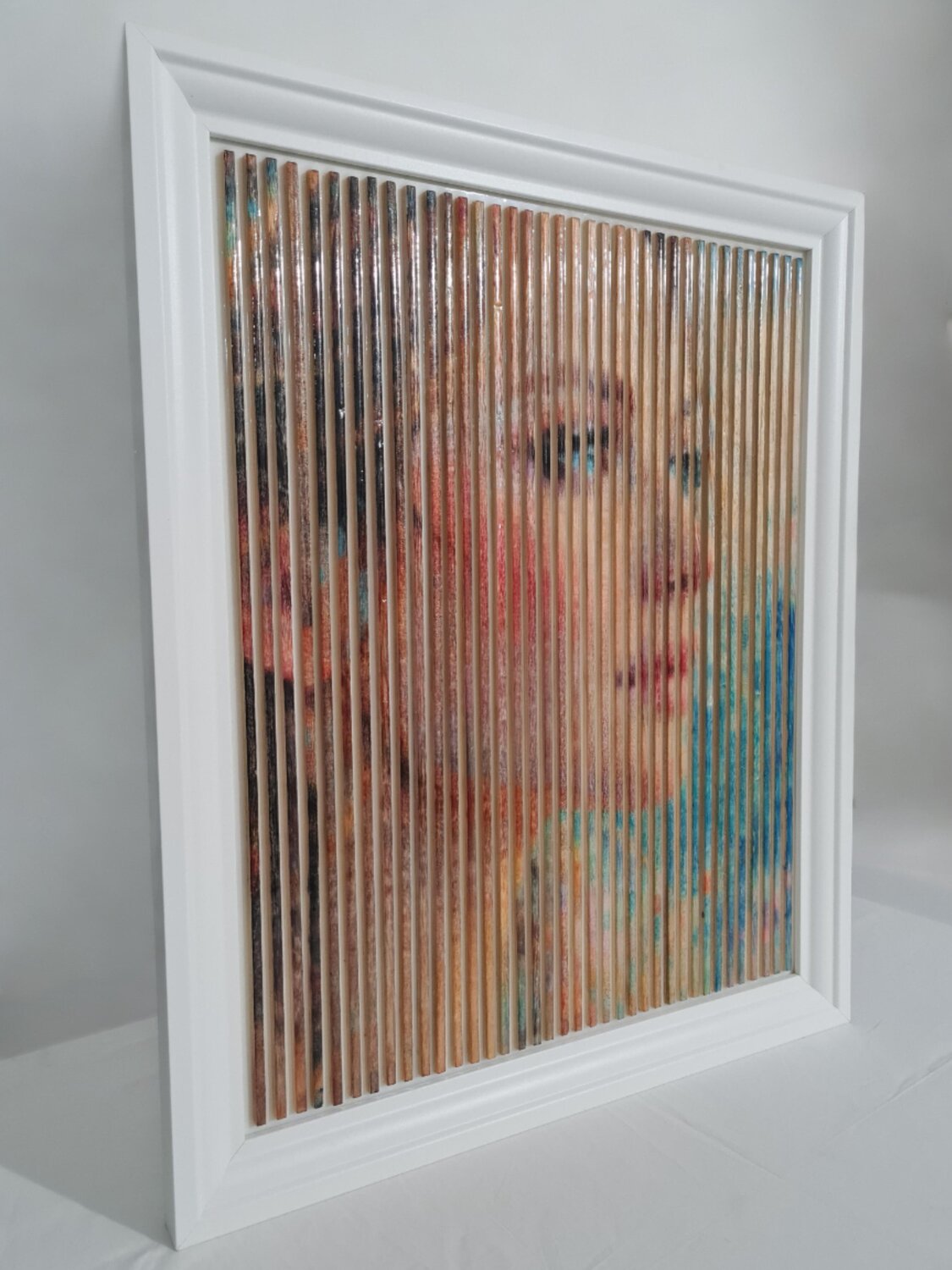
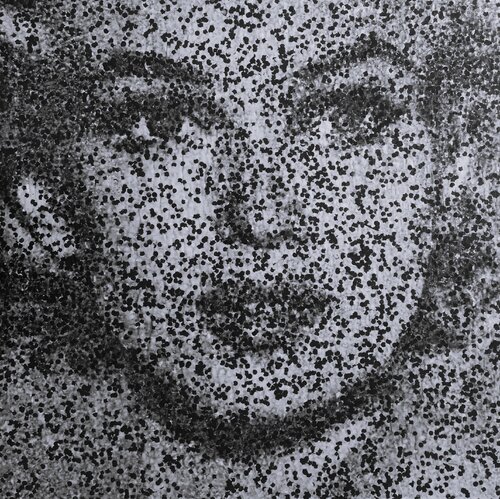
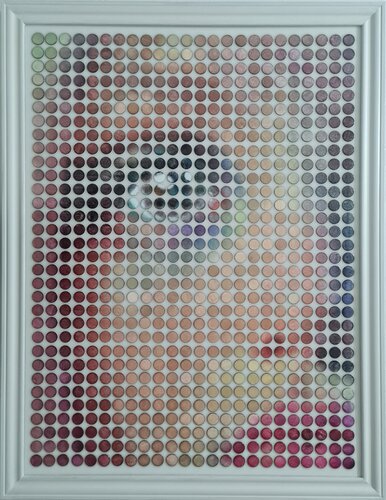
- Dot Art: 50,00 x 40,00 cm
- Dot Art + wooden frame: 56,70 x 46,70 cm; thickness 2,50 cm
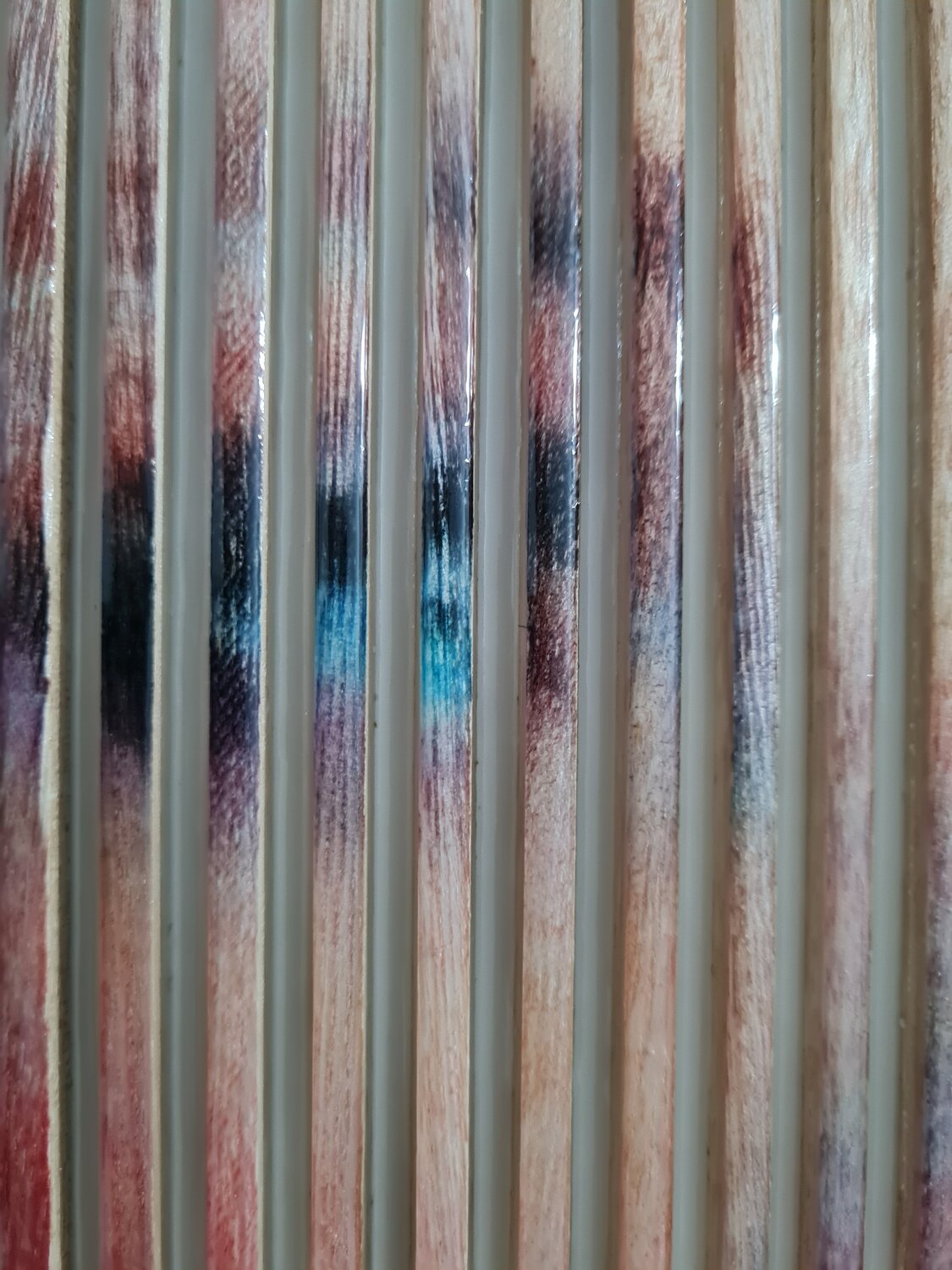
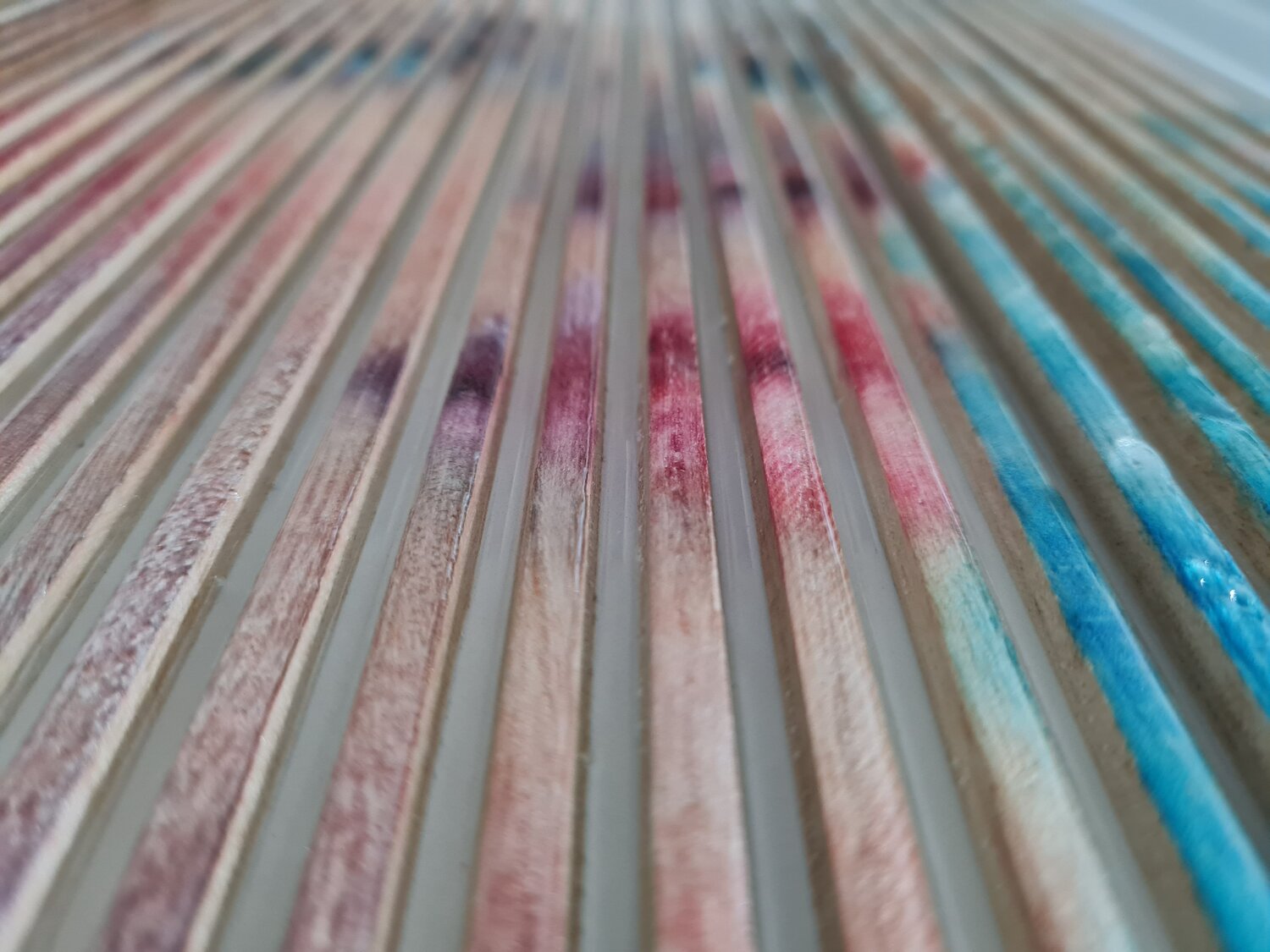
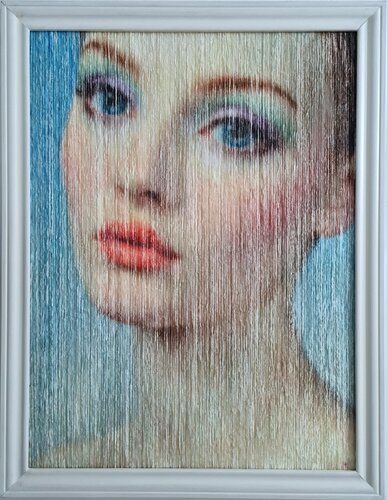
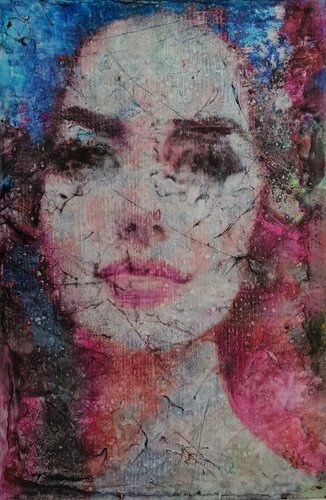
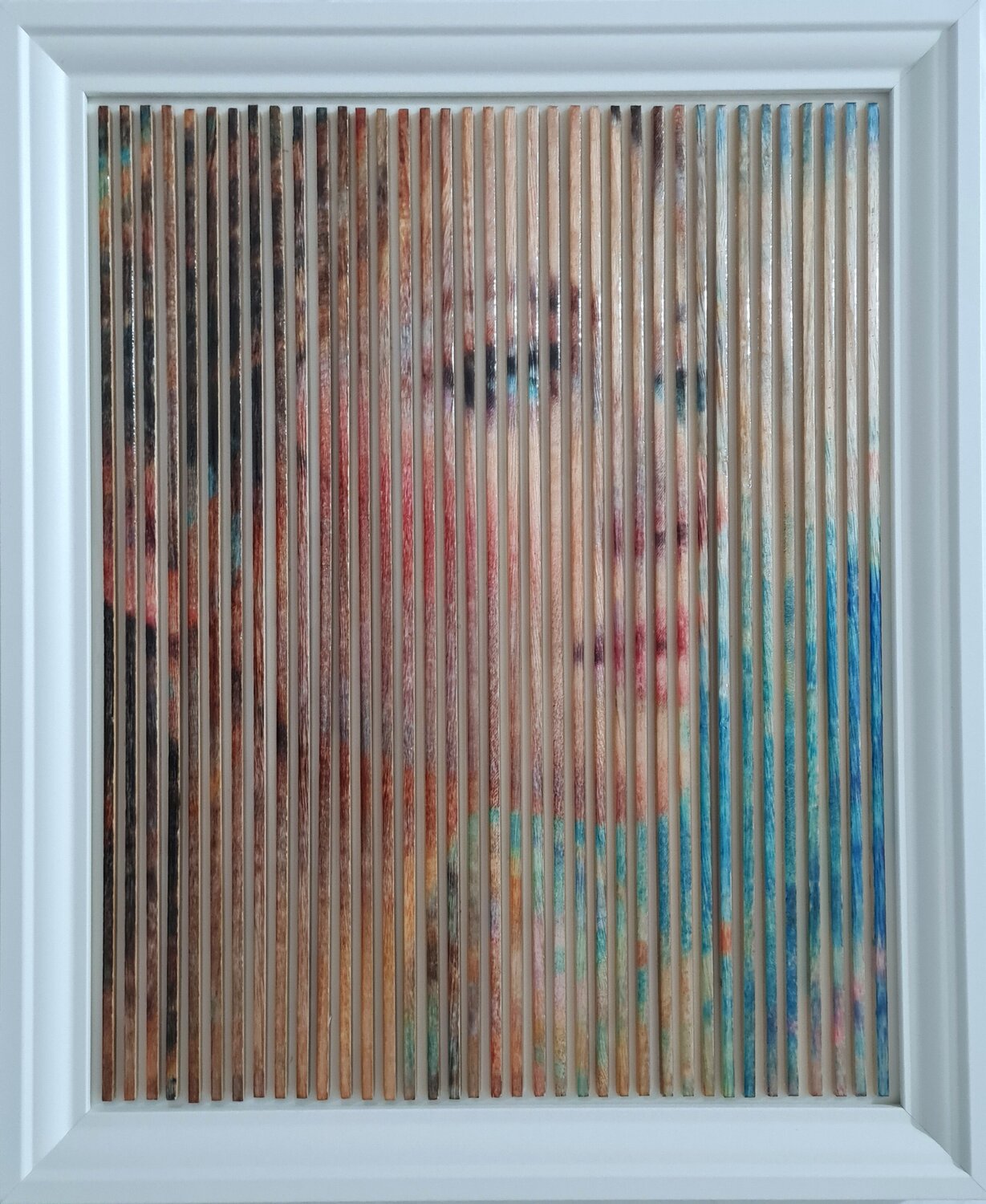
Epoxy resin on painted wooden strips (mix media)
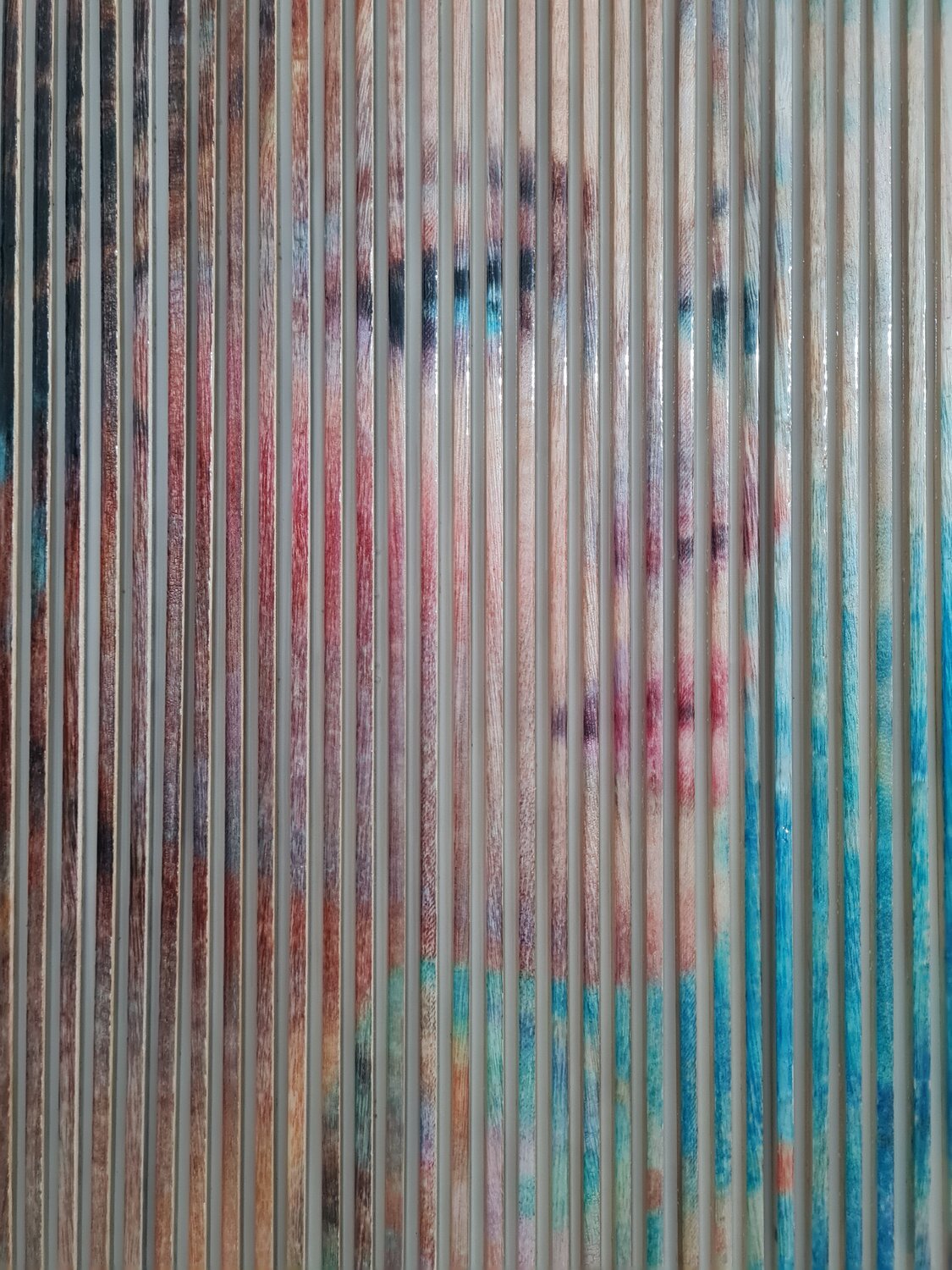
This work was created by painting 37 wooden strips, each 0.50 cm wide.
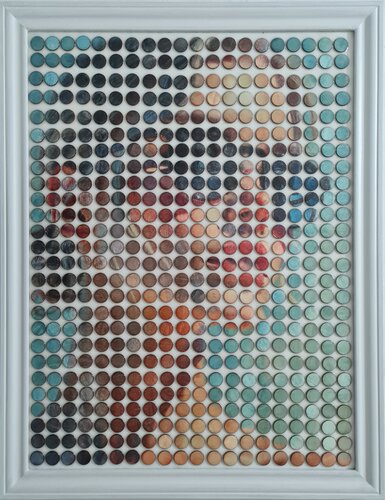
This work plays with the boundary between image and perception.
37 vertical wooden slats painted compose a surface within a white frame that changes with every step.
The thin vertical grooves fragment the female face,… transforming it into an elusive, almost moving presence.
From a distance, a delicate portrait emerges, but as one approaches, the image dissolves into lines, texture, and reflections. The contrast between the warm skin tones and the intense blues on the right side creates both balance and visual tension.
The work invites the viewer to shift perspective, suggesting that identity is never fully defined, but rather shifting and fragmented.
« Art serves to remember, to leave a testimony of our existence. »
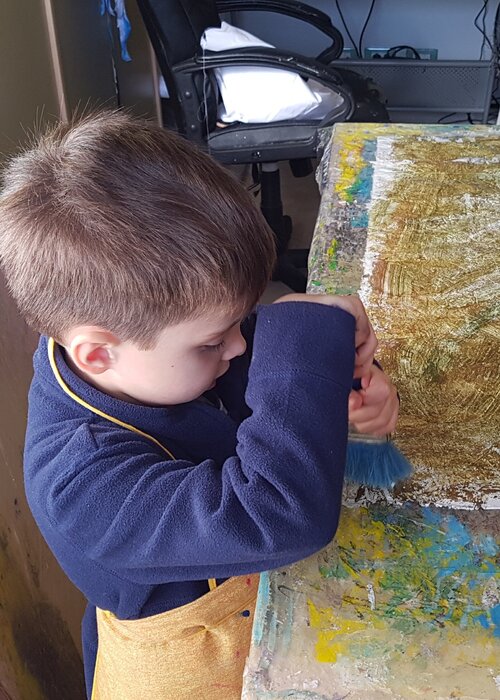
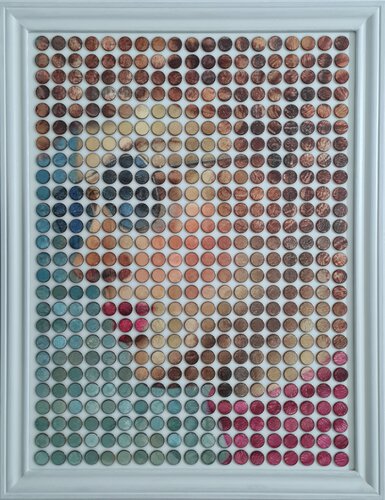
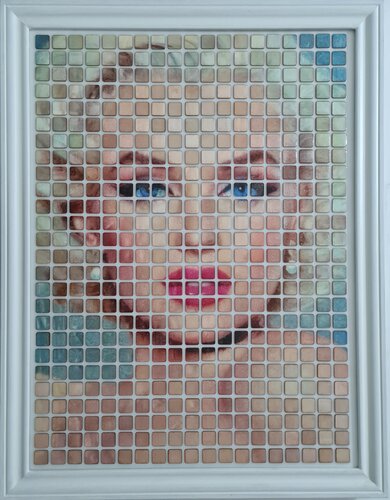
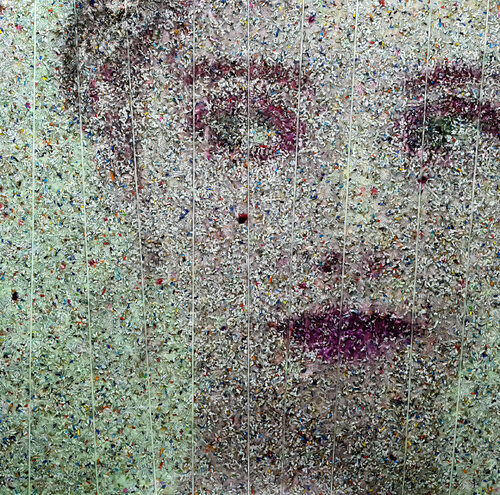
Alessio Mazzarulli transforms everyday materials into a reflection on time and perception. After his debut in clay modeling, he transferred his three-dimensional sensitivity to material painting, where relief and tactility become central. He uses fragments of recycled paper, rescuing traces of everyday life from oblivion, and with acrylics and resins he “freezes” time in deliberately distorted images, composed of fragmentary elements that invite an overall vision. In the “Dot Art” series, he uses small wooden discs to explore the voids of memory: the spaces between the elements evoke what is lost and push the observer to reconstruct the image, creating a dialogue between reality and perception in which time is experienced through erosion and visual recomposition.