Not currently available for saleThis piece is currently reserved (either by a client or for an exhibition...).Get notified when it becomes available again.
Thank you very much for your interest!
Your message has been sent successfully! We will get back to you if the artwork becomes available again.
Singulart guarantees reliability and traceability.
All the artists on the platform have been specially selected and certify to only sell works, of which they are the artist. Whatever the medium, the work is sent to the buyer with a certificate of authenticity. Photographs are numbered and signed.
Every customer can be given a copy of their certificate of authenticity by contacting support@singulart.com
With Singulart, you can pay safely by credit card or bank transfer.
For all transactions exceeding your credit limit, contact us. We are required to verify every transfer, as part of the fight against fraud and money laundering.
Singulart prices include:
Price of an artwork defined by an artist.
Insurance. Your order is 100% protected in case of any damage or loss.
All customs fees, taxes, and document preparation.
Third-party logistic provider shipping costs.
A dedicated Singulart customer care specialist that will assist you with any questions or problems during shipment.
Other details :
Artwork on synthetic panel. Artwork framed.
Dimensions :
15x22in
About this artwork
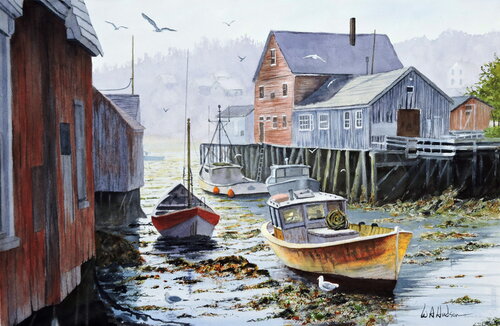
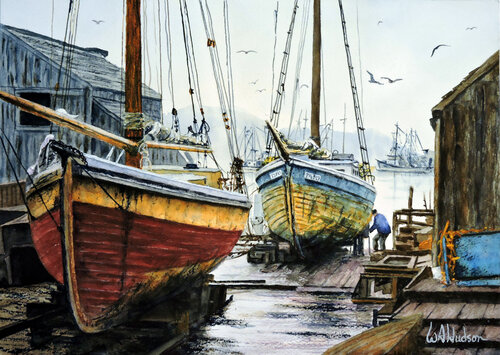
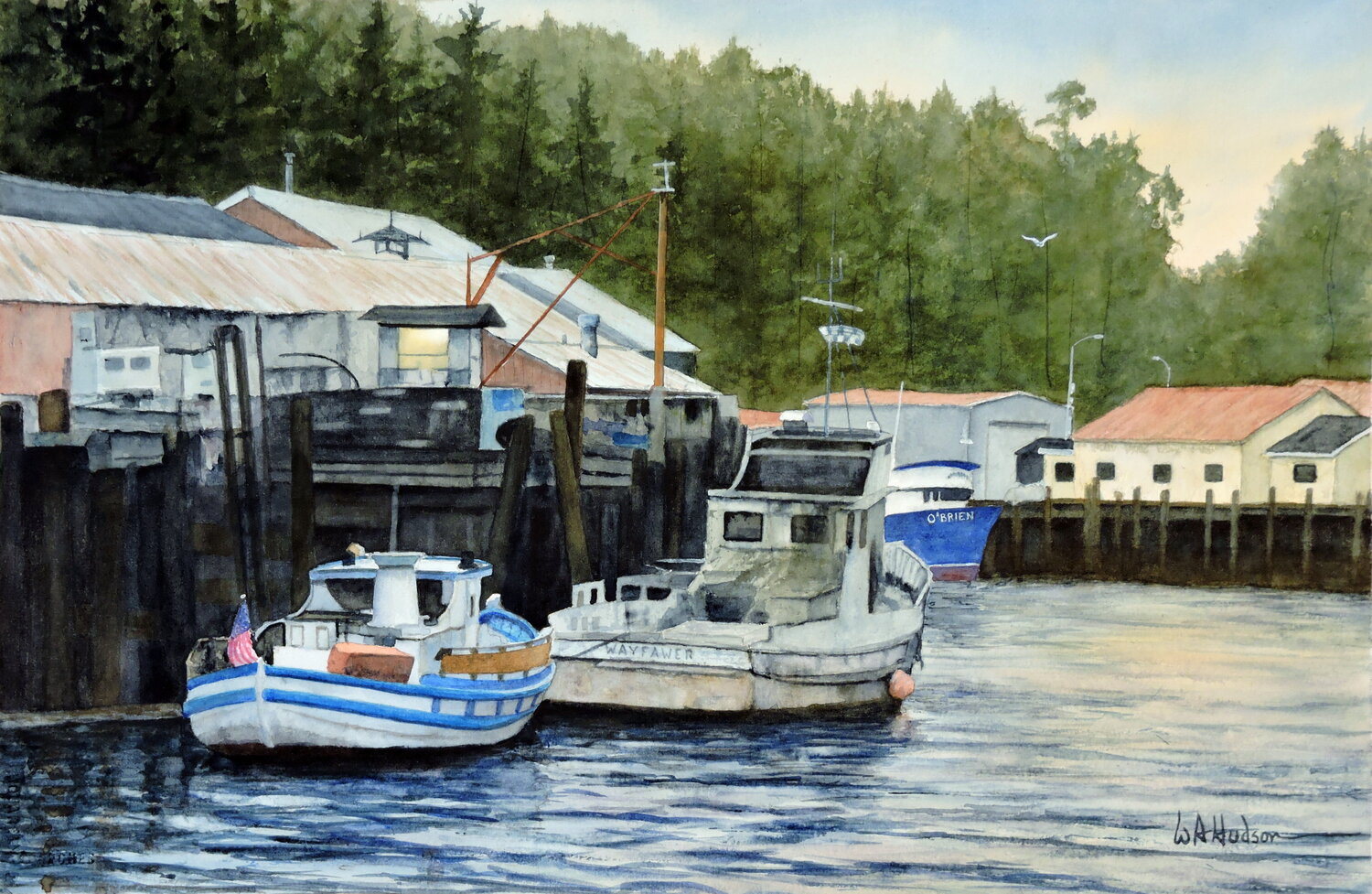
I spotted this Monterey Clipper while heading out of Noyo Harbor in Fort Bragg, California on a half-day fishing trip.
For me, no California boat has more history, utility, and appeal than the Monterey Clipper. Introduced to the San Francisco area by Italian fishermen after the 1849 gold rush, these 25 to 30-foot, lateen-rigged sailboats were known as “feluccas.” By 1890, over 1000 feluccas, or 70% of the entire fishing fleet, worked as shrimp boats,… gillnetters, and Dungeness crabbers from Fisherman’s Wharf.
By 1925, the feluccas had transformed into classic Monterey Clippers. A single cylinder, four- stroke, “heavy duty, marine gas engine” made by Hicks (circa 1910-1950) replaced sails. The straight felucca bow became a clipper bow. About a dozen restored wooden Monterey Clippers still dock at the wharf and a few can still be found along the Pacific coast. But today, the boat is too small and slow to profit in commercial fishing.
« As an artist, maritime scenes grab me, inherently providing the elements necessary for a good painting. Water adds contrast in edges, shapes, and value. Reflections guarantee compositional continuity. »
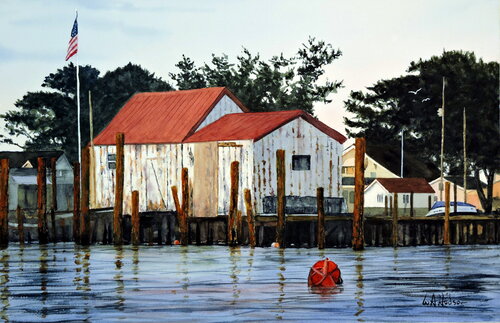
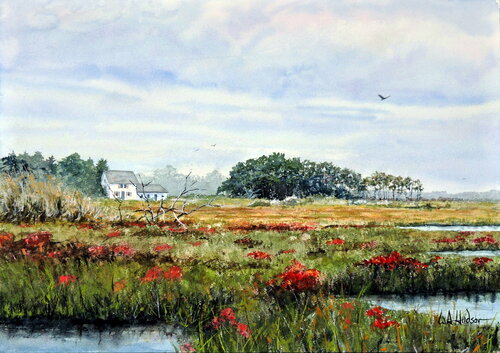
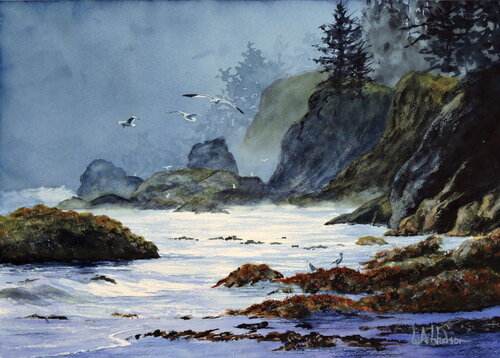
Bill Hudson is a prize-winning American artist whose paintings have been exhibited in the United States. Every one of his nautical themed compositions brings back fond memories of working the water as a child, or owning his own crab boat in San Pedro as an adult. Hudson's realistic works are created using watercolors and casein, which uses milk curds as a binder rather than gum arabic associated with watercolor and gouache.