- Professional worldwide delivery, monitored by our logistics experts
- Shipping fees, duties and taxes are included in the price
- 30-day free returns (except made-to-order items)
Singulart guarantees reliability and traceability.
All the artists on the platform have been specially selected and certify to only sell works, of which they are the artist. Whatever the medium, the work is sent to the buyer with a certificate of authenticity. Photographs are numbered and signed.
Every customer can be given a copy of their certificate of authenticity by contacting support@singulart.com
With Singulart, you can pay safely by credit card or bank transfer.
For all transactions exceeding your credit limit, contact us. We are required to verify every transfer, as part of the fight against fraud and money laundering.
Singulart prices include:
- Price of an artwork defined by an artist.
- Insurance. Your order is 100% protected in case of any damage or loss.
- All customs fees, taxes, and document preparation.
- Third-party logistic provider shipping costs.
- A dedicated Singulart customer care specialist that will assist you with any questions or problems during shipment.

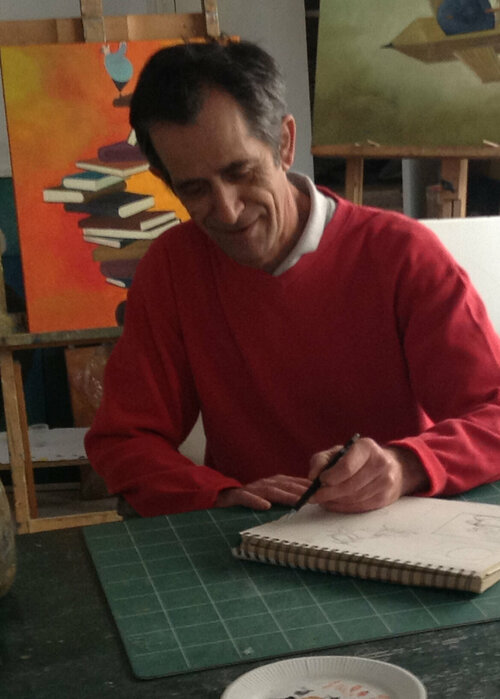
Bruno Aimetti
France
Artist highlights
- Experienced Artist
- Favorited by galleries
- Featured in gallery curations
- Works on commission
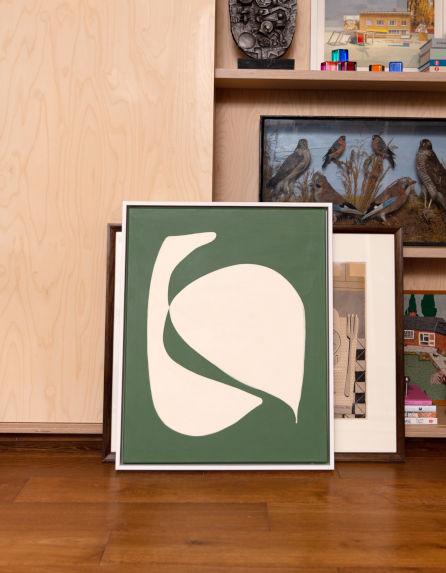
Discover the creation in interiors
Artwork details
- Medium : Oil, Gilding on Linen
- Other details : Artwork on supported wooden frame. Ready to hang. Framing on request.
- Dimensions : 18.1x15in
About this artwork
The origin of the nickname Trencavel remains uncertain and its etymology lends itself to many interpretations. According to historians, one would be "Trenca Bel", literally who slices well or "Trencarèl", the slayer. Another could be “Trenca Avanela” which means in Occitan nutcracker. Or “Trenca Ravel”, slice ravelle.
According to the research of historians Laurent Macé and Gauthier Langlois, this last hypothesis would be the most plausible. Indeed,… the coat of arms of Raimond II Trencavel, found on an Aragonese fresco preserved in the castle of Alcañiz, seat of the Order of Calatrava, reveals a “fascist of black gules and ravelles”.
Raimond-Roger will become in spite of himself the hero and the first victim of the crusade against the Albigensians. He died in 1209, confined in the dungeons of his own city of Carcassonne, probably poisoned by the vile Simon de Montfort.
According to the research of historians Laurent Macé and Gauthier Langlois, this last hypothesis would be the most plausible. Indeed,… the coat of arms of Raimond II Trencavel, found on an Aragonese fresco preserved in the castle of Alcañiz, seat of the Order of Calatrava, reveals a “fascist of black gules and ravelles”.
Raimond-Roger will become in spite of himself the hero and the first victim of the crusade against the Albigensians. He died in 1209, confined in the dungeons of his own city of Carcassonne, probably poisoned by the vile Simon de Montfort.
Bruno Aimetti
France
Credentials
- Experienced Artist
- Favorited by galleries
- Featured in gallery curations
- Works on commission
« The only difference between Van Gogh and myself is that I sleep on both my ears. »
Bruno Aimetti is a painter and draftsman whose works have been exhibited nationally, in the United States, Germany, and the Netherlands. His pieces re-imagine the scenes of everyday life in a playful manner. For Aimetti, his artistic practice translates the crucial need to remain off the beaten track and outside of mainstream artistic thinking. He primarily creates using acrylics and oils on cardboard, linen, or canvas.