Singulart guarantees reliability and traceability.
All the artists on the platform have been specially selected and certify to only sell works, of which they are the artist. Whatever the medium, the work is sent to the buyer with a certificate of authenticity. Photographs are numbered and signed.
Every customer can be given a copy of their certificate of authenticity by contacting support@singulart.com
With Singulart, you can pay safely by credit card or bank transfer.
For all transactions exceeding your credit limit, contact us. We are required to verify every transfer, as part of the fight against fraud and money laundering.
Singulart prices include:
Price of an artwork defined by an artist.
Insurance. Your order is 100% protected in case of any damage or loss.
All customs fees, taxes, and document preparation.
Third-party logistic provider shipping costs.
A dedicated Singulart customer care specialist that will assist you with any questions or problems during shipment.
Other details :
Artwork on Dibond. Artwork framed.
Dimensions :
59.1x59.1in
About this artwork
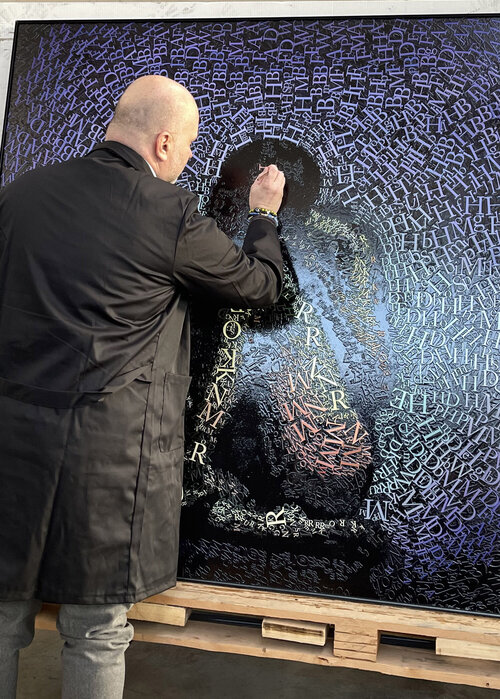
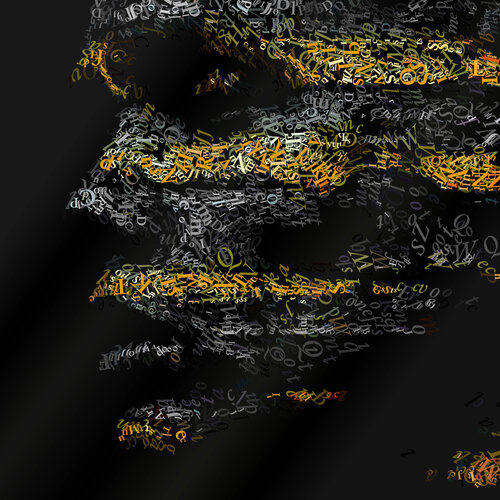
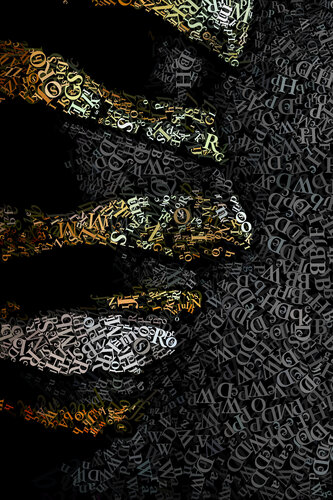
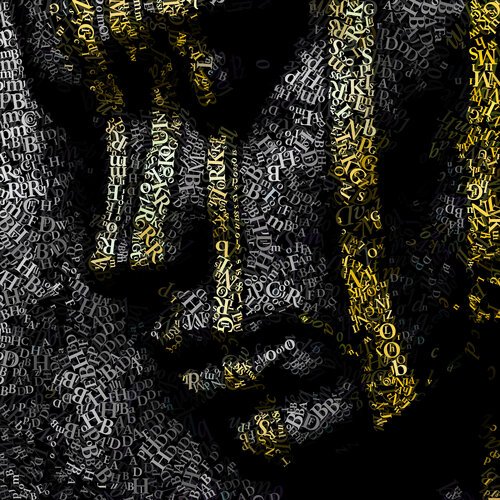
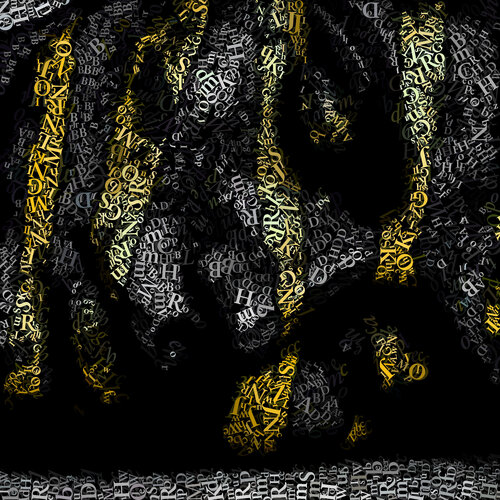
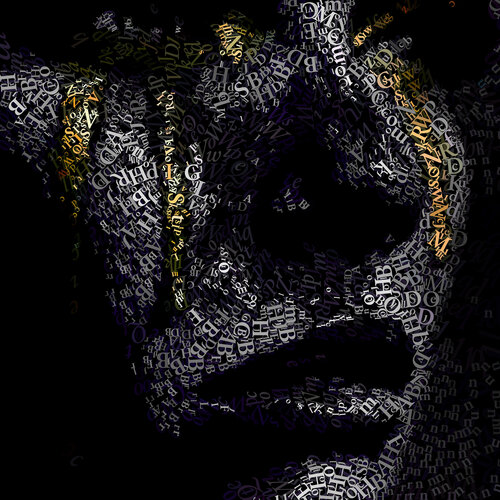
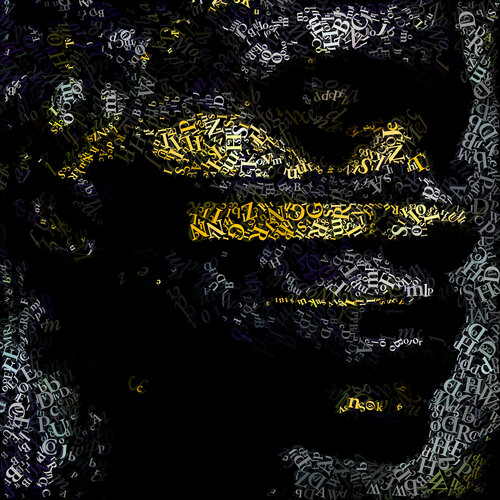
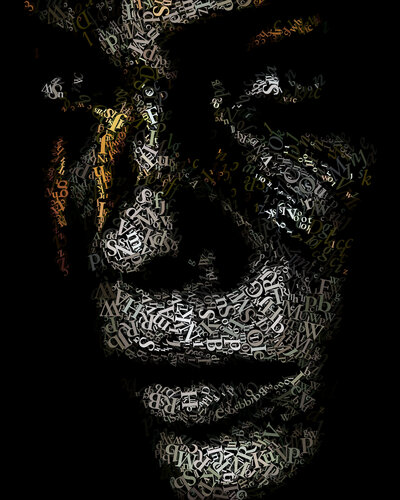
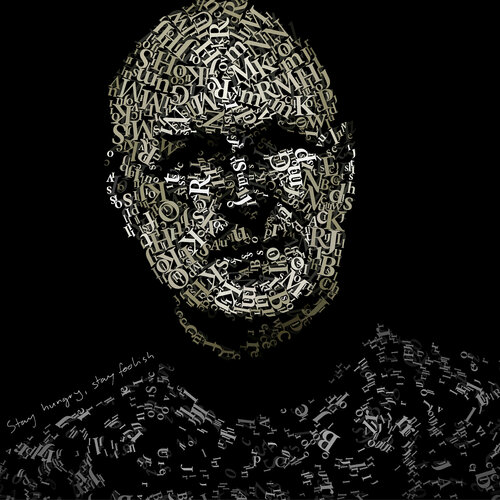
Each character is a symbolic brick that builds the visual and cultural identity of the subject, transforming language into pictorial matter. The choice of the text “Yes We Can” at the bottom left acts as an ideological and narrative signature: not just a motto, but an echo of hope and change that resonates between the folds of the face.
The work does not simply portray an individual: it becomes a visual manifesto of communicative power, where words… do not decorate, but build. It is a celebration of language as a vehicle of identity, leadership and transformation, in which the portrait itself dissolves and recomposes itself in the message it represents.
CHRIZ (Christian Z) is an Italian artist whose research explores the relationship between language, identity, and form. He begins not with the image, but with what comes first: the letter as an originary act and matrix of meaning. He uses individual typographic characters, applied and layered by hand on metal panels, to construct bodies and faces that emerge from the blackness of silence.
The text is not read: it is passed through. The letters become visual DNA, generative material from which the human figure takes shape, never idealized but alive, fragile, in transformation.
His practice stands apart from traditional text-based art, positioning itself between contemporary figuration and conceptual research in a hyper-digital culture. He works where words become images.